Uncategorized
Daily market update for Friday, September 18, 2026
Is the buyer’s market ending in Southwest Florida?
The short answer is: not exactly, but the market is changing.
Lee County’s single-family inventory has fallen to roughly 5,944 active listings, down about 18% year over year and back to its lowest listing baseline since January 2024. That is a meaningful shift after several years of elevated supply.
However, total active listings across all property types remain high. Condominiums, rental properties, and some higher-priced homes are still giving buyers negotiating leverage. In other words, Southwest Florida is not moving from a broad buyer’s market into a seller’s market overnight. Instead, the market is becoming more segmented.
Single-family homes are tightening. Condos and rentals remain softer. Insurance and mortgage costs continue to influence what buyers can afford. And across nearly every category, pricing is still the deciding factor.
That is the central message in this Cape Coral market update for 2026.
The larger Southwest Florida picture
The FGCU Regional Economic Research Institute’s Q3 2026 report, published September 8 and based primarily on Q2 data, shows a market with improving activity but softer real pricing.
Across Southwest Florida:
- Single-family sales increased approximately 14% year over year to about 5,600 sales.
- Condo sales rose approximately 17% to about 1,320 sales.
- Real median single-family prices declined about 4%.
- Real median condo prices declined about 8%.
- Lee County’s Housing Affordability Index reached 1.35 for all residential property and 1.30 for single-family homes.
- Real median rents in Lee County declined approximately 9% year over year.
An affordability index above 1.0 indicates that a median-income household has more income than the model estimates is needed to purchase the median-priced home. That is encouraging, but it does not mean every household feels comfortable. First-time buyers, buyers with limited savings, and households carrying other debt may still find monthly payments challenging.
Mortgage rates remain a major part of that calculation. The 30-year fixed rate averaged around 6.65% in late August 2026, keeping monthly payments substantially higher than they were during the ultra-low-rate period. Even when prices soften, financing costs can limit purchasing power.
Cape Coral real estate: less inventory, but still selective
Cape Coral remains one of the most closely watched markets in Lee County. Current snapshots place the approximate median sale price near $349,900, while broader MLS reporting has shown figures closer to $362,500, depending on the property mix and reporting period.
Homes are taking roughly 99 days to sell, and inventory ranges from approximately 2.35 to 4.3 months of supply, depending on the segment.
That range matters. A well-maintained home priced correctly may attract attention quickly, while an overpriced property can remain available for months. Buyers still have time to compare homes, request repairs, review insurance costs, and negotiate credits, but they may face more competition for desirable single-family properties than they did earlier in the year.
For buyers working with Cape Coral real estate agents, the most important question is not simply, “How many homes are available?” It is:
How many comparable homes are available in the neighborhood, price range, condition, and waterfront category I actually want?
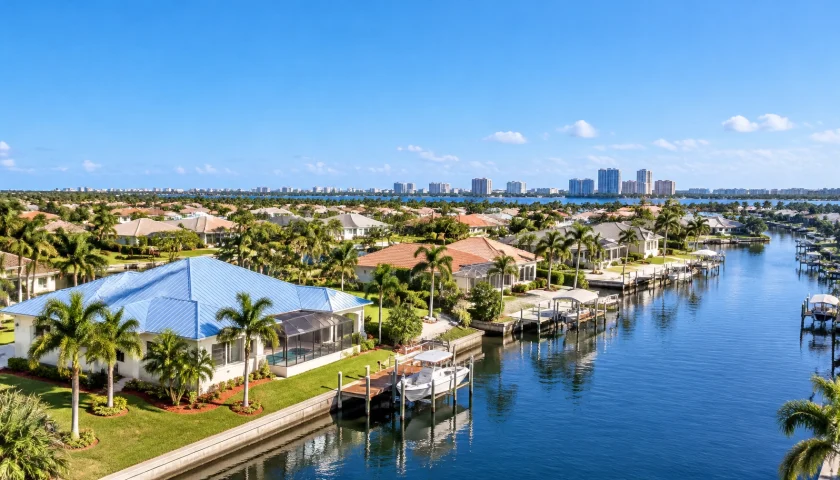
Cape Coral’s market is unusually diverse. A dry-lot inland home, a freshwater canal home, and a direct Gulf-access property may technically be in the same city, but they appeal to different buyers and behave differently in the market.
Fort Myers real estate trends show a split market
Fort Myers is also showing two different stories.
For single-family homes, the median price is above $430,000, with typical marketing times around 45 to 50 days. That suggests a comparatively leaner and more active market for well-positioned detached homes.
The broader Fort Myers market, which includes condos and other property types, is softer. The blended median is closer to $325,000, with marketing times ranging from approximately 100 to 151 days in some snapshots.
This is why broad headlines can be misleading. Someone shopping for a single-family home in a desirable Fort Myers neighborhood may experience a very different market from someone comparing older condominiums with higher association fees, insurance concerns, or upcoming assessments.
For sellers, this split makes accurate positioning essential. For buyers, it creates opportunities, especially in condo segments where sellers may be more open to price reductions, closing-cost credits, or repairs.
Waterfront values depend on access, not just the word “waterfront”
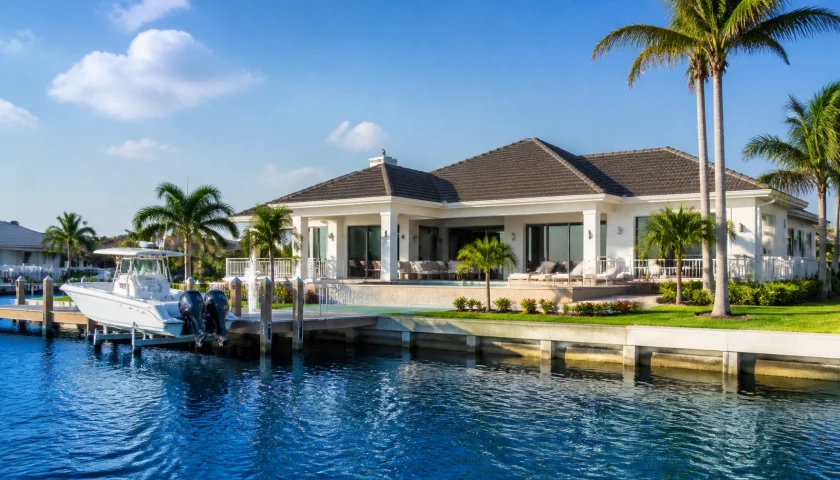
Waterfront property remains one of Cape Coral’s defining categories, but not all waterfront homes offer the same boating experience or value.

Freshwater canal homes
Freshwater canal properties generally offer attractive views, fishing, kayaking, and a peaceful setting. They are often more accessible from a pricing standpoint than Gulf-access homes.
Current snapshots place the median for freshwater canal homes near $465,000, although the actual value depends on the home’s condition, canal width, seawall, dock, pool, and neighborhood.
These homes can appeal to buyers who want the waterfront lifestyle without needing a boat route to the Gulf.
Bridge-restricted Gulf access
Bridge-restricted properties may connect to saltwater canals and offer boating access, but bridges, fixed-height clearances, canal dimensions, and route restrictions can affect the type of boat a buyer can use.
This category requires careful due diligence. “Gulf access” should never be treated as a complete description. Buyers should verify:
- Bridge clearance and tide limitations
- Navigation time to open water
- Canal depth and width
- Seawall condition
- Dock and lift permits
- Whether the route is suitable for the intended boat
Bridge-restricted homes may sit between freshwater and direct-access properties in pricing, but value can vary substantially by location and navigability.
Direct Gulf-access and sailboat-access homes
Direct Gulf-access homes generally command the strongest waterfront premiums because they provide a more convenient route to the Caloosahatchee River, Gulf of Mexico, and regional boating destinations.
The approximate median for direct Gulf-access homes is around $692,500. Sailboat-access properties, with fewer bridge restrictions, can command additional premiums depending on the route, lot, dock, seawall, and home quality.
For buyers searching for SWFL waterfront homes, the right comparison is not simply price per square foot. Boating access, insurance, flood exposure, seawall condition, and maintenance costs can have a major effect on long-term value.
Insurance remains the market’s biggest gatekeeper
Insurance continues to be one of the strongest forces shaping Southwest Florida real estate.
In many Lee County ZIP codes, premiums have increased approximately 60% to 100% since 2022. Average homeowner premiums are often in the $3,600 to $4,300 annual range, while properties in higher-risk flood zones can reach $12,000 or more.
That cost affects buyers in several ways:
- It raises the monthly payment beyond the mortgage alone.
- It can reduce the buyer’s approved loan amount.
- It may affect the affordability of older homes or homes with vulnerable roofs and building systems.
- It can influence resale demand and rental profitability.
Before making an offer, buyers should obtain an insurance estimate, not just a general quote for the ZIP code. Two homes a few streets apart can have very different premiums based on elevation, construction, roof age, flood zone, wind mitigation features, and replacement cost.
New construction is still adding supply
Southwest Florida continues to experience significant development activity. The region has the second-highest building permit rate in its peer group at approximately 17.10 permits per 1,000 residents.
New construction gives buyers more options, but it also creates competition for resale homes. Builders may offer rate incentives, upgrades, or closing-cost assistance that individual sellers cannot easily match.
In Cape Coral, the city repealed its 25% building permit fee discount and added a $55 floodplain review fee for applicable structural projects. Buyers of new construction and vacant land should account for permitting, site work, floodplain requirements, utilities, impact fees, and insurance, not just the advertised base price.
What this means for buyers, sellers, and investors
Buyers
Buyers still have negotiating opportunities, particularly in condos, properties with extended days on market, and homes needing updates. But waiting for a dramatic market collapse may not be the best strategy if you find the right home and can comfortably afford the payment.
Focus on the complete cost of ownership:
- Mortgage payment
- Homeowners and flood insurance
- HOA or condo fees
- Taxes
- Utilities
- Maintenance and reserves
- Potential storm-related improvements
Work with a lender and local agent who can compare properties based on total monthly cost, not just list price.
Sellers
The shrinking single-family inventory is helpful, but it does not eliminate the need for realistic pricing. Buyers are still sensitive to insurance, condition, inspection findings, and monthly payment.
A strong launch strategy should include:
- Pricing from the most relevant recent comparable sales
- Up-to-date insurance information
- Professional photography and presentation
- Clear disclosure of roof, seawall, dock, and storm-related improvements
- A plan for responding to inspection and appraisal concerns
The best listing is not necessarily the highest-priced listing. It is the home that gives buyers a compelling reason to act.
Investors
The rental market is softer, with rents down approximately 9% year over year and concessions appearing in some apartment communities. Elevated vacancies can create opportunities for tenants, but they require investors to be conservative.
Underwrite for realistic rent, vacancy, insurance, repairs, property management, and financing costs. Do not assume that past rent growth will quickly return. A property may still be a sound long-term investment, but the numbers need to work without relying on optimistic appreciation.
Data disclaimer
Market figures in this update are approximate and may vary by source, reporting period, property type, geographic boundary, and MLS methodology. Median prices, days on market, inventory, and months of supply can change significantly when the mix of single-family homes, condos, waterfront properties, and new construction changes.
The FGCU report provides valuable regional context, while local MLS snapshots and brokerage analyses may show different results for specific cities or neighborhoods. Buyers and sellers should request a current comparative market analysis and property-specific insurance estimates before making financial decisions.
Bottom line
Lee County’s single-family inventory is shrinking, with roughly 5,944 active homes and a high-teens year-over-year decline. That is a real shift, but it does not mean the buyer’s market has ended across the board.
The more accurate description is a selective, segmented market:
- Single-family supply is tightening.
- Condos and rentals remain softer.
- Cape Coral waterfront values depend heavily on access.
- Fort Myers single-family homes are outperforming the broader blended market.
- Insurance and mortgage rates remain the primary affordability gatekeepers.
- Sellers must price carefully, and buyers must evaluate total ownership costs.
If you are planning a move, explore available Southwest Florida properties or contact RE/MAX Realty Team for guidance from local realtors in Cape Coral and Fort Myers. With more than 100 real estate professionals serving the region, our team can help you interpret the numbers behind the headlines and make a decision based on your goals.