Uncategorized
Saturday, September 19, 2026 | Daily Southwest Florida Market Update
The Southwest Florida housing market is shifting, but not in the simple “buyers’ market” or “sellers’ market” way that headlines often suggest.
Inventory is down sharply from last year, pending contracts are increasing, and single-family sales have strengthened. At the same time, mortgage rates remain near 7%, insurance continues to influence affordability, and buyers have more choices than they did during the peak years of the market.
For this cape coral market update 2026, the most important takeaway is that local conditions now vary significantly by city, price range, property type, waterfront access, and monthly ownership cost.
The larger Southwest Florida picture
According to the latest FGCMLS-based regional analysis, active listings across the area fell 20.7% year over year to approximately 14,852 homes. That represents about 5.4 months of supply. A meaningful improvement in balance compared with the elevated inventory levels seen previously.
Residential active listings were down roughly 21% year over year in July, and inventory declined nearly 15% between April and June. However, the tightening deserves some context: not every disappearing listing resulted from a sale. Some homes sold, while others expired or were withdrawn. Buyers have fewer active choices, but sellers should not assume every properly priced property will receive immediate offers.
The regional median sale price reached approximately $399,000 in August, up 2.3% from August 2025. Single-family median prices rose between 3% and 11% across Charlotte, Lee, and Collier counties, ranging from about $355,000 in Charlotte County to $800,000 in Collier County.
August closings declined 3.1% year over year, but pending contracts rose 7.2%. That combination suggests demand is becoming more active even as completed sales remain affected by financing costs, insurance requirements, inspections, and buyer decision-making timelines.
The broader economy is providing support. FGCU’s September Regional Economic Indicators report shows:
- Single-family sales increased approximately 13% year over year.
- Sales reached 2,678 in April, the highest level of existing single-family sales since 2022.
- Single-family permits increased about 9% year over year in the latest comparison, although 8,276 permits issued during the first seven months of 2026 remained below the same period in 2025.
- The region added approximately 6,000 jobs, or 1.1%, from July 2025 to July 2026.
- Unemployment eased from 5.6% to 5.0% between April and June.
- Tourist tax revenue reached $9.2 million in April, up 14%.
- Florida consumer sentiment fell 1.9 points in August, reflecting continued concerns about household expenses.

Cape Coral: tighter supply and stronger sale-to-list performance
Cape Coral’s August median sale price was approximately $382,375, with about 4.8 months of supply. Active listings were down significantly from a year earlier, while the city recorded stronger sale-to-list performance than many nearby markets.
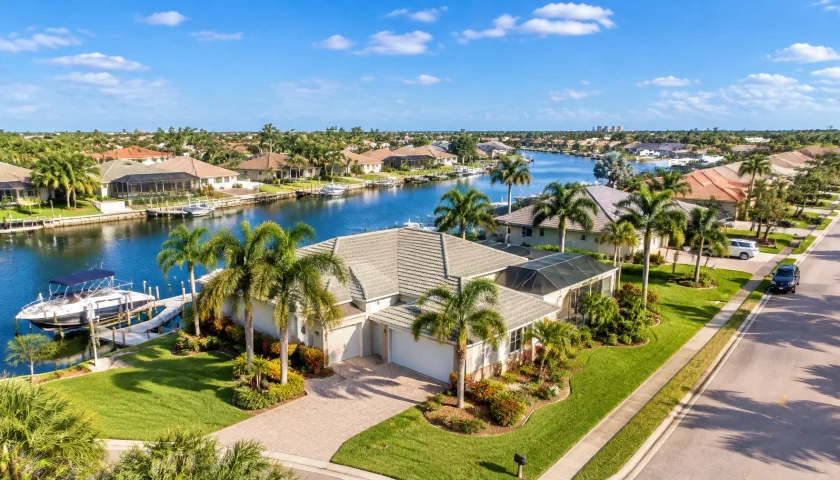
For buyers, Cape Coral remains one of the most varied markets in the region. A budget that may purchase an inland home, townhouse, or newer construction property can look very different when applied to a freshwater canal home or a direct Gulf-access property.
For sellers, pricing accuracy is increasingly important. The market is tighter, but buyers are still carefully comparing condition, insurance costs, flood exposure, seawall age, roof age, and renovation quality. A home that is clean, well-presented, and priced against current comparable sales can stand out. A property priced from outdated 2021 or 2022 expectations may sit despite reduced inventory.
If you are comparing Cape Coral real estate agents or searching for experienced realtors Cape Coral, look for professionals who can explain differences between neighborhoods, canal systems, bridge restrictions, flood zones, and insurance requirements, not just provide a list of recent sales.
Fort Myers: value remains a defining feature
Fort Myers posted an August median sale price near $345,000 and approximately 5.2 months of supply. That makes Fort Myers one of the more accessible major markets in Southwest Florida, although the numbers vary considerably between established neighborhoods, condominiums, gated communities, new construction, and waterfront areas.
The latest Fort Myers real estate trends point to a market with less available inventory than last year and improving buyer activity, but not a return to bidding-war conditions across the board. Buyers may have room to negotiate on homes that have been listed longer, while well-priced properties in desirable locations can still attract attention quickly.
Fort Myers also faces growing competition from new construction. Kingston, east of Estero along the Corkscrew Road corridor, is moving toward the market with model homes under construction and an October 17 grand opening planned. The larger master plan calls for as many as 10,000 residences, approximately 700,000 square feet of commercial space, and thousands of acres of preserved land. Builders include Lennar, Pulte Homes, and Neal Communities, with Esplanade at Kingston by Taylor Morrison.
That is important for resale sellers. New construction can offer buyers incentives, warranties, modern floor plans, and energy-efficient features. Resale homes may need to compete through location, mature landscaping, established amenities, upgrades, and a realistic price.
Waterfront homes: “Gulf access” needs verification
Southwest Florida waterfront property is not one single category. Buyers should distinguish among:
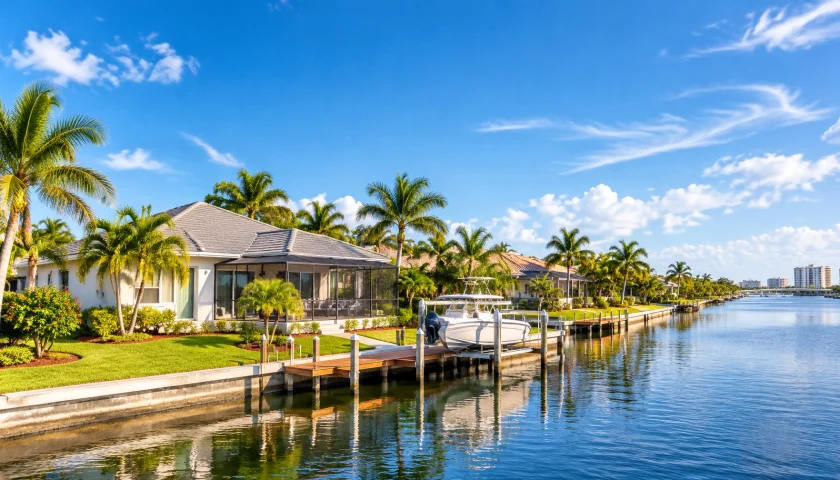
- Freshwater canal homes – Often more affordable and attractive for views, kayaking, fishing, and outdoor living, but they may not provide a boat route to the Gulf.
- Bridge-restricted Gulf-access homes – These connect to saltwater routes but may limit boat size or travel depending on bridge clearance, tide, and route.
- Direct Gulf-access homes – These generally offer the most convenient boating access, but they also tend to carry higher purchase prices, insurance considerations, seawall costs, and maintenance obligations.

The phrase “gulf access” needs verification. Before making an offer on any waterfront property, confirm:
- Bridge clearance along the complete route
- Canal depth and navigability at low tide
- Seawall condition and remaining useful life
- Dock, lift, and boating permits
- Navigational restrictions and maintenance responsibilities
- Flood zone and insurance requirements
For buyers searching for SWFL waterfront homes, a waterfront inspection and title, permit, and access review can be just as important as the general home inspection.
Mortgage rates and the real monthly payment
Freddie Mac’s weekly survey showed the average 30-year fixed mortgage rate at approximately 6.76% on September 10, up from 6.71% the previous week. The 15-year fixed rate averaged about 6.09%.
On a $350,000 30-year loan, principal and interest is roughly $2,272 per month at 6.76%: about $60 more per month than at 6.50%, before property taxes, homeowners insurance, flood insurance, HOA fees, and mortgage insurance.
That difference is a useful reminder: buyers should shop by total monthly payment, not only by purchase price or interest rate. A lower-priced home with expensive insurance, a high HOA fee, or major seawall work may cost more each month than a slightly higher-priced home with more predictable expenses.
Insurance and property-tax issues to watch
Citizens policy assumption activity involving Manatee, Mangrove, One Alliance, and Slide was scheduled for September 15. Homeowners receiving a Citizens policy packet should carefully compare the private-market offers, coverage, deductibles, exclusions, and renewal terms.
Under current rules, an offer that is no more than 20% above the estimated Citizens renewal premium can make a policyholder ineligible to remain with Citizens. Eligible homeowners must respond by the deadline stated in their packet.
For buyers, the practical advice is simple: get an insurance quote before making an offer. Insurance availability and cost can affect both financing and affordability.
Florida property-tax reform is also headed to the November ballot. The proposal would increase the non-school homestead tax exemption to $250,000. Polling indicates strong voter support, but local governments and first responder associations have raised concerns about reduced revenue and potential effects on services.
If passed, the measure could reduce taxable value for qualifying primary residences and lower ownership costs. However, it is a proposal, not a certainty, and buyers should not include a potential tax reduction in their budget until the measure is approved and implemented.
Development and long-term local impact
Cape Coral’s Community Redevelopment Agency approved a tax-increment rebate of up to $45.7 million for the proposed Bimini East redevelopment on September 9. The roughly $500 million mixed-use concept could include as many as 900 residential units, hotels, medical and general office space, retail, public gathering areas, and a marina.
Bimini East represents possible long-term upside for Cape Coral’s commercial, residential, and waterfront activity, but it remains an early-stage project. Its benefits will depend on completed development, generated tax revenue, infrastructure, timing, and market demand.
What this means for buyers, sellers, and investors
Buyers: Focus on total monthly cost, obtain insurance information early, and compare homes by condition and location, not just price. Pending activity is increasing, but negotiation opportunities remain for properties with longer market times.
Sellers: Reduced inventory is helpful, but it does not replace accurate pricing. Prepare for competition from new construction and make your home easy to insure, inspect, and finance.
Investors: Study rental demand, insurance, taxes, HOA restrictions, flood exposure, and maintenance costs. Strong tourism and job growth are supportive, but consumer sentiment and financing costs still matter.

Data disclaimer
Figures in this update are approximate and may vary by source, reporting period, property type, and geography. Regional and city statistics are based primarily on FGCMLS-related analysis and FGCU reporting. Median prices, inventory, months of supply, and pending activity can differ depending on whether the data includes single-family homes, condominiums, townhomes, new construction, or all residential property types.
Bottom line
Southwest Florida real estate is becoming more balanced, but it is not moving uniformly. Inventory is down, single-family sales and pending contracts are improving, and prices are modestly higher across the region. Still, mortgage rates, insurance, taxes, and new construction are shaping decisions as much as the list price.
Cape Coral offers varied waterfront and canal opportunities, Fort Myers continues to provide relative value, and surrounding communities are adding new competition and long-term growth potential. The best strategy is hyper-local analysis supported by a realistic total-cost budget.
Explore current homes through the SWFL property search, or contact RE/MAX Realty Team. With more than 100 agents, two office locations, and deep Southwest Florida expertise, our team can help you evaluate the market and move forward with confidence.