Uncategorized
Daily market read for Sunday, September 13, 2026
Today’s Southwest Florida market conversation is less about broad headlines and more about the costs and characteristics that determine whether a specific property makes sense.
For buyers, insurance availability and waterfront access can change the monthly budget and long-term value of a home. For sellers, accurate pricing and clear property details are increasingly important. For investors, declining rents mean that conservative underwriting is essential.
Here is the latest hyper-local read for Cape Coral and Fort Myers.
Florida’s insurance market is showing signs of stabilization
Florida’s property insurance market remains an important part of every real estate decision, but conditions are improving compared with the uncertainty of recent years.
More than 17 private insurance carriers have re-entered or newly entered the Florida market, giving homeowners and buyers more options than they had during the tightest part of the insurance crisis. The Florida Office of Insurance Regulation has reported continued growth in the number of companies writing residential property policies.
Citizens Property Insurance has also approved an average rate reduction of approximately 8.7% for many policyholders in 2026. The exact change depends on the policy type, location, coverage, and individual risk profile, but the broader direction is positive.
You can review updates from the Florida Office of Insurance Regulation and Citizens’ rate information through Citizens Property Insurance.
Older roofs still require extra attention
A more stable insurance market does not mean every home is equally easy to insure.
Older homes, particularly those with aging roofs, may still face more detailed underwriting questions, inspection requirements, coverage limitations, or higher premiums. Buyers should not assume that a property is insurable simply because it is currently occupied or has an existing policy.
Before making an offer, ask for:
- The roof’s installation date and permitting records
- Recent four-point or roof inspections
- Wind mitigation documentation
- Information about prior claims
- Current insurance declarations, when available
- Estimates for replacement cost and wind coverage
Carriers are increasingly willing to consider older roofs when their condition and construction can be documented. However, roof age remains a major factor in both insurability and negotiations.
Wind mitigation inspections can deliver meaningful savings
A wind mitigation inspection is often one of the most cost-effective steps a Florida homeowner can take to reduce insurance costs. The inspection documents features such as:
- Roof shape and construction
- Roof-to-wall connections
- Roof deck attachment
- Secondary water resistance
- Hurricane-resistant windows and doors
- Shutters and garage-door protection
Depending on the home and carrier, qualifying features may generate significant credits on the wind portion of the policy. Buyers should ask whether a current inspection is available, while sellers may benefit from completing one before listing.
A relatively modest inspection cost can make a home easier to evaluate, improve buyer confidence, and potentially reduce the total insurance premium.

Cape Coral waterfront pricing depends on the access tier
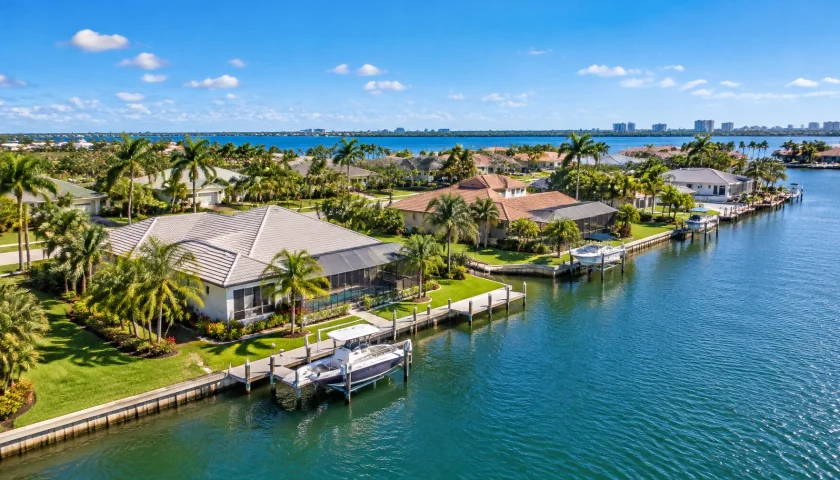
Cape Coral waterfront properties are not one uniform category. A freshwater canal, a Gulf-access canal with bridges, and direct Gulf access can attract different buyers and command very different prices.
Based on July–August 2026 market data, approximate median prices are:
| Waterfront category | Approximate median price |
|---|---|
| Freshwater canal | $465,000 |
| Gulf access with bridges | $615,000 |
| Direct Gulf access, no bridges | $692,500 |
These figures help explain why a simple “waterfront” label is not enough when comparing Cape Coral homes.
Freshwater canal homes
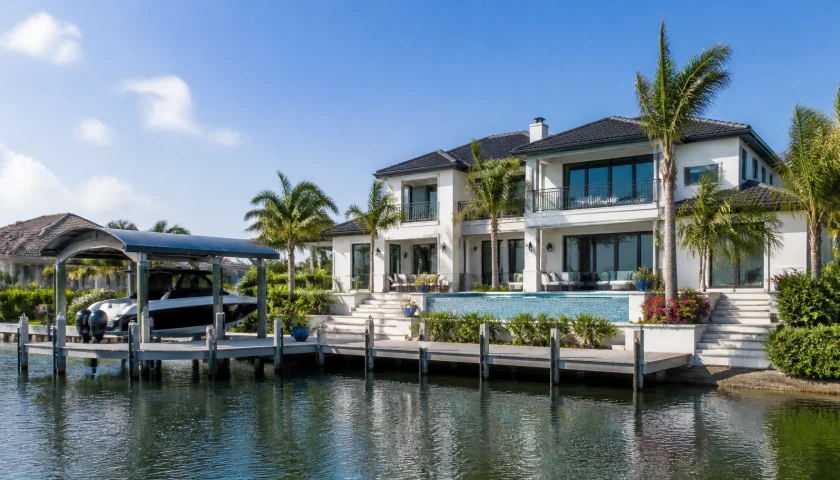
Freshwater canal properties often appeal to buyers who want a water view, private dock, kayaking, fishing, or a larger outdoor setting without paying the full premium for Gulf access.
The key questions are usability and condition. Buyers should confirm the canal’s width and depth, the condition of the seawall, dock, and boat lift, and whether the waterway connects to other canals or recreational areas.
Freshwater access may offer excellent lifestyle value, but it should not be priced like a direct Gulf-access property.
Gulf access with bridges
Gulf-access homes with bridges can provide a boating lifestyle while remaining more affordable than direct-access properties. However, the route to open water may be affected by bridge clearance, tides, canal conditions, and the size of the buyer’s boat.
During due diligence, buyers should ask:
- How many bridges are on the route to open water?
- What are the bridge clearances?
- Is the route navigable at typical tide levels?
- How long is the trip to the river or Gulf?
- Are there locks, restrictions, or maintenance concerns?
The answers can affect both enjoyment and resale appeal.
Direct Gulf access
Direct Gulf-access properties, particularly those with no bridges between the home and open water, generally command the highest waterfront premium. They may be especially attractive to boaters who want faster access and fewer route limitations.
That premium should still be evaluated against the full ownership picture. Seawalls, docks, boat lifts, electrical systems, flood exposure, storm damage history, and insurance costs can materially affect the value of a waterfront property.
Cape Coral waterfront inventory is down year over year, with approximately 4.9 months of supply in this segment. That is roughly balanced rather than extremely tight. Well-priced, move-in-ready homes can sell efficiently, while properties with aging marine infrastructure or unrealistic list prices may give buyers meaningful negotiating leverage.

Overall inventory still gives buyers room to negotiate
Cape Coral’s overall market has approximately 7 to 8 months of supply, which favors buyers. The waterfront segment is tighter than the broader citywide market, but buyers still have options and time to compare condition, access, insurance, and price.
Current citywide benchmarks remain approximately:
- Cape Coral: $349,900 median sale price and about 99 days on market
- Fort Myers: $325,000 median sale price and about 100 days on market
These are broad figures. A renovated home with a newer roof, manageable insurance, and a desirable location may perform very differently from an outdated property with deferred maintenance.
For buyers, longer marketing periods create opportunities to negotiate repairs, credits, price adjustments, or favorable terms. For sellers, the message is straightforward: accurate pricing and preparation matter more than simply testing the highest possible list price.
Lee County investors should underwrite conservatively
Lee County rents have declined, making it more important for investors to use realistic income assumptions. A property that appeared attractive when rents were rising may produce a very different return today.
Investors should stress-test each purchase using:
- Conservative market rent
- Vacancy and turnover
- Property management
- Insurance increases
- Property taxes
- Repairs and maintenance
- HOA or condominium fees
- Flood coverage, when applicable
- Financing costs
- Future capital expenditures
For a Cape Coral waterfront rental, that analysis should also include seawall, dock, lift, pool, and exterior maintenance. For a Fort Myers condominium, association reserves, master insurance, assessments, rental rules, and building condition deserve close review.
The best investment is not necessarily the property with the lowest purchase price. It is the property whose income, expenses, tenant demand, and resale prospects remain reasonable under conservative assumptions.

Practical guidance for today’s market
For buyers
Get an insurance estimate before making an offer, especially for older homes, waterfront properties, and homes with aging roofs. Verify the exact type of water access rather than relying on listing language. Review seawalls, docks, lifts, flood exposure, and permitting during due diligence.
For sellers
Gather roof records, wind mitigation reports, permits, insurance information, and marine-infrastructure documentation before listing. Price the property against comparable homes with similar access and condition. Clear information can reduce buyer uncertainty and help prevent renegotiation later.
For investors
Use current rents rather than optimistic projections. Include vacancy, insurance, maintenance, management, and capital expenses in the first version of your analysis: not as an afterthought. If the deal only works with perfect occupancy or aggressive rent growth, it may not be sufficiently durable.
Search Southwest Florida properties with local guidance
RE/MAX Realty Team serves buyers, sellers, renters, and investors throughout Cape Coral, Fort Myers, Sanibel, Fort Myers Beach, and surrounding communities.
Summary and takeaway
The September 13, 2026 market is being shaped by property-level details.
Florida’s insurance landscape is stabilizing, with more private carriers returning, an approximately 8.7% Citizens rate reduction, and increased attention to wind mitigation. Older roofs still require careful review, but documented condition and storm-resistant features can improve a home’s insurance profile.
In Cape Coral, waterfront value depends heavily on access: approximately $465,000 for freshwater canal homes, $615,000 for Gulf access with bridges, and $692,500 for direct Gulf access. Inventory is tighter in the waterfront category, but buyers retain leverage when marine infrastructure is aging or pricing is unrealistic.
Across Cape Coral and Fort Myers, longer marketing periods give buyers room to compare and negotiate. Investors should remain cautious because Lee County rents have declined.
The best real estate decisions today come from evaluating the complete ownership picture: price, insurance, condition, access, monthly costs, and long-term usability.
Data disclaimer: All figures in this article are approximate and may vary by source, property type, geographic boundary, and reporting period. Cape Coral waterfront figures reflect July–August 2026 market data, while citywide prices, days on market, inventory, insurance conditions, and rent trends reflect the latest available information as of September 13, 2026. This article is for general informational purposes only and is not financial, legal, tax, insurance, or investment advice. Consult qualified professionals before making a real estate decision.