

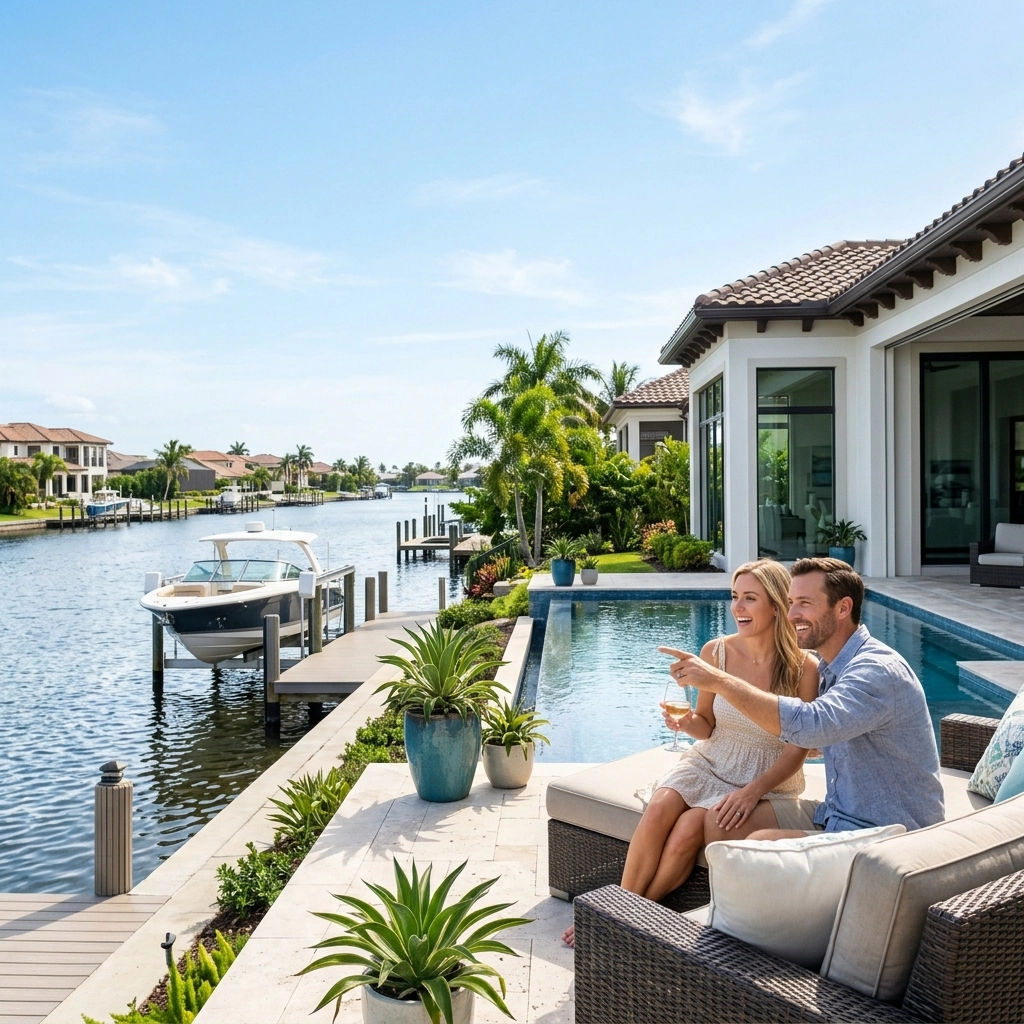
Hey there! I’m Yoselyn Hollow, Broker/Owner here at RE/MAX Realty Team. If you’ve been scrolling through Zillow dreaming of a life where your backyard is a liquid highway to the Gulf of Mexico, you aren’t alone. Southwest Florida: specifically Cape Coral and Fort Myers: is a boater’s paradise.
But buying a waterfront home here isn’t like buying a standard suburban house. There are nuances, hidden costs, and "local secrets" that can make or break your investment (and your sanity). Whether you’re looking for gated communities in Cape Coral Florida or a hidden gem in Fort Myers, here are 20 things you need to know before you sign on the dotted line.
1. Not All "Waterfront" is Created Equal
In SWFL, you’ll hear two main terms: Direct Access and Indirect Access. Direct access means there are no bridges between your dock and the Gulf. Indirect access means you’ll have to navigate under one or more bridges. If you have a sailboat or a large sport-fishing boat with a high tuna tower, you must have direct access.
2. The Bridge "Gotcha"
Think your boat will fit under that bridge? Don’t guess. Bridge heights in Cape Coral vary significantly. Some are as low as 8 or 9 feet at high tide. Local realtors in Cape Coral will tell you that a boat that fits at 10:00 AM might be stuck on the wrong side of the bridge by 2:00 PM. Always check the clearance and the tide charts.
3. The "15-Minute Rule"
When you look at a map, a house might look like it’s right on the water. But if it’s at the end of a long, winding canal system, it could take you 45 minutes of "no-wake" idling just to reach open water. Expert cape coral real estate agents always recommend timing the boat ride from the dock to the river or Gulf before buying.
4. Saltwater vs. Freshwater Canals
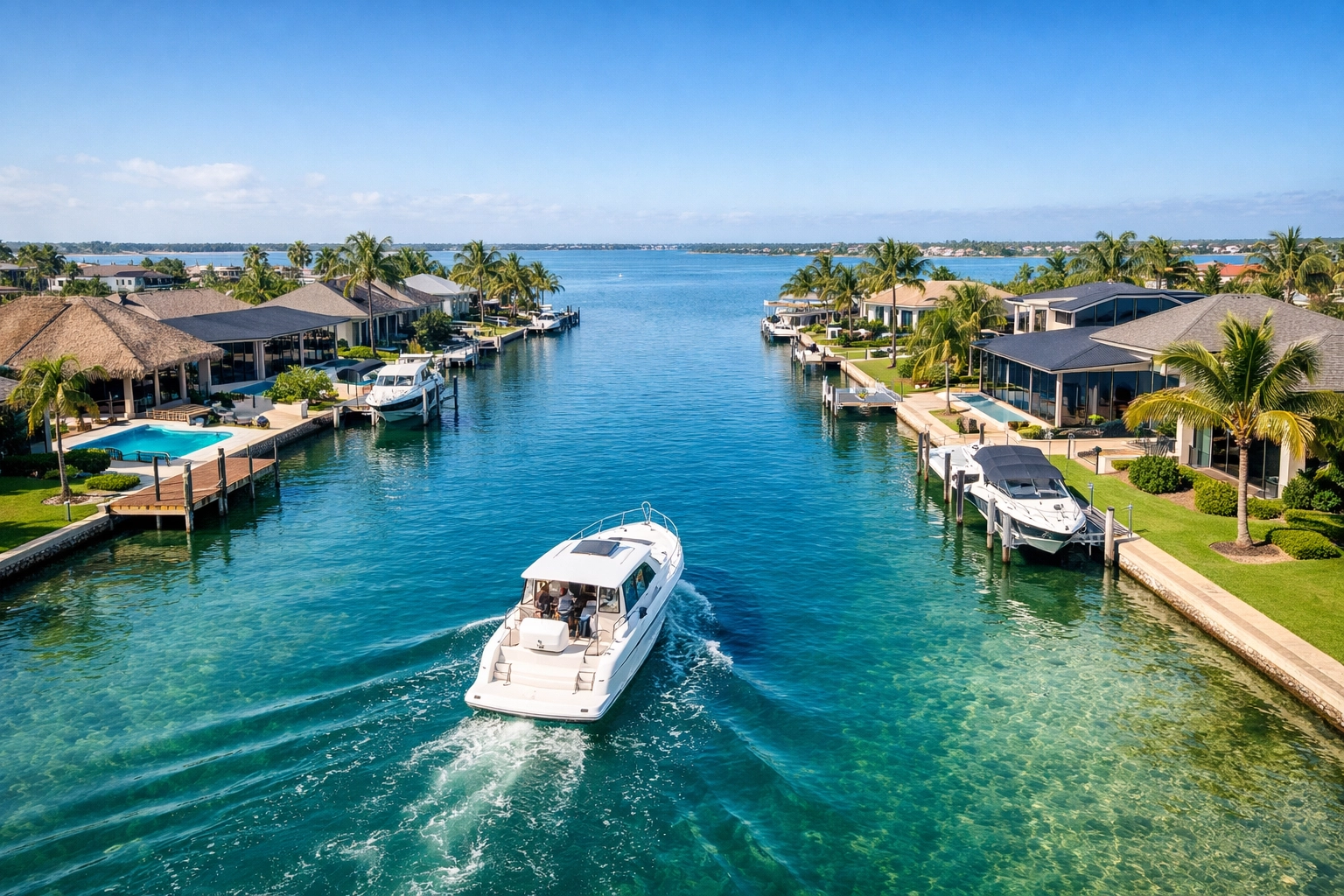
Cape Coral has over 400 miles of canals, but many are freshwater and landlocked. These are great for kayaking, electric boats, and fishing, but you aren’t getting to the Gulf from there. If your dream is the open ocean, make sure you are looking at "Gulf Access" listings.
5. Seawalls are Your Biggest Liability
A seawall is the concrete or vinyl barrier that keeps your backyard from eroding into the canal. A failing seawall is a massive expense: typically costing anywhere from $500 to $1,000+ per linear foot to replace. For a standard 80-foot lot, you’re looking at a $40,000 to $80,000 surprise if you don’t get it inspected.
6. The "Spreader" Canal Concept
Cape Coral has "Spreader" canals (North and South) designed to manage water runoff and protect the mangroves. Living on a spreader canal offers some of the best views in the city because you’re looking across at a permanent nature preserve rather than a neighbor’s backyard.
7. Understanding the Cape Coral Quadrants
Cape Coral is divided into four quadrants: NW, NE, SW, and SE.
- SE/SW: Generally has the quickest access to the river and Gulf.
- NW/NE: Often offers more value (newer homes, larger lots) but can have longer boat run times or more bridge restrictions.
Choosing the right quadrant depends on whether you value a 5-minute boat run or a 2024-built home.
8. Southern Exposure is King
If you want a pool that stays warm and a lanai that gets sun in the winter, you want "Southern Exposure." However, if you love sunsets, you might prefer Western exposure: just be prepared for higher AC bills in the summer as the afternoon sun beats down on your glass sliders.
9. Manatee Zones (The "Slow" Secret)
We love our manatees, but they mean business. Many of our local waterways are designated manatee protection zones, which require "Idle Speed" or "Slow Speed" for large portions of the year. This can turn a quick trip into a long haul. Check the local charts to see if your potential home sits in a permanent manatee zone.
10. HOA Fees in Cape Coral
While much of Cape Coral is non-gated, there are several incredible gated communities in Cape Coral Florida like Sandoval, Cape Royal, or Tarpon Point. HOA fees in Cape Coral vary wildly. Some are $150 a year for a voluntary neighborhood association, while others are $600+ a month for resort-style amenities and security.
11. Assessments: The Hidden Tax
Cape Coral is still expanding its city water and sewer services (the UEP: Utility Expansion Project). If you buy a home in an area that recently got city water/sewer, there might be an "assessment" balance remaining. This can be thousands of dollars. Always ask who is paying the balance at closing!
12. Boat Lifts Aren’t Standard
Just because a house has a dock doesn’t mean it has a lift. And just because it has a lift doesn’t mean it’s rated for your boat. Installing a new 10,000-lb to 15,000-lb boat lift can cost $15,000 to $30,000 depending on the complexity and electrical work needed.
13. The 50% Rule (Renovation Warning)
If you’re buying an older "fixer-upper" on the water, be aware of the FEMA 50% rule. If the home is below the current required flood elevation, you cannot spend more than 50% of the structure's value on improvements unless you bring the entire house up to current flood codes (which often means raising the house).
14. Depth Matters (The "Draft" Secret)
Not all canals are deep. If you have a large boat with a deep draft, you need to ensure the canal is dredged deep enough. Some canals can get quite shallow during low tide in the winter months.
15. Marine Inspections are a Must
Your standard home inspector looks at the roof and the AC. They usually don't look at the seawall, the dock pilings (for wood-boring organisms), or the boat lift motors. Hire a specialized marine inspector. It’s the best $500 you’ll ever spend.
16. Wildlife Neighbors
Waterfront living means you’re sharing space. It’s common to see dolphins and manatees right behind your house. However, it also means you’ll deal with "no-see-ums" (tiny biting gnats) and the occasional alligator in freshwater canals. A good pool screen (lanai) is your best friend.
17. Hidden Canal Neighborhoods
While Cape Coral is the "Canal Capital," don't overlook Fort Myers. Neighborhoods like Boardwalk Caper or the areas off Iona Road offer incredible gulf access with a completely different "vibe" than the Cape.
18. New Construction Upgrades
If you’re building new, remember that the base price rarely includes the dock and lift. Most builders treat the waterfront "finishing" as an add-on. If you're looking at new builds, visit swflhomestoday.com to see what's currently available and what's included.
19. Rental Potential
Waterfront homes in SWFL are massive hits on the short-term rental market (Airbnb/VRBO). If you aren’t living here full-time, a waterfront home in a prime location can practically pay for itself. But check the local city ordinances first, as rules are always evolving.
20. Work with a Local Specialist
The most important secret? Don't use a "generalist" agent. You need realtors in Cape Coral who actually boat these waters. They know which canals are "skinny," which bridges are low, and which neighborhoods have the best community feel.

Summary & Takeaway
Buying a waterfront home in Southwest Florida is a dream come true for many, but it requires a bit more homework than your average real estate transaction. From checking bridge heights and seawall integrity to understanding the nuances of the Cape Coral quadrants and HOA fees, being "in the know" can save you tens of thousands of dollars.
Your Waterfront Checklist:
- Determine if you need Direct or Indirect access.
- Get a marine inspection for the seawall and dock.
- Check for any remaining utility assessments.
- Time the boat run to open water.
- Work with a team that knows the local waters inside and out.
If you’re ready to start your search or just want to chat about the best canal for your specific boat, give us a shout at RE/MAX Realty Team. We live and breathe the SWFL lifestyle, and we’d love to help you find your slice of paradise. Check out the latest listings at swflhomestoday.com and let's get you on the water!