

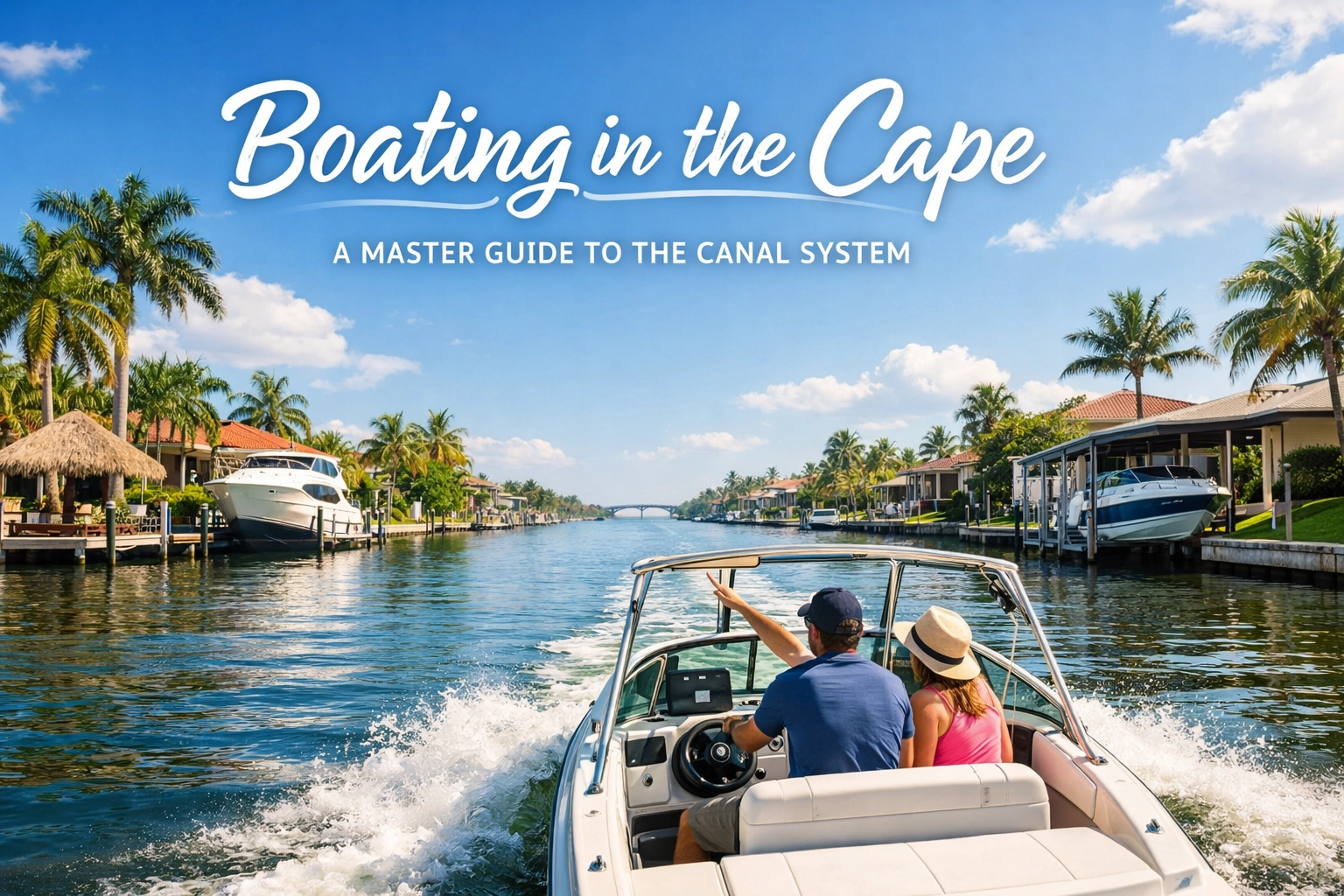
If you’ve spent more than five minutes looking at a map of Cape Coral, you probably noticed something wild: it looks more like a spiderweb of blue than a traditional city layout. We aren’t called the "Waterfront Wonderland" for nothing. With over 400 miles of canals, Cape Coral actually has more navigable waterways than Venice, Italy.
But here’s the thing: while all that water is beautiful, it can be a bit overwhelming if you’re planning to buy a home here and put a boat in the backyard. Not all canals are created equal. Some lead to the Gulf of Mexico in ten minutes; others might take you an hour just to reach open water, and some don’t lead to the ocean at all.
Whether you’re a seasoned captain or someone who just wants to cruise to a waterfront restaurant for fish tacos, this is your master guide to navigating the Cape Coral canal system.
The Big Divide: Gulf Access vs. Freshwater Canals
This is the very first thing you need to understand. In Cape Coral, we categorize every waterfront property into one of two buckets: Gulf Access or Freshwater.
Gulf Access Canals
These are the "holy grail" for most boaters. If a canal is Gulf Access, it means there is a path (eventually) to the Caloosahatchee River and out into the Gulf of Mexico. From there, the world is your oyster: or at least Sanibel, Captiva, and Fort Myers Beach are.
Within the Gulf Access category, you’ll hear two more terms:
- Sailboat Access (Direct Access): This means there are zero bridges between your dock and the open water. If you have a deep-draft sailboat or a massive sportfishing boat with a high tuna tower, this is the only place you can live.
- Indirect Access: You can still get to the Gulf, but you’ll have to pass under one or more bridges. This is fine for most powerboats, pontoon boats, and center consoles, but you have to know your "air draft" (how tall your boat is from the waterline).
Freshwater Canals
Freshwater canals are landlocked. You can’t get to the Gulf from here. These canals connect to various lakes (like Lake Kennedy or Alhambra Lake). While you won’t be taking your boat to Cabbage Key for lunch, freshwater canals are amazing for jet skiing, kayaking, and some of the best bass fishing in Florida. Plus, these homes are generally much more affordable than Gulf Access properties.
Navigating the "Bridge Problem"
If you aren't in a "Sailboat Access" area, bridges are going to be a part of your life. Most of the bridges in Cape Coral have a vertical clearance of about 9 to 11 feet at mean high tide.
Why does this matter? Because Florida tides aren't huge, but they are significant enough to ruin your day. If your boat needs 10 feet of clearance and the tide is high, you might be stuck waiting in the canal for a few hours before you can squeeze under and get home.
When you’re looking at homes on swflhomestoday.com, always check the bridge heights along your route. A "great deal" on a waterfront home might be less awesome if you realize your favorite boat won’t fit under the bridge to get there.
The Chiquita Lock: What You Need to Know
If you are looking at property in the Southwest Cape (specifically south of Cape Coral Parkway and west of Chiquita Blvd), you’re going to encounter the Chiquita Lock.
The lock is designed to manage water levels and prevent salt water from intruding too far into the northern canal system. For boaters, it’s a gateway. You pull in, the gates close, the water level adjusts, and you go on your way.
- The Pro: It keeps the water levels consistent in the canals behind it.
- The Con: On a busy Saturday afternoon in July, there can be a "traffic jam" at the lock. You might find yourself waiting 30-45 minutes to get through. It’s a great place to chat with other boaters, but it’s something you have to factor into your travel time.
Note: There has been a lot of legal back-and-forth about removing the Chiquita Lock recently. As of 2026, the situation is still evolving, so stay tuned to local news if you're buying in that specific area.
The "Spreader" Canals
Cape Coral has two massive "Spreader" canals: the North Spreader and the West Spreader. These are long, wide stretches of water that act as a buffer between the residential canals and the protected mangroves.
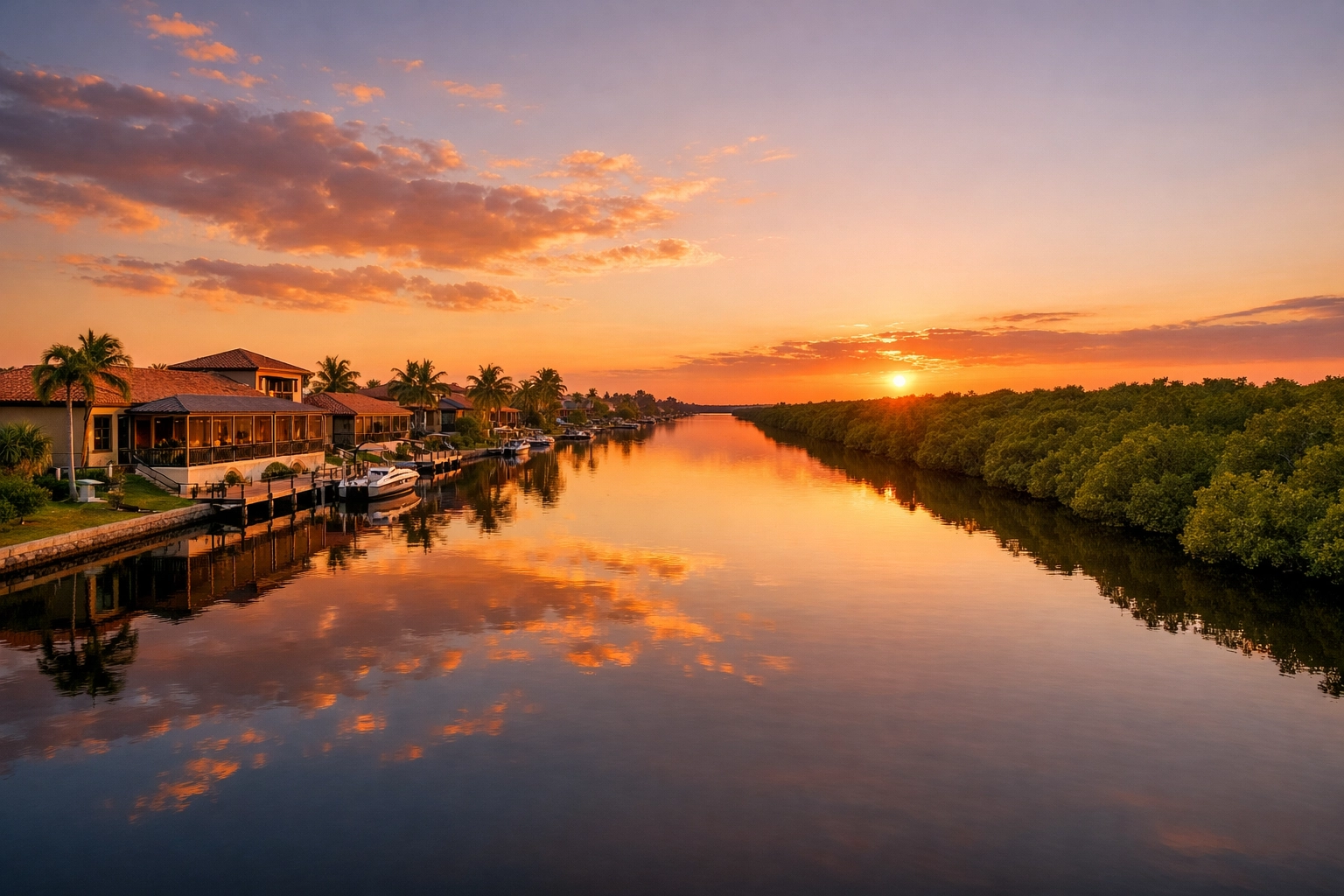
Living on a spreader is a unique experience. You only have neighbors on one side of the canal. On the other side? It’s miles of untouched Florida mangroves. The views are incredible, the sunsets are world-class, and you’ll often see dolphins and manatees right behind your house.
Speed Zones and Manatees
Navigating the Cape isn't just about floor-it-and-go. We share these waters with a lot of wildlife, specifically the West Indian Manatee.
Much of the canal system is a No Wake Zone. This means you need to be moving at a speed that creates no "swell" or "white water" behind your boat. In some areas, these rules are seasonal (winter months when manatees seek warmer water), and in others, they are year-round.
If you live way "up-canal" (meaning deep in the neighborhood), it might take you 30 or 40 minutes of idling at "No Wake" speed before you reach the river where you can finally get on plane. For some people, that 40-minute slow cruise with a cocktail in hand is the best part of the day. For others, it’s a dealbreaker. Always do a "timed run" before you buy a house!
Depth and Maintenance: The "Nitty Gritty"
Most Cape Coral canals are maintained at a depth of about 5 to 7 feet, but this can vary depending on silt buildup and recent dredging.
Boat Lifts
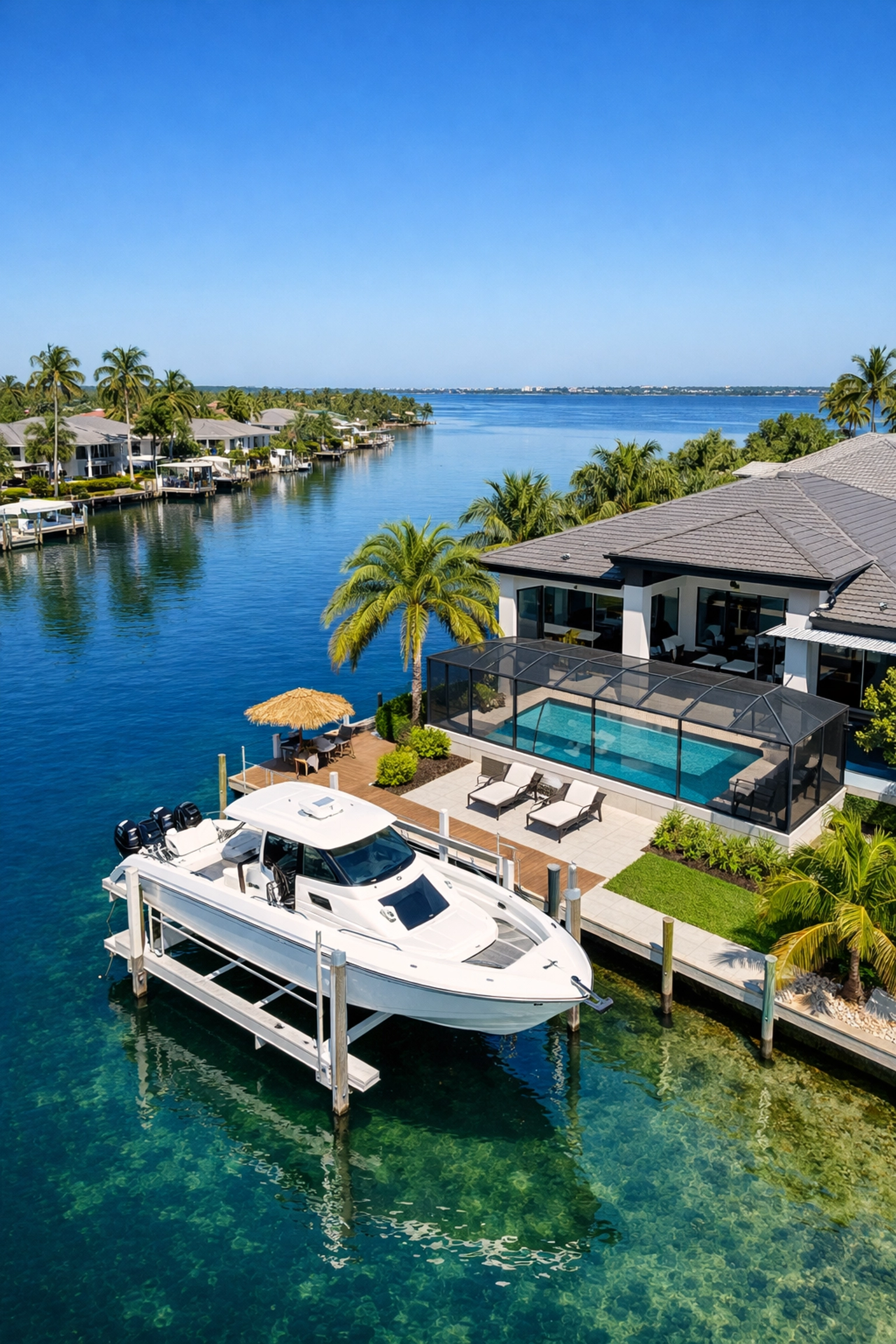
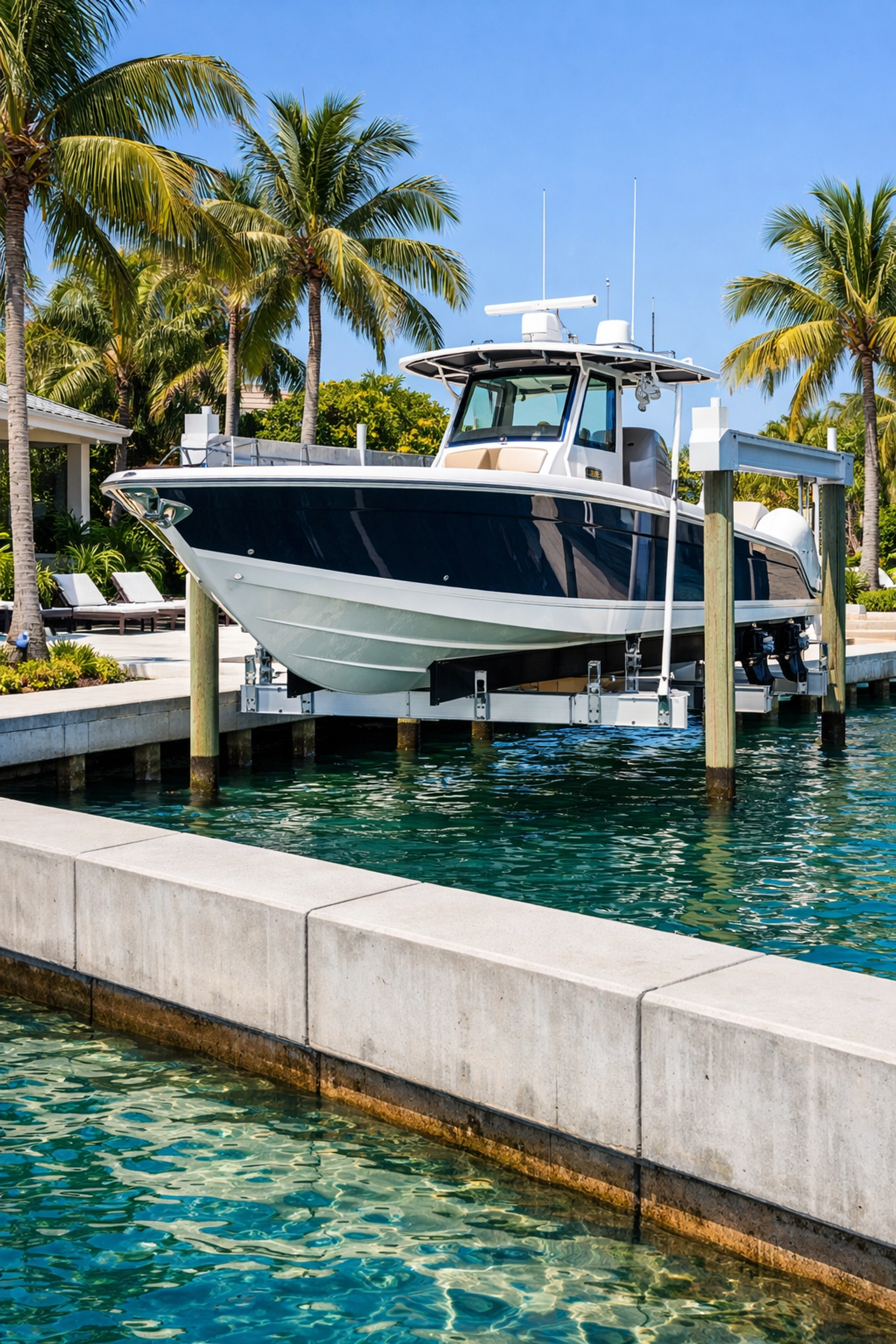
In SWFL, we don’t usually leave boats floating in the water year-round. Barnacles grow fast here, and the saltwater can be harsh. Most waterfront homes come with a boat lift. If you’re buying a home, make sure the lift is rated for the weight of your boat. Moving from a 20-foot bay boat to a 30-foot cruiser usually means you’ll need to upgrade your lift bunks and motors.
Seawalls
The seawall is the concrete barrier between your yard and the water. This is the most important "hidden" cost of waterfront living. A standard seawall can last 30-50 years, but if it starts to crack or lean, it’s an expensive fix. When we take clients to see homes at RE/MAX Realty Team, the seawall is one of the first things we inspect.
Tips for the New Cape Coral Boater
- Get a GPS with Local Charts: The canal system is a maze. It is very easy to get turned around, especially at night. A Garmin or Simrad unit with updated Florida charts is your best friend.
- Learn the Markers: Red, right, returning. When you are coming in from the Gulf toward your house, keep the red markers on your right.
- Watch the Tides: Buy a tide app. Entering a shallow canal at a "negative low tide" is a quick way to find a sandbar.
- Join a Club: The Cape Coral Cruise Club or other local boating groups are fantastic for learning the "secret" spots and making friends who also love the water.
Summary Checklist for Buyers
If you’re browsing waterfront homes on swflhomestoday.com, keep this checklist handy:
- Is it Gulf Access or Freshwater?
- How many bridges are between the house and the river?
- What is the lowest bridge height on the route?
- How long is the "idle time" to reach open water?
- Does the route go through a lock?
- What is the condition of the seawall and the boat lift?
Boating in Cape Coral is a lifestyle like no other. There is nothing quite like hopping on your boat at 5:00 PM on a Tuesday just to catch the sunset or pulling up to a dockside bar for dinner. It takes a little bit of learning to master the canal system, but once you do, you’ll realize why so many of us wouldn't live anywhere else.
If you have questions about specific neighborhoods or want to know which canals are best for your specific boat, give us a shout at RE/MAX Realty Team. We live and breathe the Cape Coral water life!