
RRT Logo
  • HOME
  • ABOUT US
  • PROPERTIES FOR SALE
  • SELL YOUR HOME
  • SEARCH BY LOCATION
    • Cape Coral
    • Fort Myers
    • Fort Myers Beach
    • North Fort Myers
    • Lehigh Acres
    • Sanibel
    • Alva
    • Labelle
    • Estero
    • Matlacha
  • (239) 242-2000
CONTACT US
RRT Logo
RRT Logo
  • HOME
  • ABOUT US
  • PROPERTIES FOR SALE
  • SELL YOUR HOME
  • SEARCH BY LOCATION
    • Cape Coral
    • Fort Myers
    • Fort Myers Beach
    • North Fort Myers
    • Lehigh Acres
    • Sanibel
    • Alva
    • Labelle
    • Estero
    • Matlacha
  • (239) 242-2000
CONTACT US
RRT Logo
  • HOME
  • ABOUT US
  • PROPERTIES FOR SALE
  • SELL YOUR HOME
  • SEARCH BY LOCATION
    • Cape Coral
    • Fort Myers
    • Fort Myers Beach
    • North Fort Myers
    • Lehigh Acres
    • Sanibel
    • Alva
    • Labelle
    • Estero
    • Matlacha
  • (239) 242-2000
CONTACT US
Author: Penny
HomeArticles Posted by Penny
Qwf91Y3VeTx
Uncategorized
November 23, 2026by Penny

Cape Coral Real Estate Agents: 5 Public Records to Check Before You Hire One

Choosing an agent can mean trusting someone with a major financial decision, often before you have much information about how they work. Fortunately, Florida publishes useful licensing and regulatory information, and Lee County provides property records you can check yourself.

This is a practical verification guide, not a substitute for talking with an agent or reviewing an agreement carefully. Most of the checks below rest on records you can pull yourself; one is paperwork you are entitled to read before you sign it. Together they help you confirm basic facts, spot questions worth asking, and make a more informed choice among cape coral real estate agents.

1. Verify the license and review the public complaint record

Start with the Florida Department of Business and Professional Regulation (DBPR) Verify a License search. Search by the agent’s name or license number, then compare the result with the name and brokerage the agent gave you.

Check these details in the DBPR record:

  • Rank or license type: A sales associate works under a broker; a broker holds a different license type. Confirm the person’s role matches how they introduce themselves.
  • Primary status: Look for a current, active status.
  • Expiration date: Florida sales associate and broker licenses renew biennially. DBPR records show the expiration date; depending on when the license was issued, expiration falls on March 31 or September 30.
  • Brokerage or employer: Compare the brokerage shown in the record with the company the agent says they represent. If it does not match, ask the agent and brokerage to clarify before signing.

DBPR’s public records page describes the licensee information it publishes, including rank, primary status, expiration date, and employer information. From the search result, look for the link to public complaints, or use DBPR’s complaint information page.

Read any public complaint information in context. DBPR says complaint and investigation information is confidential until 10 days after a probable-cause determination or until the subject waives confidentiality, whichever comes first. A clean public record therefore does not prove that nothing is pending.

A person checks a generic real estate license lookup interface on a laptop; no personal information is visible

2. Understand what a license, and “REALTOR®”, does and doesn’t tell you

A Florida real estate license is a state credential issued through DBPR and regulated by the Florida Real Estate Commission. It establishes that the person holds the relevant license; it is not a consumer rating or a measure of service quality.

“REALTOR®” is different. It is a trademark for members of the National Association of REALTORS® (NAR), generally joining through a local association. NAR explains its membership and trademark rules. Neither the state license nor REALTOR® membership tells you how someone negotiates, communicates, or handles a transaction. Those are matters to assess through records where available, clear agreements, and direct follow-up.

3. Read the advertising for the brokerage and team details

A website, sign, social profile, or mailer can offer clues about the business behind an agent. Under Florida Administrative Code Rule 61J2-10.025, real estate advertising must include the brokerage firm’s licensed name and be presented so a reasonable person understands they are dealing with a real estate licensee. For internet advertising, the brokerage name must appear adjacent to or immediately above or below the point of contact. If a licensee’s personal name appears, the registered last name must appear too.

Team branding has additional requirements under Rule 61J2-10.026. A team operates under one broker’s supervision, designates a licensee responsible for advertising compliance, and maintains a current written team roster. A team name cannot use certain terms, including “realty,” “real estate,” “properties,” “brokerage,” “company,” “Inc.” or “LLC”: that could suggest a separate brokerage. The team name also cannot appear in larger print than the brokerage name.

If a website, sign, or mailer makes it hard to identify the brokerage, treat that as a compliance question, not just a branding choice. Ask which brokerage holds the listing or agreement and verify that the answer is consistent with the DBPR record.

4. Know who represents whom, and what you’re signing, before a showing

Florida law sets a default relationship. Under Florida Statute 475.278, transaction brokerage is presumed unless a single-agent or no-brokerage relationship is established in writing. A single-agent disclosure must be provided in writing before or at the time of a listing or representation agreement, or before showing property. Whichever happens first. A licensee with no brokerage relationship must also provide written disclosure before showing property.

Separately, NAR’s settlement-related MLS practice changes took effect on August 17, 2024. Under NAR’s consumer guide to written buyer agreements, an MLS participant working with a buyer generally needs a written agreement before the buyer tours a home in person or through a live virtual tour. The requirement does not apply to simply attending an open house, or when the participant is acting only for the seller.

The agreement must state compensation as an objectively ascertainable amount or rate, not an open-ended range; prohibit receiving compensation from any source above the agreed amount; and conspicuously state that broker fees are not set by law and are fully negotiable, as required by the NAR practice changes.

So, being asked to sign something before a showing can be normal. Read the agreement first: check its term, services, compensation, and how it can be changed or ended. The thing to notice is being shown homes without the required paperwork in place, or being asked to agree to terms you have not had a chance to understand.

A generic disclosure document, pen, and house keys on a sunlit table; the page has no readable personal information

5. Test the track record with property records, and know their limits

A testimonial page is selected by the agent. Public property data can help you independently check pieces of a claimed transaction history, but it does not tell the whole story of an agent’s work.

Ask the agent for several recent transactions, including addresses, and use the Lee County Property Appraiser’s property search to check available property and historical sale information. Compare recorded sale dates with the agent’s account. For deeds and other official recorded documents, the Lee County Property Appraiser points users to the Lee County Clerk’s Official Records Search.

Then ask which listings the agent personally handled, how long each was on the market, and whether the asking price changed. Listing history and agent participation may not be fully verifiable from public records; ask for documentation and be clear about what you could not independently confirm. A recorded sale can confirm a property event, but does not by itself establish who represented the buyer or seller or how well the agent performed.

For a specific property you may buy, check permit history and look into open code issues and utility or assessment balances rather than relying on a verbal answer. Start with the relevant local building department or Lee County’s permit and code information and contact the utility provider about account-specific balances or assessments. Records may be held by different agencies, and some details require a direct request or authorization.

Market claims can be checked the same way. The Royal Palm Coast Realtor Association publishes monthly Lee County statistics, broken out by property type. Its October 2026 single-family report shows a median sale price of $369,999, 7,295 active listings and 41 days to contract. If an agent describes the market differently, ask which report and which property type they are citing. Condos and townhouses move on different numbers, and a regional median is not a neighborhood one.

Some things cannot be settled by a database. Response times, who answers when the agent is busy, and coverage while the agent is away are not reliably established by public records. Ask directly, then pay attention to whether the arrangement works in practice.

Quick checklists

If you’re buying:

  • Confirm the agent’s active license, brokerage, and public complaint information.
  • Read the representation and compensation terms before touring.
  • For a property you’re considering, check available sales, permit, code, and utility information.

If you’re selling:

  • Confirm who will be your point of contact and who covers showings or urgent matters.
  • Ask which listings the agent handled and request their history, including price changes.
  • Review the listing agreement and confirm the brokerage name appears in advertising as Florida rules require.

A larger brokerage’s staffing and coverage are among the few service arrangements you can assess by asking specific questions: Who handles what if your agent is unavailable? Which office supports your transaction and which parts of the county does it serve? RE/MAX Realty Team has more than 100 agents and two office locations; ask how that structure would support your particular purchase or sale.

Takeaway

Public records can help confirm a license, identify the brokerage, review disclosed complaints, and check recorded property information. They cannot tell you everything about an agent’s judgment, communication, or negotiating style. Use the records as a starting point, then read the agreements carefully and ask direct questions.

If you’re comparing realtors cape coral or want local guidance on a cape coral market update 2026, Fort Myers real estate trends, or SWFL waterfront homes, RE/MAX Realty Team can help you understand your next steps. Call 239-242-2000 or visit swflhomestoday.com.
Read More
Nn_ltSxd-xk
Uncategorized
November 19, 2026by Penny

Moving to Cape Coral in 2026: The Real Cost of Living, Utilities, and Everyday Practicalities Newcomers Should Know

Cape Coral can look like a straightforward choice: sunny weather, plenty of homes, and canals woven through the city. But day-to-day life here, and the cost of owning a home, depends on more than the listing price. Utility service, insurance, how you get around, and even how school assignments work can vary from one address to the next.

Here’s a practical 2026 overview to help you budget and decide what to ask before choosing a home.

Start with the home price, and look beyond it

A useful planning range for a typical Cape Coral home in 2026 is roughly $370,000 to $400,000. Recent market figures differ depending on the time period and type of home counted, so treat that range as a starting point, not a promise about what a particular property should cost. Waterfront access, age, condition, location, and lot characteristics all influence price. For a snapshot of changing prices and activity, see this Cape Coral market update.

The monthly mortgage payment is only one part of the budget. Homeowners insurance, possible flood insurance, property taxes, utility assessments, HOA fees, and ongoing maintenance can make two similarly priced homes cost very different amounts to own.

Ask for the property’s current tax bill and review every assessment listed on it. Cape Coral may also charge recurring municipal assessments, including for fire services, solid waste, and stormwater. Those costs are separate from ordinary property taxes and can vary by parcel.

Insurance deserves an address-specific quote

Homeowners insurance and flood insurance are not the same thing. A standard homeowners policy does not cover flood damage, and a home’s flood zone, elevation, construction, age, roof, claims history, and coverage limits can affect what insurers will charge.

Don’t assume a home in a lower-risk zone has no flood exposure. The City notes that properties outside Special Flood Hazard Areas can still flood. Cape Coral participates in FEMA’s Community Rating System, which provides qualifying properties with a flood-insurance discount; the city reports discounts of 25% in A, AE, and V zones and 10% in X zones.

Before your inspection period ends, get written insurance quotes for the specific address. You can check a property’s flood information through the city’s Forerunner flood-risk portal and review the city’s flood protection resources. A flood-zone lookup is a helpful first step, not a substitute for an insurance quote.

Utilities: check what the home actually has

Cape Coral homes may have city water, wastewater, and irrigation service, or rely on well and septic systems, particularly in some northern areas. Don’t assume that a home is connected to city utilities because it has a Cape Coral address. Ask what services are currently available, what the home uses today, and whether any connection work or future charges apply.

Utility bills also depend on usage and the rates in effect. The city’s rate schedule effective October 1, 2026 lists monthly base charges for standard residential water and wastewater meters, as well as usage charges. Irrigation is billed separately. Check the current city utility rates, then request recent bills from the seller to understand the home’s real pattern of use.

Understand UEP assessments before making an offer

Some areas are part of a Utilities Extension Project, or UEP, that brings city water, sewer, and irrigation infrastructure to properties. The cost can be a major ownership expense. For example, the city lists North 1 West land-area assessments totaling $26,617 per 10,000-square-foot equivalent parcel. A separate capital facility expansion charge for a typical 5/8-inch meter receiving all three utilities is $6,750. Actual amounts depend on the parcel and project details.

These charges may be paid or financed in different ways, so ask for the parcel’s current UEP status: what has been paid, what balance remains, and whether the amount appears as an installment on the tax bill. The city’s North 1 West assessment page explains how that project’s charges are calculated. Don’t rely on a general neighborhood estimate; confirm the numbers for the exact property.

A Cape Coral home beside a canal, with the seawall visible along the water

Waterfront comes in different flavors, and with upkeep

A canal view does not automatically mean boat access to the Gulf. Cape Coral has Gulf-access canals as well as freshwater canals. Gulf-access homes may offer boating routes toward open water, while freshwater canals are not connected to the Gulf in the same way. That distinction can affect price, insurance considerations, and how you plan to use the property.

Waterfront buyers should also take the seawall seriously. Its condition can become a substantial future expense, even when the house itself appears move-in ready. Have a qualified professional evaluate the seawall and ask about its age, repairs, permits, and any available documentation. Include seawall condition in your decision, not just the canal view.

Expect a car-centered routine

Cape Coral is spread out, and most residents rely on a car for errands, appointments, school drop-offs, and commuting. There isn’t a compact, walkable downtown core that serves the whole city. The Southeast offers comparatively convenient access to the bridges and central activities; the Southwest includes gated and higher-end communities; and the North has many newer homes, along with areas where city utility service may differ.

Those are broad orientation points, not strict neighborhood rules. Drive the routes you expect to use at the times you’ll use them. Check the distance to work, groceries, medical care, schools, and the bridges, not just the number of miles on a map.

A car traveling along a palm-lined suburban road in Cape Coral

School placement is not simply based on your street

Families moving from places with neighborhood-based school assignments should know that Lee County uses an open-enrollment and school-choice process for many students. Families submit ranked choices, and applications are processed through an assignment lottery. For the 2026–27 cycle, the district said applications were processed together, so applying on the first day did not give a family a better chance than applying on the final day.

Programs may have additional requirements, and transportation availability can vary. Before buying, confirm the current zone, application rules, deadlines, program requirements, and transportation options directly with Lee County Schools. A home’s location should not be treated as a guarantee of a seat at a particular school.

A simple pre-offer checklist

Before committing to a Cape Coral property, gather these details for the specific address:

  • Current property tax bill and listed assessments
  • UEP balance, payment schedule, and payoff amount, if applicable
  • Recent utility bills and confirmation of water, sewer, and irrigation service
  • Written homeowners and flood-insurance quotes
  • Flood-zone and elevation information
  • Seawall inspection or repair records for waterfront homes
  • School-choice zone, application requirements, and transportation details
  • Typical driving routes to work, services, and the bridges

For newcomers, the headline price is only the beginning of the cost-of-living picture. A home around the city’s broad median range can have very different carrying costs depending on its insurance, utilities, UEP status, water access, and maintenance needs. Reviewing those details early makes it easier to compare homes on their full cost, not just their asking price.

RE/MAX Realty Team serves Cape Coral and the wider Southwest Florida area with more than 100 agents and deep local experience. If you’re comparing homes or need help understanding the practical differences between areas, connect with our team or search available properties. We’ve been the region’s #1 producing brokerage for more than 14 years, and our local knowledge can help you ask better questions before you move.

The takeaway: Budget for the address, not just the house. Confirm insurance, utilities, assessments, school options, and maintenance needs before you buy, and you’ll have a much clearer picture of everyday life in Cape Coral.

Read More
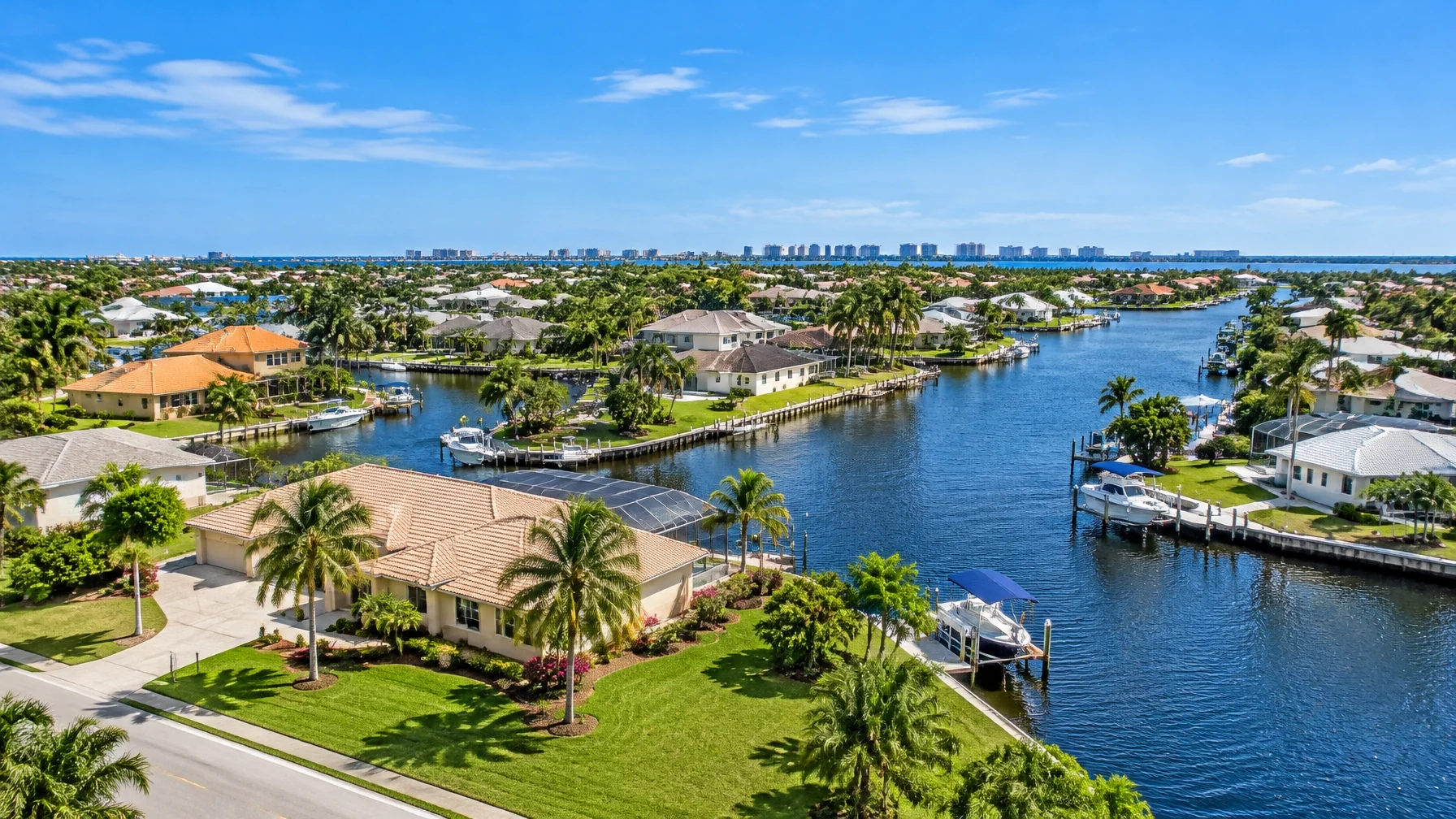
cape-coral-luxury-lanai-pool-waterfront
Uncategorized
November 18, 2026by Penny

Where to Live in Cape Coral: A Neighborhood-by-Neighborhood Guide to Tarpon Point, Cape Harbour, the Yacht Club Area, and Pelican

Cape Coral’s waterfront lifestyle comes in more than one form. You might picture a condo near a lively marina, a quiet canal-side home with a boat lift, or an established neighborhood close to a public beach and park. Tarpon Point, Cape Harbour, the Yacht Club area, and Pelican each offer a different version of that Southwest Florida experience.

The right fit depends on more than a map pin. Water access, home type, association fees, flood considerations, and the way you want to spend your days can all shape the decision. Here’s a neighborhood-by-neighborhood look at what sets these four areas apart.

At a glance: September 2026 asking-price guideposts

Approximate median asking-price guideposts for this comparison are:

Area Approximate median asking price General feel
Tarpon Point $937,000 Upscale marina and waterfront living
Cape Harbour $675,000 Marina-centered, social, and amenity-rich
Yacht Club area $739,000 Established southeast Cape with an evolving public waterfront
Pelican (ZIP 33914) $530,000 Broad selection, from inland homes to canal-front properties

These are asking-price benchmarks, not sale prices or guarantees of what a particular home is worth. Figures vary with the homes included, the date of the snapshot, and how a source defines a neighborhood. As one example, Realtor.com’s market snapshot showed a different Cape Harbour median and Pelican figure, while Tarpon Point’s neighborhood-level median was unavailable. Use the guideposts to start a conversation, then compare homes with similar water access, age, condition, and association costs.

Tarpon Point: an upscale marina setting

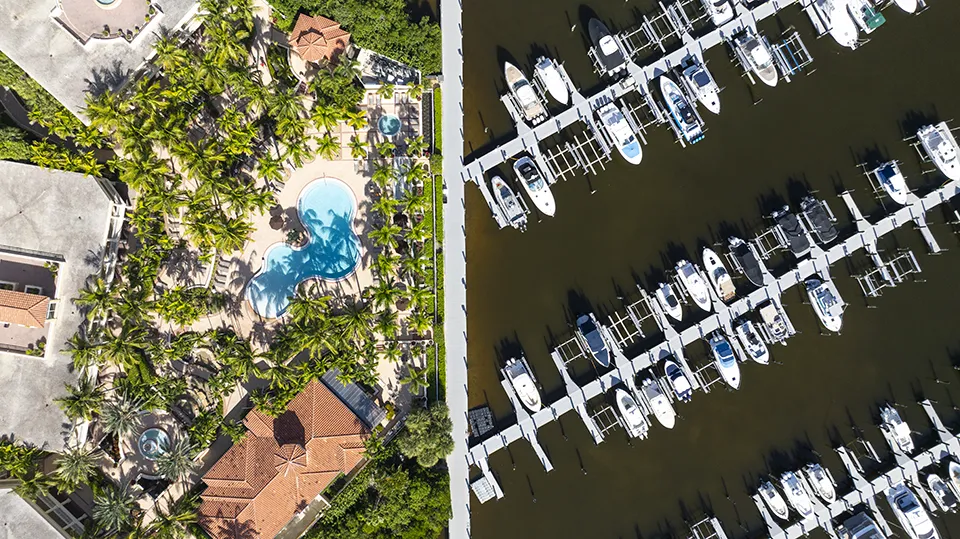
Marina-area amenities in Tarpon Point, Cape Coral

Tarpon Point is a strong match for buyers who want a polished waterfront environment with a marina at the center of the lifestyle. The area includes condominiums, villas, and larger estate homes, so the experience can range from relatively low-maintenance living to a private home with its own outdoor space.

Its location near the Caloosahatchee River makes boating a major attraction. Depending on the property and route, boaters can head toward San Carlos Bay and the Gulf. Check the actual water route for any home you consider: “waterfront” alone doesn’t tell you whether the canal is saltwater, how long the trip to open water takes, or whether bridges and other restrictions affect your boat.

The trade-off for an amenity-rich setting can be more complex association costs. A property may have a master association as well as a building- or neighborhood-level association. Review the current budgets, rules, rental restrictions, insurance, and any planned assessments for the specific unit or home, not just the community name.

Best fit: Buyers looking for a higher-end marina atmosphere, waterfront views, and a range of condo and home options.

Cape Harbour: a marina community with a social feel

Cape Harbour amenities and waterfront setting in Cape Coral

Cape Harbour is built around a marina and a lively, walkable hub of dining, shopping, and community amenities. It has a mix of condominiums, coach homes, and single-family properties, making it worth exploring whether you want a lock-and-leave home or more private space.

For buyers who enjoy having restaurants and marina activity nearby, that concentration of amenities is a real draw. It can also mean a different cost structure than a stand-alone house elsewhere in Cape Coral. Association fees and responsibilities can vary by building and section, so check what dues cover and whether additional associations apply. The fees are part of the monthly housing budget, alongside insurance, taxes, and maintenance.

Waterfront properties here can offer boating access, but access and trip details vary by home. Confirm the canal type, route, bridge clearances, dock condition, and any applicable rules before treating a property as a fit for your boating plans.

Best fit: Buyers who value a community atmosphere, marina access, and nearby dining and amenities, and who are comfortable reviewing association costs carefully.

Yacht Club area: established character and a changing public waterfront

The Yacht Club area offers an established southeast Cape Coral setting, with a mix of older homes, renovated properties, and newer construction. Its public waterfront is a key part of the neighborhood story, but the Yacht Club Community Park is still being redeveloped after Hurricane Ian.

The City of Cape Coral describes the project as phased. In its Yacht Club Community Park updates, the City says Council directed staff to proceed with Phase 2, including the fuel system, civil site work, and beach amenities. The City also notes that funding for the complete project has not yet been determined. For buyers, the important point is to view the redevelopment as an active project, not a finished amenity with a guaranteed timeline.

City rendering of the Yacht Club Community Park redevelopment

A property near the park may appeal to someone who wants an established location and is comfortable with the uncertainty and disruption that can come with phased construction. Homes in this area vary widely, so pay close attention to the condition of the structure, documented post-storm repairs, and the specific waterfront access.

Best fit: Buyers drawn to the area’s established character and public waterfront, who are willing to follow project updates and do careful property-level due diligence.

Pelican: flexibility and a wide range of home styles

Pelican is a large southwest Cape Coral area rather than a single, uniform subdivision. That’s part of its appeal: buyers can find inland homes, freshwater canal properties, and gulf-access homes, with a range of ages and price points. It is also close to both Cape Harbour and Tarpon Point, as well as local shopping and dining.

Because the area is so varied, compare properties street by street. A freshwater canal can offer a water view and a place to enjoy the outdoors, but it does not mean direct saltwater boating. A gulf-access canal may offer a route toward the river and Gulf, but the route, bridge clearance, seawall, dock, and distance to open water all matter. These differences can have a major impact on value.

Pelican may appeal to buyers who want more choice than a tightly defined marina community offers. Some homes may have fewer association obligations, but don’t assume every property is free of HOA or condo fees. Verify the rules and costs for the exact address.

Best fit: Buyers who want to weigh a broad mix of home types and water-access options, and are prepared to compare the details rather than rely on a neighborhood label.

What drives the price of a Cape Coral waterfront home?

“Waterfront” can mean very different things here. A freshwater canal, a gulf-access canal, a river-facing location, and a marina-front condo each offer a different experience and level of boating convenience.

Saltwater access can command a premium, but not all gulf-access properties are equal. The practical value depends on the navigable route, bridge clearance, canal and seawall condition, dock and lift, and time to open water. A freshwater canal may cost less and suit buyers who want the view or a peaceful backyard setting without boating to the Gulf. Compare the property’s actual features, not just the listing description.

Association fees also affect the overall cost. Marina-oriented communities may have multiple layers of association governance, while detached homes elsewhere may have fewer shared expenses. Read the documents, review budgets and rules, and ask about pending or recent assessments before making a decision.

Flood zones and property due diligence

Flood risk is property-specific, not something to infer from a neighborhood name or a canal view. Before making an offer, look up the address in the City’s flood protection resources and its Forerunner flood information portal. The City’s resources include flood-zone and elevation information, and explain that lower mapped risk does not mean no flood risk.

For a waterfront property, ask about the elevation certificate, prior flood claims, insurance options, drainage history, and permitted post-storm repairs. Arrange appropriate inspections of the seawall, dock, and boat lift. A lender or insurer can help clarify coverage requirements and costs for the specific property.

Find the neighborhood that fits your life

Start with the lifestyle you want: Tarpon Point for an upscale marina setting, Cape Harbour for a lively amenity-centered community, the Yacht Club area for established surroundings near a changing public waterfront, or Pelican for a broad range of homes and water-access options.

Then compare individual properties on the details that affect both daily life and long-term cost: canal type, boating route, association rules and fees, flood information, insurance, and waterfront infrastructure. Asking-price medians offer a starting point, but the right comparison is between homes with similar features.

RE/MAX Realty Team serves buyers across Cape Coral and Southwest Florida with more than 100 agents and deep local knowledge. Explore available Southwest Florida properties or connect with the team to discuss your search.

Takeaway: The best Cape Coral neighborhood is the one that matches how you want to live, and the best home is the one whose water access, costs, condition, and risks you’ve verified address by address.

Read More
featured-image-6cc26547
Uncategorized
November 17, 2026by Penny

Which Fort Myers Neighborhood Fits You? A Side-by-Side Look at Gateway, Whiskey Creek, McGregor, and Gulf Harbour

Choosing between Fort Myers neighborhoods is about more than comparing list prices. You’re also choosing a pace of life, a style of home, a location, and potentially a very different set of ongoing costs.

Gateway, Whiskey Creek, McGregor, and Gulf Harbour each offer a distinct version of Fort Myers living. One is a newer, master-planned community near the airport; another is an established central neighborhood with mature landscaping; a third brings historic character and a celebrated palm-lined corridor; and the fourth is a gated waterfront community with a marina and golf.

The market backdrop gives buyers room to compare carefully. As of October 2026, Fort Myers’ citywide median listing price is about $325,000, homes are taking roughly 91 days to sell, and higher inventory is contributing to a cooler, buyer-favored market. Neighborhood figures below are useful starting points, not direct apples-to-apples comparisons: home types and data sources vary, and a listing median is not the same as an estimated typical home value.

Neighborhood Approximate price point Best known for Key cost consideration
Gateway About $391,000 typical value Newer homes, planned amenities, airport access CDD assessment and possible HOA dues
Whiskey Creek About $319,000 typical value Mature landscaping, central location, larger lots Flood and insurance costs vary by address
McGregor corridor About $320,000 typical value Royal palms, character homes, location Wide variation in home condition, HOA and flood exposure
Gulf Harbour About $527,000 median listing price Gated luxury, boating and golf Layered association, insurance and optional club costs

Gateway: Planned, newer, and close to the airport

East of I-75 near Southwest Florida International Airport, Gateway is a strong match for buyers who want a planned-community feel, newer construction, and neighborhood amenities. The area is large and varied, with different home styles and price points, so it’s worth comparing individual subdivisions rather than relying on a single community-wide number.

The trade-off is recurring cost. Gateway properties may have HOA dues, and homes within the community’s CDD area also carry a Community Development District assessment. One recent community guide reports an adopted FY2027 single-family CDD assessment of $1,296.61 per year; verify the current tax bill and the assessment applicable to any specific property. CDD assessments are separate from any HOA dues.

Gateway is inland, and research on the community describes much of Gateway proper as FEMA Zone X, a designation generally associated with lower mapped flood risk. That does not mean flooding is impossible or that insurance is unnecessary. Confirm the current flood determination, insurance options, and property history for the exact address before making an offer. For a closer look at the community’s features and costs, see this Gateway neighborhood guide.

Gateway entrance sign framed by palm trees

Gateway may fit you if: you value a planned setting, newer housing options, and convenient airport access, and you’re comfortable budgeting for a CDD and any applicable association fees.

Whiskey Creek: Established, central, and leafy

Whiskey Creek offers a different feel: mature trees and landscaping, an established central location, and many homes on generously sized lots. Some areas have deed restrictions, but the neighborhood is often non-gated. Home styles and ages vary, giving buyers a range of choices, and making the condition of an individual home important to assess.

The approximate typical value of $319,000 puts Whiskey Creek near the citywide median, though renovated homes, pools, waterfront locations, and attached properties can fall well above or below that level. The neighborhood’s established character may appeal if you prefer mature surroundings over a newer master-planned look.

The critical budget question is flood exposure. Whiskey Creek contains both FEMA Zones AE and X, and the classification can change by lot. That can affect whether flood insurance is required by a lender and what coverage may cost. Don’t assume that a nearby home’s flood status applies to the property you’re considering. Check the address using the FEMA Map Service Center, then obtain a property-specific insurance quote. The Whiskey Creek community guide offers additional neighborhood details.

Homes and landscaping in the Whiskey Creek area of Fort Myers

Whiskey Creek may fit you if: you want an established neighborhood, central access, and the possibility of a larger lot, while taking time to confirm flood zone, insurance, and any rules that apply to the specific home.

McGregor corridor: Historic character and a location with range

McGregor is less a single subdivision than a broad corridor with a distinctive identity. Royal palms, mature landscaping, and character homes give it a sense of place that newer communities may not replicate. Many properties are on larger lots, and the corridor puts residents within reach of downtown Fort Myers and destinations farther south.

The approximate typical value of $320,000 is best treated as a broad point of reference. McGregor covers a wide range of properties, from modest older homes on established streets to large riverfront estates. Even homes with similar addresses can differ substantially in age, updates, lot, water access, and ongoing expenses.

That variety is part of McGregor’s appeal, but it also makes address-level research especially important. Some homes may be outside high-risk flood areas, while riverfront or canal-adjacent properties can have greater exposure. HOA requirements also depend on the property and its specific community; many corridor homes are not part of a large gated association. A recent McGregor Boulevard market discussion illustrates why a corridor-wide median can conceal very different homes and costs.

McGregor may fit you if: character, mature surroundings, and a central location matter more to you than uniform construction or a bundled community amenity package.

Gulf Harbour: Gated waterfront living at the luxury end

Gulf Harbour is the most distinctly luxury-oriented choice in this comparison. The gated community includes a marina, golf, and a range of housing, from condos and villas to larger single-family homes. Buyers interested in boating may find the combination particularly compelling. For those searching for SWFL waterfront homes, Gulf Harbour offers a variety of river-oriented options, though water access and views differ by property.

The approximate $527,000 median listing price places Gulf Harbour above the other neighborhoods here, but even that figure hides a broad range of property types and price points. Compare like with like: a condo, a golf-view home, and a riverfront property are not interchangeable simply because they share a community name.

Plan for layered costs. A property may have a master association fee as well as a neighborhood or building association fee. Club membership is a separate consideration; buying in the community does not necessarily require joining the club. Flood zones also vary across Gulf Harbour, particularly between waterfront and more inland properties. Confirm association documents, reserves, insurance costs, and any optional membership expenses before you commit. This Gulf Harbour community overview provides more background.

Gulf Harbour may fit you if: gated living, boating, golf, and waterfront amenities are priorities, and your budget accounts for the full cost of ownership, not just the purchase price.

How to compare the four before you choose

In a cooling market, buyers may have more time to weigh options and ask detailed questions. Use that time to compare the total monthly cost, not just the price on the listing. For each property you’re considering, request:

  • A current tax bill, including any CDD assessment.
  • The HOA or condo association’s fee schedule, budget, rules, and information about possible assessments.
  • A property-specific flood determination and insurance quote.
  • Details on roof age, major systems, and any recent repairs.
  • Recent comparable sales for the same home type and area.

A local agent can also help distinguish one subdivision or street from the next. Neighborhood-level knowledge matters when a few blocks can change the home style, association structure, or flood profile. RE/MAX Realty Team brings more than 100 agents and a long-standing track record as the region’s #1 producing brokerage for 14+ years. You can search available Southwest Florida properties or connect with the team.

The takeaway

There isn’t one winner among Gateway, Whiskey Creek, McGregor, and Gulf Harbour. Gateway offers planned amenities and newer options, with a CDD to factor in. Whiskey Creek brings mature surroundings and central convenience, with flood risk that can vary by lot. McGregor offers character and location, but its homes and costs span a wide range. Gulf Harbour stands out for gated waterfront and recreational amenities, alongside higher potential ownership costs.

The best match is the one that fits your everyday priorities and your full budget. Treat neighborhood values as a first filter, then compare specific properties (especially their flood zone, insurance quote, and association expenses) before deciding which Fort Myers neighborhood feels like home.

Read More
KNgQnip2IMa
Uncategorized
November 16, 2026by Penny

Buying on the Barrier Islands in 2026: What Sanibel and Fort Myers Beach Buyers Should Know Before They Fall in Love With a Listing

DRAFT

The beach view is easy to fall for. The harder part is understanding what comes with the property: its flood exposure, rebuild history, insurance costs, condo finances and rules about renting it out.

For buyers considering Sanibel or Fort Myers Beach, those details matter as much as the address. After Hurricane Ian in 2022 and Hurricanes Helene and Milton in 2024, rebuilding and insurance questions are part of the buying process, not fine print to save for later. At the same time, the barrier-island market includes a wide range of homes and condos, and headline prices can obscure big differences between property types and locations.

Here’s what to investigate before a listing becomes the one you can’t stop thinking about.

Start with the right price comparison

The numbers depend on what’s being counted. A May 2026 Fort Myers Beach report put the single-family median at $917,500, while another report for the same month showed $1,055,000. Differences in MLS boundaries, timing and how properties are classified can produce very different snapshots. On the other hand, a report covering the three months ending August 2026 put the median sale price across property types at about $505,000. That broader figure includes condos and townhomes as well as houses, so it is not a like-for-like comparison with a single-family median.

Sanibel also merits its own comparison. The Sanibel & Captiva Islands Association of REALTORS® reported a May 2026 median sale price of $1.295 million for Sanibel homes and $745,000 for condos. Those are island-specific figures, but they still describe varied properties, not a price promise for a particular neighborhood or building.

For context, September 2026 regional medians were about $359,999 for single-family homes and $219,999 for condos and townhomes. That regional baseline is not an apples-to-apples estimate for an island property. Its value is in showing how far a barrier-island purchase may sit from the broader area’s price range.

Sanibel waterfront condo listings can vary substantially by building, view, condition and rental rules. Some bay-view options may appear in the high-$400,000s to $600,000s, but that range should not be treated as a reliable Sanibel bayfront median. Check recent sales and active listings for the exact complex. And remember: asking prices are not closed-sale prices.

The takeaway for buyers tracking Fort Myers real estate trends is to compare similar properties, over the same timeframe, in the same location. Use medians as context, not as an offer strategy.

Low-rise tropical condominium community on Sanibel with palms, beach, and Gulf water

Choose your island setting, and your daily routine

Sanibel’s East End is near the Causeway and lighthouse, with a number of Gulf-front condominium communities. Mid-Island has major beachfront resorts and convenient access to central island services. The West End is farther toward Blind Pass and includes quieter Gulf-front communities.

These are useful starting points, but each building and parcel has its own story. Two condos with similar views may differ in repair status, monthly fees, assessments, insurance, rental rules and financial reserves. Ask for the association’s governing documents, current budget, meeting minutes, insurance information and details about completed or planned work.

Fort Myers Beach has a different feel, shaped by Estero Island’s layout and its mix of homes and condos. Think about access, parking, proximity to the water and how the property’s location fits your intended use, whether that’s a year-round home, a seasonal getaway or an investment.

When you tour, look beyond the view. Note how the home is elevated, what the surrounding area looks like, and whether visible repairs or construction may affect your plans. For SWFL waterfront homes, setting and exposure are part of the ownership picture.

Treat permits, elevation and flood status as essential homework

The islands have strict flood-elevation and resilience requirements. A home that looks newly finished may still warrant a careful review of its permitting and inspection record. Ask the appropriate city department for the property’s permit history, including open permits and final inspections. Request an elevation certificate if available, and confirm the flood zone with the city and your insurance professional.

Sanibel’s flood-information page explains the city’s mapped flood zones and review process. The Town of Fort Myers Beach provides building services and permitting information, including information about floodplain requirements and the FEMA 50% rule, which can affect substantial repairs or improvements.

A local real estate listing’s flood-zone label is a starting point, not a final determination. The Town’s flood information explains that some properties may span different zones and that the more restrictive zone applies. Ask for the documents, then confirm what they mean for the particular structure.

Elevated coastal home with a clipboard of permit and elevation documents in the foreground

Get real insurance quotes, and ask about Fort Myers Beach’s Class 5 rating

Fort Myers Beach earned a Class 5 rating through FEMA’s Community Rating System. For eligible National Flood Insurance Program policies, that classification corresponds to a 25% premium reduction. It is a community-level discount on qualifying NFIP flood insurance, not a discount on every type of homeowners, wind or private flood coverage. FEMA explains how CRS classifications and discounts work; WGCU’s report on the town’s rating notes that qualifying policies could receive the discount starting in April 2026.

Ask an insurance agent to quote the specific property and explain whether it qualifies. A community rating doesn’t determine an individual building’s full premium, and the age, elevation, construction, coverage and policy details matter. Request flood, wind and homeowners quotes early enough to factor them into your decision.

Check rental rules before counting on rental income

Sanibel’s rental rules can be a surprise to buyers who assume a beach property can be rented nightly or on weekends. Generally, dwelling units that are not permitted or compliant resort housing may not be rented for periods shorter than four consecutive weeks. The city code makes clear that resort-housing treatment is different, so the rule is not identical for every property.

Start with Sanibel’s dwelling rental regulations, then verify the parcel’s zoning and rental-license status with the city. For a condo, also review the declaration, association rules and any restrictions that apply to that specific unit. An HOA may impose tighter limits, but it cannot make a rental legal if city rules prohibit it.

If rental income is part of your plan, make the rules a condition of your research, not an assumption based on a listing description.

Look closely at condo condition and finances

For any condo purchase, review the association’s financial and maintenance picture alongside the unit itself. Request available inspection and reserve documents, current budgets, insurance information, meeting minutes, details of completed repairs and information about pending or anticipated special assessments. Ask whether building work is finished, permitted and signed off.

This step matters on both islands, where repair schedules, insurance questions and construction availability can affect how quickly communities resolve issues. Inventory can be constrained when repairs or insurance decisions take time, so a listing’s current appearance may not tell the whole story.

The same principle applies to a single-family home: get an inspection suited to the property’s age and construction, and follow up on signs of previous water intrusion or repairs.

Make your offer after the paper trail, and the numbers, check out

Before committing, line up the records and professionals who can help you evaluate the specific property. That may include a home inspector, insurance agent, local permitting staff, lender and, if you’re considering a condo, association documents and a qualified professional’s review of them.

RE/MAX Realty Team’s 100+ agents serve Sanibel and Fort Myers Beach, bringing local knowledge and transaction experience to island searches. Our brokerage has been the region’s #1 producing brokerage for more than 14 years. Explore available Southwest Florida properties or contact the team for help comparing your options.

The takeaway

Sanibel and Fort Myers Beach offer the appeal buyers come for, but a smart purchase involves more than falling in love with the view. Compare similar sales, confirm rental rules, review permits and flood information, check condo finances, and get property-specific insurance quotes. In a market where location, elevation and building condition can change the ownership picture, careful due diligence is how you make sure the listing you love also makes sense.

Market figures reflect reports published in 2026 and may use different time periods, property categories or MLS boundaries. Confirm current data and property-specific requirements with the relevant professionals and local authorities.

Read More
DU_qb0cHE7S
Uncategorized
November 13, 2026by Penny

The Cape Coral & Fort Myers Rental Market Has Split in Two: What Investors Should Know Before Buying a Rental in 2026

A Fort Myers apartment vacancy rate near 20% sounds like a warning to every rental investor. But it doesn’t tell the whole story. The market for large apartment buildings and the market for single-family rentals are behaving differently, and treating them as one market can lead to the wrong investment decision.

For investors considering Cape Coral and Fort Myers this fall, that distinction matters. Apartment owners are competing amid heavy new supply and rent concessions. Professionally managed single-family rentals, by contrast, showed a much lower vacancy rate in HUD’s latest detailed housing analysis. That doesn’t guarantee a house will rent quickly or profitably, but it does mean the apartment glut shouldn’t be applied indiscriminately to every property type.

Why the rental market has split in two

The apartment supply story is stark. A September 2026 WINK News report, citing CoStar and local rental analysis, put Fort Myers apartment vacancy at 19.3%, with asking rents down about 3.6% year over year. The report also noted landlords were offering incentives, such as free rent, to attract tenants. A local business report described Southwest Florida apartment vacancies as reaching a 17-year high.

That pressure follows a wave of apartment construction. In its Q1 2026 Fort Myers multifamily report, Lee & Associates reported 17.2% vacancy and asking rents down roughly 9% year over year. Other reports use different market boundaries and methods, so figures vary. The direction is consistent: large multifamily properties are working through substantial new supply.

Single-family rentals tell a different, though not entirely rosy, story. HUD’s Cape Coral–Fort Myers housing analysis found a 3.1% vacancy rate among professionally managed single-family rental homes in April 2025. That figure is older and covers only a small share of all single-family rentals; it is not a current vacancy estimate for every house in the area. Still, it illustrates why apartment vacancy numbers alone don’t describe the entire rental market.

Modern Fort Myers apartment buildings illustrating the surge in multifamily supply

Rent estimates also differ by source and property type. HUD put average apartment rent at $1,861 in the first quarter of 2025, while Zillow’s rental manager showed a Cape Coral average around $1,913 in October 2026. One market tracker estimated a broader area rental average of about $1,712 per month, with rent growth near 3.7% and a median cap rate around 4.1%. These aren’t interchangeable measurements: they cover different geographies, dates, rental types, and methodologies. And reported averages may not capture concessions that lower what a tenant effectively pays.

For anyone looking up a cape coral market update 2026, the practical point is that asking rents, effective rents, and vacancy rates can vary considerably depending on what is being measured. Underwrite the specific property and its competition, not a single headline number.

1. Long-term single-family landlords: focus on the rent a house can actually command

A house may face less direct competition from the apartment boom, but it still competes with apartments and other homes for tenants. As WINK’s reporting illustrates, some private owners have had to reduce asking rents to compete with apartment deals. That is a reminder to base projections on current comparable homes, not last year’s rent or a broad regional average.

Purchase price matters just as much. Mid-2026 estimates put Cape Coral single-family median sale prices roughly in the $390,000–$400,000 range. The broader Lee County market’s September single-family median was about $359,999, but those figures cover different geographies and time periods; they shouldn’t be treated as direct comparisons. A local area-wide rental tracker’s estimated median cap rate near 4.1% is a useful point of reference, not a promise of what a particular home will earn.

Build a conservative model that includes vacancy, repairs, property management, taxes, utilities where applicable, and insurance. Stress-test it with a lower rent and a longer leasing period. If the deal only works with full occupancy and optimistic rent growth, it may not be resilient enough for today’s conditions.

Well-maintained Cape Coral single-family home suited to long-term rental use

2. Cape Coral vacation-rental operators: strong gross revenue isn’t net income

Cape Coral’s canal homes can appeal to seasonal visitors, and the snowbird season begins ramping up in October. Buying now can put an investor in position to serve that seasonal demand, but it also means entering a market where supply is strong and future bookings are not guaranteed.

Local operator write-ups report gross annual revenue of roughly $60,000–$120,000 for well-run Gulf-access canal homes. That’s a broad, operator-reported range, not a forecast for any specific home. Some investor guides cite 5%–8% cap-rate targets for well-managed operations; results depend heavily on purchase price, bookings, management, expenses, and how the calculation is defined. A softer apartment market can also give renters and seasonal guests more alternatives, so conservative occupancy and nightly-rate assumptions are prudent.

Compliance and operating costs belong in the model from the start:

  • Cape Coral requires annual rental registration. The city lists a $350 annual fee for short-term rentals of six months or less; its registration page also outlines renewal and other requirements.
  • Vacation rentals need the applicable Florida DBPR license and local business tax receipts. Confirm current requirements and fees with the Florida DBPR and the relevant city and county offices.
  • Florida sales tax, the Lee County surtax, and the county tourist-development tax can total roughly 11.5% on short stays. Verify tax treatment and collection obligations with the Florida Department of Revenue. This is generally collected from guests and remitted; it still affects the total price a guest sees.
  • Local investor guides commonly estimate combined homeowners, wind, and flood insurance on canal homes at roughly $8,000–$14,000 a year. Treat this as a planning range only: obtain property-specific insurance quotes before making an offer.

For SWFL waterfront homes, don’t stop at the view or the booking estimate. Verify seawall and dock condition, bridge clearance for the intended boat, flood exposure, and any HOA or POA rental restrictions. Each can affect either expenses, guest appeal, or the ability to operate as planned.

Waterfront property inspection focused on dock and seawall condition

3. Condo buyers: a lower purchase price may come with higher carrying costs

Mid-2026 Cape Coral estimates placed condo prices around $197,000–$205,000, with one measure showing an 8.9% year-over-year decline. Those lower entry prices can look appealing, but they don’t automatically mean a better rental investment.

HUD’s analysis described rising condo ownership costs, including association fees and assessments connected to inspections, reserves, and repairs. An investor needs to understand the property’s current monthly dues, any pending or recently approved assessments, and the association’s rental rules and approval process. Also compare realistic condo rents with the full carrying cost, not just the mortgage and purchase price. In a market where renters have more options, projecting premium rent simply because a unit is renovated or well located may not hold up.

A practical due-diligence checklist

Before you commit to a rental purchase in Cape Coral or Fort Myers:

  1. Get insurance quotes early. Request property-specific homeowners, wind, and flood quotes before your offer becomes difficult to change.
  2. Get rental rules in writing. Confirm HOA or POA restrictions, minimum lease terms, approval processes, and any limits on short-term rentals.
  3. Use realistic rent and vacancy assumptions. Compare current properties of the same type and account for concessions, seasonality, and time between tenants.
  4. For vacation rentals, verify licensing and taxes. Confirm city registration, DBPR licensing, local business tax receipt requirements, and tourist-tax collection responsibilities.
  5. Inspect waterfront features. Have the seawall, dock, and relevant boat access or bridge clearance evaluated; budget for repairs where needed.
  6. Run the full operating model. Include management, maintenance, utilities, taxes, insurance, and reserves, not just gross rent and loan payments.

Fall brings seasonal demand back, but that doesn’t erase the area’s broader rental softness. It can cut both ways: tenants and guests may have more choices, while buyers may have more room to negotiate on purchase terms. The best opportunity is not simply the property with the biggest rent estimate; it’s the one that still makes sense under cautious assumptions.

RE/MAX Realty Team has more than 100 agents, deep local knowledge, and a track record as the region’s #1 producing brokerage for 14+ years. Our team can help investors compare specific properties and run the numbers against local conditions. Learn more at RE/MAX Realty Team.

Takeaway: Fort Myers apartment vacancy near 20% does not mean every rental segment is equally oversupplied. Single-family homes, vacation rentals, and condos each have distinct demand drivers, expenses, and risks. Identify the property’s true competitors, verify costs and restrictions, and underwrite conservatively before you buy.

Read More
UucvSlthddT
Uncategorized
November 12, 2026by Penny

Nearly 1 in 4 Cape Coral and Fort Myers Listings Is a Second Attempt. Here’s How to Read One Before You Make an Offer

In September, 23.9% of active Fort Myers listings and 20.9% of active Cape Coral listings had already been listed within the prior 12 months, according to Worthington Realty’s analysis of Florida Gulf Coast MLS data, reported by Gulfshore Business. In plain terms, roughly one in four Fort Myers listings and one in five Cape Coral listings had made an earlier attempt to sell.

That raises a fair question for buyers: If the home didn’t sell last time, what should I make of it now?

A second attempt isn’t a warning label. It is a clue. The key is figuring out whether the seller has corrected the issue that stalled the first listing, or simply put the same home back on the market with a fresh presentation.

What a relisting can tell you

A home may come off the market for many reasons. Sometimes the seller needed a break or circumstances changed. But when a property returns, it’s worth asking what happened the first time.

Often, the first attempt was priced against the wrong comparison set. In other cases, a buyer’s inspection raised concerns, insurance or association costs surprised someone, or the property has features that narrow its buyer pool. A few homes are genuinely more challenging to sell because of condition, layout, location, access or maintenance needs.

Relisting rates in nearby markets were also substantial in September: 27.4% in Bonita Springs, 25.5% in Naples and 25% in Estero. The same report found that relisted homes generally took longer to go under contract. In Naples, for example, the median was 246 days for relisted homes, compared with 78 days for first-attempt listings. That comparison isn’t a forecast for an individual Cape Coral or Fort Myers property, but it underscores why looking beyond the current listing date matters.

This is especially useful now, as seasonal and out-of-state buyer traffic picks up heading into winter. A home that has been overlooked may be worth another look, particularly if its price or condition has changed. It also gives you a sharper way to read any cape coral market update 2026 numbers you come across: listing history tells you what happened at one specific address, not just what the citywide average did.

Cape Coral’s canal tiers make the right comps essential

In Cape Coral, “the city’s median price” doesn’t tell you enough to judge a specific home. Whether a property is on a canal, what kind of access it has, and what it offers can place it in a very different pricing tier from a home inland.

Trailing 90-day single-family figures available in mid-September illustrate the gap:

Cape Coral property group Median list price Median sold price Median days on market
All single-family homes $399,900 $390,000 49
Off-water homes $350,000 $345,000 44
Gulf-access homes $750,000 $725,000 64

The median sale-price difference between the gulf-access and off-water groups is about $380,000. Their typical sizes and prices per square foot also differ: the median off-water home was 1,715 square feet at $206.84 per square foot, while the gulf-access median was 2,100 square feet at $346.18 per square foot.

Cape Coral canal-front home with dock and boat in bright daylight

That’s why comparing a gulf-access home with an inland property simply because both are in Cape Coral can lead to a misleading price conclusion. Waterfront buyers may also weigh canal route, boating access, dock and seawall condition, insurance costs and other property-specific details.

When reviewing SWFL waterfront homes, ask whether the comparable sales share the same kind of water access and similar features. For an off-water home, look for comparable off-water homes. A listing can sit because its asking price is out of line, even if that price seems reasonable beside a very different type of property. This is one of the most important details behind local Fort Myers real estate trends too: broad market averages can be useful context, but they don’t replace a relevant comp set.

New construction gives buyers another comparison

The other major source of pricing pressure is new construction. In Lee County, the July 2026 median closed price for new homes was $338,000, compared with $361,000 for resale. Roughly 34% of active Cape Coral listings were new construction, versus about 8% in Fort Myers. As of October 20, the median list price for Cape Coral new homes was around $356,888.

Builders have also been offering incentives such as rate buydowns and closing-cost credits. That can make a resale home harder to sell if it’s priced near a new home but needs updates, or if the builder’s incentives make the monthly payment or upfront costs look more attractive.

Agent and buyer reviewing listing history and price reductions on a tablet at a kitchen island

A resale home may still be the better fit. It could have mature landscaping, a completed pool, established neighborhood surroundings or features that are difficult to match in a new build. But compare the full package, not only the asking price. When a resale listing returns at a similar number without addressing condition or the builder’s incentives, it may not have changed enough to attract the buyers who passed the first time.

For light regional context, the September 2026 Cape Coral–Fort Myers MSA median sale price was around $375,500, according to Florida Realtors and FGCU RERI data, whose official monthly figures typically lag by about a month.

How to read a home’s listing history before you offer

A refreshed listing can make a home look newly available. Before deciding whether it’s a good opportunity, ask your agent to help you look at the full timeline.

  • Request the full MLS history. Ask for previous list prices, listing dates and cumulative days on market across attempts. The current listing’s days alone may not show how long buyers have been seeing the home.
  • Ask what changed at relaunch. Did the seller adjust the price, complete repairs, improve presentation, update disclosures or change terms? “Back on the market” is not the same as “meaningfully improved.”
  • Find out why the previous listing ended. It could have been a seller decision, a change in circumstances or an issue that arose during an earlier transaction. A history can prompt questions, but it doesn’t establish the reason by itself.
  • Request prior inspection information. Ask whether the seller has an earlier inspection report or repair records. These documents may help focus your own due diligence; they don’t replace an inspection of your own.
  • Ask about insurance quotes. If the seller obtained homeowners or flood insurance quotes, ask whether they are available. Treat them as a starting point and get your own property-specific quotes.
  • Check whether the price changed or the listing restarted. A lower price shown on a new listing may reflect a relaunch rather than a simple price cut from the previous listing. Compare both versions of the price history.
  • Verify total carrying costs. Check the flood zone, insurance, HOA or CDD costs, and any other recurring fees before assuming the lower asking price makes the home affordable.

For flood-zone information, start with the FEMA Map Service Center, then confirm details with your lender and insurance professional. If you’re comparing homes with association costs or new-construction incentives, build those into the same monthly-cost comparison.

A quick note for sellers: relaunches need a real change

A new listing date won’t, on its own, fix the reason buyers passed. If a home returns at a similar price with the same condition, limited disclosures or unchanged terms, buyers may see the relaunch as more of the same. Meanwhile, the property can continue accumulating market exposure.

Before relaunching, review feedback and compare the home with the right tier: canal access against similar canal-access sales, off-water against off-water, and resale against the new construction buyers can actually choose today. A thoughtful change in price, presentation, condition or terms can give a second attempt a clearer purpose.

Takeaway: a second attempt is information, not a warning label

A relisted Cape Coral or Fort Myers home could be a good opportunity, or it could still have the same pricing or due-diligence issues that slowed it down before. The history helps you tell the difference. Look at the full timeline, compare like with like, and investigate the costs and condition that matter to your plans.

RE/MAX Realty Team’s 100+ agents, two local offices and experience as the region’s #1 producing brokerage for 14+ years give buyers access to deep local perspective when assessing a property’s history. Browse homes for sale or contact the team at swflhomestoday.com.

Read More
1Xg43X5pvtP
Uncategorized
November 12, 2026by Penny

Cape Coral vs. Fort Myers: Which Is Better for Your 2026 Home Search?

Choosing between Cape Coral and Fort Myers is not simply a choice between two nearby cities. It’s a decision about the kind of home, daily routine and ongoing costs you want, especially as snowbird season gets underway. One city may put you closer to the boating lifestyle you imagine; the other may better match your preference for an established neighborhood, a condo or a more urban setting.

There’s no one-size-fits-all winner. And because a home’s location, condition and property type matter so much in Southwest Florida, it pays to compare specific homes, not just city names.

A note on the November 2026 market numbers

As of November 6, the latest monthly statistics posted by the Royal Palm Coast Realtor Association (RPCRA) are for September. The association says its monthly figures are typically updated around the 10th of the month. Its coverage includes Lee and Hendry counties, excluding Bonita Springs and Estero; the figures are regional, not a Cape Coral-versus-Fort Myers breakdown.

For single-family homes, RPCRA’s September dashboard reported a regional median price of $359,999, 6,885 active listings and 41 days on market. For condominiums and townhouses, it reported a regional median price of $219,999, 2,442 active listings and 88 days on market. These are different property types, and none of these figures should be treated as either city’s median.

RPCRA does not publish a comparable city-by-city price-cut count on that dashboard. So, rather than suggest one market has more reductions based on an unverified number, buyers should check the listing history and recent comparable sales for each home. The same applies to inventory and time on market: a canal-front house, a downtown condo and a home in a gated subdivision are not interchangeable comparisons.

Cape Coral: Detached homes, canals and a more spread-out feel

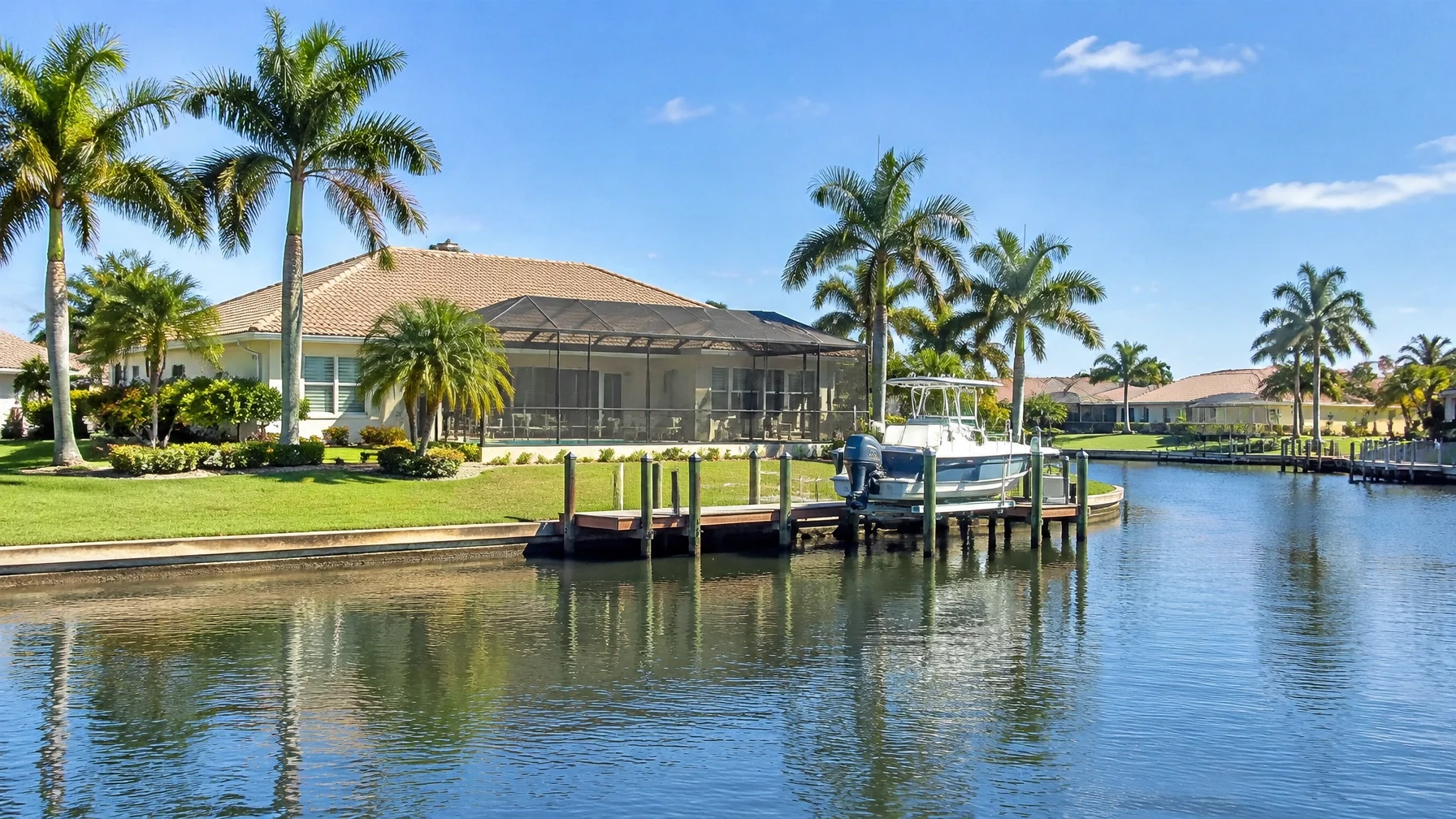
A detached home, dock and boat lift along a Cape Coral canal

Cape Coral is known for its broad supply of detached single-family homes and its extensive network of canals. The city says it maintains more than 400 miles of canals, which support stormwater management and, depending on the location and type of waterway, may offer boating access. The city’s canal information and Waterfront Living Guide are useful starting points for understanding the system.

For buyers, “waterfront” can mean very different things. A freshwater canal is not the same as a saltwater canal with a boating route toward the river or Gulf. Before falling for the view, ask about canal type, navigability, bridges, water depth, seawall condition, dock and lift permits, and any maintenance history. Gulf access is a property-specific feature, not a blanket description for every canal home.

Cape Coral may suit buyers seeking a yard, a garage, a pool or a private dock. It also offers many neighborhoods where the home, rather than a shared building, is the main focus. The tradeoff is that destinations can be spread out. If your work or regular activities are across the Caloosahatchee River, your commute may depend on bridge access, your starting neighborhood and seasonal traffic.

Fort Myers: More variety, from downtown condos to established neighborhoods

A bright daytime view of Fort Myers’ River District and downtown buildings

Fort Myers has a wider mix of urban and suburban housing settings. Buyers can explore condos and apartments near the downtown River District, older homes in established neighborhoods, and single-family houses in newer communities farther from the city center. Its historic-preservation and planning resources can help buyers research historic areas and determine whether renovation plans may involve additional review.

The downtown and riverfront setting may appeal to people who value restaurants, events and a more walkable environment. Established suburbs may be a better fit for buyers who want a traditional detached home without choosing a canal lot. Newer planned communities can offer shared amenities, but may also come with an HOA, a community development district (CDD), or both.

If your job, school or regular errands are in Fort Myers, living on that side of the river may simplify some trips. But the city is not one uniform neighborhood: a downtown condo, a home in an older district and a property in a newer subdivision can have very different costs, upkeep and travel patterns.

Compare the monthly costs, not just the asking price

Insurance and flood exposure deserve attention in both cities. A city label cannot tell you what a specific home will cost to insure. Request quotes early, and check the property’s flood zone, elevation information, roof age, wind-mitigation features and prior claims. Cape Coral provides an address-based flood-risk information portal. The city also notes that standard homeowners and renters insurance does not cover flood damage. Flood risk should be checked for every address, including properties outside mapped high-risk zones.

HOA and condo fees also vary by property, not simply by city. A detached home may have no mandatory association, while a gated neighborhood, villa community or condominium may charge fees for shared facilities and maintenance. For any association, review its current budget, reserves, meeting minutes, insurance information, rules and any pending or planned assessments. For condos, understand what the monthly fee covers and what costs remain the owner’s responsibility.

In parts of Cape Coral, also check for a Utilities Extension Project assessment or upcoming connection requirements. The city’s UEP information can help you investigate. Confirm the status and balance for the exact parcel rather than relying on a general neighborhood assumption.

Which city might fit your search?

Cape Coral may be worth prioritizing if you:

  • Want a detached home, outdoor space or the possibility of canal-side living.
  • Are looking for boating access and are prepared to investigate the waterway and waterfront infrastructure carefully.
  • Prefer a more residential, spread-out setting and can plan around your usual routes.

Fort Myers may be worth prioritizing if you:

  • Want to compare downtown condos, historic neighborhoods and suburban homes in one city.
  • Prefer to live closer to work or activities on the Fort Myers side of the river.
  • Are open to a community with shared amenities, while budgeting for association fees and reviewing its financial health.

For seasonal residents and relocating buyers, it can help to visit both cities during the hours you expect to travel and at the time of year you expect to be here. Try the route from a potential home to work, groceries, health care or the waterfront. A map distance alone won’t capture your day-to-day experience.

A practical next step

The latest available RPCRA figures offer a useful regional snapshot, but they do not establish that Cape Coral or Fort Myers is cheaper or moving faster in every property category. City-level and neighborhood-level results can differ, and price reductions are best assessed listing by listing. Compare homes of the same type, then weigh the total monthly cost, flood and insurance details, association obligations, utilities and commute.

If you’re weighing options, local cape coral real estate agents and realtors cape coral can help you compare specific neighborhoods and property histories with Fort Myers alternatives. RE/MAX Realty Team serves buyers across Southwest Florida, including Cape Coral and Fort Myers. Browse homes at swflhomestoday.com or search available properties. For help with your search, call 239-242-2000.

The takeaway: Cape Coral and Fort Myers both offer plenty of choice, but the right fit depends on the home and the details behind it. Use the latest verified market data as context, then compare the exact property’s costs, risks and everyday location before making your decision.

Read More
xt6lzCvuKlt
Uncategorized
November 11, 2026by Penny

New Construction vs. Resale in Cape Coral: Which Makes Sense in 2026’s Balanced Market?

New construction offers modern finishes and a fresh start. A resale home may put you closer to established neighborhoods, mature landscaping, or the waterfront you’ve been picturing. In Cape Coral, the better choice depends on more than the list price: lot costs, upgrades, insurance, utility assessments, timing, and location all affect the real value.

So, is Cape Coral’s market balanced in 2026? One current snapshot suggests it is: Momentum Realty’s October 20 report shows a median sale price of $379,025, up 1% year over year, and a median 51 days to contract. Its proprietary market score is 50 out of 100, which it classifies as balanced. That’s a useful indicator, not a guarantee of equal negotiating power in every price range or neighborhood. (See the Cape Coral market data and methodology.)

Start with the full cost, not the advertised price

New construction: The quoted base price may not include the lot premium, upgraded cabinets or flooring, window treatments, a pool, landscaping, or other options. Ask for a written, itemized estimate of the home as you actually want it. Then compare the total to a resale with similar features.

Builder incentives can improve the numbers. These may include closing-cost credits, rate buydowns, appliances, or design allowances. But some offers depend on using the builder’s preferred lender. Compare the full loan terms (including lender fees, rate, and the cost of points) not just the advertised credit.

Resale: The price may be more negotiable, particularly if a home has been listed for a while, but budget for repairs, updates, and near-term replacements. A roof, air-conditioning system, pool equipment, or windows can change the cost comparison quickly. Ask about seller concessions as well as price reductions; the best option depends on your financing and the home’s condition.

For an additional local data point, one October 2026 listing snapshot reported 30 new-construction homes across six Cape Coral communities, with asking prices from $270,000 to $440,000 and a median of $356,888. That’s a limited, changing sample, not a citywide price rule. (View the snapshot and its coverage.)

Look closely at lot and utility costs

A new build on a vacant lot can carry costs that aren’t obvious in the home’s headline price. The City of Cape Coral lists current Contribution in Aid of Construction (CIAC) charges of $25,538 per equivalent parcel where city services are available within 200 feet and the property is outside an assessment area. The city calculates the charge based on parcel size, and it may not apply to every property. Separate utility expansion assessments or balances can also affect a specific lot or home. (Check Cape Coral’s utility and CIAC information.)

Before committing, ask whether water, sewer, and irrigation are connected, available, or planned; whether any assessments remain; and who is responsible for paying them. Get the answer for the exact parcel, not just the neighborhood.

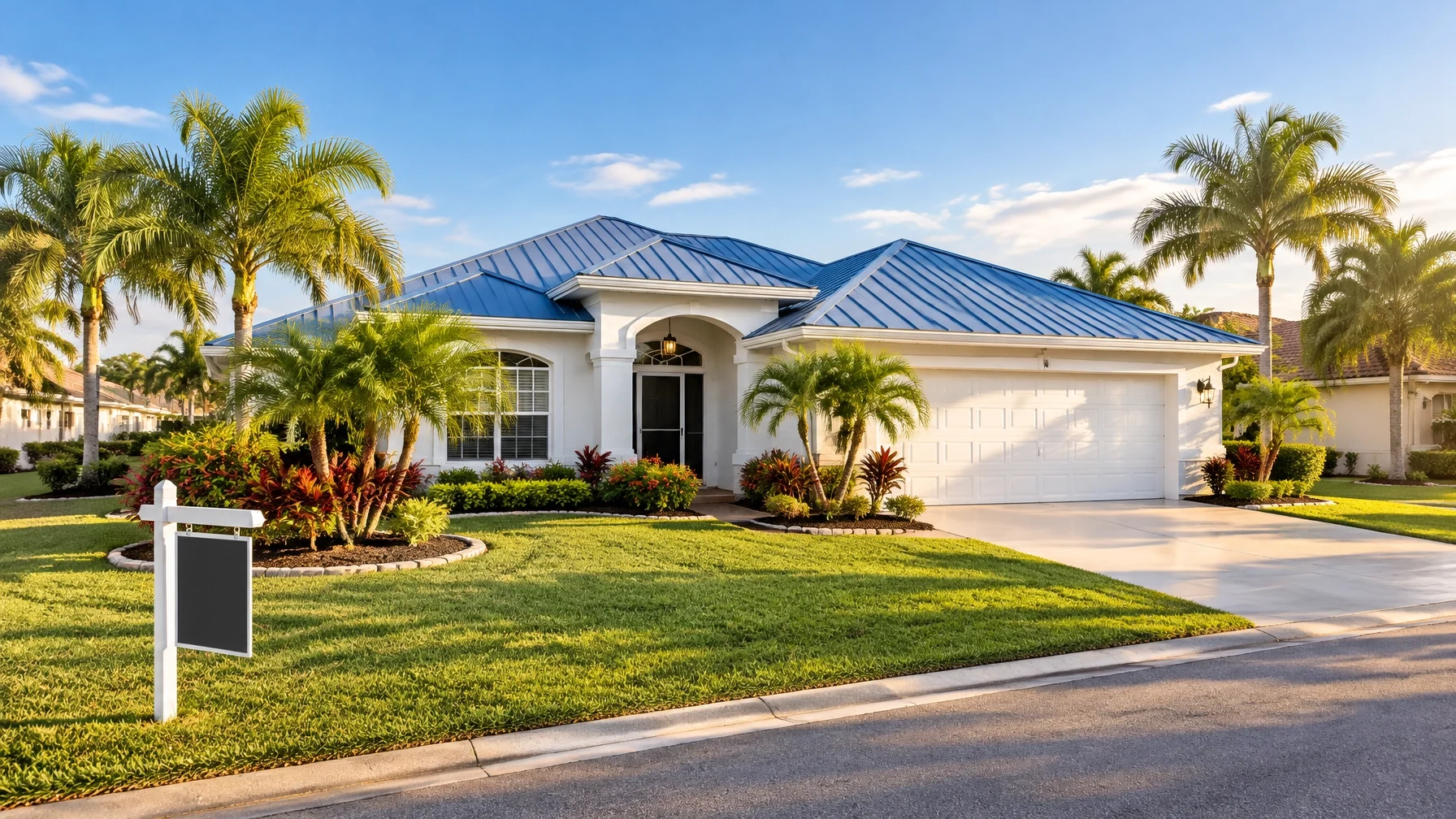
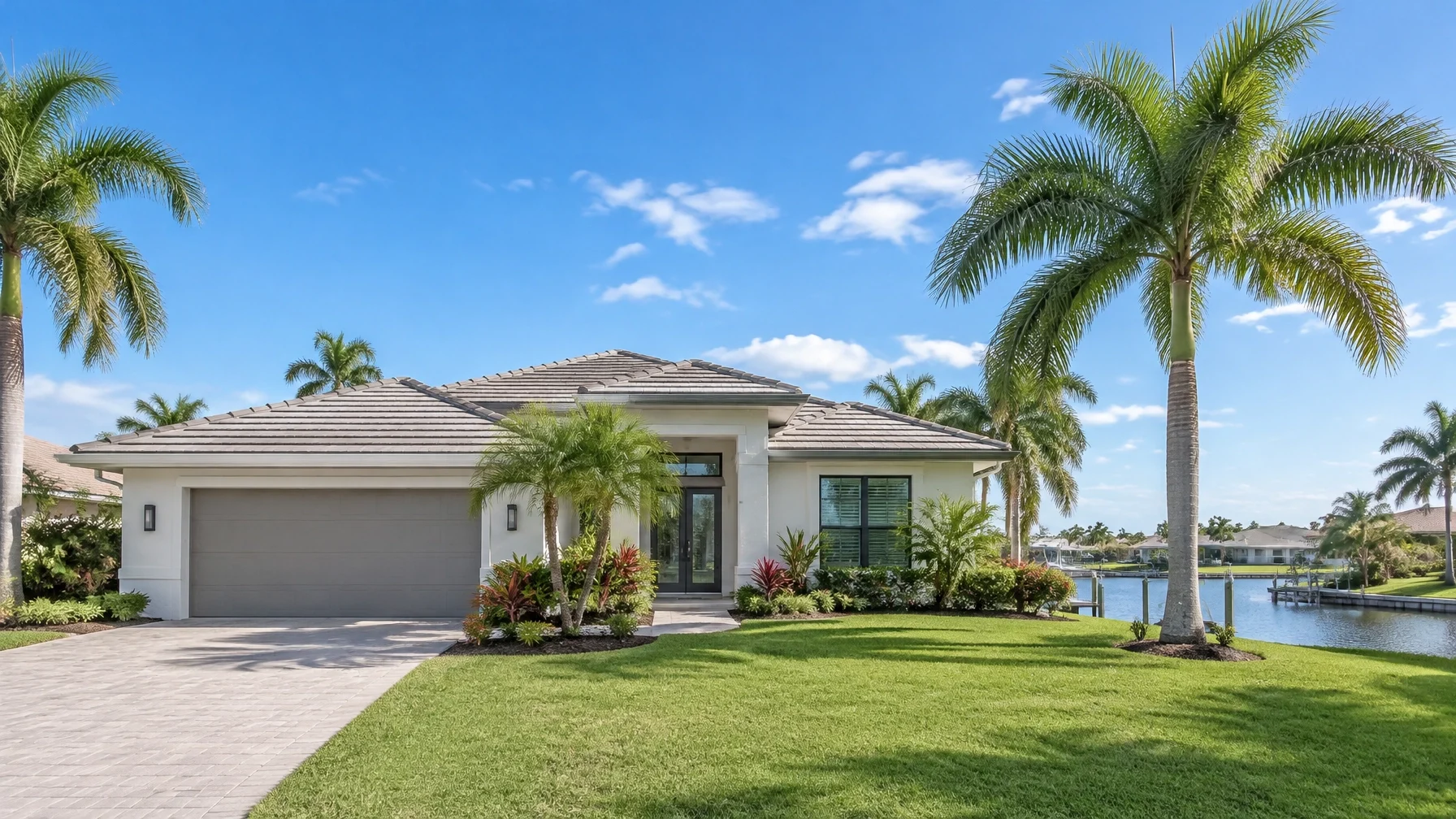
A newly built Florida home and an established home on a leafy street illustrate the different settings buyers may compare

Timeline and construction-stage risks

A resale home may be available to occupy soon after closing, subject to the transaction and any agreed repairs. That can suit buyers working around a move date. But a home that looks finished can still have deferred maintenance or unpermitted work to investigate.

New construction can mean choosing finishes and moving into a home that hasn’t had a previous owner. The timeline depends on whether you’re buying a completed inventory home or building from a particular stage. For a home under construction, ask for the current schedule, what could delay completion, and what happens if the home is not ready by the estimated date. Confirm which selections are still available and when they must be finalized.

At each stage, keep records of selections, change orders, allowances, and promised completion dates. Ask how access for inspections is arranged and how unresolved items are documented before closing. Weather, permitting, material availability, and construction sequencing can affect schedules; a projected date should not be treated as a guaranteed move-in date unless the contract says so.

Warranties and inspections: neither option is inspection-free

New doesn’t mean “skip the inspection.” Consider an independent inspection before closing, and ask whether the builder will allow additional inspections during construction. Clarify what the builder’s written warranty covers, how long coverage lasts, how to submit a claim, and how warranty service is handled. Coverage and terms vary by builder and contract.

For a resale, hire an inspector and review the findings before deciding what to negotiate. Depending on the property, you may also want roof, pool, pest, sewer, or other specialist inspections. Ask for permit history and documentation for major renovations. In Cape Coral, the city notes that repairs and improvements to structures in a Special Flood Hazard Area may require permits, including certain remodel work. (Read the City’s flood and permit guidance.)

A home inspector checks details inside a modern Florida home before closing

Insurance, flood exposure, and property taxes

Get insurance quotes early for either kind of home. Ask an insurance professional about homeowners, windstorm, and flood coverage, including deductibles and any requirements from your lender. A newer home may have features that affect insurance options, but the age of the house alone doesn’t tell you what your premium will be.

Check the flood zone and elevation information for the individual property, rather than relying on a broad neighborhood description. The City of Cape Coral provides an address-based flood-risk information portal with flood zone, elevation, and available document details. Lee County’s revised flood maps are scheduled to take effect March 2, 2027, according to Lee County’s flood information. Ask your insurance agent how current and pending map information could affect the property you’re considering. A flood zone is only one part of the risk picture; get a property-specific quote.

Taxes deserve the same attention. A seller’s current tax bill may not represent your future bill after a sale. The Lee County Property Appraiser explains that the prior owner’s homestead exemption does not transfer to a buyer, and the tax bill can include non-ad valorem assessments for services such as water, sewer, roads, or fire protection. (Review Lee County exemption and tax-bill information.) Ask your agent or tax professional how to estimate your costs, and verify any parcel-specific assessments with the relevant agency.

Location: a new home can’t move the neighborhood

Many new communities offer a consistent look, newer infrastructure, and a lower-maintenance start. Depending on the particular location, they may be farther from established commercial areas or have less mature landscaping. Resale homes can offer established streets, shade trees, and proximity to places or amenities you already value. But conditions vary from one block to another, and new construction is also available in a range of locations.

If you’re looking for SWFL waterfront homes, compare the waterfront itself, not just the house. Ask about the canal or water access, dock and lift condition, and any relevant permits or restrictions. Waterfront properties can differ substantially in access, exposure, and upkeep.

When comparing Cape Coral with nearby areas, treat Fort Myers real estate trends as a separate market reference, not a substitute for Cape Coral neighborhood-level comparisons. City, county, price range, and property type can all change what a statistic means.

A Cape Coral-style canal-front home with a dock highlights how waterfront location can shape a buyer’s decision

Questions to ask before you make an offer

Whether you’re speaking with a builder or a resale seller, get clear answers to these questions:

  • What is included in the price, and what costs extra?
  • Which incentives are available, what conditions apply, and what is the net cost after financing fees?
  • Are there utility assessments, unpaid balances, or future connection costs for this parcel?
  • What permits, inspections, warranties, and repair records are available?
  • What are the property’s flood zone, elevation details, and insurance quotes?
  • How might taxes and non-ad valorem assessments change after purchase?
  • For new construction, what is the completion schedule, what can delay it, and how are changes documented?
  • For resale, what repairs are needed soon, and are there records of prior storm damage or renovation work?

A local professional can help you compare the property, neighborhood, contract details, and recent comparable sales. If you’re weighing options, search Southwest Florida properties or contact RE/MAX Realty Team. Cape Coral real estate agents who know the area can help you investigate parcel-specific details; when comparing realtors Cape Coral buyers might work with, look for someone prepared to explain the costs and tradeoffs, not just the list price.

The takeaway

In Cape Coral’s 2026 market, new construction may make sense if its finished cost, incentives, location, and timeline suit your plans. Resale may be the better fit if you value an established setting, a quicker move, or a particular location, and the home’s condition and ongoing costs work for your budget. Compare the full cost of ownership, check the lot and flood details, and put every incentive or promise in writing. That’s a more reliable way to decide than choosing based on “new” or “resale” alone.

Read More
E2IeT8WtBrY
Uncategorized
November 10, 2026by Penny

The Tax Number on That Listing Isn’t Yours: How Homestead Exemptions, Portability, and 2026 Assessment Resets Work for Cape Coral and Fort Myers Buyers

If you’re comparing homes in Cape Coral or Fort Myers, the property-tax figure on a listing can look reassuringly precise. But it usually describes the seller’s tax situation, not yours.

That number may reflect years of Florida’s Save Our Homes assessment cap and the seller’s homestead exemption. When ownership changes, the seller’s benefits don’t simply transfer to the buyer. Your assessment and exemptions can be different, which means your future tax bill may look very different, too.

Here’s how to read the listing figure, what the 2026 rules mean, and how to estimate your own costs before you buy.

Why the listing’s tax figure can be misleading

Florida property taxes are based on a property’s taxable value and the millage rates set by taxing authorities. That taxable value may be lower than market value because of exemptions and assessment limits.

A homeowner who has lived in a property for years may have a Save Our Homes (SOH) benefit that limits increases in assessed value. They may also receive a homestead exemption. Both can reduce the taxable value used to calculate taxes.

Those benefits belong to the qualifying owner and property, not automatically to the next buyer. Lee County notes that a homestead exemption shown on a notice for a property purchased after January 1 may be the prior owner’s benefit, and that it will be removed. Buyers must apply and qualify for their own exemption.

Homebuyer comparing a property assessment notice with a listing sheet

For buyers, the key point is this: don’t assume the seller’s capped assessed value will remain yours. After an ownership change, the assessment is reset for the new owner based on the property’s market or just value, rather than the seller’s accumulated SOH assessment difference. The Lee County Property Appraiser’s tax estimator is a better starting point for estimating your own taxes.

What homestead exemption means in 2026

If you own and occupy a Florida property as your permanent residence and meet the requirements, you may qualify for a homestead exemption. For 2026, the first $25,000 of assessed value is exempt from all property taxes, including school taxes.

There’s also an additional homestead exemption of up to $26,411 in 2026. It applies to assessed value over $50,000 and reduces non-school taxes only. The maximum may not apply if the property’s assessed value is too low.

Homestead isn’t automatic when you buy a home, and the seller’s exemption doesn’t carry over. Eligible owners need to apply by March 1 for the year they’re seeking the exemption. You can review the homestead information and apply online, or download the DR-501 application.

Save Our Homes: why a longtime owner may have a lower assessment

Once a property qualifies for homestead, the Save Our Homes cap limits how much its assessed value can increase year to year. The annual increase is capped at 3% or the change in the Consumer Price Index, whichever is less. For 2026, the cap is 2.7%.

That does not mean the property’s market value can’t rise faster. It means the assessed value used for property-tax calculations may be limited while the owner continues to qualify. Over time, the gap between market value and assessed value can grow. That gap is the accumulated SOH benefit, and it helps explain why a seller’s tax figure may be lower than a buyer’s future estimate.

The cap doesn’t apply to additions or new construction. Lee County’s 2026 TRIM insert also lists a 2.7% recapture rate for homestead properties. Recapture applies when market value is above assessed value and the assessed value must increase toward market value.

Portability: taking some of your SOH benefit to a new Florida home

If you’re selling a Florida homestead and buying another Florida home, you may be able to transfer some or all of your accumulated SOH benefit. This is called portability. The maximum transferable benefit is $500,000.

You must qualify for homestead on the new property by March 1 and apply for portability with your homestead application. The general window is three years from January 1 of the year you abandoned your previous homestead, not three years from the sale date.

Here are two examples from the Lee County Property Appraiser’s portability guidance:

  • Upsizing: Your old home had a $400,000 market value and a $250,000 assessed value, leaving a $150,000 SOH benefit. If you move to a $600,000 home, the full $150,000 benefit may transfer. The new home’s assessed value would be $450,000 before exemptions; after the $50,000 homestead exemptions used in the example, its taxable value would be $400,000.
  • Downsizing: If you move from that same $400,000 home to a $300,000 home, 75% of the previous benefit may transfer: $112,500. The new home’s assessed value would be $187,500 before exemptions.

Your result depends on the properties and ownership details. See Lee County’s portability rules and examples, and use the DR-501T portability form when applying.

Couple and real estate agent outside a Southwest Florida home with closing paperwork

Second homes and investment properties are different

A vacation home or rental property that isn’t your Florida primary residence generally won’t qualify for homestead exemption or Save Our Homes. Most non-homestead properties are subject to a 10% assessment cap on annual increases, but that cap does not mean the assessment will be 10% below market value.

The assessment may be reset after a sale, and future property taxes are tied to the property’s assessed and taxable values, applicable exemptions, and millage rates. As with a primary residence, don’t use the seller’s bill as your only budget estimate. Check the property’s current details and run your own estimate.

Bright Florida vacation home with tropical landscaping and a screened lanai

Buying this winter? Know which tax year you’re looking at

For snowbird buyers closing in fall 2026, the tax bill mailed in November 2026 is for the 2026 tax year and reflects the January 1, 2026 assessment and the exemptions on record for that year. It may therefore show the seller’s assessment and exemption history. Your closing documents determine how any tax amount is handled between the parties.

If you occupy the property as your permanent Florida residence and meet the requirements on January 1, 2027, apply for your homestead exemption by March 1, 2027. The 2027 TRIM notice, your Notice of Proposed Property Taxes, is expected in August and will show the proposed value, exemptions, and taxes. It is not the tax bill. If you disagree with the value or exemption details, the notice provides a 25-day window to petition the Value Adjustment Board.

The Lee County Tax Collector mails tax bills in November. Early-payment discounts are listed as 4% in November, 3% in December, 2% in January, and 1% in February. Check the current bill for its due dates and instructions.

How to estimate your taxes before you make an offer

Start with the Lee County Property Appraiser’s tax estimator. Enter the expected purchase price and consider whether you’ll qualify for homestead and portability. The estimator is a planning tool, not a guaranteed bill: values, exemptions, and millage rates can change.

Then confirm eligibility and filing requirements directly with LEEPA. For buyers, the most useful checklist is:

  1. Don’t treat the listing’s tax figure as your own future bill.
  2. Estimate taxes using your expected purchase price and circumstances.
  3. If it will be your primary residence, check the March 1 homestead deadline.
  4. If you’re moving from another Florida homestead, look into portability and the three-year window.
  5. Review your TRIM notice when it arrives and contact LEEPA if information appears incorrect.

Local knowledge can help you ask the right questions while comparing homes and planning a purchase. RE/MAX Realty Team has more than 100 agents across two offices and has been the region’s #1 producing brokerage for more than 14 years. For help exploring Cape Coral, Fort Myers, and nearby communities, visit swflhomestoday.com. Understanding Fort Myers real estate trends is useful, but understanding the tax estimate for the specific home you’re considering matters just as much.
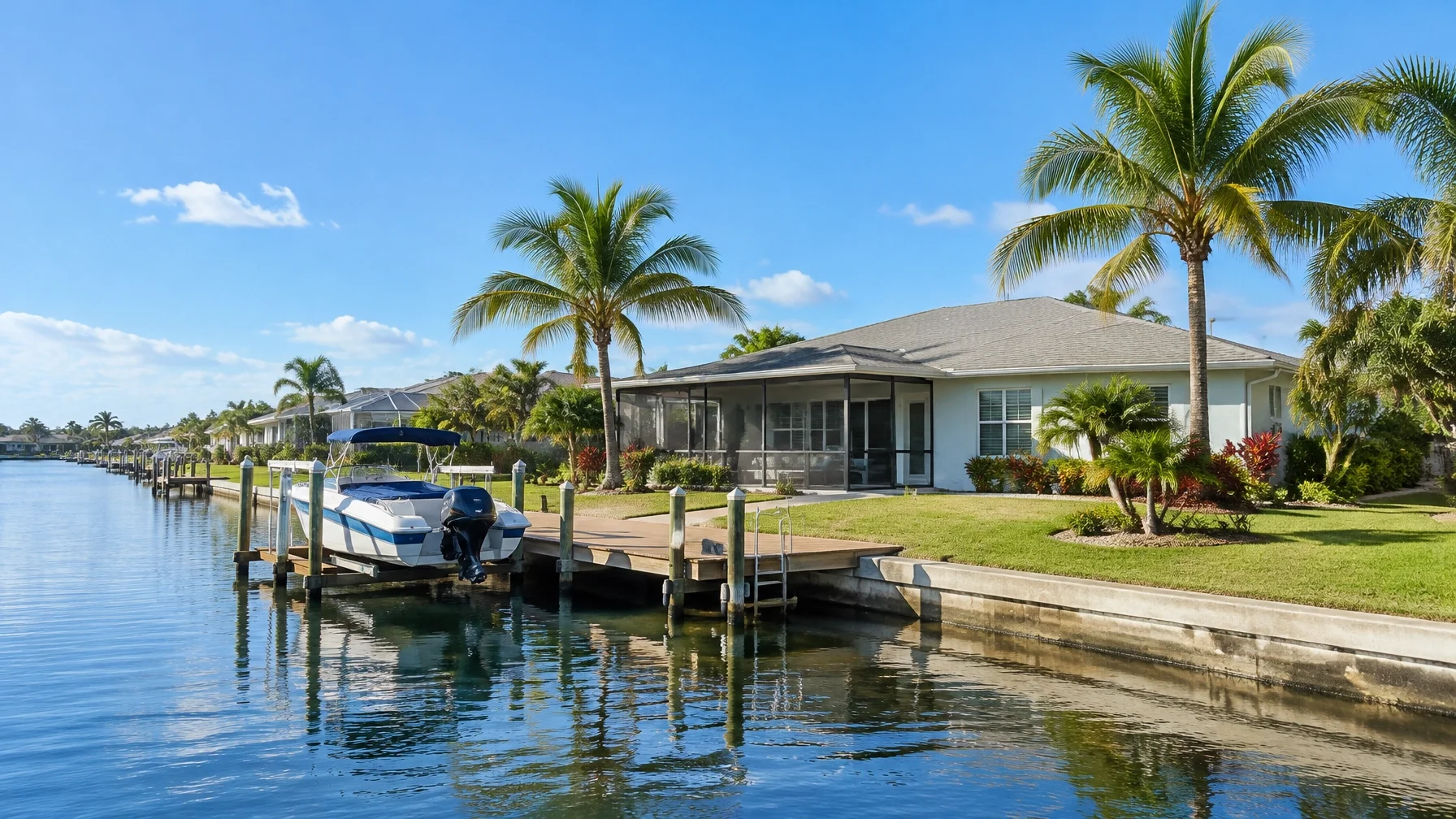
The takeaway: the tax number on a listing is a snapshot of the seller’s situation. Your assessment may reset, your exemptions depend on your eligibility and timely application, and portability may help if you’re moving from another Florida homestead. Use LEEPA’s estimator and official filing resources to build a more realistic estimate before you buy.

Read More
  • 1
  • 2
  • 3
  • …
  • 8

Exceptional Service. Local Expertise. Proven Results.

(239) 242-2000

Cape Coral Office
2326 Del Prado Blvd. S.
Cape Coral, FL 33990


Fort Myers Office
6611 Orion Dr. #104
Fort Myers, FL 33912

Quick Links

  • Company
  • Search Online
  • Sell With RE/MAX
  • Contact Our Office

Join Our Team

Build your real estate career with a collaborative, experienced team committed to helping agents grow, succeed, and reach their full potential.

© 2026 RE/MAX Realty Team. All Rights Reserved | Website By: OMG