Uncategorized
Late September 2026 buyer, seller, renter, and investor guide
Cape Coral and Fort Myers are close neighbors, but they do not offer the same real estate experience. Cape Coral generally brings more canal-front housing, newer construction opportunities, and stronger recent price growth. Fort Myers offers a lower median sale price, more varied housing options, and additional negotiating room in many neighborhoods.
The right choice depends on more than the citywide median. Your budget, insurance costs, boating plans, commute, rental strategy, and preferred lifestyle can all change which market represents the better value.
Cape Coral vs. Fort Myers: The late September comparison
| Market measure | Cape Coral | Fort Myers |
|---|---|---|
| Median sold price | Approximately $382,375 | Approximately $345,000; some September estimates are closer to $334,800 |
| Year-over-year price trend | Up approximately 6.8% | Essentially flat year over year |
| Active listings | Approximately 2,441, down about 22.4% year over year | More varied by segment; approximately 5.2 months of supply |
| Months of supply | Approximately 4.8 months | Approximately 5.2 months |
| Typical marketing pace | Median around 85 days on market | Approximately 64–74 days to contract, depending on the data set and property type |
| Sale-to-asking relationship | Sellers closing around 97.7% of the most recent asking price | Sellers netting approximately 95% of asking |
| Notable buyer leverage | More limited inventory in some single-family segments | Approximately 24% of active listings are relists |
These numbers should be viewed as market indicators rather than guarantees. Data can vary depending on whether the analysis includes single-family homes, condominiums, townhomes, waterfront properties, new construction, or a broader geographic boundary.
For regional perspective, Fort Myers Beach is operating at a much higher price level, with a working median around $470,000. That is a reminder that “Fort Myers area” statistics can look very different depending on whether they include beach, riverfront, condo, or inland properties.
For broader context, FGCU’s Regional Economic Research Institute housing dashboard reported a Cape Coral–Fort Myers MSA single-family median price of $380,000 for August 2026. The Florida REALTORS® July 2026 market report also provides statewide and MSA-level comparisons.
First, know which number you are comparing
A median sold price represents the midpoint of homes that actually closed during a specific period. Half sold for more and half sold for less.
A median listing price represents the midpoint of homes currently offered for sale. It reflects seller expectations, not completed transactions.
Those numbers can differ significantly. A market may have a high median listing price because many owners are testing ambitious prices, while the median sold price remains lower because buyers are negotiating. For purchase decisions, sold prices are generally more useful for understanding what buyers have recently paid. For sellers, comparable closed sales, pending sales, active competition, and property condition all matter.
Citywide medians can also mislead at the neighborhood level. A Cape Coral home on a freshwater canal is not directly comparable to a direct Gulf-access property. A Fort Myers condominium near downtown is not comparable to a newer single-family home in a master-planned community. The most useful comparison is usually between similar homes in similar locations.
Pick Cape Coral if waterfront access and space are priorities
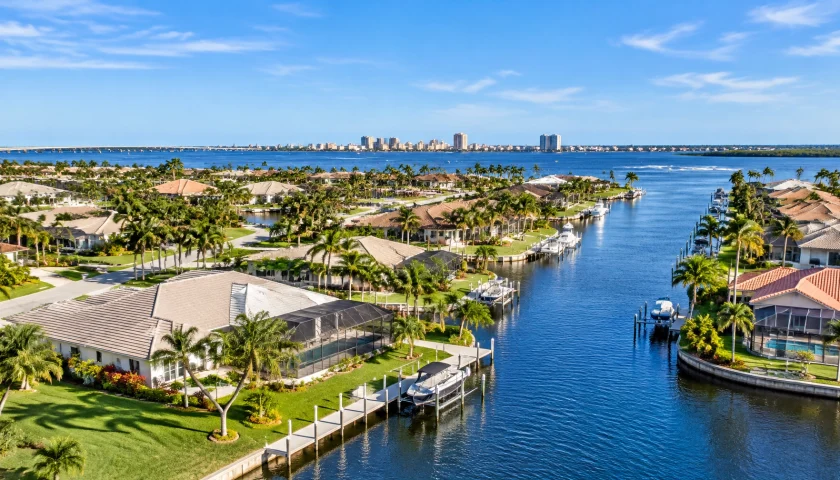
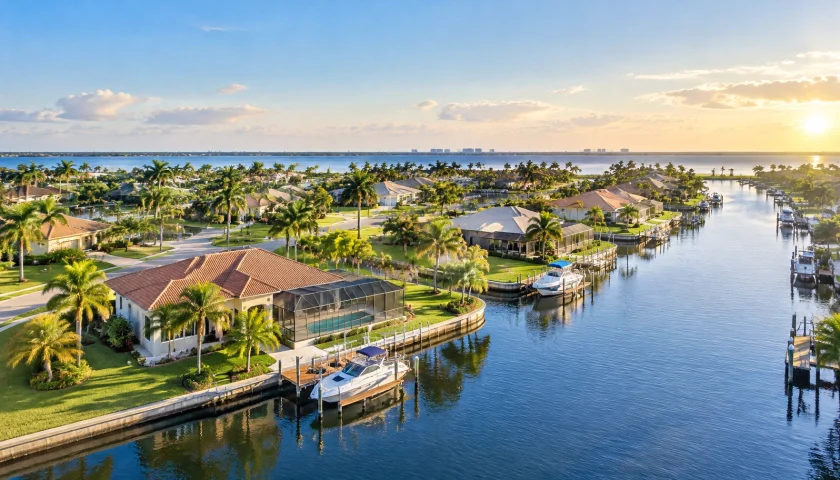
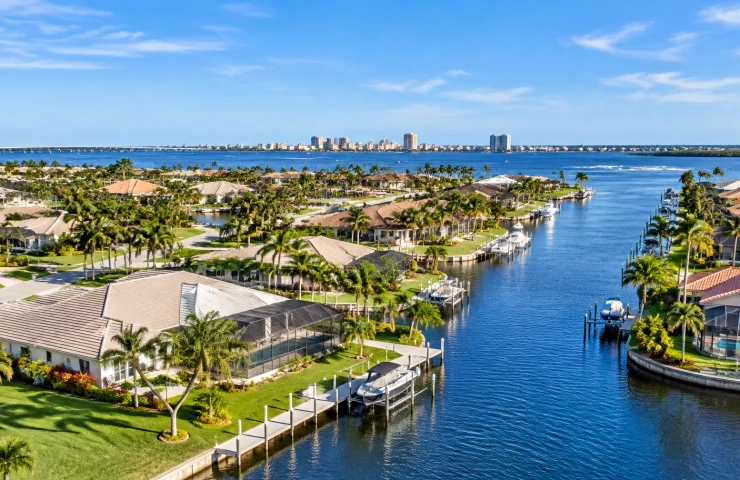
Cape Coral remains the stronger fit for buyers who want a large selection of canal-front homes and a lifestyle centered around boating, outdoor space, and single-family residences.
The waterfront categories are important:
- Direct Gulf or sailboat access: The highest-demand category, generally offering fewer bridge restrictions and a more practical route to open water. These homes usually command a substantial premium.
- Bridge-restricted Gulf access: Still connected to saltwater routes, but bridge height, bridge location, and travel time can limit the boats that can reach the property.
- Freshwater canal: Often more affordable and attractive for views, kayaking, fishing, or a private waterfront setting, but it does not provide the same boating access to the Gulf.
Cape Coral’s citywide median of approximately $382,375 includes a wide range of properties. Newer inland homes, older canal homes, and premium sailboat-access properties can sit in very different price brackets.
Buyers should also compare Northwest Cape Coral new construction with resale inventory. New construction may offer modern roofs, current building standards, energy-efficient systems, builder incentives, and fewer immediate renovation needs. However, buyers should investigate completion timelines, lot premiums, landscaping requirements, warranty coverage, utility costs, and the surrounding infrastructure.
Resale homes may offer mature landscaping, established neighborhoods, larger lots, and more immediate availability. They may also require closer review of roof age, electrical systems, seawalls, plumbing, storm repairs, and insurance history.
Pick Fort Myers if entry price and negotiation matter most
Fort Myers generally offers the lower citywide median, with recent figures around $345,000 and some September estimates closer to $334,800. Pricing has been essentially flat year over year, which may create a more approachable entry point for buyers who are focused on monthly payment.
The Fort Myers market also offers broader housing variety, including:
- Condominiums and townhomes
- Established inland neighborhoods
- Newer master-planned communities
- Riverfront properties
- Downtown and urban-adjacent housing
- Higher-end waterfront and luxury pockets
The approximately 24% relist rate is especially relevant for buyers. A relisted property may have been withdrawn and returned to the market, sometimes after an unsuccessful pricing strategy, an expired listing, a change in seller circumstances, or a price adjustment. It does not automatically mean there is a problem with the home, but it can create an opportunity to ask better questions and negotiate more carefully.
With sellers netting around 95% of asking in some Fort Myers reporting, buyers may have more room to discuss price, closing costs, repairs, rate buydowns, or other concessions. The strongest leverage usually exists on homes that have been available for an extended period, experienced price reductions, or returned to the market.
Insurance can change the budget more than the purchase price
The lower purchase price in Fort Myers does not automatically mean a lower total monthly cost, and the higher Cape Coral median does not tell the whole insurance story.
In both markets, obtain insurance quotes early. Review:
- Homeowners insurance
- Windstorm coverage
- Flood insurance
- Roof age and construction type
- Elevation and flood zone
- Prior claims
- Hurricane-resistant features
- Deductibles and exclusions
- HOA or condominium master-policy costs
Cape Coral has a larger supply of canal-front homes, so buyers shopping for waterfront there may face additional seawall, dock, lift, flood, and wind-related expenses. Fort Myers buyers may find more inland choices and some lower-risk locations, but riverfront, coastal, older, and low-elevation properties can still carry significant costs.
Lee County’s floodplain management resources explain flood zones, elevation certificates, flood insurance, and permit requirements. Buyers can also use the Lee County Property Appraiser’s GeoView for parcel and map information and review additional tools through Lee County GIS. For properties inside Cape Coral or Fort Myers, confirm information with the applicable city because incorporated municipalities may have their own flood-map and permitting guidance.
Waterfront due diligence checklist
Before buying a waterfront property in either market, verify:
- Seawall condition, repair history, and permits
- Dock and boat-lift permits
- Bridge clearance and the actual route to open water
- Canal depth, turning radius, and access at low tide
- Flood zone and base flood elevation
- Elevation certificate, if available
- Insurance quotes before the inspection or financing deadlines
- HOA rules governing docks, rentals, boats, and improvements
- Rental restrictions and minimum lease periods
- Any mangrove, environmental, shoreline, or drainage restrictions
A waterfront view is valuable, but usable access and documented improvements are what determine how much that feature is worth.
What this means for sellers
Cape Coral sellers: The 97.7% sale-to-most-recent-asking ratio and stronger year-over-year price trend are encouraging, but buyers are still comparing condition and total ownership costs. Accurate pricing remains important, particularly when competing with new construction in Northwest Cape Coral. Sellers should highlight permitted improvements, seawall updates, boat access, elevation information, storm protection, and insurance details.
Fort Myers sellers: The approximately 95% sale-to-asking relationship and relist activity suggest that overpricing can lead to extended market time and repositioning. A home that is correctly priced from the beginning may stand out against properties that have accumulated price reductions or returned to the market. Sellers should be prepared to discuss repairs, credits, closing costs, and other terms, not just the headline price.
In both cities, the best pricing strategy comes from comparing recent closed sales, current competition, pending transactions, property condition, and neighborhood-specific demand.
What this means for investors and renters
Investors should evaluate both purchase price and operating performance. Cape Coral’s median rent is approximately $1,900 per month, but projected income must be weighed against insurance, property taxes, maintenance, utilities, vacancy, management, and any HOA or rental restrictions.
Cape Coral may appeal to investors seeking single-family rentals, canal properties, or long-term appreciation potential. Fort Myers may offer more entry points through condos, townhomes, and inland properties, along with potential buyer leverage created by longer marketing times and relisted inventory.
Renters should compare more than monthly rent. Ask about utility responsibility, flood exposure, parking, pet rules, lease renewals, storm-related provisions, and commute times. A lower rent may not represent better value if transportation or utility costs are substantially higher.
A simple decision framework
Lean Cape Coral if you want:
- More canal-front and boating-oriented housing
- A stronger recent price trend
- New construction choices, particularly in the Northwest Cape
- More space and a predominantly single-family lifestyle
- A waterfront property search with several access tiers
Lean Fort Myers if you want:
- A lower citywide median price
- More condominium, townhome, and inland options
- Greater negotiating room in selected segments
- A shorter drive to downtown amenities, medical services, and established commercial areas
- A market where relists and longer marketing times may improve buyer leverage
The most important question is not simply, “Which city is cheaper?” It is, “Which city gives me the best combination of purchase price, insurance, maintenance, commute, lifestyle, and long-term flexibility?”
RE/MAX Realty Team can help you compare those costs at the neighborhood and property level. With more than 100 agents, two Southwest Florida offices, and a record as the region’s #1 producing brokerage for more than 14 years, our team brings detailed local knowledge to purchases, sales, rentals, and investments.

Start with the Southwest Florida property search, or contact RE/MAX Realty Team to compare Cape Coral and Fort Myers options based on your actual budget and goals.

Takeaway
Cape Coral is often the better fit for buyers prioritizing canals, boating, space, and newer single-family housing. Fort Myers may be the better fit for buyers prioritizing lower entry prices, housing variety, and negotiation. In either market, the winning decision comes from looking beyond the median, especially at insurance, flood exposure, permits, waterfront access, rental rules, and neighborhood-level comparable sales.