Uncategorized
September 7, 2026 market pulse
Labor Day weekend traditionally marks the beginning of Southwest Florida’s fall real estate season. This year, early momentum is developing in a market that is more balanced, more selective, and increasingly dependent on neighborhood and property type.
Cape Coral and Fort Myers are not moving in exactly the same direction. Cape Coral remains relatively stable, with fewer homes available than a year ago and stronger demand for well-priced single-family and waterfront properties. Fort Myers continues to provide more negotiating room, especially for condos and homes that need updates.
Mortgage rates remain an important part of the conversation. According to Freddie Mac’s Primary Mortgage Market Survey, the 30-year fixed mortgage averaged 6.71% for the week ending September 3, 2026. The 15-year fixed rate averaged 6.04%.
Here is the latest hyper-local look at the Cape Coral market update 2026, Fort Myers real estate trends, and the market for SWFL waterfront homes.
The September 7 market snapshot
The following figures combine the latest available local market data and directional MLS trends. Statistics vary by reporting period, property type, and geographic boundaries.
| Metric | Cape Coral | Fort Myers | Lee County |
|---|---|---|---|
| Median sale price | Approximately $352,000–$375,000 | Single-family: $430,000–$445,000 | Varies by segment |
| Condos | Varies by submarket | Approximately $220,000–$233,000 | Varies by segment |
| Recent sales activity | Approximately 960 homes sold | Split between single-family and condos | Sales up approximately 7% year over year |
| Median days on market | Approximately 100 days | Longer for many condos and older homes | Elevated but improving |
| Months of supply | Approximately 4.9 months | Single-family: 4.3–4.5 months; condos: 6.5–6.9 months | Tightening gradually |
| Inventory trend | Down approximately 25% year over year | More balanced in single-family; buyer-leaning in condos | Fewer listings than earlier in the year |
| Sale-to-ask performance | Varies by property | Varies by property | Sellers receiving approximately 93% of asking price |
| Price reductions | Common on stale listings | More frequent in buyer-leaning segments | Approximately 22% of listings |
The overall message is not that the market has suddenly become hot. Instead, the fall season is beginning with fewer choices than last year, steady buyer interest, and a wide gap between properties that are priced correctly and those that are not.

Cape Coral: inventory is tighter, but buyers remain selective
Cape Coral’s median sale price is currently landing somewhere between approximately $352,000 and $375,000, depending on the reporting period and property mix. Roughly 960 homes sold in the latest tracked period, and the typical property has spent about 100 days on the market.
Inventory is down approximately 25% year over year, while absorption is near 4.9 months. That places Cape Coral close to a balanced market overall. It is not the highly competitive environment seen during the pandemic-era boom, but it is also not a market where every seller must accept a steep discount.
The strongest demand remains concentrated in homes with:
- Updated roofs, electrical systems, and HVAC equipment
- Pools and attractive outdoor living areas
- Reasonable insurance profiles
- Newer construction or completed renovations
- Desirable canal access or larger lots
- Convenient access to shopping, restaurants, schools, and major roads
Cape Coral’s size makes neighborhood-level analysis essential. Recent listing medians have illustrated the range:
- Diplomat: approximately $340,000
- Mariner: approximately $369,000
- Burnt Store: approximately $459,000
- Cape Harbour: approximately $509,000
- Pelican: approximately $535,000
- Cape Royal Country Club Estates: approximately $775,000
These figures are listing medians, not appraisals. They can also move substantially when only a small number of homes sell. Still, they show why a buyer comparing northern Cape Coral with Pelican, Cape Harbour, or Cape Royal may be looking at very different markets.
For sellers, the lesson is straightforward: pricing must reflect current competition, not the highest sale from several years ago. For buyers, the tighter inventory trend means the best homes may attract attention quickly, even while less competitive listings remain available for negotiation.
Fort Myers: different conditions for single-family homes and condos
Fort Myers remains more segmented than the citywide median suggests.
Single-family homes are reporting a median sale price of approximately $430,000 to $445,000, with 4.3 to 4.5 months of supply. That is near-balanced territory. Buyers have time to investigate a property and negotiate, but a well-maintained home in a desirable location may still attract multiple interested parties.
Condos are operating differently. Median prices are approximately $220,000 to $233,000, while inventory has expanded to roughly 6.5 to 6.9 months of supply. This gives condo buyers more selection and leverage, particularly when association fees, insurance costs, reserves, or potential assessments are high.

Neighborhoods also tell different stories. Established areas such as Whiskey Creek, Briarcliff, and Heritage Palms may attract buyers who value mature landscaping, community amenities, and convenient access to shopping, healthcare, and employment centers. Other areas, including Island Park and older condo communities, may offer lower entry prices but require closer review of condition and carrying costs.
Fort Myers buyers should compare:
- Monthly homeowners association fees
- Association reserves and meeting minutes
- Insurance coverage and deductibles
- Roof age and building maintenance
- Rental restrictions
- Special assessments
- Flood exposure and elevation
- The property’s total monthly cost, not just the purchase price
SWFL waterfront homes: price tiers still vary dramatically
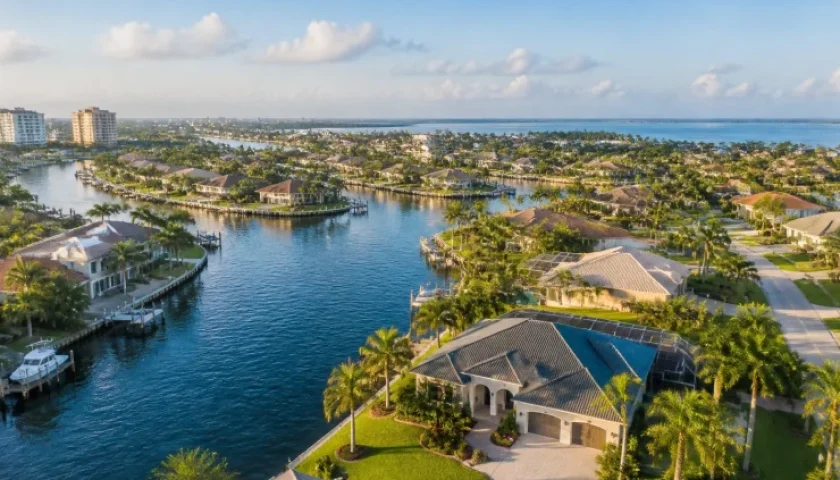
Waterfront remains one of the most important distinctions in the Cape Coral market. However, “waterfront” is not a single category.
Approximate price tiers for Cape Coral waterfront properties include:
| Waterfront category | Approximate price range |
|---|---|
| Freshwater canal homes | Mid-$400,000s and up |
| Gulf-access homes with bridge restrictions | Approximately $600,000–$650,000 |
| Direct Gulf or sailboat access | Approximately $700,000–$755,000 and up |
| Premium riverfront, wide-basin, or extensively upgraded homes | $1 million or more |
The exact value depends on canal width, bridge clearance, seawall condition, dock and lift improvements, boating route, storm protection, remodeling, lot size, and proximity to open water.
A buyer should ask more than whether a property is labeled “waterfront.” Important questions include:
- How long does it take to reach the Caloosahatchee River or Gulf?
- Are there bridges or height restrictions?
- Is the seawall permitted and structurally sound?
- Are the dock and lift insurable?
- What flood insurance is required?
- Has the property experienced storm damage?
- Are short-term rentals permitted?
The least expensive waterfront home may not provide the most useful boating access. Likewise, a higher-priced property may justify its premium if it offers direct access, a newer seawall, a protected basin, or a more desirable location.
Mortgage rates and the September 15–16 FOMC meeting
At 6.71%, the current 30-year fixed rate continues to influence affordability. The 15-year rate of 6.04% may appeal to buyers who want to pay down principal more quickly, but the higher monthly payment requires careful budgeting.
The Federal Reserve’s September 15–16 FOMC meeting will be closely watched. The Fed does not directly set mortgage rates, but its policy decisions and economic guidance can affect bond markets and longer-term borrowing costs.
If rates ease after the meeting, some buyers may return to the market or gain additional purchasing power. If rates remain elevated, buyers are likely to continue emphasizing price, seller concessions, rate buydowns, and lower-cost properties.
The practical advice is to make decisions based on the payment you can afford today. Refinancing may become an option later, but it should not be the foundation of a purchase decision.
Insurance remains a major part of affordability
Insurance must be addressed early, particularly for coastal, older, waterfront, elevated, and condo properties.
Recent Citizens Property Insurance changes included an average decrease for some multiperil policies and a separate reduction for certain wind-only policies. The impact varies by property, coverage type, deductible, mitigation features, roof age, location, and prior claims history. Buyers should review Citizens Property Insurance resources and obtain a property-specific quote before the inspection period expires.
A complete housing budget should include:
- Homeowners insurance
- Wind and flood coverage
- Property taxes
- HOA or condo fees
- Utilities
- Maintenance
- Seawall, dock, or pool expenses
- Reserves for major repairs

Strategy for buyers, sellers, and investors
For buyers
The fall market may offer more negotiating room than the fastest-moving years, but preparation still matters.
- Get fully pre-approved before touring homes.
- Compare recent closed sales rather than relying on asking prices.
- Review price reductions and total days on market.
- Request insurance estimates early.
- Investigate permits, roofs, seawalls, docks, and storm repairs.
- For condos, review reserves, assessments, rental rules, and association finances.
- Consider both Cape Coral and Fort Myers if your lifestyle and commute allow flexibility.
For sellers
The post-Labor Day season can bring more activity from seasonal residents, relocating households, and second-home buyers. However, buyers are informed and have alternatives.
Sellers should:
- Price against current comparable homes.
- Complete high-impact repairs before listing.
- Gather roof, permit, insurance, and renovation records.
- Present outdoor spaces and waterfront features clearly.
- Explain bridge clearance, boating access, and seawall condition.
- Monitor showing activity during the first two weeks.
- Be prepared to adjust if the market provides negative feedback.
For investors
Investors should underwrite the entire property rather than focusing only on purchase price.
Include realistic rent, vacancy, management, insurance, taxes, HOA fees, repairs, utilities, financing, and capital reserves. Cape Coral waterfront homes may have strong lifestyle and rental appeal, but seawalls, lifts, flood exposure, and insurance can materially affect returns. Fort Myers condos may provide a lower entry price, but association restrictions and assessments require careful review.
The bottom line for September 7, 2026
Southwest Florida is entering its fall market with improving momentum but continued segmentation.
Cape Coral is close to balanced: inventory is down approximately 25% year over year, absorption is near 4.9 months, and well-priced single-family and waterfront homes can attract serious attention.
Fort Myers is split: single-family homes are near-balanced with 4.3 to 4.5 months of supply, while condos remain more buyer-friendly with 6.5 to 6.9 months of supply.
Across Lee County, sales are up approximately 7% year over year, sellers are capturing about 93% of asking price, and roughly 22% of listings have experienced price cuts. That combination points to a market that is active: but still rewards realistic pricing and careful analysis.
The key takeaway is simple: the citywide median is only the beginning. Neighborhood, property type, insurance profile, waterfront access, condition, and financing costs will determine the right strategy.
Search available Southwest Florida properties, meet the RE/MAX Realty Team, or contact our office for guidance from local cape coral real estate agents and experienced realtors cape coral buyers and sellers can trust throughout Cape Coral, Fort Myers, Sanibel, Fort Myers Beach, and surrounding communities.
Market figures are approximate and may vary by source, reporting period, property type, and geographic boundaries. This article is for general informational purposes only and is not an appraisal, insurance quote, lending decision, or substitute for individualized real estate, legal, tax, insurance, or financial advice.