RRT Logo
  • HOME
  • ABOUT US
  • PROPERTIES FOR SALE
  • SELL YOUR HOME
  • SEARCH BY LOCATION
    • Cape Coral
    • Fort Myers
    • Fort Myers Beach
    • North Fort Myers
    • Lehigh Acres
    • Sanibel
    • Alva
    • Labelle
    • Estero
    • Matlacha
  • (239) 242-2000
CONTACT US
RRT Logo
RRT Logo
  • HOME
  • ABOUT US
  • PROPERTIES FOR SALE
  • SELL YOUR HOME
  • SEARCH BY LOCATION
    • Cape Coral
    • Fort Myers
    • Fort Myers Beach
    • North Fort Myers
    • Lehigh Acres
    • Sanibel
    • Alva
    • Labelle
    • Estero
    • Matlacha
  • (239) 242-2000
CONTACT US
RRT Logo
  • HOME
  • ABOUT US
  • PROPERTIES FOR SALE
  • SELL YOUR HOME
  • SEARCH BY LOCATION
    • Cape Coral
    • Fort Myers
    • Fort Myers Beach
    • North Fort Myers
    • Lehigh Acres
    • Sanibel
    • Alva
    • Labelle
    • Estero
    • Matlacha
  • (239) 242-2000
CONTACT US
Uncategorized
HomeUncategorizedPage 2

Category: Uncategorized

oM5Yze6jROd
Uncategorized
October 1, 2026by Penny

Hyper-Local Cape Coral & Fort Myers Real Estate Insights: What Today’s Mortgage Rates and Closing Costs Really Mean for Your Cape Coral Budget

Daily market insight: September 30, 2026

The list price gets your attention, but the monthly payment and cash required at closing determine whether a home truly fits your budget.

That distinction matters in Lee County, where the market has become more balanced but financing and insurance costs still vary widely. Recent market data puts Cape Coral’s August median sale price near $382,375, with approximately 4.8 months of supply. Fort Myers was near $345,000, with about 5.2 months of supply and roughly 74 to 95 days on market, depending on the data set and property type. Across the broader Cape Coral–Fort Myers area, the median was approximately $380,000.

The region also had roughly 14,800 active listings, down about 20% year over year. In other words, buyers have more choices than they did in a highly competitive market, but the best question is still: What will this home cost me every month?

Mortgage rates: the starting point for your real budget

The latest published Freddie Mac Primary Mortgage Market Survey showed the national 30-year fixed-rate average at approximately 7.03% for the week ending September 24, 2026. Florida rate estimates have been closer to 6.9%, although actual quotes vary by credit score, loan type, down payment, debt-to-income ratio, and lender.

For planning purposes, the examples below use a rate range of approximately 6.9% to 7.1% on a 30-year fixed mortgage.

That range is only an illustration, not a loan quote.

Homebuyers reviewing mortgage numbers with a real estate professional

Typical Lee County buyer closing costs

A financed buyer in Cape Coral or Fort Myers should often plan for approximately 2% to 5% of the purchase price in closing costs, although the final amount depends heavily on the loan, property, negotiated credits, and prepaid items.

Here is what typically appears in a Lee County purchase:

  • Lender fees: Origination, underwriting, processing, credit report, appraisal, document preparation, and other lender charges.
  • Florida mortgage taxes: Florida generally charges documentary stamp tax on the mortgage note at $0.35 per $100 of the loan amount, plus a nonrecurring intangible tax of 0.2% of the loan amount. On a $300,000 loan, those two charges total approximately $1,650.
  • Title and settlement charges: The buyer usually pays for the lender’s title policy, while local custom often has the seller paying the owner’s title insurance, title search, and settlement charges. The contract controls.
  • Recording fees: Charges for recording the mortgage and other documents with the county.
  • Inspections and survey: General inspection, four-point or wind-mitigation inspection where appropriate, termite inspection, and survey if needed.
  • Prepaids and escrows: Initial deposits for property taxes, homeowners insurance, flood insurance if required, prepaid interest, and escrow reserves.
  • HOA or condominium fees: Estoppel certificates commonly range from approximately $250 to $500, while transfer, application, capital contribution, and setup fees vary by association.
  • CDD charges: If the property is in a community development district, current or future assessments may be prorated or disclosed at closing. Confirm whether a CDD obligation exists and how it will affect the annual tax bill.

Florida deed documentary stamp tax is generally $0.70 per $100 of consideration in Lee County. It is customarily paid by the seller, but the purchase contract can negotiate a different allocation. The Florida Department of Revenue provides the official tax rates.

Insurance and taxes can change the payment substantially

Your principal-and-interest payment is only one part of the monthly number.

Most financed buyers pay property taxes and insurance through an escrow account. The lender collects approximately one-twelfth of the expected annual bill each month and pays those bills when due. The lender may also collect an initial reserve at closing, which increases your cash-to-close.

For illustration, a $3,600 annual homeowners insurance premium adds $300 per month to the payment. However, that is only a planning figure. A coastal Lee County property may have a substantially higher premium depending on the home’s age, roof, construction, wind coverage, hurricane deductible, replacement-cost estimate, and distance from the Gulf. Flood insurance may be separate.

Property taxes also require care. A buyer should not simply rely on the seller’s current tax bill. Florida’s homestead exemption, reassessment rules, prior ownership, and the new purchase price can all affect the future bill. Ask your lender and a local tax professional to model the property-specific estimate.

Worked examples: what the numbers may look like

These examples assume no HOA fee and use an estimated property-tax range of approximately 1.1% to 1.4% of the purchase price, plus homeowners insurance ranging from $3,600 to $8,400 per year. They include principal, interest, estimated taxes, homeowners insurance, and, where noted, private mortgage insurance.

They do not include flood insurance, HOA or CDD charges, utilities, maintenance, or special assessments.

Example Down payment Approx. monthly payment
$375,000 Cape Coral home 20% down ($75,000) $2,620–$3,160
$375,000 Cape Coral home 10% down ($37,500) $2,970–$3,660, including estimated PMI
$335,000 Fort Myers home 20% down ($67,000) $2,370–$2,890
$335,000 Fort Myers home 10% down ($33,500) $2,680–$3,340, including estimated PMI

For the Cape Coral example, a 20% down payment produces a loan of approximately $300,000. Principal and interest alone would be roughly $1,975 to $2,015 per month at the assumed rates. With 10% down, the loan rises to approximately $337,500, making principal and interest roughly $2,220 to $2,270, before taxes, insurance, and PMI.

For the Fort Myers example, a 20% down payment produces a loan of approximately $268,000. Principal and interest would be roughly $1,765 to $1,800 per month. With 10% down, the loan would be approximately $301,500, producing principal and interest of approximately $1,985 to $2,025 before the other monthly costs.

Estimated cash to close

A rough planning range, including the down payment and approximately 2% to 5% in buyer closing costs, looks like this:

  • $375,000 Cape Coral home

    • 20% down: approximately $82,500–$93,750
    • 10% down: approximately $45,000–$56,250
  • $335,000 Fort Myers home

    • 20% down: approximately $73,700–$83,750
    • 10% down: approximately $40,200–$50,250

Your earnest-money deposit is generally credited toward the cash required at closing. Seller concessions, lender credits, rate buydowns, prepaid escrows, and the exact insurance quote can move these numbers considerably.

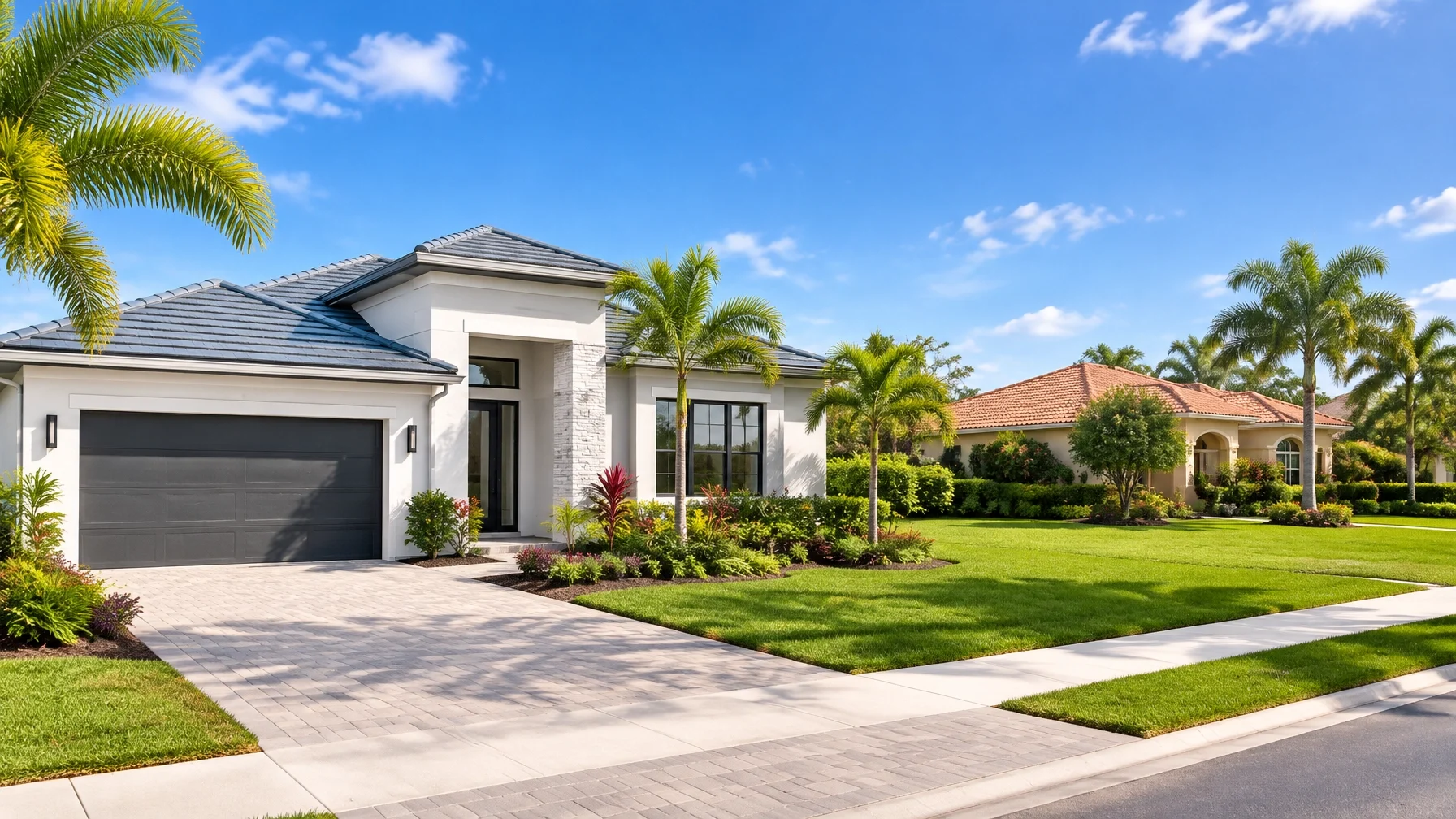
Sunlit Fort Myers home with palms and Florida landscaping

Points, rate buydowns, and builder incentives are not the same

These terms are often used interchangeably, but they describe different strategies:

  • Paying points: One discount point is generally equal to 1% of the loan amount. You pay the lender upfront in exchange for a permanent rate reduction. The value depends on how much the rate falls and how long you expect to keep the loan.
  • Buying down the rate: This can mean paying points, but it may also refer to a temporary 2-1 or 1-0 buydown, where the payment is reduced during the first one or two years and then rises to the full note rate.
  • Builder incentives: A builder may offer closing-cost credits, upgrades, a temporary buydown, or preferred-lender pricing. Compare the incentive against the lender’s fees, rate, APR, loan terms, and the home’s total price. A large credit is not automatically the best deal.

Ask for a side-by-side comparison showing total cash to close, monthly payment, APR, and five-year borrowing cost.

Why Florida-specific pre-approval matters for retirees and out-of-state buyers

A pre-approval from a lender in another state may not fully account for Southwest Florida realities.

A Florida-specific lender can help estimate:

  • Homeowners, wind, and flood insurance
  • Lee County property taxes after purchase
  • Homestead exemption eligibility
  • HOA, condominium, and CDD obligations
  • Remote or electronic closing requirements
  • Retirement income, pensions, Social Security, investment income, or asset-based qualifying
  • Condo review requirements and association financial documents

For a retiree or relocating buyer, the right pre-approval should be based on the complete monthly housing cost, not only principal and interest. Before making an offer, obtain a property-specific insurance quote and ask the lender to update the estimate using the actual tax, HOA, CDD, and flood information.

The takeaway

In today’s Cape Coral and Fort Myers market, the purchase price is only the beginning. A $375,000 Cape Coral home may produce a monthly payment anywhere from the mid-$2,000s to the mid-$3,000s depending on down payment, insurance, taxes, PMI, and community fees. A $335,000 Fort Myers home can carry a similarly wide range.

Use the list price to find the property. Use the all-in monthly payment and verified cash-to-close estimate to decide whether it fits your life.

Rates, insurance premiums, taxes, lender fees, closing costs, and payment estimates change and vary by borrower and property. Always confirm the numbers with a licensed Florida lender, insurance professional, title company, and tax adviser. For local guidance, connect with the RE/MAX Realty Team, serving buyers, sellers, investors, and relocating households throughout Lee County and Southwest Florida.
Read More
j7eveodvh5y
Uncategorized
September 29, 2026by Penny

Hyper-Local Cape Coral & Fort Myers Real Estate Insights: New Construction vs. Resale, Where the Deals Are Right Now

Daily market insight for September 29, 2026

If you are shopping for a home in Cape Coral or Fort Myers right now, the best deal may not be the home with the lowest list price. It may be the property with the strongest combination of price, financing incentives, insurance outlook, maintenance costs, and long-term resale value.

That makes the new construction-versus-resale decision especially important in late September 2026. Builders are using meaningful incentives to move completed and quick-move-in homes, while resale sellers are competing with newer properties that offer modern building standards and fewer immediate repair concerns.

The short answer: new construction is often the better monthly-payment deal, while resale can still offer the better land, location, and negotiating opportunity. The right choice depends heavily on the neighborhood and the total cost of ownership.

The Southwest Florida market backdrop

Lee County remains close to balanced rather than dramatically favoring buyers or sellers.

Recent August and early-September reporting shows:

  • Approximately 14,852 active listings across the region, down about 20.7% year over year
  • Roughly 5.4 months of supply
  • Cape Coral’s August median sale price: approximately $382,375, with about 4.8 months of supply
  • Fort Myers’ August median sale price: approximately $345,000, with about 5.2 months of supply
  • A September Fort Myers estimate near $334,800, with roughly 74 days on market
  • Fort Myers Beach’s median: approximately $470,000

You can review broader market reporting through Florida Realtors market data, along with current Cape Coral trends from Redfin.

This environment gives buyers room to compare. It also gives builders a reason to make their terms more attractive.

Why new construction deserves a closer look in 2026

Nationally, newly built home prices reached a five-year low earlier this year, and builders in Southwest Florida are actively competing for buyers.

Typical incentives being advertised or negotiated in Cape Coral and Fort Myers include:

  • Mortgage-rate buydowns often running 0.5% to 1.5% below prevailing market rates
  • Closing-cost or prepaid credits generally ranging from $5,000 to $20,000
  • Design-center allowances or upgrade credits
  • Lot-premium reductions
  • Negotiable pricing on inventory and quick-move-in homes
  • Builder-paid contributions toward closing costs when using a preferred lender and title company

The most aggressive opportunities are usually found on homes that are already complete or nearing completion. A finished home costs the builder money every month it remains unsold, so these properties may receive more flexible pricing than a home that has not yet been started.

Current new-home inventory and promotions can be explored through NewHomeSource listings for the Cape Coral area and Lee County new construction listings. Promotions change frequently, however, and the exact terms may depend on the community, phase, financing program, and closing date.

The important comparison: payment versus price

A resale home listed at $365,000 may appear less expensive than a new home listed at $385,000. But if the builder offers a rate buydown, $15,000 in closing-cost assistance, and a lower insurance profile, the new home may produce a lower monthly payment and require less cash at closing.

That does not automatically make it the better investment. Buyers still need to compare:

  1. The final contract price
  2. The value of included features and upgrades
  3. The lot premium
  4. HOA and CDD charges
  5. Estimated insurance and flood costs
  6. Property taxes
  7. The likely cost of repairs and replacements in the first five years

A builder incentive can be valuable, but it should not distract from an inflated base price or expensive recurring fees.

New construction home with Florida landscaping in Cape Coral

Cape Coral: where new construction and resale compete differently

Cape Coral is not one uniform market. The math changes considerably depending on the quadrant, canal access, lot type, and whether the property is inside a planned community.

Northwest and Northeast Cape Coral

These areas often offer more new construction on individual lots, including homes that are not part of a large master-planned development. Some may have no mandatory HOA and no CDD, which can make the total monthly cost attractive.

Buyers should still investigate:

  • Remaining utility or infrastructure assessments
  • Drainage and road improvements
  • Whether irrigation systems are included
  • Landscaping, fencing, appliances, and window treatments
  • Flood zone and elevation
  • Future development around the parcel

A lower-priced new home in the Northwest Cape may be a strong value for a buyer who wants modern construction and does not need an established neighborhood. A resale home nearby may offer mature landscaping, a larger finished yard, or a better-positioned lot, but may also require roof, HVAC, or seawall work.

Southwest and Southeast Cape Coral

In older, more established sections of Cape Coral, resale homes can offer advantages that are difficult to reproduce in a new development. Buyers may find mature trees, established streets, larger landscaping investments, and proximity to existing shopping, restaurants, canals, and waterfront access.

Waterfront resale homes require an especially careful inspection of:

  • Seawall age and condition
  • Dock and lift condition
  • Canal access and bridge clearance
  • Boat access to the river or Gulf
  • Flood zone and elevation
  • Roof age and wind-mitigation features

A dated resale property may offer negotiating room, but the renovation budget must be realistic. A $20,000 price reduction can disappear quickly if the roof, electrical panel, air conditioner, or seawall needs attention.

Fort Myers: new construction often means community fees

Fort Myers has a larger concentration of gated and master-planned communities than much of Cape Coral. Newer neighborhoods around Gateway, Treeline Avenue, Daniels Parkway, Colonial Boulevard, and south Fort Myers may offer pools, clubhouses, fitness centers, gates, and maintained common areas.

Those amenities can be appealing, but they may come with:

  • HOA dues
  • CDD assessments
  • Community-specific rules
  • Future assessment risk
  • Restrictions on rentals, vehicles, fencing, or exterior changes

CDD assessments commonly range from approximately $1,300 to $4,200 or more annually, depending on the community and amenity package. Some communities have no CDD, but that does not necessarily mean they have no additional costs; the infrastructure expense may be reflected in HOA dues, lot pricing, or other assessments.

In Fort Myers, buyers should compare the full annual carrying cost, not just the advertised home price. A resale home in an established neighborhood may have a higher list price but lower recurring community costs. Conversely, a new home may offer a lower insurance profile, a warranty, and builder incentives that offset some HOA or CDD expenses.

Established resale home with mature landscaping in Fort Myers

The ownership costs that can change the answer

The “better deal” can shift after insurance and maintenance are included.

Insurance

Florida homeowners insurance remains expensive, although rate increases have moderated in some segments during 2026. A statewide baseline of approximately $3,600 per year is sometimes used for planning, but Lee County buyers should obtain property-specific quotes. Coastal exposure, roof age, flood zone, elevation, construction type, and wind-mitigation features can move the number substantially.

A newer roof and modern wind-rated construction may improve insurance options. A resale home with a post-2002 or post-2005 roof may also be attractive, particularly if the seller can provide a wind-mitigation inspection and roof documentation.

HOA and CDD charges

A new home with a lower purchase price can become less affordable if it carries several hundred dollars per month in HOA costs plus a CDD assessment. Request the current budget, fee schedule, governing documents, and disclosure of any pending or anticipated assessments.

Maintenance and warranties

New construction generally offers a builder warranty and fewer immediate replacement projects. It may also involve punch-list items, delayed landscaping, settling cracks, irrigation adjustments, and warranty-service follow-up.

Resale homes provide a known history and can be inspected before purchase, but buyers should budget for roof, HVAC, plumbing, appliances, pool equipment, and exterior maintenance based on the property’s age.

Which option fits which buyer?

New construction may fit you best if you:

  • Want a modern floor plan and current building standards
  • Prefer lower immediate maintenance risk
  • Can use a builder incentive effectively
  • Want to choose finishes or purchase a quick-move-in home
  • Are comfortable with HOA or CDD expenses
  • Plan to stay long enough to benefit from the warranty

Resale may fit you best if you:

  • Value an established neighborhood and mature landscaping
  • Want immediate occupancy
  • Prefer a larger lot or a specific location
  • Are comfortable managing renovations
  • Want to negotiate based on inspection findings
  • Need a waterfront, golf, or central location where little new land is available

Investors should be particularly careful with incentives. A temporary rate buydown can improve early cash flow, but long-term returns depend on rent, taxes, insurance, HOA restrictions, maintenance, and future resale value.

Bring representation to the builder appointment

If you are considering new construction, bring your buyer’s agent to the first builder appointment. Builder sales representatives work for the builder. Your agent can help compare communities, review incentives, identify additional costs, negotiate where possible, and coordinate inspections.

In many transactions, buyer representation typically comes at no direct cost to the buyer because compensation is addressed through the transaction. Registration policies vary, so discuss representation before visiting a model center.

RE/MAX Realty Team has more than 100 agents across two offices serving Cape Coral, Fort Myers, Fort Myers Beach, Sanibel, and surrounding Southwest Florida communities. Our team can help you compare builder incentives with resale opportunities, not just compare list prices.

Sources and local resources

  • RE/MAX Realty Team property search
  • Contact RE/MAX Realty Team
  • Meet the RE/MAX Realty Team
  • New construction in Cape Coral
  • New construction in Lee County
  • Cape Coral housing market data
  • Florida Realtors market reports
  • CDD fee overview for Florida buyers

The takeaway

In Cape Coral and Fort Myers, new construction is not automatically more expensive than resale in September 2026. Builder rate buydowns, closing-cost credits, design allowances, and negotiable quick-move-in pricing can narrow, or eliminate, the traditional new-construction premium.

At the same time, resale homes remain compelling when they offer established locations, mature landscaping, larger lots, or waterfront features that new communities cannot match.

The smartest comparison is the complete one: purchase price, incentive value, insurance, HOA and CDD charges, flood exposure, maintenance, and future resale appeal. Before you sign with a builder or make an offer on a resale home, let a local RE/MAX Realty Team agent help you calculate the true cost of both options. Start your Southwest Florida home search or contact our team for guidance tailored to your goals.

Read More
jHhU9myvT8t
Uncategorized
September 29, 2026by Penny

Hyper-Local Cape Coral & Fort Myers Real Estate Insights: The Condo Story, Lower Prices, Higher Fees, and What to Check Before You Buy

Cape Coral and Fort Myers market update for Monday, September 28, 2026

The sharpest split in today’s Southwest Florida housing market is between condominiums and single-family homes.

Condo prices have corrected substantially from their pandemic-era highs. In Cape Coral, condo prices are down roughly 34% from the 2022 peak. In Fort Myers, condo prices are down approximately 27% from the 2023 peak. Single-family homes have softened, too, but not nearly as much.

That creates an opportunity for buyers, but it also creates a new question: How much of the lower purchase price is being offset by higher monthly ownership costs?

For today’s buyers, the condo story is not simply “prices are down.” It is a combination of lower entry prices, rising insurance costs, mandatory reserve funding, special-assessment risk, and major differences between individual buildings.

The latest Southwest Florida condo market data

The FGCU Regional Economic Research Institute’s Q3 2026 report, which analyzes Q2 2026 activity, shows that buyers are returning to the condo segment.

Condo sales increased approximately 17% year over year to about 1,320 sales across Southwest Florida. At the same time, real median condo prices declined roughly 8% compared with Q2 2025.
That combination, higher sales volume and lower prices, suggests that buyers are finding value and negotiating more successfully. It also indicates that the condo market is functioning, rather than disappearing.

However, the broader regional figures do not tell the entire Cape Coral or Fort Myers story. A regional median can hide significant differences between:

  • A 1980s coastal high-rise
  • A newer inland condo community
  • A low-rise villa-style property
  • A downtown Fort Myers riverfront building
  • A 55+ community
  • A Sanibel or Fort Myers Beach building
  • A Cape Coral condo with canal access or boat docks

The reported 27% and 34% peak-to-current declines are best understood as directional comparisons for specific local condo segments and peak periods. They should not be interpreted as the exact decline for every building or every unit.

Market segment Current trend What is driving it?
Cape Coral condos Roughly 34% below the 2022 peak in affected segments Post-boom correction, insurance costs, reserve funding, buyer caution
Fort Myers condos Roughly 27% below the 2023 peak in affected segments Higher ownership costs, building-specific assessments, more negotiating room
Southwest Florida condo sales Up about 17% year over year to approximately 1,320 sales Improved affordability and buyers returning to the market
Southwest Florida condo prices Real median prices down about 8% year over year More inventory, fee concerns and price negotiation
Single-family homes Down approximately 4% in FGCU’s Q2 2026 regional data Softer demand, but fewer association-related costs
Condo fee drivers Rising insurance, reserves, maintenance and repairs Coastal exposure, post-Surfside requirements and aging buildings

Why condo fees are rising

The lower purchase price is only one part of the financial picture. Monthly condominium fees are rising in many Southwest Florida communities for two primary reasons: insurance and reserves.

In coastal areas, building insurance can represent approximately 40% to 50% of the total monthly condo fee. Premiums have increased because of storm exposure, reinsurance costs, construction costs and the financial impact of recent hurricanes.

Florida’s post-Surfside structural-safety requirements are another major factor. Covered condominium buildings, generally residential buildings of three or more habitable stories, must address milestone inspections and Structural Integrity Reserve Studies, commonly called SIRS.

A SIRS evaluates the expected life and replacement cost of major components such as:

  • Roofs
  • Structural systems
  • Fireproofing and fire-protection systems
  • Plumbing and electrical systems
  • Waterproofing and exterior painting
  • Windows and exterior doors
  • Other qualifying components

The Florida Department of Business and Professional Regulation’s condo inspection guidance explains how milestone inspections and SIRS requirements affect associations. If a building has underfunded reserves, owners may face higher regular assessments, special assessments, association loans or some combination of these options.

This is why a $75,000 price reduction does not necessarily mean a buyer is getting a $75,000 savings over the life of ownership.

Home buyer and real estate agent reviewing condo association documents at a table

The real math: compare total monthly cost

A buyer should compare the full monthly cost, not just the list price.

For example, consider two properties:

Condo option

  • Purchase price: $300,000
  • Estimated mortgage payment: $1,900
  • Condo fee: $900
  • Property taxes: $350
  • Unit insurance and flood-related coverage: $150
  • Estimated total: $3,300 per month

Single-family option

  • Purchase price: $390,000
  • Estimated mortgage payment: $2,450
  • HOA fee: $100
  • Property taxes: $450
  • Homeowners and flood-related insurance: $350
  • Estimated total: $3,350 per month

This is a simplified example, and actual costs will vary based on the down payment, interest rate, taxes, insurance, building finances and property location. But it shows how a lower condo purchase price can be nearly offset by a higher monthly association fee.

Ask for a detailed breakdown of the fee. How much goes toward:

  • Master insurance?
  • Structural reserves?
  • Routine maintenance?
  • Water, sewer or utilities?
  • Management?
  • Amenities?
  • Upcoming repairs?

The answer can tell you more than the fee total alone.

Condo buyer due diligence checklist

Before making an offer, buyers should review the association documents with their real estate agent, lender, insurance professional and, when appropriate, an attorney or other qualified adviser.

1. Review the current association budget

Look for insurance, utilities, maintenance, management, reserves and recurring repair expenses. Compare the current budget with prior years to identify sharp increases.

2. Request the SIRS and milestone inspection documents

Determine whether the building is required to have a SIRS or milestone inspection, whether one has been completed, and whether repairs remain outstanding.

A study can exist without the association being fully funded. Read the funding recommendations, not just the first page.

3. Compare reserves with required funding

Ask how much money is currently in reserves compared with the amount recommended by the study. Confirm whether reserves have been waived, deferred or underfunded in previous budgets.

4. Review the master insurance policy

Understand what the association’s policy covers and what it does not cover. Pay attention to deductibles, wind coverage, flood coverage, exclusions and whether the policy covers common elements only.

5. Obtain an HO-6 insurance quote

An HO-6 policy generally covers the owner’s personal property, liability and portions of the unit’s interior, depending on the policy and governing documents. It may also include loss-assessment coverage. Do not assume the master policy protects everything inside the unit.

6. Ask about special assessments

Review the history of special assessments and ask whether any are proposed, pending or being discussed. A recent assessment may not be the only one under consideration.

7. Check rental rules

Confirm minimum lease periods, annual rental limits, approval requirements, pet restrictions and whether short-term rentals are permitted. These rules can significantly affect both lifestyle and investment value.

8. Investigate litigation

Ask whether the association, developer or unit owners are involved in litigation. Pending lawsuits can affect financing, insurance, resale and the association’s financial position.

9. Review occupancy and owner-occupancy ratios

A high percentage of tenants may affect financing guidelines, maintenance expectations and resale appeal. Conversely, some 55+ communities have age restrictions that limit the buyer pool.

10. Calculate the insurance-to-reserves ratio

Two buildings with the same $900 monthly fee may have very different financial profiles. One might spend most of the fee on insurance, while another may be collecting substantial reserves for upcoming structural work.

What condo buyers should know about flood risk

Water views and waterfront access are important parts of the appeal of many SWFL waterfront homes and condos. They also make flood and insurance research essential.

Before buying, review the official Lee County Floodplain Management resources. The county provides flood-zone information, flood insurance resources, elevation information and links to current and proposed map changes. If the property is inside Cape Coral, Fort Myers, Sanibel or another municipality, contact the applicable city or town for jurisdiction-specific information.

The Lee County Property Appraiser GeoView can help buyers locate a parcel, review aerial imagery, identify property information and examine available flood and zoning layers.

A flood zone is not the same as an evacuation zone, and a property outside a mandatory flood-insurance area can still experience flood risk. Get an insurance quote before the inspection period ends.

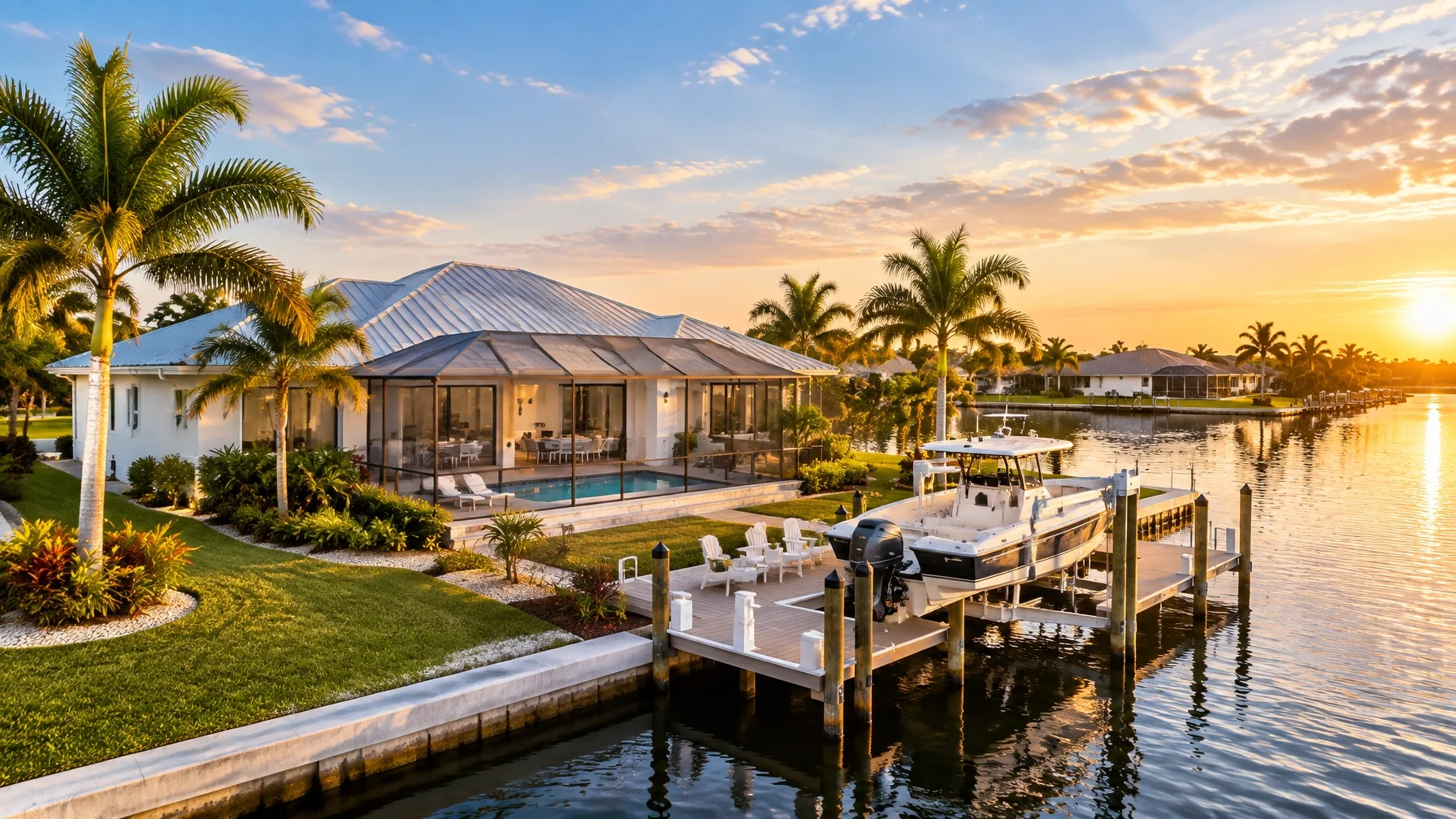
Fort Myers riverfront condo view with water, palms and modern buildings in daylight

What this means for condo sellers

Sellers have a better chance of avoiding surprises when they provide association information early.

Have the following documents ready:

  • Current budget and recent financial statements
  • SIRS and milestone inspection reports
  • Repair invoices and engineering reports
  • Special-assessment history
  • Master insurance declarations
  • Rules, regulations and rental restrictions
  • Meeting minutes
  • Litigation disclosures
  • Reserve information

Pricing should reflect the property’s total monthly cost compared with competing buildings. A unit with a lower list price but a much higher fee may not be the best value in the buyer’s eyes.

This is where experienced cape coral real estate agents and local realtors cape coral can help position a condo accurately. The right comparable sale may be in the same building, not across the city.

What this means for condo investors

Lower entry prices may be attractive, but investors should be conservative.

FGCU reported that real median rents in Lee County declined approximately 9% year over year, while Cape Coral’s median rent is around $1,900. That means investors should model rent growth carefully rather than assuming the rent increases of recent years will continue.

Before purchasing, calculate:

  • Mortgage payment
  • Condo fees
  • Property taxes
  • Insurance
  • Property management
  • Repairs and furnishings
  • Vacancy
  • Leasing fees
  • Potential special assessments
  • Rental restrictions and minimum lease periods

A condo may offer an attractive purchase price and still produce weak cash flow if fees rise or rents soften.

A note about the data

Real estate figures vary depending on the source, property type, geography, timeframe and whether the data is nominal or adjusted for inflation. The Cape Coral and Fort Myers peak-to-current declines cited here are directional and may differ substantially by building or neighborhood. FGCU’s figures are regional Q2 2026 data reported in its Q3 2026 report. This article is for general information only and is not an appraisal, legal opinion, insurance recommendation or investment advice.

The bottom line for the Cape Coral market update 2026

The condo segment is where Southwest Florida’s largest price correction is happening. That creates meaningful opportunities in Cape Coral, Fort Myers and surrounding communities, but buyers must look beyond the list price.

The best condo value is not necessarily the least expensive unit. It is the property with a defensible price, manageable monthly fees, adequate reserves, clear inspection history, reasonable insurance costs and rules that fit your plans.

Whether you are comparing Fort Myers real estate trends, searching for a Cape Coral waterfront condo or evaluating an investment, start with the building, not just the unit.

Search Cape Coral, Fort Myers and Southwest Florida properties or contact RE/MAX Realty Team for local guidance. With more than 100 agents, two offices and a record as the region’s #1 producing brokerage for more than 14 years, RE/MAX Realty Team has the local knowledge and resources to help buyers, sellers and investors move forward with confidence.

Read More
BOfEf_4Zgmx
Uncategorized
September 28, 2026by Penny

Hyper-Local Cape Coral & Fort Myers Real Estate Insights: Waterfront vs. Inland, Where Your Money Works Harder

If you are watching the Cape Coral market update 2026 headlines, you may be wondering where your money has the best opportunity right now: a waterfront home with boating access or an inland property with a lower purchase price and potentially simpler ownership costs.

The answer depends on your goals. Waterfront continues to command a meaningful premium in Cape Coral and Fort Myers, particularly for Gulf-access, sailboat-access, riverfront, and Gulf-front homes. At the same time, inland properties may offer a lower barrier to entry, more predictable expenses, and a broader pool of potential buyers or renters.

Late September 2026 is giving buyers more breathing room than they had during the 2021–2022 frenzy. Inventory is elevated, marketing times are longer, and negotiations are more common. However, the market is not uniform. Waterfront and inland homes are behaving differently, and the details behind the price tag matter.

The late-September 2026 market at a glance

Here is the broader picture across Lee County and the Cape Coral–Fort Myers metro:

  • Fort Myers median sale price: Approximately $334,818, down about 6% year over year
  • Fort Myers median days on market: Approximately 74 days
  • Fort Myers months of supply: Approximately 4.4 months
  • Cape Coral August median price: Approximately $382,375
  • Cape Coral months of supply: Approximately 4.8 months
  • Cape Coral–Fort Myers metro median list price: Approximately $425,000
  • Metro median days on market: Approximately 112 days as of late September

These numbers point to a market moving toward more balanced conditions. Buyers have more choices and negotiating leverage than they did several years ago, while sellers must pay closer attention to pricing, presentation, condition, and market positioning.

Citywide statistics, however, blend together very different properties. A modest inland home, a freshwater canal property, a Gulf-access home, and a riverfront estate should not be evaluated using the same expectations.

Waterfront still earns a premium, but not every waterfront property is equal

In Cape Coral, “waterfront” can mean several different things. A freshwater canal home may offer attractive views and kayaking access but no route to the Gulf. A Gulf-access home may connect to open water through bridges, while a sailboat-access property offers fewer height restrictions. Riverfront and Gulf-front homes occupy an even more limited and premium segment.

Typical pricing tiers in the current market broadly look like this:

  • Inland or off-water homes: Often in the upper-$200,000s to low-$300,000s, depending on condition, age, location, and size
  • Freshwater canal homes: Commonly in the mid-$400,000s and above
  • Bridge-restricted Gulf-access homes: Often around $600,000 to $650,000 and higher
  • Sailboat-access homes: Frequently $700,000 to $755,000 and above
  • Premium riverfront, wide-basin, or extensively upgraded properties: Often $1 million or more

Recent Cape Coral analyses have shown a waterfront-to-off-water median price gap of roughly $270,000, although the exact premium varies by neighborhood, canal width, boating access, home condition, and improvements.

Cape Coral Gulf-access canal home with a dock, seawall, and boat

The important takeaway is that buyers are not simply paying for a view. They are paying for access, scarcity, lifestyle utility, and the potential to use the property as a primary residence, second home, seasonal retreat, or vacation rental.

In Fort Myers, waterfront pricing is more varied. Riverfront properties along the Caloosahatchee, homes near McGregor Boulevard, canal communities, and waterfront condominiums each have distinct buyer pools. Some riverfront and luxury properties can reach well above the citywide median, while inland neighborhoods may remain closer to the broader Fort Myers price range.

Inland homes may offer more predictable ownership costs

Inland properties generally cost less to purchase than comparable waterfront homes. That lower price can create several advantages:

  1. More accessible monthly payments: A lower purchase price may reduce the amount needed for a down payment and financing.
  2. Broader resale audience: Inland homes may appeal to first-time buyers, local families, retirees, and investors seeking a lower acquisition cost.
  3. Potentially simpler insurance planning: Inland homes are not automatically low-risk, but they may be less likely to carry the combination of flood, wind, seawall, dock, and coastal exposure concerns associated with waterfront properties.
  4. More flexibility in renovations: Buyers may have more room in their budget for updates, energy improvements, or rental-ready improvements after closing.

That does not mean inland is always the better investment. A well-located waterfront property can retain strong appeal because supply is limited and many buyers specifically want boating access or water views. But inland buyers may be able to achieve stronger cash-flow prospects, or at least lower carrying costs, depending on the property, financing, rental restrictions, taxes, insurance, and management expenses.

Well-maintained inland home in a palm-lined Fort Myers neighborhood

The four deal-shapers every waterfront buyer must investigate

The waterfront premium only works when the underlying property supports it. Before making an offer, buyers should evaluate four major issues.

1. Insurance

Insurance costs remain one of the biggest differences between waterfront and inland ownership in Southwest Florida. Wind coverage, flood coverage, deductibles, roof age, construction type, mitigation features, and prior claims can all affect the final cost.

Do not rely on a seller’s current premium as a guarantee. Request fresh quotes for the exact property and your intended coverage before the inspection or financing deadlines expire.

2. Flood zone designation

A home’s location near water does not tell the entire story, and being inland does not mean a property has no flood risk. FEMA explains that flood maps indicate the likelihood of flooding and help lenders determine insurance requirements.

Use the official FEMA Flood Map Service Center to review the property’s current mapping information. Flood zones can change, and the exact parcel, not just the neighborhood, matters.

3. Seawall and dock condition

A seawall is part of the waterfront property’s value and its future maintenance obligations. Cracking, bowing, erosion, settlement, or deterioration behind the wall can signal a significant repair or replacement expense.

Buyers should ask about:

  • The age and condition of the seawall
  • Recent inspections or engineering reports
  • Dock and lift permits
  • Shoreline erosion
  • Canal width and navigability
  • Bridge clearance and route to open water

A seawall issue may not be obvious during a standard home inspection, so specialized waterfront due diligence is often worthwhile.

4. Roof age and storm resilience

Roof age can affect both insurability and negotiating leverage. Buyers should review permits, inspection reports, wind mitigation features, roof materials, and evidence of storm damage or repairs.

A newer roof, impact-rated openings, elevation improvements, and documented maintenance may help support value. An older roof or incomplete repair history can make a seemingly attractive waterfront price less appealing after insurance and replacement costs are calculated.

What this means for buyers

Buyers have more leverage in late September 2026, but the best opportunities are not always the properties with the biggest price reductions.

For inland homes, focus on condition, location, resale appeal, and total monthly cost. A properly priced home with updated systems and reasonable insurance may offer better value than a cheaper property requiring immediate repairs.

For waterfront homes, negotiate based on the complete property, not just the list price. A seller may be more flexible on price, closing costs, repairs, seawall work, dock equipment, or insurance-related concerns. Compare the home’s boating access and physical condition with recent sales in the same waterfront category.

Working with experienced Cape Coral real estate agents or realtors in Cape Coral is especially important when evaluating canal access, flood mapping, seawall responsibility, and local resale patterns.

What this means for sellers

Waterfront sellers should not assume that a premium location eliminates the need for accurate pricing. Higher inventory means buyers can compare your property with more alternatives, including newer construction and homes with updated roofs, seawalls, kitchens, and insurance documentation.

A strong waterfront marketing strategy should clearly explain:

  • Type and quality of water access
  • Bridge restrictions and boating route
  • Seawall and dock history
  • Roof age and permits
  • Flood zone information
  • Recent updates and storm mitigation features
  • Insurance considerations, where appropriate

Inland sellers also need a realistic strategy. Buyers are comparing monthly payments and total ownership costs carefully, so a clean, well-maintained, correctly priced home can stand out even in a slower market.

What this means for investors

Investors should separate lifestyle value from financial performance. Waterfront homes may attract seasonal renters and vacation-home buyers, but they also tend to involve higher acquisition costs, insurance expenses, maintenance obligations, and specialized repairs.

Before purchasing, analyze:

  • Long-term versus seasonal rental demand
  • Local rental regulations and HOA restrictions
  • Insurance and flood premiums
  • Property management fees
  • Pool, dock, lift, and seawall maintenance
  • Vacancy assumptions
  • Resale liquidity at your target price point

An inland property may produce a more manageable investment profile, while a waterfront property may offer stronger lifestyle appeal and scarcity value. Neither category is automatically superior.

Local guidance makes the difference

Real estate decisions in Cape Coral and Fort Myers require more than a broad market statistic. The right evaluation depends on the neighborhood, property type, canal category, flood designation, construction age, insurance profile, and intended use.

RE/MAX Realty Team brings more than 100 full-time real estate professionals, two Southwest Florida offices, and deep Lee County market knowledge to buyers, sellers, renters, and investors. The brokerage has also been the region’s #1 producing brokerage for more than 14 years.

Whether you are comparing available SWFL properties, preparing to sell, or evaluating a waterfront investment, local guidance can help you compare the full cost and potential of each opportunity.

The takeaway

Waterfront property in Cape Coral and Fort Myers still commands a premium, especially when it offers Gulf, sailboat, river, or direct boating access. Those properties can move faster than comparable inland homes when they are correctly priced and well maintained, but their purchase price is only one part of the decision.

Inland homes may offer a lower entry point, broader resale appeal, and more predictable ownership costs. Waterfront homes may offer scarcity, lifestyle value, and stronger emotional appeal, but they require careful review of insurance, flood zones, seawalls, docks, and roofs.

In the more balanced late-September 2026 market, the smartest purchase is not necessarily waterfront or inland. It is the property whose price, condition, carrying costs, and long-term purpose work together.

Read More
qyDkAgCNuSn-740×480
Uncategorized
September 27, 2026by Penny

Hyper-Local Cape Coral & Fort Myers Real Estate Insights: Cape Coral vs Fort Myers, Which Market Fits Your Budget?

Late September 2026 buyer, seller, renter, and investor guide

Cape Coral and Fort Myers are close neighbors, but they do not offer the same real estate experience. Cape Coral generally brings more canal-front housing, newer construction opportunities, and stronger recent price growth. Fort Myers offers a lower median sale price, more varied housing options, and additional negotiating room in many neighborhoods.

The right choice depends on more than the citywide median. Your budget, insurance costs, boating plans, commute, rental strategy, and preferred lifestyle can all change which market represents the better value.

Cape Coral vs. Fort Myers: The late September comparison

Market measure Cape Coral Fort Myers
Median sold price Approximately $382,375 Approximately $345,000; some September estimates are closer to $334,800
Year-over-year price trend Up approximately 6.8% Essentially flat year over year
Active listings Approximately 2,441, down about 22.4% year over year More varied by segment; approximately 5.2 months of supply
Months of supply Approximately 4.8 months Approximately 5.2 months
Typical marketing pace Median around 85 days on market Approximately 64–74 days to contract, depending on the data set and property type
Sale-to-asking relationship Sellers closing around 97.7% of the most recent asking price Sellers netting approximately 95% of asking
Notable buyer leverage More limited inventory in some single-family segments Approximately 24% of active listings are relists

These numbers should be viewed as market indicators rather than guarantees. Data can vary depending on whether the analysis includes single-family homes, condominiums, townhomes, waterfront properties, new construction, or a broader geographic boundary.

For regional perspective, Fort Myers Beach is operating at a much higher price level, with a working median around $470,000. That is a reminder that “Fort Myers area” statistics can look very different depending on whether they include beach, riverfront, condo, or inland properties.

For broader context, FGCU’s Regional Economic Research Institute housing dashboard reported a Cape Coral–Fort Myers MSA single-family median price of $380,000 for August 2026. The Florida REALTORS® July 2026 market report also provides statewide and MSA-level comparisons.

First, know which number you are comparing

A median sold price represents the midpoint of homes that actually closed during a specific period. Half sold for more and half sold for less.

A median listing price represents the midpoint of homes currently offered for sale. It reflects seller expectations, not completed transactions.

Those numbers can differ significantly. A market may have a high median listing price because many owners are testing ambitious prices, while the median sold price remains lower because buyers are negotiating. For purchase decisions, sold prices are generally more useful for understanding what buyers have recently paid. For sellers, comparable closed sales, pending sales, active competition, and property condition all matter.

Citywide medians can also mislead at the neighborhood level. A Cape Coral home on a freshwater canal is not directly comparable to a direct Gulf-access property. A Fort Myers condominium near downtown is not comparable to a newer single-family home in a master-planned community. The most useful comparison is usually between similar homes in similar locations.

Pick Cape Coral if waterfront access and space are priorities

Cape Coral remains the stronger fit for buyers who want a large selection of canal-front homes and a lifestyle centered around boating, outdoor space, and single-family residences.

The waterfront categories are important:

  • Direct Gulf or sailboat access: The highest-demand category, generally offering fewer bridge restrictions and a more practical route to open water. These homes usually command a substantial premium.
  • Bridge-restricted Gulf access: Still connected to saltwater routes, but bridge height, bridge location, and travel time can limit the boats that can reach the property.
  • Freshwater canal: Often more affordable and attractive for views, kayaking, fishing, or a private waterfront setting, but it does not provide the same boating access to the Gulf.

Cape Coral’s citywide median of approximately $382,375 includes a wide range of properties. Newer inland homes, older canal homes, and premium sailboat-access properties can sit in very different price brackets.

Buyers should also compare Northwest Cape Coral new construction with resale inventory. New construction may offer modern roofs, current building standards, energy-efficient systems, builder incentives, and fewer immediate renovation needs. However, buyers should investigate completion timelines, lot premiums, landscaping requirements, warranty coverage, utility costs, and the surrounding infrastructure.

Resale homes may offer mature landscaping, established neighborhoods, larger lots, and more immediate availability. They may also require closer review of roof age, electrical systems, seawalls, plumbing, storm repairs, and insurance history.

Waterfront homes, docks, and canals in Cape Coral

Pick Fort Myers if entry price and negotiation matter most

Fort Myers generally offers the lower citywide median, with recent figures around $345,000 and some September estimates closer to $334,800. Pricing has been essentially flat year over year, which may create a more approachable entry point for buyers who are focused on monthly payment.

The Fort Myers market also offers broader housing variety, including:

  • Condominiums and townhomes
  • Established inland neighborhoods
  • Newer master-planned communities
  • Riverfront properties
  • Downtown and urban-adjacent housing
  • Higher-end waterfront and luxury pockets

The approximately 24% relist rate is especially relevant for buyers. A relisted property may have been withdrawn and returned to the market, sometimes after an unsuccessful pricing strategy, an expired listing, a change in seller circumstances, or a price adjustment. It does not automatically mean there is a problem with the home, but it can create an opportunity to ask better questions and negotiate more carefully.

With sellers netting around 95% of asking in some Fort Myers reporting, buyers may have more room to discuss price, closing costs, repairs, rate buydowns, or other concessions. The strongest leverage usually exists on homes that have been available for an extended period, experienced price reductions, or returned to the market.

Insurance can change the budget more than the purchase price

The lower purchase price in Fort Myers does not automatically mean a lower total monthly cost, and the higher Cape Coral median does not tell the whole insurance story.

In both markets, obtain insurance quotes early. Review:

  • Homeowners insurance
  • Windstorm coverage
  • Flood insurance
  • Roof age and construction type
  • Elevation and flood zone
  • Prior claims
  • Hurricane-resistant features
  • Deductibles and exclusions
  • HOA or condominium master-policy costs

Cape Coral has a larger supply of canal-front homes, so buyers shopping for waterfront there may face additional seawall, dock, lift, flood, and wind-related expenses. Fort Myers buyers may find more inland choices and some lower-risk locations, but riverfront, coastal, older, and low-elevation properties can still carry significant costs.

Lee County’s floodplain management resources explain flood zones, elevation certificates, flood insurance, and permit requirements. Buyers can also use the Lee County Property Appraiser’s GeoView for parcel and map information and review additional tools through Lee County GIS. For properties inside Cape Coral or Fort Myers, confirm information with the applicable city because incorporated municipalities may have their own flood-map and permitting guidance.

Waterfront due diligence checklist

Before buying a waterfront property in either market, verify:

  1. Seawall condition, repair history, and permits
  2. Dock and boat-lift permits
  3. Bridge clearance and the actual route to open water
  4. Canal depth, turning radius, and access at low tide
  5. Flood zone and base flood elevation
  6. Elevation certificate, if available
  7. Insurance quotes before the inspection or financing deadlines
  8. HOA rules governing docks, rentals, boats, and improvements
  9. Rental restrictions and minimum lease periods
  10. Any mangrove, environmental, shoreline, or drainage restrictions

A waterfront view is valuable, but usable access and documented improvements are what determine how much that feature is worth.

What this means for sellers

Cape Coral sellers: The 97.7% sale-to-most-recent-asking ratio and stronger year-over-year price trend are encouraging, but buyers are still comparing condition and total ownership costs. Accurate pricing remains important, particularly when competing with new construction in Northwest Cape Coral. Sellers should highlight permitted improvements, seawall updates, boat access, elevation information, storm protection, and insurance details.

Fort Myers sellers: The approximately 95% sale-to-asking relationship and relist activity suggest that overpricing can lead to extended market time and repositioning. A home that is correctly priced from the beginning may stand out against properties that have accumulated price reductions or returned to the market. Sellers should be prepared to discuss repairs, credits, closing costs, and other terms, not just the headline price.

In both cities, the best pricing strategy comes from comparing recent closed sales, current competition, pending transactions, property condition, and neighborhood-specific demand.

What this means for investors and renters

Investors should evaluate both purchase price and operating performance. Cape Coral’s median rent is approximately $1,900 per month, but projected income must be weighed against insurance, property taxes, maintenance, utilities, vacancy, management, and any HOA or rental restrictions.

Cape Coral may appeal to investors seeking single-family rentals, canal properties, or long-term appreciation potential. Fort Myers may offer more entry points through condos, townhomes, and inland properties, along with potential buyer leverage created by longer marketing times and relisted inventory.

Renters should compare more than monthly rent. Ask about utility responsibility, flood exposure, parking, pet rules, lease renewals, storm-related provisions, and commute times. A lower rent may not represent better value if transportation or utility costs are substantially higher.

A simple decision framework

Lean Cape Coral if you want:

  • More canal-front and boating-oriented housing
  • A stronger recent price trend
  • New construction choices, particularly in the Northwest Cape
  • More space and a predominantly single-family lifestyle
  • A waterfront property search with several access tiers

Lean Fort Myers if you want:

  • A lower citywide median price
  • More condominium, townhome, and inland options
  • Greater negotiating room in selected segments
  • A shorter drive to downtown amenities, medical services, and established commercial areas
  • A market where relists and longer marketing times may improve buyer leverage

The most important question is not simply, “Which city is cheaper?” It is, “Which city gives me the best combination of purchase price, insurance, maintenance, commute, lifestyle, and long-term flexibility?”

RE/MAX Realty Team can help you compare those costs at the neighborhood and property level. With more than 100 agents, two Southwest Florida offices, and a record as the region’s #1 producing brokerage for more than 14 years, our team brings detailed local knowledge to purchases, sales, rentals, and investments.

RE/MAX Realty Team office serving Southwest Florida

Start with the Southwest Florida property search, or contact RE/MAX Realty Team to compare Cape Coral and Fort Myers options based on your actual budget and goals.

RE/MAX Realty Team office exterior

Takeaway

Cape Coral is often the better fit for buyers prioritizing canals, boating, space, and newer single-family housing. Fort Myers may be the better fit for buyers prioritizing lower entry prices, housing variety, and negotiation. In either market, the winning decision comes from looking beyond the median, especially at insurance, flood exposure, permits, waterfront access, rental rules, and neighborhood-level comparable sales.

Read More
t6vMBbEKMsQ
Uncategorized
September 26, 2026by Penny

Hyper-Local Cape Coral & Fort Myers Real Estate Insights: Late September 2026

Southwest Florida’s late-summer real estate market is entering fall with a more selective form of balance. Regional inventory is lower than it was a year ago, but buyers are still taking their time, comparing properties carefully, and paying close attention to condition, insurance, water access, and long-term ownership costs.

For Cape Coral and Fort Myers, the headline is simple: there may be fewer choices overall, but the market is still behaving very differently from one neighborhood, property type, and waterfront category to the next.

This snapshot is designed for local and out-of-state buyers, sellers, and investors evaluating Lee County as we move into the fall 2026 buying season.

The Southwest Florida market is tightening, but not uniformly

Across Southwest Florida, active listings have declined approximately 20.7% year over year to about 14,852 properties, according to a regional market snapshot. The region is carrying roughly 5.4 months of supply, which is close to a balanced market overall.

The regional number is important, but it does not tell the whole story. Inventory and negotiating power vary considerably between:

  • Single-family homes and condominiums
  • Waterfront and off-water properties
  • Move-in-ready homes and dated properties
  • Direct Gulf-access, bridged, and freshwater canal locations
  • Established neighborhoods and newer construction areas

Lee County’s active listing count is lower than the broader Southwest Florida total, and county-level data also show a substantial year-over-year decline. Buyers may have fewer homes to choose from, but that does not mean every well-priced property will receive multiple offers. Instead, demand is concentrating around homes that offer the right combination of location, condition, usable features, and predictable ownership costs.

For broader regional context, buyers and sellers can review the FGCU Regional Economic Research Institute’s active listings dashboard.

Cape Coral: a balanced overall market with major waterfront differences

Cape Coral’s August 2026 median sale price was approximately $382,375, with about 4.8 months of supply. That places the city near a balanced market, although individual segments can feel much tighter or softer.

The city’s geography makes hyper-local analysis especially important. A home on a freshwater canal in Northeast Cape Coral is competing in a very different market from a Gulf-access home in Southwest Cape Coral or a property near the Caloosahatchee River.

Freshwater canal homes

Freshwater canal properties typically fall in the approximate $405,000 to $465,000 range, depending on the home’s size, age, updates, lot, canal width, and overall presentation.

These homes can appeal to buyers who want:

  • Water views
  • A dock or outdoor lifestyle
  • Kayaking, paddleboarding, or fishing
  • Lower pricing than Gulf-access properties
  • A quieter residential setting

Freshwater canal homes do not provide a boating route to the Gulf, so buyers should be clear about whether they want waterfront scenery or navigable boating access. In areas of Northeast Cape Coral and other freshwater canal neighborhoods, that distinction can substantially affect value.

Gulf-access properties

Direct Gulf-access properties are trading in a higher tier, generally around $692,500 to $730,500 in the current market snapshot. Homes with unrestricted access command a premium because boaters are paying for more than a canal view: they are paying for route, clearance, convenience, and flexibility.

Bridge-restricted properties typically trade lower. That may be an attractive value for buyers with smaller boats or no immediate boating plans, but bridge height, canal route, tide conditions, and travel time to open water should be evaluated before making an offer.

Neighborhoods such as Cape Harbour and waterfront corridors closer to the Caloosahatchee River can carry additional premiums because of amenities, broader water views, boating infrastructure, or faster access. However, higher prices do not eliminate negotiation. Insurance costs, seawall concerns, and deferred maintenance can still cause a premium listing to sit.

Move-in-ready Cape Coral freshwater canal home with a dock and seawall

Fort Myers: softer blended numbers, tighter desirable segments

Fort Myers recorded an August 2026 median sale price of approximately $345,000, with about 5.2 months of supply. September estimates place the median closer to $334,800, with a median of roughly 74 days on market.

These numbers reflect the broader Fort Myers market and include a mix of property types and locations. The experience can be very different for a well-maintained single-family home, a riverfront property, a condominium, or a home farther from the water.

In areas along the McGregor Boulevard corridor, near established waterfront neighborhoods, and around the Caloosahatchee River, buyers are often evaluating location and scarcity as much as square footage. Direct riverfront and Gulf-connected frontage can command a meaningful premium because these properties are limited and difficult to replicate.

Meanwhile, condos and off-water homes may offer more negotiating room, particularly when they have higher association fees, pending assessments, older roofs, insurance questions, or deferred updates.

Fort Myers neighborhood differences matter

  • Downtown Fort Myers and the River District: Buyers often prioritize walkability, restaurants, historic character, and proximity to the river. Condominiums and attached properties may behave differently from single-family homes in suburban neighborhoods.
  • McGregor corridor: Established homes, mature landscaping, and access toward the beaches remain attractive, but buyers should compare flood exposure, roof age, renovation quality, and insurance costs carefully.
  • Iona and nearby waterfront areas: Water access and boating potential can create significant price differences from one canal or frontage type to another.
  • South Fort Myers: Buyers may find a broader range of condos, townhomes, and single-family properties, with value often determined by community fees, condition, and proximity to major roads and services.

For current listing research, buyers can use RE/MAX Realty Team’s Southwest Florida property search and then work with an agent to compare active listings with recent closed sales in the same micro-market.

Fort Myers Beach remains low-inventory and price-sensitive

Fort Myers Beach continues to be a distinct market. The current working median sale price is around $470,000, with extended marketing times and strong sensitivity to condition, elevation, insurance, and rebuilding or renovation status.

Low inventory does not automatically mean sellers can price aggressively. On the beach, buyers are often comparing:

  • Flood-zone considerations
  • Wind and flood insurance availability
  • Elevation and storm-resistance features
  • Rental regulations
  • Association financial health
  • Access to the beach, bay, or Gulf
  • Repair and permitting history

A property that is fully documented, correctly priced, and easy to insure may attract attention quickly. A similarly located property with unclear improvements or substantial deferred maintenance can remain on the market much longer.

The Redfin Fort Myers Beach market page offers another useful reference point, but buyers should always confirm current figures by property type and time period.

Why waterfront due diligence matters more than ever

Waterfront buyers should not treat a dock or canal view as a simple feature. In Cape Coral and Fort Myers, the usable value of waterfront property depends on several connected systems.

Before moving forward, investigate:

  1. Seawall condition and documentation
    Ask for installation records, permits, repair history, engineering reports, and any known settlement or erosion concerns. A seawall replacement can materially affect your ownership budget.

  2. Bridge clearance and boating route
    Confirm the actual route to open water, not just the marketing description. Check fixed bridge heights, tides, canal width, turning areas, and whether the route suits your boat.

  3. Dock, lift, and electrical systems
    Inspect pilings, decking, lifts, davits, shore power, seawater exposure, and permits. Functional infrastructure can be a major advantage over a property that only appears waterfront-ready.

  4. Flood and wind insurance
    Obtain insurance quotes early. Premiums, deductibles, coverage limits, elevation, roof age, and construction details can change the affordability calculation.

  5. HOA and municipal restrictions
    Review rules involving docks, boat size, lifts, rentals, seawalls, landscaping, and exterior improvements.

Fort Myers waterfront home near a river tributary with boat access

What fall 2026 means for buyers, sellers, and investors

For buyers

The tightening inventory means you should be prepared to act when the right property appears, especially in desirable waterfront and move-in-ready segments. At the same time, avoid rushing through inspections or insurance review simply because a home is scarce.

The best offer is not always the highest offer. Strong documentation, a realistic inspection period, and a clear understanding of access and ownership costs can protect your investment.

For sellers

Pricing must reflect the exact segment, not just the citywide median. A Gulf-access home should be compared with similar Gulf-access homes, while a freshwater canal property should be evaluated against properties with comparable water utility and condition.

Highlight seawall records, permits, roof age, storm improvements, dock details, and insurance information. Buyers are rewarding transparency and functionality. Dated homes can still sell, but the price must account for the work ahead.

For investors

Investors should underwrite conservatively. Longer marketing times in selected areas, insurance volatility, association costs, maintenance, and rental rules can materially affect returns. A property with lower purchase price may not be the better investment if it requires a seawall, roof, dock, or major insurance adjustment.

Real estate professional reviewing seawall and waterfront inspection documents on a Cape Coral dock

The takeaway for late September

Cape Coral and Fort Myers are not one market. They are a collection of highly localized submarkets shaped by water access, bridges, neighborhood character, property condition, insurance, and buyer priorities.

Regional inventory is down roughly one-fifth from last year, but the strongest demand is concentrated in homes that are well-maintained, properly priced, and supported by reliable documentation. For waterfront buyers, the question is not simply, “How close is the home to the water?” It is, “Can I safely, affordably, and practically use the water?”

Whether you are buying, selling, renting, or investing, RE/MAX Realty Team can help you compare the details that matter at the neighborhood and property level. With more than 100 agents serving Cape Coral, Fort Myers, Fort Myers Beach, Sanibel, and surrounding communities, our team is ready to help you make a well-informed Southwest Florida move.

Read More
-ZGabvtGLPD
Uncategorized
September 23, 2026by Penny

Hyper-Local Cape Coral & Fort Myers Real Estate Insights: What Buyers and Sellers Need to Know Right Now

Southwest Florida real estate is not one market. In 2026, the difference between a Gulf-access home in Southwest Cape Coral, a newer property in the Northeast Cape, a downtown Fort Myers condo, and a post-storm rebuild on Fort Myers Beach can be substantial.

That is why buyers and sellers need more than a broad “Cape Coral market update 2026.” They need neighborhood-level information about inventory, pricing, flood exposure, insurance, construction type, rental demand, and resale potential.

Late-summer market data shows the Cape Coral–Fort Myers area is still more negotiable than the national market. Median days on market across the metro were approximately 94–95 days, while Cape Coral had roughly 2,800 active listings. However, individual ZIP codes and property types are moving at very different speeds.

Cape Coral real estate in 2026: more choice, but not equal leverage everywhere

Cape Coral remains one of the most varied residential markets in Lee County. The city’s canal network, new construction pipeline, waterfront lifestyle, and relative affordability continue to attract full-time residents, retirees, second-home buyers, and investors.

At the same time, buyers are taking longer to make decisions. They are comparing insurance quotes, reviewing flood zones, inspecting seawalls and docks, and weighing resale homes against new construction.

Recent market snapshots show:

  • Cape Coral typical home values are approximately $335,000, depending on the data source and property type.
  • Median days on market range from roughly 70 to 90-plus days in several major ZIP codes.
  • Many homes are selling below the original asking price, creating room for negotiation.
  • Gulf-access waterfront homes command a significant premium, but condition, canal location, bridge clearance, seawall age, and flood exposure all affect value.

For buyers, this means more time and selection. For sellers, it means accurate pricing and strong presentation are essential.

Search available Cape Coral and Fort Myers properties with local guidance from RE/MAX Realty Team.

SW Cape versus NE Cape: lifestyle, boating access, and insurance considerations

Cape Coral contrast between established Gulf-access waterfront homes and newer residential construction

The Southwest and Southeast Cape generally contain Cape Coral’s most established Gulf-access neighborhoods. Buyers may find shorter boating routes, mature landscaping, larger waterfront homes, and proximity to marinas, restaurants, and lifestyle amenities.

Popular waterfront areas include portions of the Yacht Club area, Gold Coast, Cape Harbour, Surfside, and the South Spreader corridor. In these locations, buyers often pay a premium for:

  • Direct Gulf access
  • No-bridge or limited-bridge boating routes
  • Wide intersecting canals
  • Updated seawalls and docks
  • Water views from multiple rooms
  • Proximity to restaurants, marinas, and beaches

The Northeast and Northwest Cape offer a different value proposition. These areas have more vacant land, newer construction, and emerging neighborhoods. Some properties offer Gulf access, but many canals are freshwater or involve longer routes to open water.

The NE and NW Cape can appeal to buyers who prioritize:

  • A newer home with modern building standards
  • Larger lots or more customization
  • Lower entry prices than established waterfront areas
  • Potentially more favorable flood-zone characteristics
  • Long-term growth rather than immediate boating convenience

However, “waterfront” does not automatically mean “Gulf access.” Buyers should confirm whether a canal connects to open water, the anticipated boat route, bridge restrictions, and any permitting or maintenance obligations.

What the major ZIP codes are telling us

ZIP code averages are helpful starting points, but they should never replace a property-specific comparative market analysis. Still, the current data shows meaningful differences.

33914: Southwest Cape and waterfront-heavy inventory

ZIP code 33914 includes many highly desirable Southwest Cape neighborhoods and a significant amount of waterfront housing. Typical home values are above the Cape Coral average, with recent estimates around $421,000.

The area has also shown a median time on market near 90 days. That does not mean every property takes three months to sell. A well-priced, updated Gulf-access home can attract attention quickly, while an older or overpriced home may remain available considerably longer.

For sellers, 33914 pricing should account for the specific canal, seawall, elevation, renovation quality, and insurance profile, not simply the ZIP code.

33904: Southeast Cape and established neighborhoods

ZIP code 33904 is known for mature neighborhoods, proximity to the Caloosahatchee River, and a mix of older homes, condos, and waterfront properties. Typical values are lower than 33914 overall, with recent estimates near $338,000.

The ZIP has also shown roughly 90 days of median market time. Buyers may find opportunities in older homes that need updates, but renovation costs can be significant, especially when electrical, roof, plumbing, seawall, or flood-compliance work is involved.

33990: central and Northeast Cape

ZIP code 33990 is one of the more active mid-priced segments in the Cape. Recent listing data has placed median prices near $370,000, with approximately 400 active listings and market times ranging from the low 70s to around 90 days, depending on the source.

This area can appeal to buyers seeking a balance between affordability, access to shopping and services, and newer residential construction. Sellers should still expect buyers to compare resale homes with nearby builder incentives and completed new-construction inventory.

33919: South Fort Myers and the McGregor corridor

Although often associated with Fort Myers rather than Cape Coral, ZIP code 33919 is important to the broader Southwest Florida comparison. It includes established neighborhoods, condos, townhomes, and homes near the McGregor corridor.

Recent data indicated approximately 400-plus homes for sale and a median market time near 90 days. The area’s mature location and proximity to beaches, healthcare, shopping, and employment centers can support steady demand, particularly among full-time residents and retirees.

33901: downtown Fort Myers and the riverfront

ZIP code 33901 includes downtown Fort Myers, the River District, riverfront condominiums, and a mix of historic and newer properties. It has shown some of the longest market times in the region, with ZIP-level data near 98 days and downtown-specific data sometimes substantially longer.

The reason is partly property mix. A downtown statistic may combine older condos, luxury riverfront units, small homes, and newer developments. A few high-priced or unusual sales can significantly influence the numbers.

For sellers, downtown pricing must be building-specific. Condo fees, reserves, assessments, insurance, rental restrictions, parking, views, and renovation quality can matter as much as square footage.

Fort Myers riverfront, downtown, and coastal recovery markets

Fort Myers riverfront and downtown district with waterfront residences and boats

Fort Myers is showing signs of rebalancing. Prices remain below recent peaks in several segments, but pending activity has improved and inventory has begun to tighten from earlier highs.

Downtown and riverfront properties appeal to buyers looking for walkability, restaurants, arts and entertainment, and a more urban waterfront lifestyle. The trade-off is often slower liquidity. A downtown condo may be attractive as a long-term investment but less predictable as a quick resale.

In south Fort Myers, buyers often prioritize convenience, established neighborhoods, healthcare access, and proximity to the beaches. These properties may offer more stable everyday demand than highly specialized luxury or waterfront inventory.

Fort Myers Beach and Sanibel remain recovery-driven markets. Buyers will encounter a mix of rebuilt homes, elevated new construction, older properties requiring substantial work, vacant lots, and properties with complex insurance or permitting histories.

On the islands, the purchase price is only part of the analysis. Buyers should evaluate:

  • Elevation and flood-zone classification
  • Wind and flood insurance availability
  • Building-code compliance
  • Rebuild or renovation costs
  • Condo association reserves and assessments
  • Short-term rental rules
  • Anticipated construction timelines
  • Long-term maintenance and carrying costs

These markets can offer strong lifestyle and investment appeal, but they generally require a longer time horizon and a higher tolerance for complexity.

Flood zones and insurance are now part of the pricing conversation

Flood risk is not a footnote in Lee County. It can affect financing, insurance costs, renovation plans, construction requirements, and future resale demand.

Zones beginning with A or V are generally considered Special Flood Hazard Areas. Federally backed lenders typically require flood insurance for structures in these zones. X zones are generally outside the high-risk area, but they are not risk-free, and a lender or insurer may still recommend or require coverage.

Before making an offer, buyers should:

  1. Check the property’s current FEMA and municipal flood-zone information.
  2. Request an insurance quote before the inspection period ends.
  3. Review elevation certificates, permits, and prior claims where available.
  4. Ask whether the home has impact windows, storm shutters, an updated roof, or other mitigation features.
  5. Confirm whether planned renovations could trigger substantial-improvement requirements.
  6. Review upcoming FEMA map changes and local requirements.

Useful official resources include Lee County flood information, the county’s Flood Zone Check tool, and Cape Coral’s flood protection information.

New construction versus resale homes

New construction remains an important competitor for resale sellers, particularly in the NE and NW Cape. Builders may offer rate incentives, closing-cost assistance, warranties, and modern finishes that make a new home appealing even when the base price is higher.

Resale homes can compete effectively when they offer:

  • Mature landscaping
  • Completed pools and screened lanais
  • Established seawalls and docks
  • Fewer construction delays
  • Proximity to built-out amenities
  • Renovated kitchens, bathrooms, roofs, and mechanical systems
  • A clearly documented maintenance history

Buyers should compare the complete cost of ownership, not just the list price. A lower-priced resale home may need a roof, seawall, electrical upgrades, or insurance-related improvements. A new home may have fewer immediate repairs but could be farther from established services.

Rental and investment demand: location and rules matter

Rental demand remains strongest where tenants value convenience, employment access, beaches, boating, healthcare, and established amenities. South Fort Myers, parts of central Cape Coral, downtown Fort Myers, and select waterfront communities can attract different tenant profiles.

Investors should verify:

  • Local rental restrictions
  • HOA or condo association rules
  • Minimum lease terms
  • Short-term rental regulations
  • Flood and wind insurance costs
  • Property management fees
  • Seasonal vacancy assumptions
  • Maintenance for pools, docks, seawalls, and landscaping

A Gulf-access property may command a premium from vacation renters, but higher insurance, maintenance, and storm-related risk can reduce net returns. A non-waterfront home in a convenient neighborhood may produce a steadier, more manageable investment.

Practical pricing advice for sellers

In a market with longer days on market, the first few weeks are especially important. Sellers should:

  • Price from recent comparable sales, not peak-era expectations.
  • Separate waterfront premiums from ordinary water views.
  • Document seawall, roof, dock, pool, and storm-hardening improvements.
  • Obtain insurance information early.
  • Use professional photography that shows both the home and the lifestyle.
  • Address deferred maintenance before listing.
  • Monitor competing new construction.
  • Be prepared to adjust quickly if showing activity is weak.

A home that is correctly positioned from the beginning can benefit from the first wave of serious buyers. Overpricing often leads to longer exposure, price reductions, and weaker negotiating leverage later.

The takeaway for Cape Coral and Fort Myers buyers

Southwest Florida is offering opportunity, but the best decisions will come from looking beyond citywide averages.

The right property may be a Gulf-access home in 33914, a mature neighborhood in 33904, a newer residence in 33990, a convenient home in 33919, a walkable condo in 33901, or a long-term recovery investment on Fort Myers Beach or Sanibel. Each choice carries different implications for price, insurance, rental demand, maintenance, and resale.

Work with local Cape Coral real estate agents who understand the difference between canal types, ZIP codes, flood zones, building ages, and buyer demand. For a property-specific strategy, contact RE/MAX Realty Team for guidance from a team serving Cape Coral, Fort Myers, Sanibel, Fort Myers Beach, and surrounding Lee County communities.

The most important lesson is simple: in 2026, hyper-local knowledge is not optional. It is what turns a market statistic into a smart real estate decision.

Read More
Zk2bdaDjrMw
Uncategorized
September 22, 2026by Penny

Hyper-local Cape Coral & Fort Myers Real Estate Insights

Tuesday, September 22, 2026

The late-September market: balanced, selective, and highly local

Cape Coral and Fort Myers are no longer experiencing the rapid, seller-dominated conditions of the 2020–2022 boom. Today’s market is more balanced. Buyers have choices, listings are taking longer to sell than they did several years ago, and negotiation is part of many successful transactions.

At the same time, “balanced” does not mean every property performs the same way. Well-priced homes, updated properties, and desirable SWFL waterfront homes, especially those with usable Gulf access, can attract attention much faster than the citywide average.

Realtor.com’s September 2026 data places Cape Coral’s median listing price around $402,800, with approximately 5,774 active listings and a median of 85 days on market. The median sold price is about $380,000, and homes are selling for approximately 97% of asking price on average. In Fort Myers, Realtor.com reports a median listing price near $329,000 and roughly 93 days on market.

These figures are useful benchmarks, but they are not a substitute for neighborhood-level analysis. A canal-front home in southwest Cape Coral, a downtown Fort Myers condominium, and a new construction home in the northwest corridor each compete in a different market.

View Realtor.com’s Cape Coral market data and Fort Myers market data.

Cape Coral: neighborhood differences matter

Sunny Cape Coral canal neighborhood with palms and well-kept homes

SW Cape

Southwest Cape Coral continues to draw buyers looking for established neighborhoods, proximity to the river, restaurants, shopping, and boating. Areas around Pelican, Surfside, and the Eight Lakes corridor can command a premium when homes offer attractive water views, updated interiors, newer roofs, and well-maintained seawalls.

Cape Harbour remains one of the area’s most recognizable lifestyle communities, combining marina access, dining, shops, and condominiums. Its smaller inventory means individual listings can influence neighborhood statistics significantly, so buyers should compare recent sales carefully rather than relying on a broad Cape Coral median.

NW Cape and the Burnt Store corridor

The northwest side offers more land, newer construction, and a wider range of price points. The Burnt Store corridor is especially relevant for buyers comparing new homes, vacant lots, and established residences near waterways and Burnt Store Marina.

Realtor.com’s September neighborhood data places Burnt Store’s median listing price near $449,900, with homes spending about 84 days on market. That does not mean every property falls within that range. Lot size, water access, construction year, pool features, and proximity to open water can create substantial differences.

Buyers should also account for the time and cost of completing a new build, including site work, landscaping, window coverings, pool construction, and utility-related expenses.

SE Cape and the Yacht Club area

Southeast Cape Coral, including the Yacht Club area, appeals to buyers who value older Cape Coral character, river proximity, and access toward Fort Myers. Some properties have excellent boating potential, while others face bridge restrictions or longer routes to open water.

The area also includes a mix of older homes, renovated residences, rebuilds, and condominiums. A property’s age alone is not a reliable measure of value. The more important questions are often: Has the roof been replaced? Is the seawall sound? Are the dock and lift permitted? What is the actual route to the river?

Sandoval and other amenity communities

Sandoval remains popular with buyers seeking gated-community amenities, pools, trails, and organized neighborhood activities rather than waterfront access. These homes compete on lifestyle, maintenance, floor plan, and community fees.

For buyers comparing Sandoval with a canal property, the monthly budget may look very different even when purchase prices are similar. One home may have a homeowners association fee and fewer exterior maintenance responsibilities, while the other may carry seawall, dock, lift, flood insurance, and pool expenses.

Fort Myers: riverfront, suburban, and coastal options

Fort Myers offers a broader mix of housing types and settings.

  • Downtown and the River District: Buyers are drawn to historic architecture, restaurants, events, river views, and condominium living. Condo buyers should review association budgets, reserves, assessments, insurance, and building inspection records.
  • McGregor: The McGregor corridor includes established homes, mature landscaping, golf communities, and access toward the beaches and Sanibel. Condition varies widely, so roof age, flood exposure, and renovation history are central to pricing.
  • Gateway: This master-planned community east of Interstate 75 offers newer homes, amenities, and a more suburban setting. It can appeal to relocating families and buyers who want organized community facilities.
  • Iona: Near the McGregor and Sanibel corridor, Iona attracts buyers interested in waterfront homes, established neighborhoods, and convenient access to coastal destinations. Flood and insurance analysis is particularly important here.
  • The Villas and San Carlos: These areas offer established housing and, in many cases, more accessible price points. Buyers often compare them for commute convenience, rental potential, and proximity to shopping, schools, and employment centers.
  • Cypress Lake: Cypress Lake provides a central Fort Myers location with a mix of single-family homes and condominiums. Buyers should compare association costs and property condition closely because similar asking prices can conceal very different long-term expenses.

Why late September through November can be a smart window

Late September marks the beginning of a meaningful seasonal shift. Out-of-state buyers, retirees, and second-home shoppers often begin planning visits before Southwest Florida’s winter season is fully underway.

For sellers, listing now can offer several advantages:

  • Less competition than during the heaviest winter listing period.
  • More time to attract buyers who are planning a December or January move.
  • An opportunity to present a home before the market becomes crowded with seasonal inventory.
  • A better chance to highlight improvements, waterfront features, and insurance documentation before buyers become more selective.

For buyers, fall can provide a useful combination of choice and negotiating room. There may be fewer weekend visitors than during peak season, but serious buyers are already preparing for winter occupancy. A buyer who is pre-approved and understands total ownership costs can move decisively when the right home appears.

Waterfront value is about access, not just a canal view

Cape Coral Gulf-access property with dock, lift, seawall, and bridge in the distance

In Cape Coral and parts of Fort Myers, “waterfront” covers several very different experiences.

A freshwater canal may offer attractive views, kayaking, fishing, and a peaceful setting, but it does not provide a route to the Gulf. Gulf-access properties can be more valuable, but buyers must investigate:

  • Bridge clearance and whether the route accommodates the intended boat.
  • Canal depth and width at different tides.
  • Travel time to the Caloosahatchee River and open water.
  • Seawall age, condition, permits, and potential assessments.
  • Dock, lift, electrical, and boat-lift permits.
  • Maintenance responsibilities and storm-related exposure.

A home advertised as Gulf access may still have bridges, shallow sections, or navigational limitations. Before making an offer, use the Lee County Property Appraiser search, review LeeGIS property information, and obtain professional inspections or marine advice when necessary.

The monthly cost matters as much as the purchase price

Two homes priced at $500,000 can have very different carrying costs. Before comparing properties, buyers should request insurance estimates and review:

  • Homeowners and flood insurance requirements.
  • FEMA flood zone and elevation information.
  • Roof age, remaining useful life, and replacement documentation.
  • Impact windows, doors, shutters, and other wind-mitigation features.
  • Elevation certificates, prior claims, and inspection reports.
  • HOA or condominium fees, reserves, and possible assessments.
  • Pool, seawall, dock, lift, landscaping, and pest-control expenses.

Florida’s insurance market has shown signs of improvement in 2026 following recent reforms. The private market has more carrier participation in general, and Citizens received an approved statewide average rate decrease. However, savings are not automatic. Eligibility and pricing still depend heavily on the individual home’s roof, construction, flood exposure, mitigation features, and claims history. Standard homeowners insurance also does not replace separate flood insurance.

New construction versus resale in Cape Coral

Newly built Cape Coral home beside an established resale home

New construction can offer modern layouts, current building standards, warranties, and builder incentives. But buyers should look beyond the advertised base price. The final cost may include:

  • Lot premiums, particularly for oversized or waterfront lots.
  • Impact fees and utility-related charges.
  • Pool, landscaping, fencing, appliances, and window treatments.
  • Upgrades to cabinets, flooring, fixtures, and electrical systems.
  • Construction timelines and interest-rate changes during the build.

Builder incentives may help with closing costs, rate buydowns, or upgrades, but buyers should compare the complete purchase package with comparable resale homes.

Resale homes may offer established landscaping, completed improvements, and a clearer record of actual insurance and utility costs. They may also require roof, HVAC, seawall, or remodeling work. The best choice depends on the buyer’s timeline, budget, tolerance for maintenance, and intended use.

Matching fall buyers with the right strategy

  • Relocating families should begin now if they want to settle before the 2026–2027 school and winter activity cycles.
  • Retirees may prefer established Fort Myers neighborhoods, low-maintenance communities, or a move-in-ready Cape Coral home.
  • Second-home buyers should evaluate storm preparation, property management, insurance, and time spent vacant.
  • Out-of-state buyers benefit from virtual tours, local inspections, and a clear closing timeline before traveling south for winter.
  • Investors should compare achievable rent, insurance, taxes, HOA rules, maintenance, and seasonal demand, not just purchase price.

For buyers considering Sanibel or Fort Myers Beach, recovery and rebuilding information remains part of due diligence. Review the City of Sanibel’s active and recent grants, LeeCares housing recovery resources, and official Town of Fort Myers Beach updates before evaluating a storm-affected or substantially rebuilt property.

Summary: the opportunity is in the details

The September 2026 Cape Coral and Fort Myers market gives buyers more choice and negotiating room than the boom years, while sellers can still succeed with accurate pricing, strong presentation, and complete documentation. The most competitive properties are typically updated, correctly priced, and clear about insurance, flood risk, and waterfront features.

Late September through November is a practical planning window for both sides: buyers can shop before peak winter activity, and sellers can reach seasonal demand before competition intensifies.

For neighborhood-specific guidance, comparable sales, insurance questions to raise, or help evaluating SWFL waterfront homes, connect with RE/MAX Realty Team. With more than 100 agents, two offices, deep Southwest Florida knowledge, and a record as the region’s #1 producing brokerage for 14+ years, our team is here to help you make a confident next move.

Read More
fKyAlDzZW78-740×480
Uncategorized
September 20, 2026by Penny

Hyper-local Cape Coral & Fort Myers Real Estate Insights

Daily Southwest Florida market update for Sunday, September 20, 2026

Mortgage rates moved sharply higher this week, and that is the most immediate factor shaping real estate decisions in Cape Coral, Fort Myers, and throughout Lee County.

The broader market remains more balanced than it was several years ago. Buyers have choices, sellers must pay close attention to pricing, and local development and environmental decisions continue to influence the long-term outlook. Here is what Southwest Florida buyers, sellers, homeowners, and investors should know today.

Mortgage rates jump to the highest level since January 2025

According to Freddie Mac’s September 17 survey, the average 30-year fixed mortgage rate reached 6.95%, up from 6.76% the previous week. That 19-basis-point increase puts the average rate at its highest level since January 2025.

For a buyer financing a $350,000 loan over 30 years, the estimated monthly principal-and-interest payment is approximately:

  • At 6.95%: about $2,320 per month
  • At 6.50%: about $2,210 per month

That is roughly $110 more per month before property taxes, homeowners insurance, flood insurance, HOA fees, and other housing costs.

The difference may not sound dramatic in isolation, but buyers qualify based on their total monthly obligation. A rate increase can affect the price range a household can comfortably afford, especially in Southwest Florida, where insurance and flood-related costs are important parts of the ownership equation.

What higher rates mean for buyers

Buyers who were preapproved several weeks ago should ask their lender to update their numbers. A rate change can alter:

  • Maximum purchase price
  • Estimated monthly payment
  • Cash needed at closing
  • Debt-to-income ratio
  • The amount available for repairs, furnishings, or renovations

In the current Cape Coral and Fort Myers real estate market, many buyers are shopping by monthly payment rather than price alone. A home that appears affordable based on its list price may no longer fit the budget once today’s mortgage rate, insurance premium, flood zone, and HOA dues are included.

This is also a good time to compare lenders and ask about temporary or permanent rate buydowns. Buyers should compare the upfront cost of a buydown with the expected monthly savings and how long they expect to own or finance the home.

What higher rates mean for sellers

Sellers should expect buyers to have a narrower affordability range than they did earlier this month. That makes accurate pricing even more important.

Seller concessions may become a useful negotiation tool. Depending on the buyer’s loan program and the terms of the transaction, a seller might contribute toward:

  • Closing costs
  • Prepaid taxes and insurance
  • A mortgage rate buydown
  • Repairs identified during inspection
  • Flood mitigation or other property improvements

The right strategy depends on the property, competition, condition, and buyer demand. A credit that helps reduce a buyer’s monthly payment may be more valuable than a modest price reduction, but it should be evaluated with guidance from the buyer’s lender and real estate professional.

Waterfront homes and canals in Cape Coral, Florida

August market context: balanced, not stagnant

For readers who are new to the Southwest Florida housing market, August figures provide useful background:

  • Regional median sale price: approximately $399,000
  • Regional supply: approximately 5.4 months
  • Cape Coral median sale price: approximately $382,375
  • Cape Coral supply: approximately 4.8 months
  • Fort Myers median sale price: approximately $345,000
  • Fort Myers supply: approximately 5.2 months

Cape Coral showed stronger year-over-year pricing, while Fort Myers was relatively flat. Both markets offer more negotiating room than buyers experienced during the most competitive years, but desirable homes that are well-maintained and priced correctly can still attract attention.

The numbers also vary by property type. A waterfront home, newer construction, condominium, age-restricted property, or investment home may perform differently from the overall city median. This is why a citywide average should be used as context, not as a precise valuation for an individual property.

Fort Myers Midtown fieldhouse could become an economic anchor

On September 16, Fort Myers City Council reviewed Card & Associates’ concepts for a proposed Midtown sports complex. The fieldhouse options range from approximately 162,000 to 200,000 square feet, and council members signaled a preference for focusing on the largest option.

The vision extends beyond an indoor sports facility. The broader concept could include supporting retail, hotel, residential, and community components. An independent study cited in local reporting estimated a potential annual economic impact of approximately $62.7 million once the facility is fully operating.

However, this remains a planning-stage project. No construction agreement has been finalized, and community town halls are expected to begin in October.

For Fort Myers real estate, a major sports and mixed-use destination could eventually influence demand in nearby neighborhoods by bringing visitors, jobs, services, and new investment. Properties near future amenities can benefit from improved convenience and visibility, but the outcome depends on the final plan and execution.

Residents and property owners should watch several issues closely:

  1. Traffic and road improvements: Large tournaments and events could create congestion if transportation planning does not keep pace.
  2. Project timeline: A preferred concept is not the same as a construction start date.
  3. Final land uses. Retail, hotel, and residential components could change the character and demand profile of Midtown.
  4. Parking and noise: These factors may affect nearby homeowners differently depending on location.
  5. Public investment and private commitments: The final funding and development structure will matter.

For now, the project is best viewed as a potential long-term influence on Midtown Fort Myers property values, not an immediate reason to buy or sell.

Seven Islands highlights the importance of waterfront due diligence

In Cape Coral, the Seven Islands development is drawing attention for environmental reasons. The South Florida Water Management District fined Gulf Gateway Resort & Marina $34,336.51 after more than 7,000 square feet of protected mangroves were removed at the site.

The settlement requires shoreline stabilization and the replanting of 783 mangroves. The restoration will be inspected annually for three years, with a target of at least 80% survival.

The situation is a reminder that waterfront property is about much more than the view. Buyers considering Cape Coral waterfront homes should investigate:

  • Existing seawalls and the remaining useful life
  • Mangroves and other protected vegetation
  • Permits for docks, lifts, seawalls, dredging, and shoreline work
  • Canal access and boating restrictions
  • Flood zone and elevation information
  • Insurance availability and projected premiums
  • Whether planned improvements could affect the shoreline or neighboring properties

Mangroves provide natural shoreline protection, habitat, and erosion resistance. They can also affect what an owner is permitted to remove, trim, or modify. Before purchasing a waterfront home or vacant parcel, buyers should work with qualified professionals to review permits, surveys, environmental restrictions, and insurance requirements.

Aerial view of Southwest Florida waterfront neighborhoods and open water

Amendment 3 could change future homestead taxes, but it is not certain

Florida voters are expected to decide in November on Amendment 3, a proposal that would increase the non-school homestead exemption to $250,000, with the change phased in under the proposed language.

A September 30 community program in Cape Coral will address the potential effects and unintended consequences of the proposal. Homeowners should pay attention to the distinction between the school-tax portion and non-school property taxes, as well as the possible effect on city, county, fire, and other local government revenues.

Most importantly, Amendment 3 is still a proposal. It must be approved by voters before it becomes law. Homeowners, buyers, and investors should not budget on a tax reduction that has not yet been approved.

If you are purchasing a home before the election, ask your tax professional or the Lee County Property Appraiser’s Office how the proposal might apply to your specific situation. Tax outcomes depend on assessed value, homestead eligibility, taxing authority, and the final language implemented.

Bottom line for Cape Coral and Fort Myers

Today’s Southwest Florida real estate market is being shaped by two different forces:

  • Short-term affordability pressure: Mortgage rates near 7% are raising monthly payments and making concessions, lender comparisons, and realistic pricing more important.
  • Long-term local change: Midtown Fort Myers planning, waterfront environmental protections, and possible property-tax changes could influence specific neighborhoods and ownership costs over time.

For buyers, the smartest approach is to evaluate the complete monthly cost, not just the list price. For sellers, pricing and flexibility matter more when buyers are payment-sensitive. For waterfront owners and investors, permitting, insurance, environmental restrictions, and infrastructure deserve careful review.

Data disclaimer

Market figures in this update are rounded August 2026 estimates compiled from regional and local reporting. Statistics can vary by source, property type, geographic boundaries, data-set methodology, and whether they include single-family homes, condominiums, or all residential sales. Mortgage payments are estimates for principal and interest only and do not include taxes, insurance, flood insurance, HOA fees, mortgage insurance, or other costs. Amendment 3 remains a proposal and is not guaranteed to pass. Consult a licensed lender, tax professional, insurance professional, and real estate advisor before making a financial decision.

Search Southwest Florida properties with local guidance

Ready to explore homes for sale in Cape Coral, Fort Myers, and throughout Southwest Florida? RE/MAX Realty Team can help you compare neighborhoods, evaluate total ownership costs, prepare a property for sale, or identify rental and investment opportunities.

With more than 100 full-time agents, two Southwest Florida offices, and a history as the region’s #1 producing brokerage for more than 14 years, RE/MAX Realty Team brings local knowledge and broad transaction experience to every move.

Contact RE/MAX Realty Team or meet our team to get started.

Read More
fKyAlDzZW78
Uncategorized
September 19, 2026by Penny

Hyper-local Cape Coral & Fort Myers Real Estate Insights

Saturday, September 19, 2026 | Daily Southwest Florida Market Update

The Southwest Florida housing market is shifting, but not in the simple “buyers’ market” or “sellers’ market” way that headlines often suggest.

Inventory is down sharply from last year, pending contracts are increasing, and single-family sales have strengthened. At the same time, mortgage rates remain near 7%, insurance continues to influence affordability, and buyers have more choices than they did during the peak years of the market.

For this cape coral market update 2026, the most important takeaway is that local conditions now vary significantly by city, price range, property type, waterfront access, and monthly ownership cost.

The larger Southwest Florida picture

According to the latest FGCMLS-based regional analysis, active listings across the area fell 20.7% year over year to approximately 14,852 homes. That represents about 5.4 months of supply. A meaningful improvement in balance compared with the elevated inventory levels seen previously.

Residential active listings were down roughly 21% year over year in July, and inventory declined nearly 15% between April and June. However, the tightening deserves some context: not every disappearing listing resulted from a sale. Some homes sold, while others expired or were withdrawn. Buyers have fewer active choices, but sellers should not assume every properly priced property will receive immediate offers.

The regional median sale price reached approximately $399,000 in August, up 2.3% from August 2025. Single-family median prices rose between 3% and 11% across Charlotte, Lee, and Collier counties, ranging from about $355,000 in Charlotte County to $800,000 in Collier County.

August closings declined 3.1% year over year, but pending contracts rose 7.2%. That combination suggests demand is becoming more active even as completed sales remain affected by financing costs, insurance requirements, inspections, and buyer decision-making timelines.

The broader economy is providing support. FGCU’s September Regional Economic Indicators report shows:

  • Single-family sales increased approximately 13% year over year.
  • Sales reached 2,678 in April, the highest level of existing single-family sales since 2022.
  • Single-family permits increased about 9% year over year in the latest comparison, although 8,276 permits issued during the first seven months of 2026 remained below the same period in 2025.
  • The region added approximately 6,000 jobs, or 1.1%, from July 2025 to July 2026.
  • Unemployment eased from 5.6% to 5.0% between April and June.
  • Tourist tax revenue reached $9.2 million in April, up 14%.
  • Florida consumer sentiment fell 1.9 points in August, reflecting continued concerns about household expenses.

Established Fort Myers neighborhood with a well-maintained Florida home and mature tropical landscaping

Cape Coral: tighter supply and stronger sale-to-list performance

Cape Coral’s August median sale price was approximately $382,375, with about 4.8 months of supply. Active listings were down significantly from a year earlier, while the city recorded stronger sale-to-list performance than many nearby markets.

For buyers, Cape Coral remains one of the most varied markets in the region. A budget that may purchase an inland home, townhouse, or newer construction property can look very different when applied to a freshwater canal home or a direct Gulf-access property.

For sellers, pricing accuracy is increasingly important. The market is tighter, but buyers are still carefully comparing condition, insurance costs, flood exposure, seawall age, roof age, and renovation quality. A home that is clean, well-presented, and priced against current comparable sales can stand out. A property priced from outdated 2021 or 2022 expectations may sit despite reduced inventory.

If you are comparing Cape Coral real estate agents or searching for experienced realtors Cape Coral, look for professionals who can explain differences between neighborhoods, canal systems, bridge restrictions, flood zones, and insurance requirements, not just provide a list of recent sales.

Fort Myers: value remains a defining feature

Fort Myers posted an August median sale price near $345,000 and approximately 5.2 months of supply. That makes Fort Myers one of the more accessible major markets in Southwest Florida, although the numbers vary considerably between established neighborhoods, condominiums, gated communities, new construction, and waterfront areas.

The latest Fort Myers real estate trends point to a market with less available inventory than last year and improving buyer activity, but not a return to bidding-war conditions across the board. Buyers may have room to negotiate on homes that have been listed longer, while well-priced properties in desirable locations can still attract attention quickly.

Fort Myers also faces growing competition from new construction. Kingston, east of Estero along the Corkscrew Road corridor, is moving toward the market with model homes under construction and an October 17 grand opening planned. The larger master plan calls for as many as 10,000 residences, approximately 700,000 square feet of commercial space, and thousands of acres of preserved land. Builders include Lennar, Pulte Homes, and Neal Communities, with Esplanade at Kingston by Taylor Morrison.

That is important for resale sellers. New construction can offer buyers incentives, warranties, modern floor plans, and energy-efficient features. Resale homes may need to compete through location, mature landscaping, established amenities, upgrades, and a realistic price.

Waterfront homes: “Gulf access” needs verification

Southwest Florida waterfront property is not one single category. Buyers should distinguish among:

  1. Freshwater canal homes – Often more affordable and attractive for views, kayaking, fishing, and outdoor living, but they may not provide a boat route to the Gulf.
  2. Bridge-restricted Gulf-access homes – These connect to saltwater routes but may limit boat size or travel depending on bridge clearance, tide, and route.
  3. Direct Gulf-access homes – These generally offer the most convenient boating access, but they also tend to carry higher purchase prices, insurance considerations, seawall costs, and maintenance obligations.

Cape Coral waterfront home on a calm canal with tropical landscaping and a private dock

The phrase “gulf access” needs verification. Before making an offer on any waterfront property, confirm:

  • Bridge clearance along the complete route
  • Canal depth and navigability at low tide
  • Seawall condition and remaining useful life
  • Dock, lift, and boating permits
  • Navigational restrictions and maintenance responsibilities
  • Flood zone and insurance requirements

For buyers searching for SWFL waterfront homes, a waterfront inspection and title, permit, and access review can be just as important as the general home inspection.

Mortgage rates and the real monthly payment

Freddie Mac’s weekly survey showed the average 30-year fixed mortgage rate at approximately 6.76% on September 10, up from 6.71% the previous week. The 15-year fixed rate averaged about 6.09%.

On a $350,000 30-year loan, principal and interest is roughly $2,272 per month at 6.76%: about $60 more per month than at 6.50%, before property taxes, homeowners insurance, flood insurance, HOA fees, and mortgage insurance.

That difference is a useful reminder: buyers should shop by total monthly payment, not only by purchase price or interest rate. A lower-priced home with expensive insurance, a high HOA fee, or major seawall work may cost more each month than a slightly higher-priced home with more predictable expenses.

Insurance and property-tax issues to watch

Citizens policy assumption activity involving Manatee, Mangrove, One Alliance, and Slide was scheduled for September 15. Homeowners receiving a Citizens policy packet should carefully compare the private-market offers, coverage, deductibles, exclusions, and renewal terms.

Under current rules, an offer that is no more than 20% above the estimated Citizens renewal premium can make a policyholder ineligible to remain with Citizens. Eligible homeowners must respond by the deadline stated in their packet.

For buyers, the practical advice is simple: get an insurance quote before making an offer. Insurance availability and cost can affect both financing and affordability.

Florida property-tax reform is also headed to the November ballot. The proposal would increase the non-school homestead tax exemption to $250,000. Polling indicates strong voter support, but local governments and first responder associations have raised concerns about reduced revenue and potential effects on services.

If passed, the measure could reduce taxable value for qualifying primary residences and lower ownership costs. However, it is a proposal, not a certainty, and buyers should not include a potential tax reduction in their budget until the measure is approved and implemented.

Development and long-term local impact

Cape Coral’s Community Redevelopment Agency approved a tax-increment rebate of up to $45.7 million for the proposed Bimini East redevelopment on September 9. The roughly $500 million mixed-use concept could include as many as 900 residential units, hotels, medical and general office space, retail, public gathering areas, and a marina.

Bimini East represents possible long-term upside for Cape Coral’s commercial, residential, and waterfront activity, but it remains an early-stage project. Its benefits will depend on completed development, generated tax revenue, infrastructure, timing, and market demand.

What this means for buyers, sellers, and investors

Buyers: Focus on total monthly cost, obtain insurance information early, and compare homes by condition and location, not just price. Pending activity is increasing, but negotiation opportunities remain for properties with longer market times.

Sellers: Reduced inventory is helpful, but it does not replace accurate pricing. Prepare for competition from new construction and make your home easy to insure, inspect, and finance.

Investors: Study rental demand, insurance, taxes, HOA restrictions, flood exposure, and maintenance costs. Strong tourism and job growth are supportive, but consumer sentiment and financing costs still matter.

Homebuyers and a real estate professional reviewing a home cost checklist in a bright Florida kitchen

Data disclaimer

Figures in this update are approximate and may vary by source, reporting period, property type, and geography. Regional and city statistics are based primarily on FGCMLS-related analysis and FGCU reporting. Median prices, inventory, months of supply, and pending activity can differ depending on whether the data includes single-family homes, condominiums, townhomes, new construction, or all residential property types.

Bottom line

Southwest Florida real estate is becoming more balanced, but it is not moving uniformly. Inventory is down, single-family sales and pending contracts are improving, and prices are modestly higher across the region. Still, mortgage rates, insurance, taxes, and new construction are shaping decisions as much as the list price.

Cape Coral offers varied waterfront and canal opportunities, Fort Myers continues to provide relative value, and surrounding communities are adding new competition and long-term growth potential. The best strategy is hyper-local analysis supported by a realistic total-cost budget.

Explore current homes through the SWFL property search, or contact RE/MAX Realty Team. With more than 100 agents, two office locations, and deep Southwest Florida expertise, our team can help you evaluate the market and move forward with confidence.

Read More
  • 1
  • 2
  • 3
  • 4
  • …
  • 6

Exceptional Service. Local Expertise. Proven Results.

(239) 242-2000

Cape Coral Office
2326 Del Prado Blvd. S.
Cape Coral, FL 33990


Fort Myers Office
6611 Orion Dr. #104
Fort Myers, FL 33912

Quick Links

  • Company
  • Search Online
  • Sell With RE/MAX
  • Contact Our Office

Join Our Team

Build your real estate career with a collaborative, experienced team committed to helping agents grow, succeed, and reach their full potential.

© 2026 RE/MAX Realty Team. All Rights Reserved | Website By: OMG