Uncategorized
Choosing between Cape Coral and Fort Myers is not simply a choice between two nearby cities. It’s a decision about the kind of home, daily routine and ongoing costs you want, especially as snowbird season gets underway. One city may put you closer to the boating lifestyle you imagine; the other may better match your preference for an established neighborhood, a condo or a more urban setting.
There’s no one-size-fits-all winner. And because a home’s location, condition and property type matter so much in Southwest Florida, it pays to compare specific homes, not just city names.
A note on the November 2026 market numbers
As of November 6, the latest monthly statistics posted by the Royal Palm Coast Realtor Association (RPCRA) are for September. The association says its monthly figures are typically updated around the 10th of the month. Its coverage includes Lee and Hendry counties, excluding Bonita Springs and Estero; the figures are regional, not a Cape Coral-versus-Fort Myers breakdown.
For single-family homes, RPCRA’s September dashboard reported a regional median price of $359,999, 6,885 active listings and 41 days on market. For condominiums and townhouses, it reported a regional median price of $219,999, 2,442 active listings and 88 days on market. These are different property types, and none of these figures should be treated as either city’s median.
RPCRA does not publish a comparable city-by-city price-cut count on that dashboard. So, rather than suggest one market has more reductions based on an unverified number, buyers should check the listing history and recent comparable sales for each home. The same applies to inventory and time on market: a canal-front house, a downtown condo and a home in a gated subdivision are not interchangeable comparisons.
Cape Coral: Detached homes, canals and a more spread-out feel

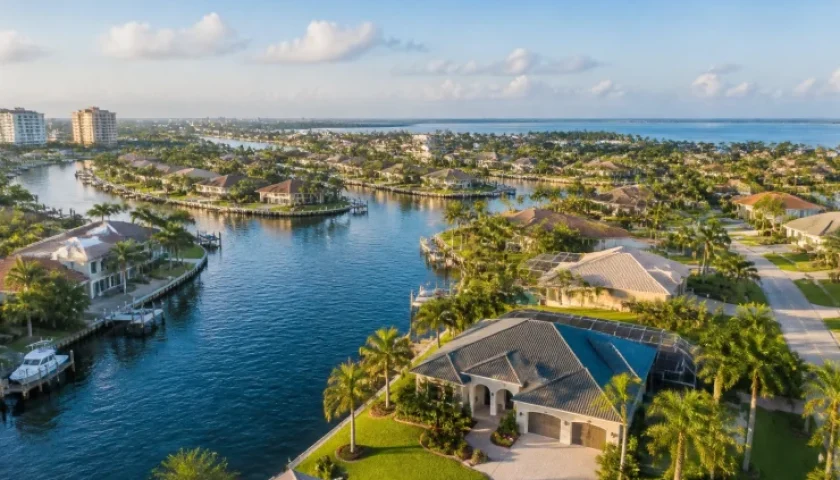
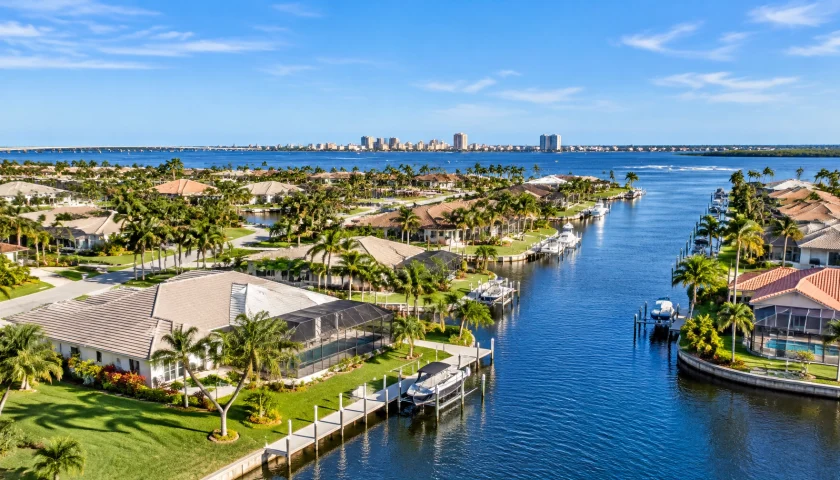
Cape Coral is known for its broad supply of detached single-family homes and its extensive network of canals. The city says it maintains more than 400 miles of canals, which support stormwater management and, depending on the location and type of waterway, may offer boating access. The city’s canal information and Waterfront Living Guide are useful starting points for understanding the system.
For buyers, “waterfront” can mean very different things. A freshwater canal is not the same as a saltwater canal with a boating route toward the river or Gulf. Before falling for the view, ask about canal type, navigability, bridges, water depth, seawall condition, dock and lift permits, and any maintenance history. Gulf access is a property-specific feature, not a blanket description for every canal home.
Cape Coral may suit buyers seeking a yard, a garage, a pool or a private dock. It also offers many neighborhoods where the home, rather than a shared building, is the main focus. The tradeoff is that destinations can be spread out. If your work or regular activities are across the Caloosahatchee River, your commute may depend on bridge access, your starting neighborhood and seasonal traffic.
Fort Myers: More variety, from downtown condos to established neighborhoods

Fort Myers has a wider mix of urban and suburban housing settings. Buyers can explore condos and apartments near the downtown River District, older homes in established neighborhoods, and single-family houses in newer communities farther from the city center. Its historic-preservation and planning resources can help buyers research historic areas and determine whether renovation plans may involve additional review.
The downtown and riverfront setting may appeal to people who value restaurants, events and a more walkable environment. Established suburbs may be a better fit for buyers who want a traditional detached home without choosing a canal lot. Newer planned communities can offer shared amenities, but may also come with an HOA, a community development district (CDD), or both.
If your job, school or regular errands are in Fort Myers, living on that side of the river may simplify some trips. But the city is not one uniform neighborhood: a downtown condo, a home in an older district and a property in a newer subdivision can have very different costs, upkeep and travel patterns.
Compare the monthly costs, not just the asking price
Insurance and flood exposure deserve attention in both cities. A city label cannot tell you what a specific home will cost to insure. Request quotes early, and check the property’s flood zone, elevation information, roof age, wind-mitigation features and prior claims. Cape Coral provides an address-based flood-risk information portal. The city also notes that standard homeowners and renters insurance does not cover flood damage. Flood risk should be checked for every address, including properties outside mapped high-risk zones.
HOA and condo fees also vary by property, not simply by city. A detached home may have no mandatory association, while a gated neighborhood, villa community or condominium may charge fees for shared facilities and maintenance. For any association, review its current budget, reserves, meeting minutes, insurance information, rules and any pending or planned assessments. For condos, understand what the monthly fee covers and what costs remain the owner’s responsibility.
In parts of Cape Coral, also check for a Utilities Extension Project assessment or upcoming connection requirements. The city’s UEP information can help you investigate. Confirm the status and balance for the exact parcel rather than relying on a general neighborhood assumption.
Which city might fit your search?
Cape Coral may be worth prioritizing if you:
- Want a detached home, outdoor space or the possibility of canal-side living.
- Are looking for boating access and are prepared to investigate the waterway and waterfront infrastructure carefully.
- Prefer a more residential, spread-out setting and can plan around your usual routes.
Fort Myers may be worth prioritizing if you:
- Want to compare downtown condos, historic neighborhoods and suburban homes in one city.
- Prefer to live closer to work or activities on the Fort Myers side of the river.
- Are open to a community with shared amenities, while budgeting for association fees and reviewing its financial health.
For seasonal residents and relocating buyers, it can help to visit both cities during the hours you expect to travel and at the time of year you expect to be here. Try the route from a potential home to work, groceries, health care or the waterfront. A map distance alone won’t capture your day-to-day experience.
A practical next step
The latest available RPCRA figures offer a useful regional snapshot, but they do not establish that Cape Coral or Fort Myers is cheaper or moving faster in every property category. City-level and neighborhood-level results can differ, and price reductions are best assessed listing by listing. Compare homes of the same type, then weigh the total monthly cost, flood and insurance details, association obligations, utilities and commute.
If you’re weighing options, local cape coral real estate agents and realtors cape coral can help you compare specific neighborhoods and property histories with Fort Myers alternatives. RE/MAX Realty Team serves buyers across Southwest Florida, including Cape Coral and Fort Myers. Browse homes at swflhomestoday.com or search available properties. For help with your search, call 239-242-2000.
The takeaway: Cape Coral and Fort Myers both offer plenty of choice, but the right fit depends on the home and the details behind it. Use the latest verified market data as context, then compare the exact property’s costs, risks and everyday location before making your decision.