Uncategorized
October is bringing a notable shift to Southwest Florida’s housing market. The first wave of seasonal residents is returning, buyer traffic is beginning to build, and the weather is becoming more comfortable for home tours.
But the biggest change is happening in the rental market.
Fort Myers apartment vacancy is approaching 20%, currently estimated at 19.3%. Average asking rents are down approximately 3.6% year over year, with asking rents around $1,700 per month in one commonly cited market measure. FGCU’s rental index also shows Fort Myers and Cape Coral rents running roughly 10% below what historic growth would have predicted.
The trend extends across Southwest Florida:
- Punta Gorda apartment vacancy: approximately 17.3%
- Naples apartment vacancy: approximately 16.4%
- Lee County median rent: around $2,000, down roughly 11% year over year
For renters, this creates more choice and negotiating power. For landlords and investors, it means underwriting assumptions need to be more conservative. For buyers and sellers, falling rents change the buy-versus-rent calculation and may affect whether a homeowner rents or sells.
Here is what the latest Cape Coral market update 2026 means locally.
Why Southwest Florida has so many available rentals
The current oversupply has roots in the period after Hurricane Ian.
Following the storm, Southwest Florida rents surged, with some properties reaching approximately $2,300 per month. That rapid increase signaled strong demand to developers. Thousands of new apartment units were planned and built across Fort Myers, Cape Coral, and surrounding communities.
Now those units are competing for tenants at the same time.
As new apartment communities lease up, older apartment buildings and private single-family landlords are competing for the same renters. Apartment complexes often have larger marketing budgets and can offer concessions such as waived application fees, reduced deposits, or a free month of rent.
Private landlords are responding in different ways. Some are reducing asking rents, while others are holding the advertised price steady but offering flexible lease terms, upgraded appliances, utilities, or move-in incentives.
This distinction matters. Asking rent may not tell the entire story. A $1,900 apartment with two months free on a 12-month lease has an effective monthly rent of approximately $1,583 before additional fees. In other words, landlords may be protecting the headline rent while discounting the actual cost of occupancy.

What falling rents mean for renters and investors
Renters have more leverage
Today’s rental market gives tenants more room to compare properties and negotiate. Renters may be able to ask about:
- One or two months of free rent
- Reduced security deposits
- Waived application or administrative fees
- Flexible lease start dates
- Included parking, utilities, or storage
- Pet-fee discounts
- Shorter lease options
However, not every property offers the same deal. A newer building with amenities may have a higher advertised rent but a larger concession, while an older property may have a lower base rent and fewer incentives.
Renters should compare the total effective cost, not just the monthly asking price. Also review utility charges, amenity fees, parking, insurance requirements, renewal terms, and penalties for early termination.
Investors need to stress-test their numbers
For investors, a near-20% apartment vacancy rate is a warning against relying on peak post-Ian rents. A property that looked attractive at $2,300 per month may produce a very different return if market rent is closer to $1,900-or if the owner must offer a free month to secure a qualified tenant.
Investors should model:
- Lower rent than the original pro forma
- Longer lease-up periods
- Concessions and effective rent
- Repairs and turnover costs
- Property insurance, taxes, and HOA expenses
- A higher vacancy allowance than in recent years
Single-family rentals may benefit from privacy, garages, yards, and access to specific school zones or neighborhoods. But they are not insulated from competition. When apartment communities offer significant concessions, private landlords may need to price carefully and present their properties well.
These are important Fort Myers real estate trends for anyone considering a rental purchase, including investors looking at duplexes, townhomes, condos, and single-family homes.
Should sellers rent instead of sell?
Falling rents make the “I’ll just rent it” strategy less automatic.
Some homeowners consider renting because their property has not appreciated as quickly as expected, because they want to move before selling, or because they hope to hold the home for future appreciation. That can still be a reasonable strategy, but the property must work at today’s effective rent, not yesterday’s peak.
A homeowner should ask:
- What is the realistic monthly rent today?
- How much time could the property sit vacant?
- Will I need to offer a concession?
- What are the insurance, taxes, maintenance, and management costs?
- How will a tenant affect the property’s condition?
- Do local HOA rules permit leasing?
- Am I prepared for an emergency repair from another city or state?
A home that rents for $2,000 per month does not produce $24,000 of usable annual income. Subtract vacancy, repairs, landscaping, management, insurance, taxes, utilities, and potential turnover costs.
At the same time, selling into a market with approximately 4.8 months of supply in Cape Coral and 5.2 months in Fort Myers requires a well-supported pricing strategy. Local MLS-based snapshots place the Cape Coral median sold price near $382,375, while Fort Myers is reported in a range of approximately $334,800 to $345,000, depending on the source, property type, and reporting period.
The right choice depends on equity, cash flow, timeline, and long-term goals, not simply on whether rents are rising or falling.
How the buy-versus-rent math has changed at 7.28%
The 30-year fixed mortgage rate reached 7.28% for the week ending October 1, its highest level in nearly three years. That rate changes the monthly payment calculation for buyers.
Consider a home priced around Cape Coral’s approximate $382,375 median. A buyer putting 20% down would finance roughly $305,900 before taxes, insurance, HOA dues, and other costs. At 7.28%, principal and interest alone would be approximately $2,080 per month.
The actual monthly housing cost would be higher after adding:
- Homeowners insurance
- Property taxes
- Flood insurance, if applicable
- HOA or condo fees
- Maintenance and repairs
- Utilities
That does not mean buying is a bad decision. It means buyers need to compare the complete cost of ownership with the complete cost of renting.
Renting may be attractive for someone who expects to move within a few years, is still learning the area, or wants flexibility while prices and mortgage rates remain elevated. Buying may make more sense for a long-term resident who values control, wants to build equity, or finds a property with a strong combination of price, condition, and location.
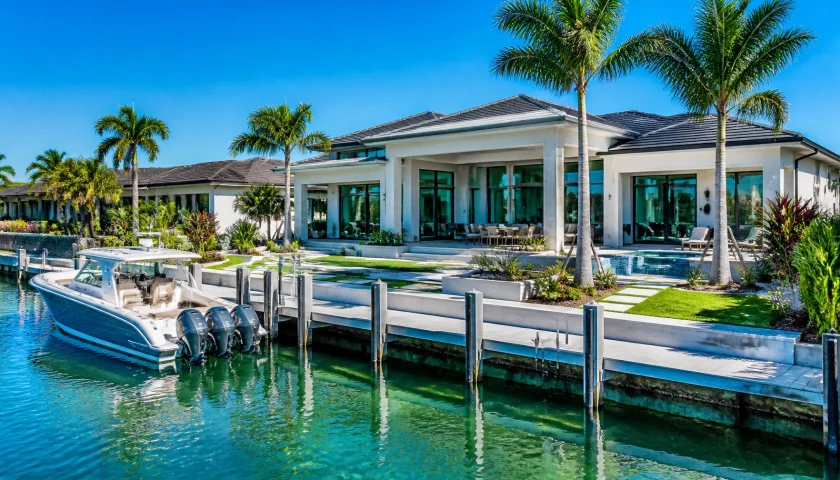
The calculation is especially different for SWFL waterfront homes, where insurance, seawall condition, dock improvements, flood exposure, and maintenance can materially affect the total cost.
A qualified lender can compare different down payments, rate options, and seller credits. A local real estate professional can also help compare available rentals with homes for sale in the same neighborhood.

October timing: a practical playbook for buyers and sellers
October is often a transition month in Southwest Florida.
The first seasonal residents are returning, the summer heat begins to ease, and more buyers start planning ahead of the traditional December-through-March activity period.
For buyers
October can be a useful month to:
- Revisit neighborhoods before peak winter competition
- Compare new construction with resale homes
- Review rental concessions before committing to a purchase
- Get fully underwritten or preapproved
- Study flood zones, insurance costs, and utility assessments
- Watch listings that have had price reductions
- Tour properties before seasonal inventory becomes more competitive
Local development may also influence future housing choices. Cape Coral Grove, a reported $700 million mixed-use project along Pine Island Road, is scheduled to begin vertical construction in the second half of 2026. The project is expected to add future retail, dining, office, hotel, and multifamily components.
In Fort Myers, Midtown fieldhouse town halls are scheduled this month, giving residents and prospective buyers another opportunity to follow public investment and community planning in the area.
For sellers
Sellers should prepare for more buyer activity without assuming every home will receive multiple offers.
October is a good time to:
- Review recent comparable sales
- Correct deferred maintenance
- Improve exterior presentation
- Confirm insurance details and flood information
- Price against current competition, not last year’s peak
- Decide whether to sell now or pursue a rental strategy
- Prepare for more showings as seasonal traffic increases
Cape Coral’s Affordable Housing Advisory Committee is also scheduled to address accessory dwelling units, expedited permitting, and impact fee deferrals on October 1. Final City Council action is required by December 31. These policy discussions could affect future housing supply and the feasibility of certain housing projects, but buyers and sellers should wait for final approvals before relying on them in a transaction.

The takeaway for Cape Coral and Fort Myers
Southwest Florida’s rental market has flipped from scarcity to competition. Fort Myers apartment vacancy near 19.3%, falling rents, and substantial concessions show that renters have more leverage than they did after Hurricane Ian. Cape Coral and Fort Myers investors need realistic effective-rent assumptions, while homeowners considering renting instead of selling should calculate net cash flow carefully.
At the same time, mortgage rates near 7.28% have made the buy-versus-rent decision more sensitive to taxes, insurance, HOA fees, maintenance, and expected length of ownership.
October is the time to get prepared. Buyers can use the month to understand neighborhoods and financing before winter traffic builds. Sellers can position their properties before the seasonal market becomes more competitive.
Rental and vacancy figures are market-level estimates. Actual results can vary significantly by building, property type, condition, amenities, lease terms, and neighborhood. Median prices and months of supply also vary by data source and reporting period.
For help comparing a rental, sale, or investment opportunity, connect with the local cape coral real estate agents and realtors Cape Coral buyers and sellers trust.
Search Southwest Florida properties or contact RE/MAX Realty Team at 239-242-2000. Visit swflhomestoday.com to connect with local professionals serving Cape Coral, Fort Myers, Sanibel, Fort Myers Beach, and surrounding Southwest Florida communities.