

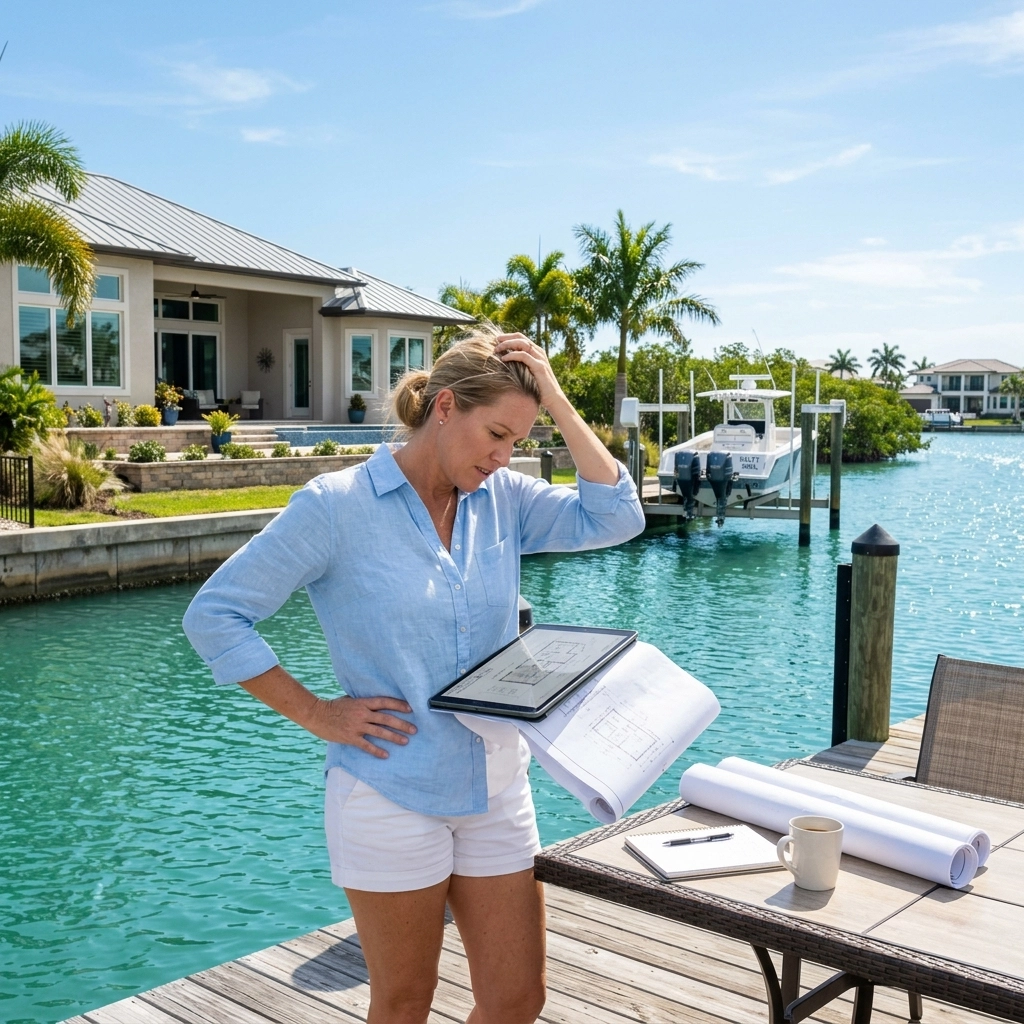
Living in Southwest Florida: specifically Cape Coral and Fort Myers: is a dream for anyone who loves the water. We aren’t called the "Venice of America" for nothing. With over 400 miles of canals in Cape Coral alone, the lure of having a boat parked in your backyard is strong.
But here’s the reality: buying a waterfront home is completely different from buying a standard dry-lot property. If you approach it the same way, you’re going to run into some expensive, stressful surprises. I’ve seen buyers fall in love with a view only to realize later that their boat won't fit under the bridge or that their insurance bill is the size of a small car payment.
As the Broker/Owner here at RE/MAX Realty Team, I want to make sure you’re moving into your dream home with your eyes wide open. Here are the seven most common mistakes people make with SWFL waterfront homes and exactly how to fix them.
1. Not Knowing Your Access Types (Gulf vs. Freshwater)
In Cape Coral, we talk about the "quadrants" all the time: NW, NE, SW, and SE. Depending on where you are, "waterfront" can mean two very different things.
The biggest mistake is assuming every canal leads to the Gulf of Mexico. It doesn't. Cape Coral has an extensive freshwater canal system. These are beautiful, often wider than salt canals, and great for kayaking, electric boats, or fishing. However, they are landlocked. You aren't taking your 30-foot Grady-White out to Sanibel from a freshwater canal.
How to Fix It: Before you even look at a house, define your lifestyle. Do you want to reach the open ocean, or are you happy with a peaceful lake view? If you want Gulf access, make sure the listing explicitly says so. Check the Cape Coral quadrants to see which areas offer the quickest "run time" to the river.

2. Ignoring the "Bridge Factor"
So, you found a Gulf access home. Great! But can your boat actually get out? Many waterfront homes in SWFL are behind bridges. These bridges have specific clearances (often around 9 to 11 feet, but it varies).
If you have a sailboat or a large sportfish with a tuna tower, a "bridge-restricted" canal is a dealbreaker. I’ve seen buyers close on a house only to realize their boat’s T-top is three inches too high to clear the neighborhood bridge during high tide.
How to Fix It: Know your boat’s "air draft": the height from the waterline to the highest point. When searching for SWFL waterfront homes, specifically look for "Sailboat Access" listings. This term indicates there are no bridges between your dock and the open water.
3. Underestimating Seawall and Dock Maintenance
On a dry lot, your biggest exterior concern is the roof or the landscaping. On a waterfront lot, the seawall is your most important (and expensive) asset.
A lot of buyers treat the seawall like a sidewalk: they assume it’s just there and will stay there forever. In reality, seawalls in SWFL are under constant pressure from salt, tides, and burrowing marine life. Replacing a seawall can cost tens of thousands of dollars, depending on the linear footage.
How to Fix It: Never buy a waterfront home without a specific seawall and dock inspection. A standard home inspector might take a quick glance, but you want a specialist who will look for "offsets" in the concrete, failing tie-backs, or cracks below the waterline. If the dock is made of wood, check for marine borers that eat the pilings from the inside out.
4. Getting "Sticker Shock" Over Flood Insurance
We need to talk about the "I" word: Insurance. Since the implementation of FEMA’s Risk Rating 2.0, flood insurance premiums are no longer just based on what zone you’re in. They look at the specific elevation of your first floor and the cost to rebuild.
Many waterfront homes in Cape Coral and Fort Myers are in high-risk flood zones. If you’re financing the home, your lender will require flood insurance. If you don't budget for this, it can significantly impact your monthly mortgage payment.
How to Fix It: Don't wait until you're under contract to get an insurance quote. Ask your realtors cape coral to provide a current elevation certificate for the property and get a quote from a local agent who understands the SWFL market. Sometimes, older homes that haven't been elevated can have much higher premiums than newer construction.

5. Overlooking HOA Fees and Restrictions
While many parts of Cape Coral are non-HOA, there are many beautiful gated communities in cape coral florida and Fort Myers that sit right on the water. These communities often have strict rules about what kind of boat you can park behind your house, whether you can have a boat lift canopy, or even what color your dock can be.
Additionally, HOA fees Cape Coral waterfront communities often include the maintenance of common boat ramps, dredging of shared channels, or master insurance policies that you need to account for.
How to Fix It: Read the "Covenants, Conditions, and Restrictions" (CC&Rs) before you sign. If you have a specific dream of a bright blue boat lift cover, make sure the HOA allows it. If you’re looking at a waterfront condo, look closely at the reserve study to ensure they have enough money to maintain the seawalls and docks for the next decade.
6. Buying for the House, Not the Water
It sounds counterintuitive, but when you’re buying waterfront, the land (and the water) is often more valuable than the structure. People often fall in love with a renovated kitchen but ignore the fact that the canal is only three feet deep at low tide.
If you have a boat with a deep draft, you might find yourself "stuck" at your dock for six hours a day waiting for the tide to come back in.
How to Fix It: Check the water depth. Seriously. Go to the property at low tide and see what it looks like. Ask neighbors about the "draft" in the canal. You can change a kitchen, but you can’t easily change the depth of a canal system.

7. Using a "Generalist" Real Estate Agent
This might be the biggest mistake of all. If you’re working with an agent who mostly sells inland condos or suburban tract homes, they might not know to ask about manatee speed zones, salt vs. fresh water, or the current state of local dredging projects.
Cape coral real estate agents who specialize in waterfront property understand the nuances of things like "spreader canals" and the difference between a concrete seawall and a rip-rap (rock) shoreline.
How to Fix It: Work with a local expert. You want someone who knows the local waterways as well as they know the local schools. At RE/MAX Realty Team, we live and breathe the SWFL lifestyle. We know which canals have the best fishing and which ones have the trickiest turns for a large boat.
Summary: Your Waterfront Checklist
Buying on the water in Southwest Florida is one of the best decisions you’ll ever make, provided you do it right. Here is your quick "cheat sheet" to avoid the mistakes we discussed:
- Confirm Access: Is it Gulf access or freshwater?
- Measure Bridges: Will your boat fit?
- Inspect the Seawall: Get a specialist, not just a generalist.
- Quote Insurance Early: Know your flood costs before you're committed.
- Check the Depth: Visit at low tide.
- Review HOA Rules: Don't let community restrictions sink your plans.
- Hire a Specialist: Use an agent who knows the water.
The SWFL market is moving fast, and waterfront inventory is always in high demand. If you're ready to find your piece of paradise in Cape Coral or Fort Myers, reach out to us at RE/MAX Realty Team. We’ll help you navigate the canals and find a home that fits your lifestyle perfectly.
Happy boating!