

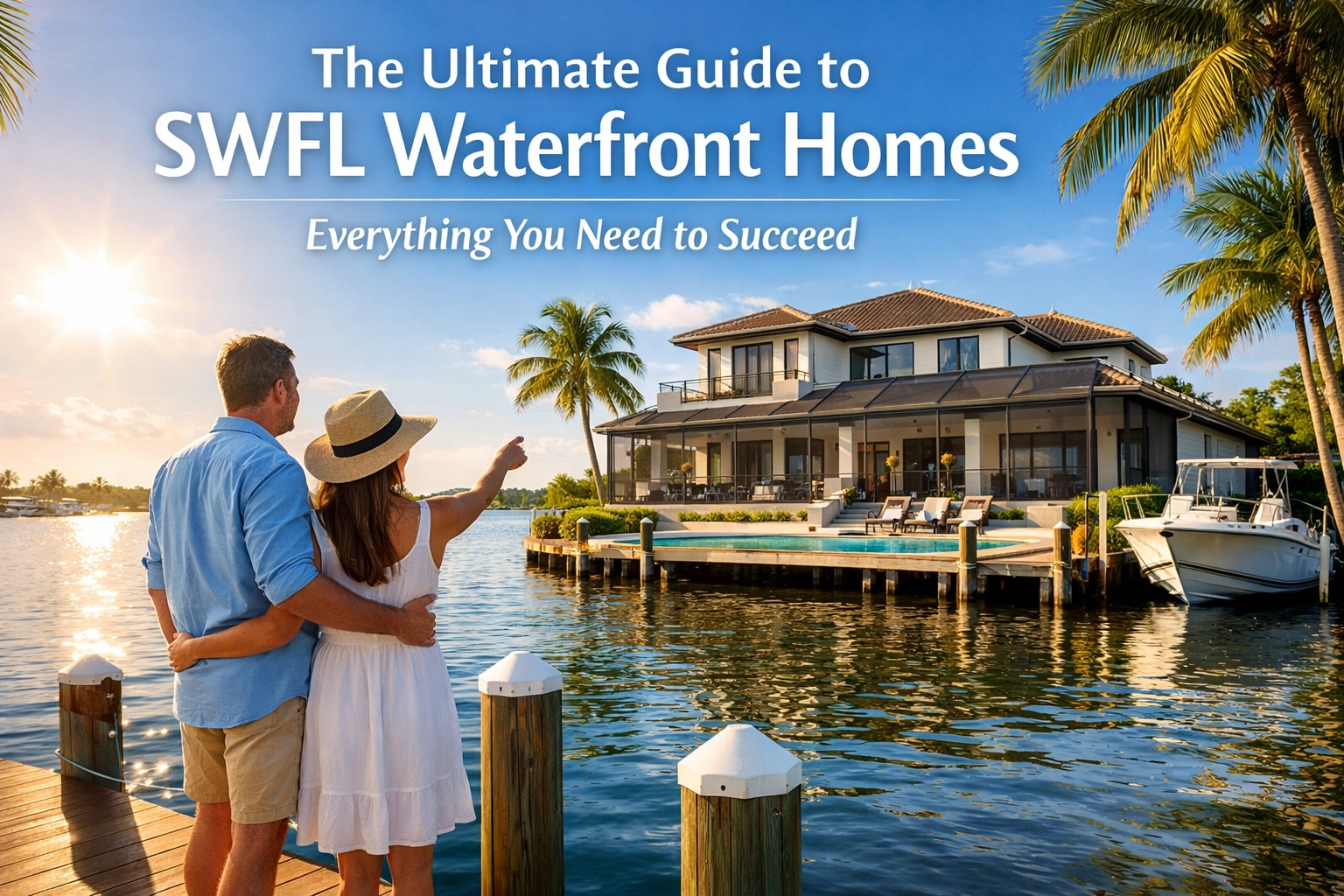
If you’ve ever dreamt of waking up, grabbing a cup of coffee, and walking out your back door to see dolphins playing in the canal or the sun rising over the Gulf, you aren’t alone. Here in Southwest Florida (SWFL), the waterfront lifestyle isn’t just a luxury: it’s a way of life. But as any of our realtors in Cape Coral will tell you, buying a waterfront home isn’t quite the same as buying a standard dry-lot property.
There are bridges to measure, seawalls to inspect, and "sailboat access" terminology to master. Whether you’re looking at the luxury estates of Naples or the sprawling canal systems of Cape Coral, this guide is designed to help you navigate the waters (pun intended) of the SWFL real estate market.
Understanding the "Flavors" of SWFL Waterfront
Not all waterfront is created equal. In Southwest Florida, the type of water behind your home dictates your lifestyle, your boat size, and your budget.
Gulf-Front Homes
These are the crown jewels. We’re talking about properties that sit directly on the Gulf of Mexico. You get unobstructed views and the sound of crashing waves. The trade-off? These are the most expensive properties and are the most exposed to the elements, meaning higher insurance premiums and more rigorous building codes.
Bay-Front & Intracoastal
These homes offer a fantastic middle ground. You get the big water views and quick access to the Gulf, but you’re usually more protected from heavy surf. Areas like Estero Bay or the Caloosahatchee River fall into this category.
Canal-Front: The SWFL Special
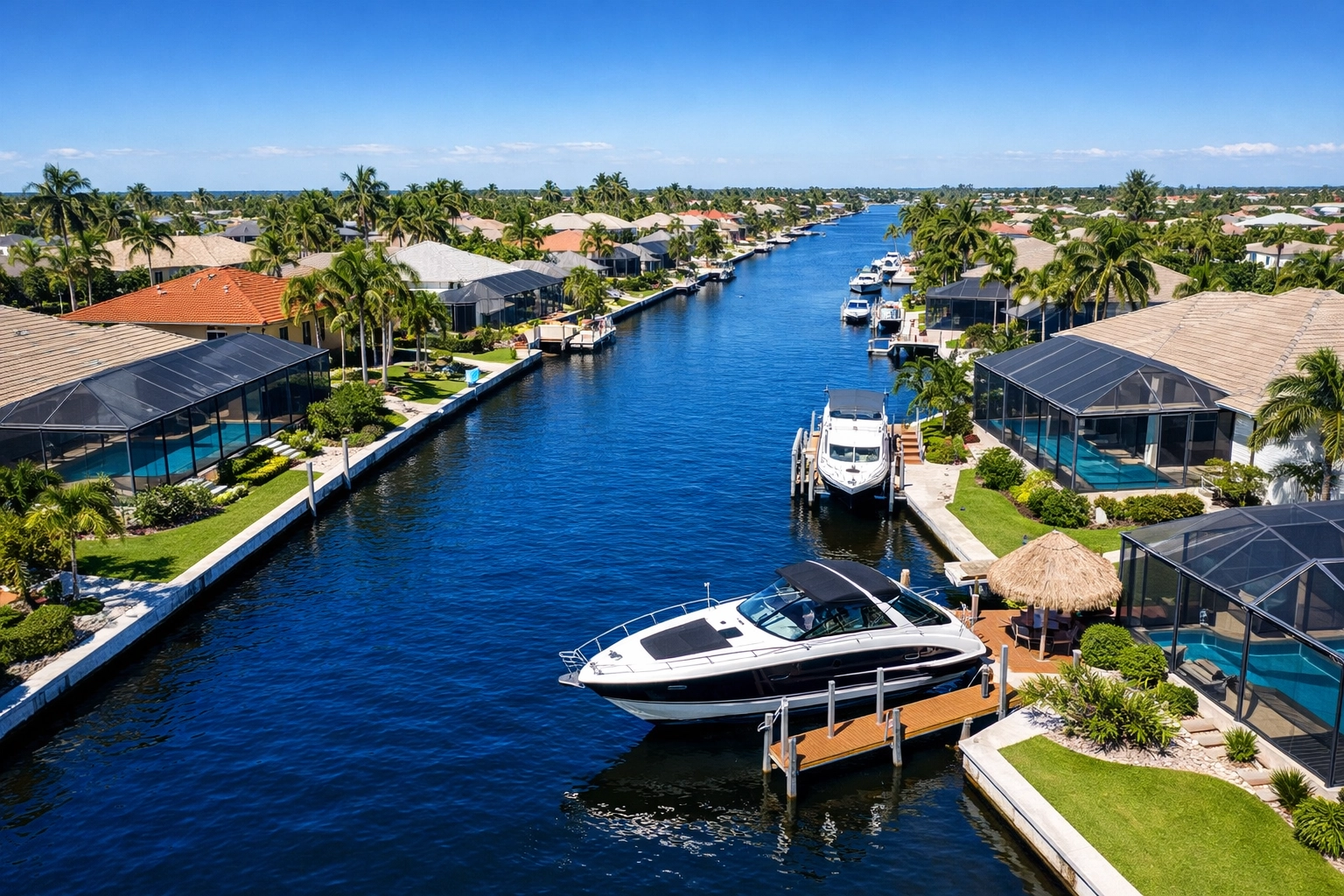
This is where Cape Coral shines. With over 400 miles of canals, there is more waterfront here than in Venice, Italy. Canals are generally categorized into two types:
- Saltwater/Gulf Access: These canals lead out to the Gulf of Mexico.
- Freshwater: These are landlocked lakes and canals. They are beautiful for kayaking, electric boats, and fishing, but you won't be taking your yacht to the Sanibel Lighthouse from here.
The "Bridge" Talk: Don't Get Stuck
If you are a boater, the most important phrase you will learn is "Sailboat Access." In the world of SWFL waterfront homes, this doesn't necessarily mean you own a sailboat. It means there are no bridges between your dock and the open water.
If a property is not sailboat access, it means there is at least one bridge your boat must pass under.
- Low Bridges: 8–10 feet of clearance. Great for bass boats or small pontoons.
- High Bridges: 12–18 feet of clearance. These can accommodate many powerboats and cruisers with T-tops.
Before you fall in love with a kitchen, make sure your boat’s radar arch or bimini top can actually get out to the river. Our team at RE/MAX Realty Team always recommends measuring your boat (at mean high tide!) before signing a contract.
Neighborhood Spotlight: Cape Coral Quadrants
Cape Coral is a massive city, and it’s divided into four distinct quadrants. Understanding these is vital when working with cape coral real estate agents.
- Southwest (SW): Often considered the most prestigious area for waterfront. It’s home to the luxury Cape Harbour and Tarpon Point marinas. You’ll find many gated communities in Cape Coral Florida here, offering high-end amenities and quick access to the river.
- Southeast (SE): This is the "original" Cape Coral. It features mature landscaping and very quick access to the river and Fort Myers. Many of the homes here are being beautifully renovated or replaced with modern coastal estates.
- Northwest (NW): This is the frontier of growth. You can still find larger lots and newer construction here. While it takes a bit longer to get to the open Gulf, the serenity and price points are very attractive for long-term investors.
- Northeast (NE): Mostly freshwater canals. It’s a paradise for nature lovers and those who want the waterfront look without the saltwater price tag.
The "Unsexy" Stuff: Seawalls and HOA Fees
When you buy a waterfront home, you aren't just buying a house; you're buying a piece of marine infrastructure.
The Seawall
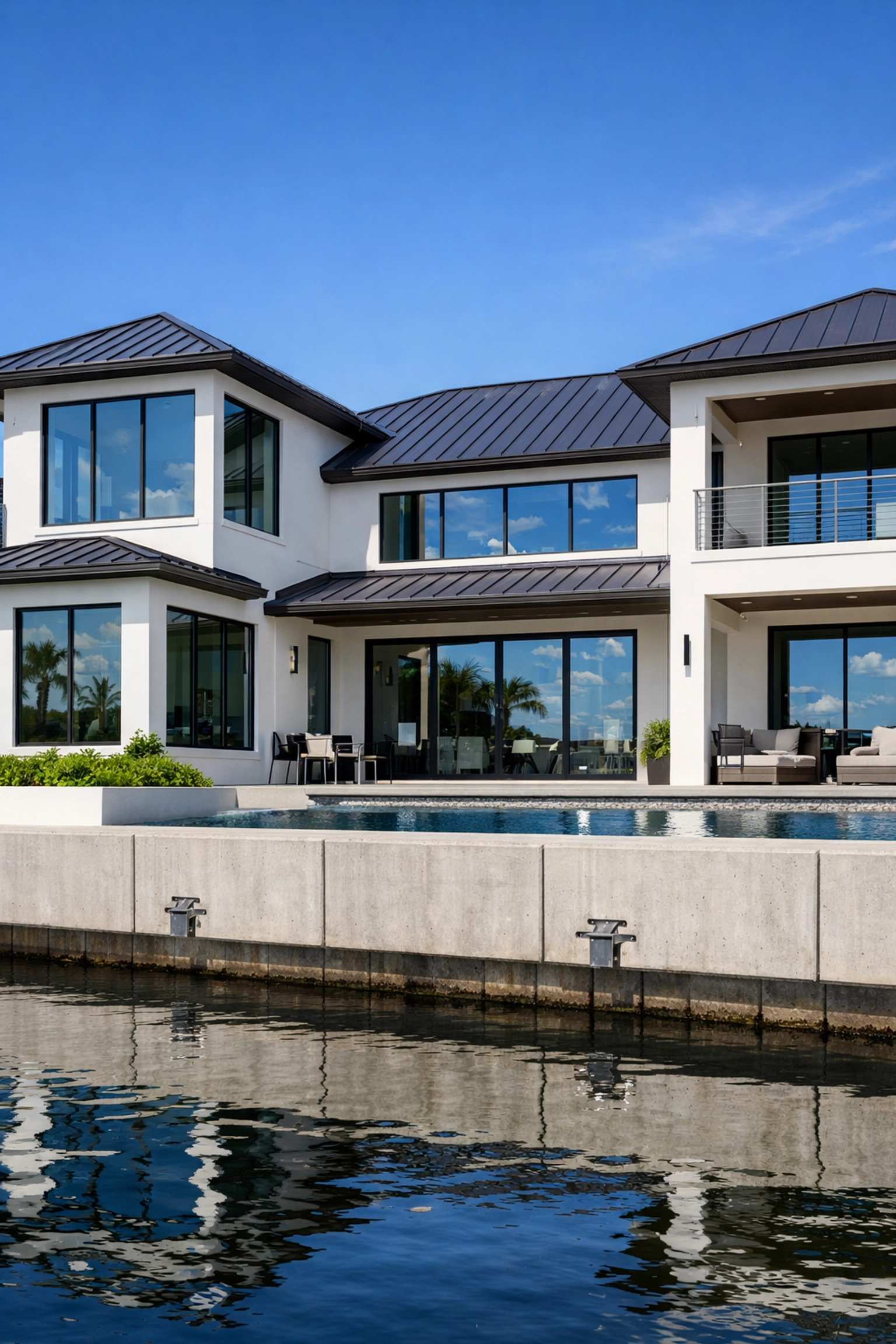
In SWFL, most waterfront homes have a concrete or composite seawall. Replacing a seawall can cost tens of thousands of dollars. When we walk through a property, we look for "tipping," "settling," or large cracks. A professional seawall inspection is a non-negotiable part of your due diligence.
HOA Fees and Gated Communities
Many people are surprised by HOA fees in Cape Coral and Fort Myers. In a gated community, these fees often cover 24/7 security, lawn maintenance, and community docks or boat ramps. If you're looking for a low-maintenance lifestyle where you can "lock and leave," a gated community is worth the extra monthly cost. You can browse current listings in these communities at swflhomestoday.com.
Insurance and Environmental Protection
It’s no secret that insurance has been a hot topic in Florida. For a waterfront home, you need to budget for:
- Homeowners Insurance: Standard coverage.
- Flood Insurance: Most waterfront homes will require this if you have a mortgage.
- Wind/Hurricane Coverage: Often bundled, but essential to verify.
The good news? Newer homes (built after 2002) are constructed to much stricter codes, which often results in significant insurance discounts compared to older properties.
Market Trends: What’s Happening in 2026?
As of March 2026, we are seeing a "normalized" market. The frantic bidding wars of a few years ago have cooled, giving buyers more breathing room to do inspections and negotiate. However, inventory for "Direct Access" (no bridges) homes remains tight because, quite frankly, they aren't making any more waterfront land.
Fort Myers Beach is also seeing a massive resurgence. After years of rebuilding, modern, high-elevation homes are hitting the market, offering incredible investment potential for those looking for vacation rentals.
The Waterfront Success Checklist
Before you pull the trigger, run through this quick checklist:
- Check the Depth: Is the canal deep enough for your boat's draft during low tide?
- Measure the Bridges: Will your boat fit, or are you limited to "Sailboat Access" areas?
- Inspect the Seawall: Is it concrete or the newer, more durable vinyl? Are there signs of erosion?
- Verify the HOA: What are the HOA fees in Cape Coral for that specific neighborhood, and what do they cover?
- Run the Insurance Numbers: Get an insurance quote during your inspection period so there are no surprises at the closing table.
Why Work With a Local Expert?
Buying on the water is complicated. You need someone who knows the difference between a spreader canal and a 200-foot wide intersecting canal. You need someone who knows which neighborhoods have the fastest access to the Gulf and which ones require a 45-minute "no-wake" zone crawl.
At RE/MAX Realty Team, we live and breathe the SWFL lifestyle. Whether you’re looking for a quiet spot in the NW Cape or a luxury estate in McGregor Isles, our realtors in Cape Coral have the hyper-local data you need to make a smart move.
Summary & Takeaway
Success in the SWFL waterfront market comes down to three things: Location, Access, and Infrastructure.
- Location: Pick the quadrant or neighborhood that fits your daily life (commute, shopping, schools).
- Access: Ensure your boat (current or future) can actually navigate the route to the Gulf.
- Infrastructure: Don't ignore the seawall, the dock, or the insurance costs.
Southwest Florida offers a lifestyle unlike anywhere else in the world. If you’re ready to start your search, head over to swflhomestoday.com to see the latest listings, or give us a call. We'd love to help you find your slice of paradise.
See you on the water!