

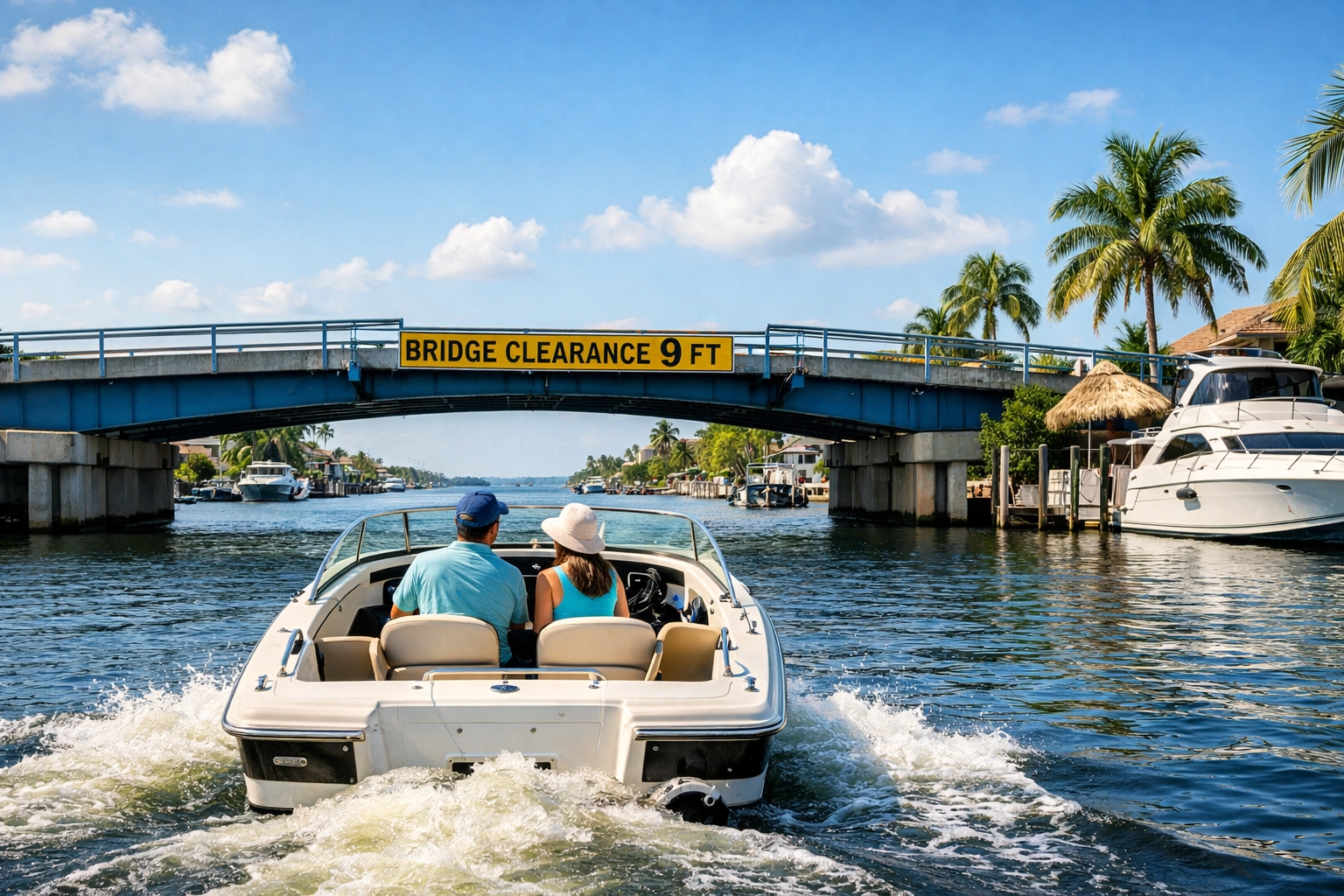
Let's talk about one of the biggest mistakes buyers make when shopping for SWFL waterfront homes: falling in love with a beautiful canal-front property without checking if their boat can actually get to the Gulf of Mexico.
It happens more often than you'd think. Someone buys their dream Cape Coral home with a private dock, only to discover their sailboat won't clear the bridge or that they're looking at a 30-minute no-wake zone just to reach open water. Not exactly the boating lifestyle they imagined.
If you're serious about living the waterfront life in Cape Coral, understanding bridge heights and canal access isn't optional, it's essential. Let's break down what you need to know before you sign on the dotted line.
The Bridge Height Reality Check
Cape Coral's bridges aren't created equal. Bridge heights throughout the city range from approximately 8 feet to 11.25 feet, measured at average high tide. That might not sound like much variation, but a few inches can be the difference between your boat fitting or not.
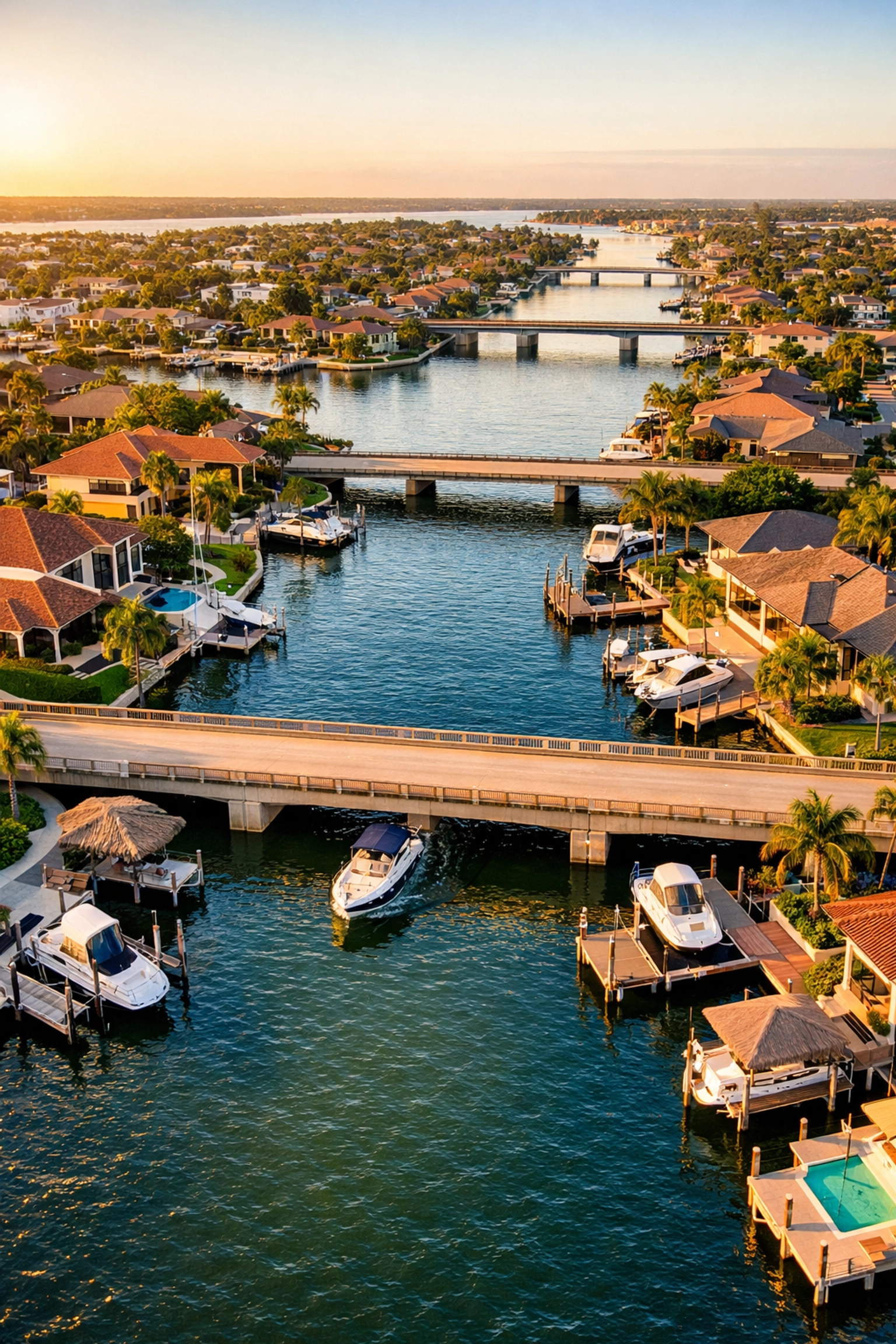
Here's the thing most people don't realize: it's not about the bridge closest to your potential home. You need to identify the lowest bridge on your entire route to open water. Think of it like a hallway, the narrowest doorframe determines what furniture you can move through, not the widest one.
And yes, water levels matter. These clearances are measured at average high tide, which means you'll have slightly more room at lower tides. But don't count on timing every boating trip around the tide schedule. That gets old fast.
Not All Canals Lead to the Gulf
Cape Coral has over 400 miles of canals, but they're not all the same. Understanding the difference between canal types will save you from a costly mistake.
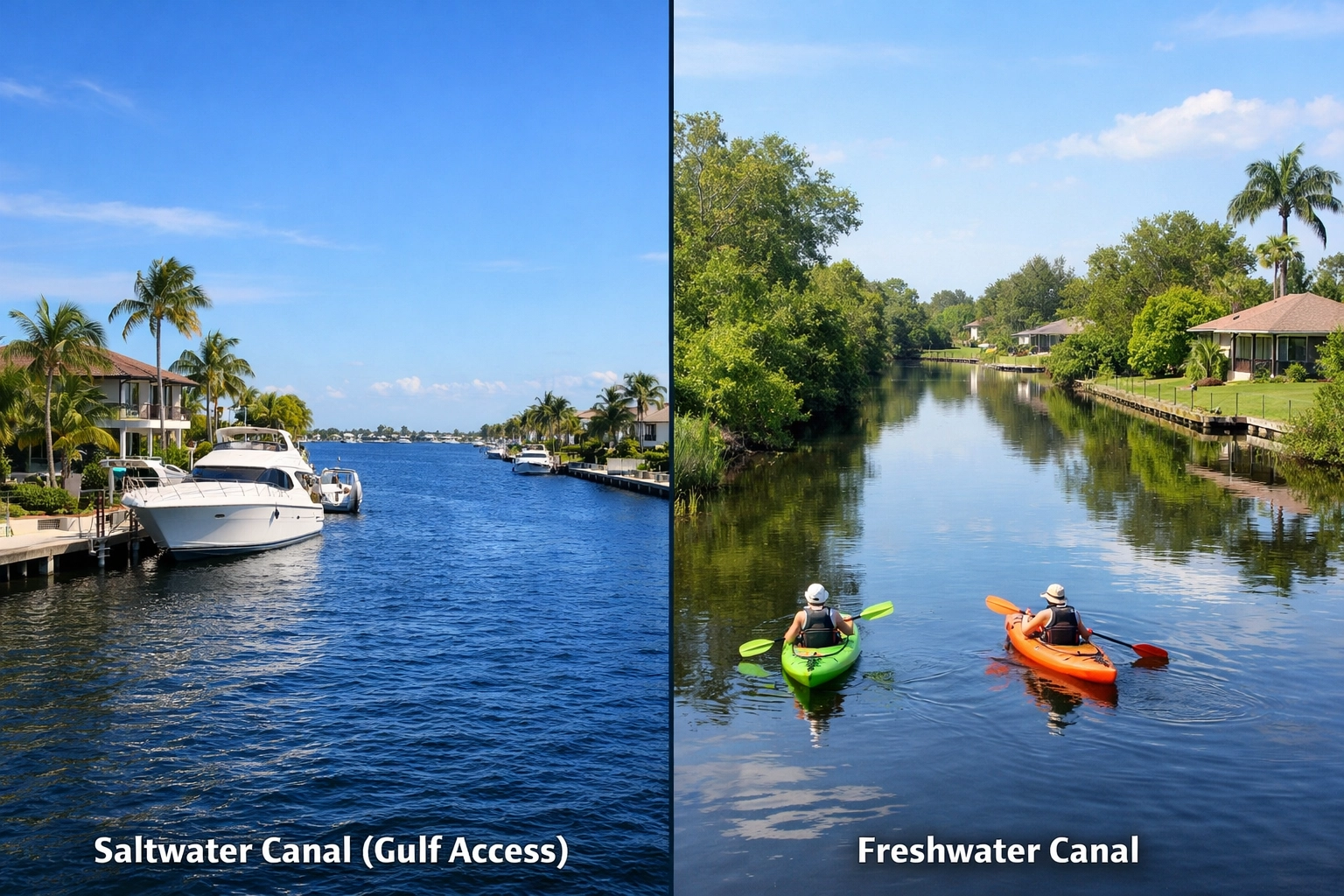
Gulf Access Canals are what most boaters want. These connect to the Gulf of Mexico through tidal channels, giving you true saltwater access. You'll see these marked in various colors on city maps (anything except blue).
Freshwater Canals are marked in blue and offer miles of peaceful, interconnected waterways: perfect for kayaking or paddleboarding. But if you're dreaming of offshore fishing trips or sunset cruises in the Gulf, freshwater canals won't cut it. The upside? Lower maintenance costs since your boat isn't constantly exposed to saltwater.
One more curveball: if you're looking at properties in south Cape Coral west of Chiquita Boulevard, you'll need to pass through the Cape Harbor boat lock to reach the Gulf. It's not a dealbreaker, but it adds time and another logistical consideration to every outing.
Distance to Open Water: The Hidden Cost
Here's something Cape Coral real estate agents should always point out (but don't always): distance to open water dramatically affects both your daily boating experience and your property's value.
Cape Coral uses color-coded zones to show distance to open water:
- Green areas: Closest to the Gulf (prime real estate)
- Blue areas: 2-4 miles from open water
- Yellow areas: 4-8 miles away
- Red areas: 8+ miles from open water
Why does this matter? In no-wake zones: which make up most of Cape Coral's canals: you're traveling at 3-4 miles per hour. That's walking speed. If you're 8 miles from open water, you're looking at a two-hour round trip just to get your boat in and out, before you've even started your actual boating adventure.
For weekend warriors, that's manageable. For serious boaters who want to get out several times a week? It becomes a chore.
The Boat Size Misconception
Let's clear up a common myth: plenty of boats can fit through Cape Coral's bridges. You don't need a tiny fishing skiff to live behind a bridge.
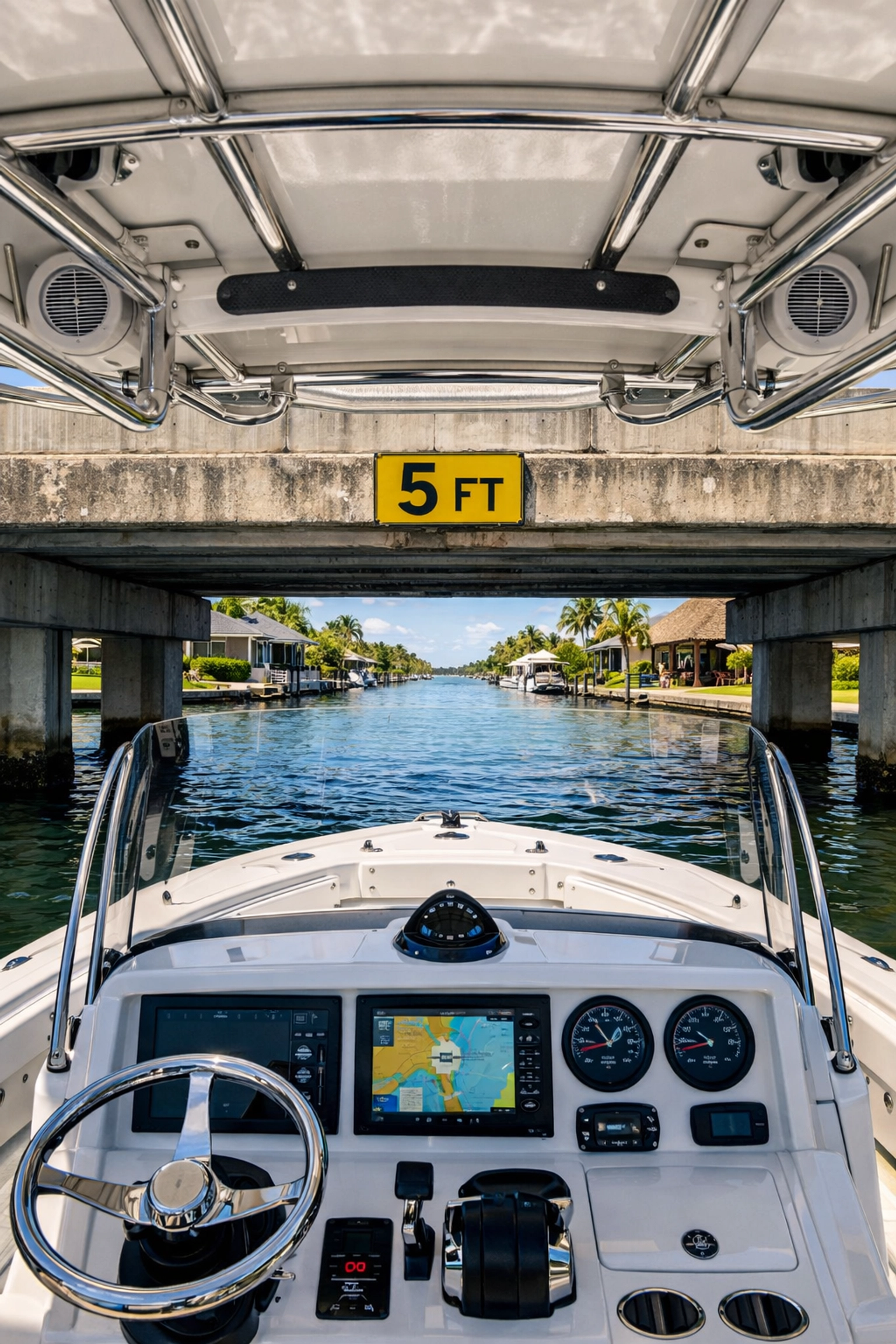
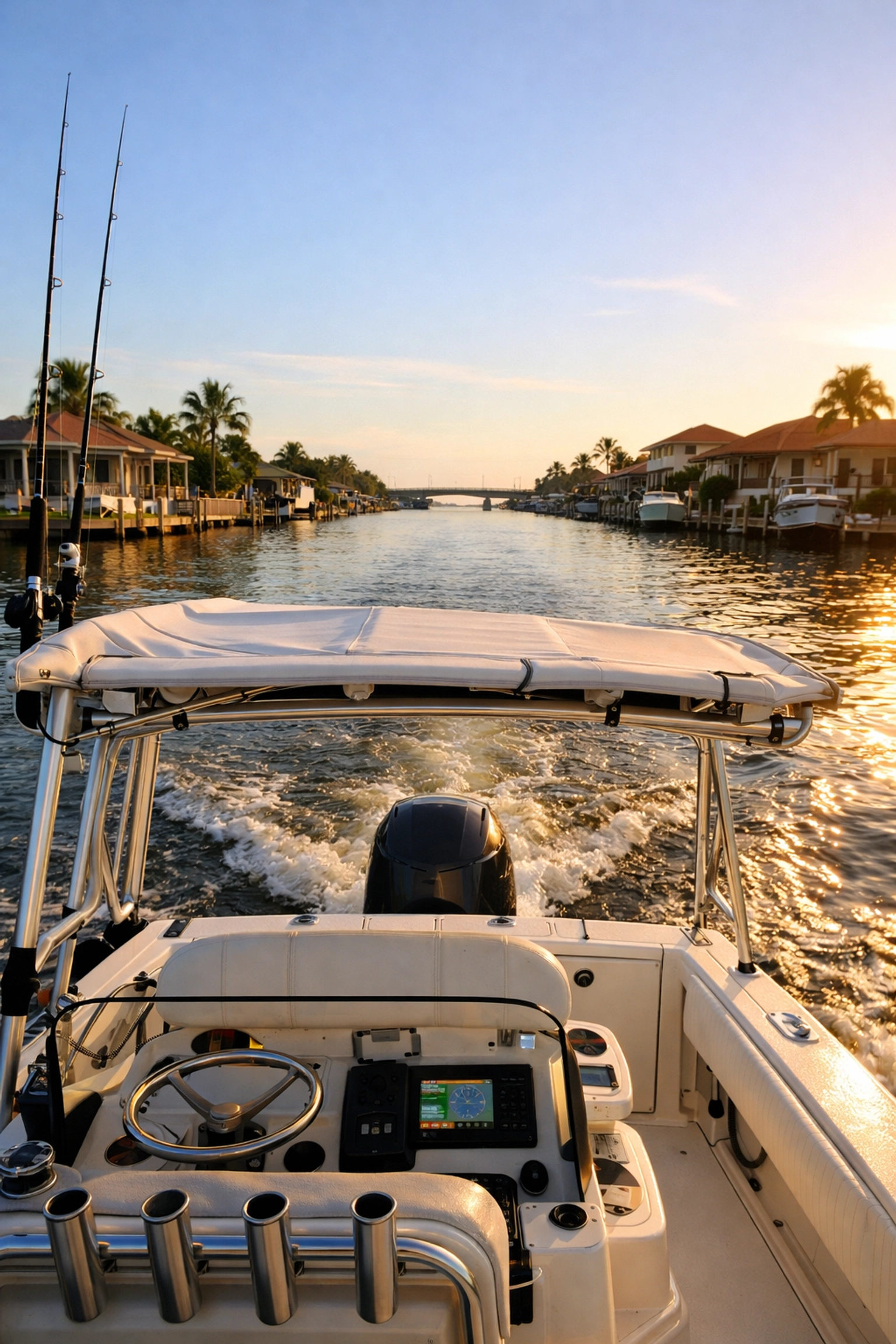
Boats that typically fit: 26+ foot center console boats, boats with removable T-tops, and many cabin cruisers regularly navigate these bridges. You might need to lower fishing poles or fold down a radar antenna temporarily, but it's doable.
Boats that won't fit: Sailboats with tall masts, boats with fixed flying bridges, and vessels 40+ feet generally can't clear most Cape Coral bridges.
Popular choices for Cape Coral's calm Gulf waters include 24-26 foot boats like Grady Whites and Robalos for fishing enthusiasts, or Bayliners and Hurricane deck boats in the 22-26 foot range for cruising and family fun.
The key is matching your boat to your property's bridge limitations: or choosing a property that matches your boat.
Property Values and Bridge Restrictions
Here's where it gets interesting from an investment perspective.
Properties with no bridge restrictions command premium prices. Why? Sailboats and larger vessels can access them, which opens up your potential buyer pool when it's time to sell. These homes also tend to be closer to open water, which is another value driver.
But here's the flip side: many of Cape Coral's widest canals are actually located behind bridges, particularly in the southwest corner. These tend to be newer development areas with more established neighborhoods, better infrastructure, and often more appealing street appeal.
So you're not necessarily compromising on quality by buying behind a bridge: you're making a trade-off. Wider canals and newer construction in exchange for boat size limitations. For many buyers, especially those with powerboats under 10 feet of clearance, that's a fantastic deal.
Your Pre-Purchase Evaluation Checklist
Before you fall in love with that waterfront property, do your homework:
1. Measure your boat's actual clearance. Don't guess. Measure from the waterline to the highest fixed point on your boat. Include T-tops, fishing rod holders, antennas: everything. Add a few inches for safety margin and wave action.
2. Identify every bridge on your route. Work with a local Cape Coral real estate agent who knows the area. They should be able to map out your exact route to open water and identify bridge clearances.
3. Check the canal designation. Is it Gulf access or freshwater? This should be clearly marked in the property listing, but verify it independently.
4. Calculate your distance to open water. Look at the color zone on city maps. Then actually drive (or boat) the route. What looks like 3 miles on a map feels a lot longer at no-wake speed.
5. Consider your boating habits. Are you a casual weekend boater or someone who wants to be on the water 4-5 times a week? Your tolerance for distance and bridge clearance issues will vary accordingly.
6. Think about future boats. Even if your current boat fits, what if you upgrade in five years? Will you outgrow your property's limitations?
The Bottom Line
Cape Coral's waterfront lifestyle is one of the best reasons to live in Southwest Florida. But it's not one-size-fits-all. The perfect property for a kayaker or a 21-foot center console owner might be completely wrong for someone with a 30-foot cabin cruiser or sailboat.
Understanding bridge heights and canal access before you buy isn't about being picky: it's about making sure your investment matches your lifestyle. The last thing you want is to realize six months after closing that your dream boat won't fit under the bridge between you and the Gulf.
Take the time to evaluate these factors carefully. Measure twice, buy once. And work with Cape Coral real estate agents who actually understand the boating side of waterfront properties, not just the real estate side.
Your future self: relaxing on the Gulf of Mexico instead of stuck in a no-wake zone for an hour: will thank you. Visit our website to connect with local experts who can help you find the perfect waterfront property for your boating lifestyle.