


Let’s be real: who hasn’t dreamed of waking up, walking out to the lanai with a cup of coffee, and seeing their boat docked right in the backyard? In Southwest Florida, that isn't just a vacation fantasy: it’s a lifestyle. But if you’re looking at SWFL waterfront homes in 2026, the game has changed a bit from previous years.
The market is currently finding its balance. We aren’t in the "wild west" of the post-2020 boom, but we aren't in a slump either. It’s a sophisticated market that rewards buyers who do their homework. Whether you’re eyeing a gulf-access canal in Cape Coral or a luxury bayfront property in Naples, you need a strategy.
Here is everything you need to know about buying and maintaining your slice of paradise in the 2026 market.
The 2026 Market Pulse: What Buyers Need to Know
As of March 2026, the Southwest Florida real estate landscape is showing some fascinating trends. We’ve seen active inventory dip by about 17.5% year-over-year, which means there are fewer "for sale" signs hitting the grass. However, the homes that are on the market are seeing more price adjustments than we’ve seen in years.
In a single week recently, SWFL saw over 2,000 price decreases. What does that tell you? It tells you that sellers who overshot the mark are getting serious about negotiating. For a buyer, this is great news. If a home has been sitting for 40 or 50 days, there’s likely room to talk.
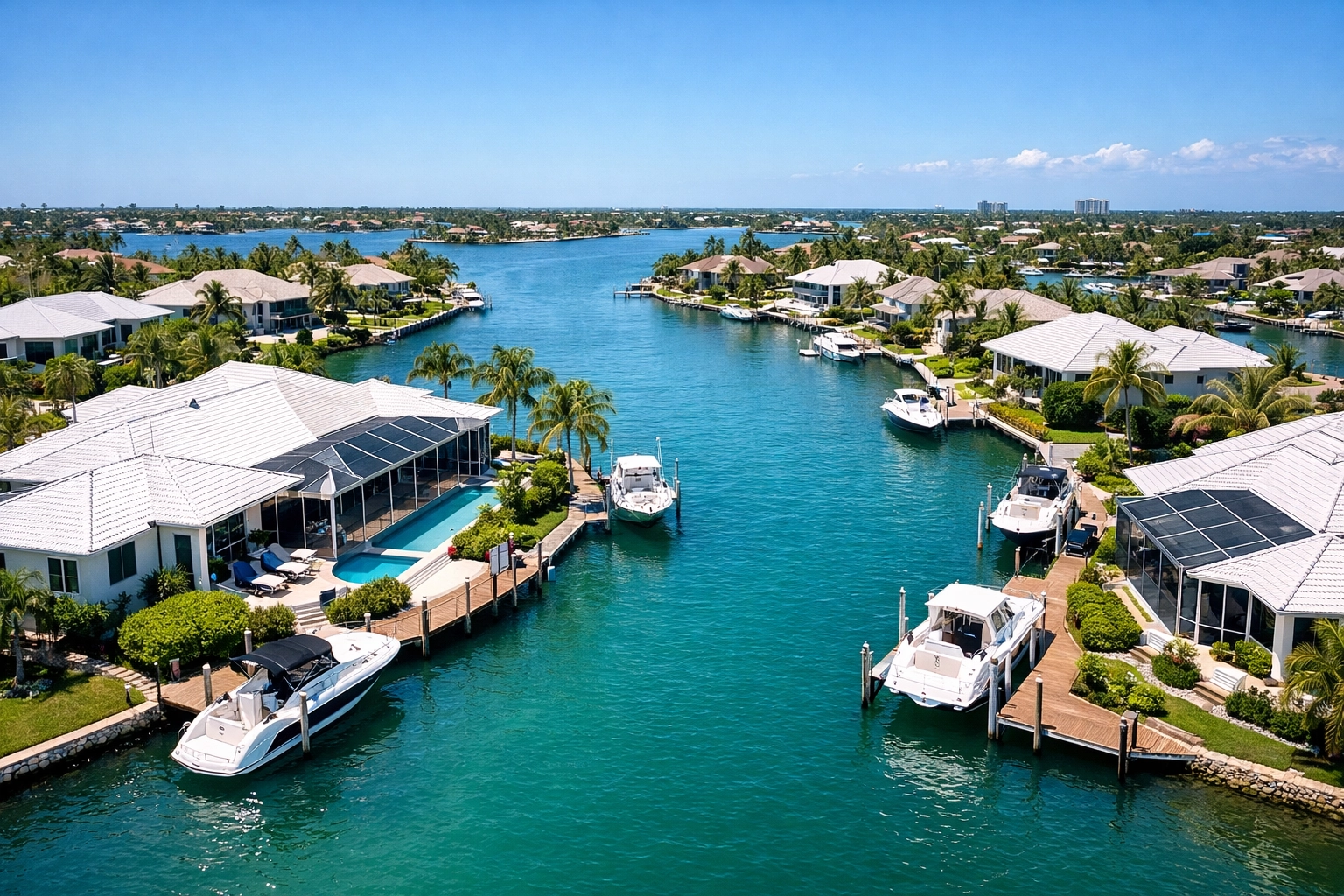
(Caption: A typical Southwest Florida canal-front neighborhood showcasing the boating lifestyle.)
Pricing Strategically
In 2026, the "median sale price" doesn't tell the whole story. When you’re looking at waterfront property, you have to look at the price per square foot and the lineal feet of waterfront. A home on a 200-foot wide canal is worth significantly more than one on an 80-foot canal. At RE/MAX Realty Team, we always recommend looking at the "sold" data from the last 90 days rather than the "list" prices to get the real picture. You can check out current listings and their history at www.swflhomestoday.com.
Choosing Your Water: It’s Not All the Same
When people talk about SWFL waterfront homes, they often lump them all together. Big mistake! The type of water you live on dictates your lifestyle and your home’s future resale value.
- Direct Access (No Bridges): This is the gold standard. It means there are no bridges between your dock and the Gulf of Mexico. If you have a large sailboat or a deep-draft powerboat with a high T-top, this is your only option.
- Indirect Access (Bridge Restricted): You’ll have to pass under one or more bridges to get out to open water. You’ll need to know the "bridge clearance" at high tide. If your boat is too tall, you’re stuck. These homes are usually more affordable than direct access.
- Freshwater Canals: These are great for fishing, kayaking, and electric boats, but they don't lead to the Gulf. They offer the view and the water access at a fraction of the price.
- Gulf Front/Bay Front: These are the high-end luxury spots where you’re looking directly at the open water. Expect higher maintenance due to the salt spray, but the views are unbeatable.
Maintenance Tips: Keeping Your Paradise Pristine
Buying the home is just step one. Maintaining SWFL waterfront homes requires a bit more effort than a standard land-locked house. The Florida sun and salt air are beautiful, but they can be tough on a property.
The Seawall: Your Home's Best Friend
The seawall is the most expensive "hidden" cost of a waterfront home. In 2026, we’re seeing more buyers opt for professional seawall inspections.
- Concrete vs. Vinyl: Most older homes have concrete walls. Look for cracks or "weep holes" that are clogged. Newer builds are using vinyl composite, which lasts longer and resists erosion better.
- Signs of Trouble: If you see "sinkholes" in the yard near the edge of the water, it’s a sign that the dirt is washing out behind the wall. Get it fixed early, or you're looking at a $50,000+ repair down the road.
Boat Lifts and Docks
If you’re buying a home with an existing lift, check the capacity. A lift rated for 7,000 lbs won't hold a modern 30-foot center console. In 2026, many owners are upgrading to high-speed hydraulic lifts. Also, ensure the wood or composite decking on the dock is treated for the intense Florida UV rays.
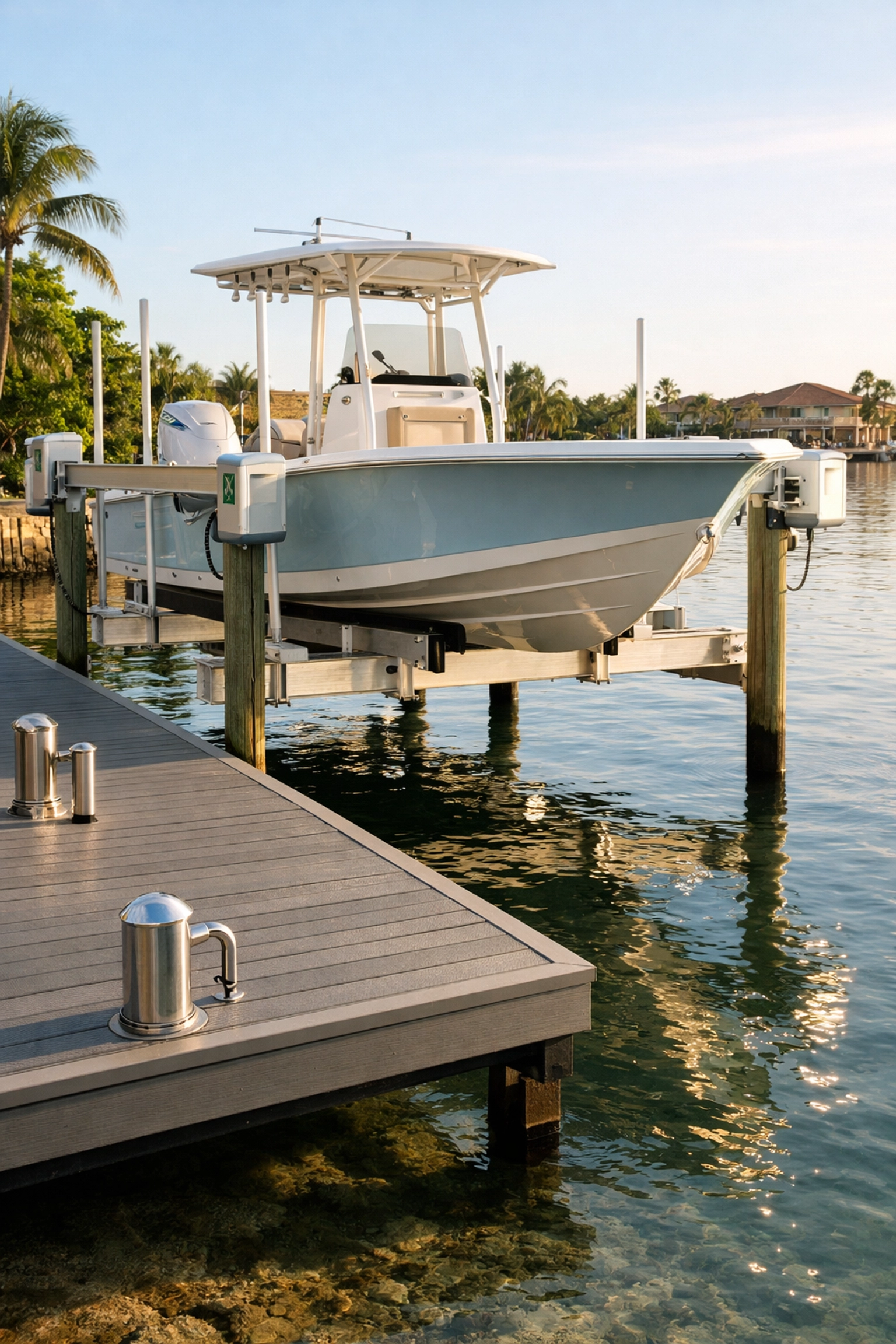
(Caption: Proper dock and boat lift maintenance is essential for preserving your property value.)
Risk and Resilience: The "New Standards"
Post-2024 and 2025 weather patterns have changed how we look at construction. In 2026, "coastal resilience" is the buzzword.
Elevation is everything.
When browsing homes on www.swflhomestoday.com, pay close attention to the base flood elevation. Newer homes built to 2024+ codes are often elevated higher and feature "flood vents" in the garage or lower levels. These features aren't just for safety: they significantly lower your flood insurance premiums.
Older waterfront homes can be charming, but you must factor in the "50% Rule." If you plan to renovate an older home and the cost of the renovation exceeds 50% of the structure's value, FEMA may require you to bring the entire house up to current elevation codes. This is why we’re seeing a lot of older waterfront cottages being replaced by modern, high-elevation builds.
Spotlight: Cape Coral and the Seven Islands Project
If you’re looking for the best bang for your buck in 2026, keep an eye on North Cape Coral. The Seven Islands project along Burnt Store Road is transforming the northern waterfront corridor. With new luxury condos, retail, and dining planned, the surrounding residential waterfront homes are seeing a steady increase in interest. It’s becoming a "destination within a destination."
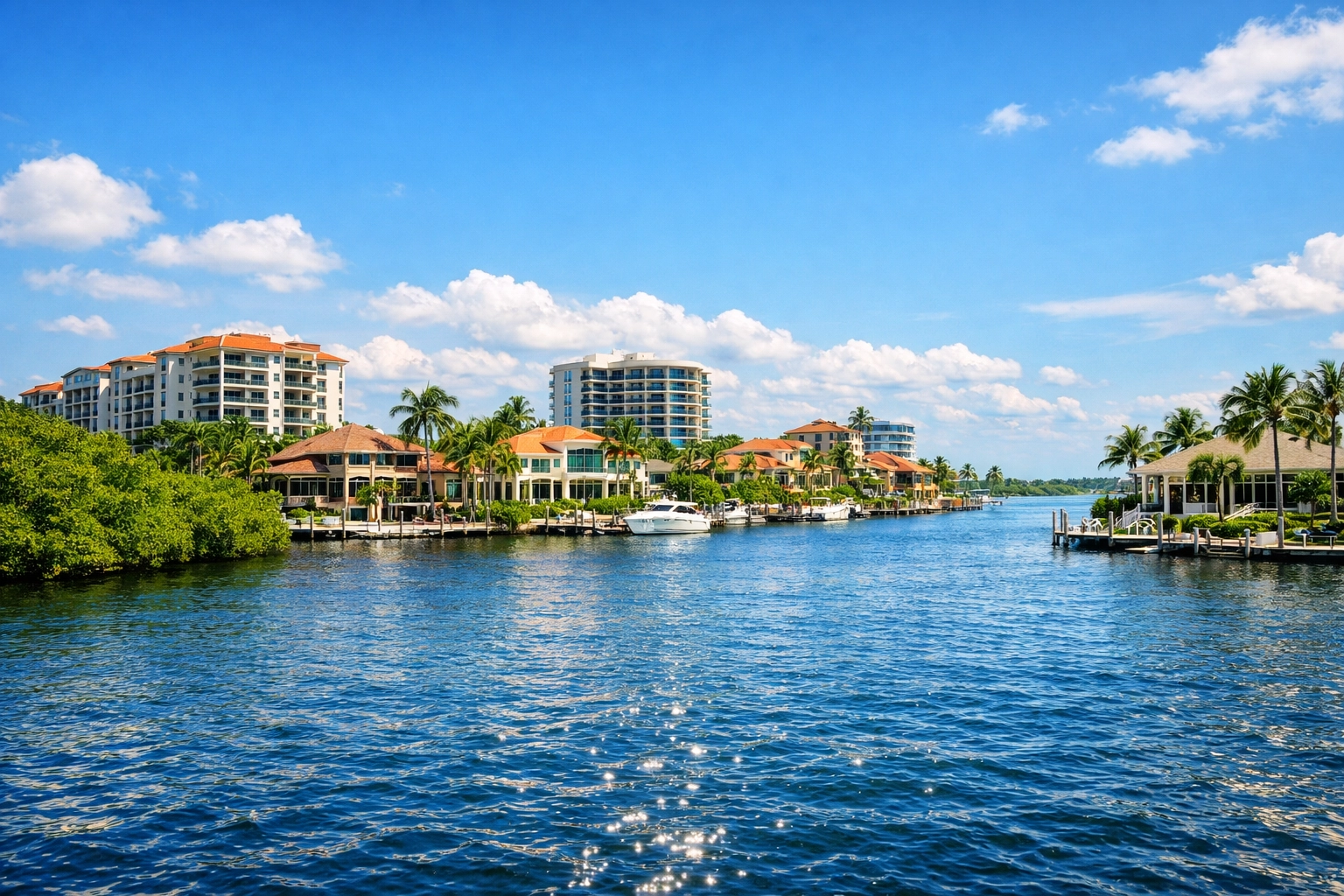
(Caption: The Seven Islands area in Cape Coral is a major growth hub for waterfront real estate.)
The Financial Perks of Florida Waterfront
Beyond the sunsets, there are some serious financial reasons to choose SWFL:
- No State Income Tax: This is the big one. Moving from a high-tax state can effectively "pay" for your boat.
- Homestead Exemption: If the waterfront home is your primary residence, you get a break on property taxes and a cap on how much those taxes can increase each year (the "Save Our Homes" act).
- Finite Supply: They aren't making more waterfront land. While the market may fluctuate, the long-term value of water-access property remains one of the safest bets in real estate.
Buying Tips for 2026: A Summary Checklist
If you’re ready to dive in, here is your "cheat sheet" for success:
- Get a Specialized Inspection: Don't just get a home inspection. Get a seawall, dock, and boat lift inspection.
- Check the "Tails": In canal systems, ensure you know how long it takes to get to open water. A 45-minute "no-wake" zone crawl can get old fast.
- Understand Insurance: Get an insurance quote before you're under contract. Know your flood zone and your wind mitigation credits.
- Look at Pricing Per Foot: Compare the home’s value based on the width of the water it sits on.
- Partner with a Local Pro: You need someone who knows the difference between a spreader canal and a freshwater basin. Our team at RE/MAX Realty Team lives and breathes these waters.
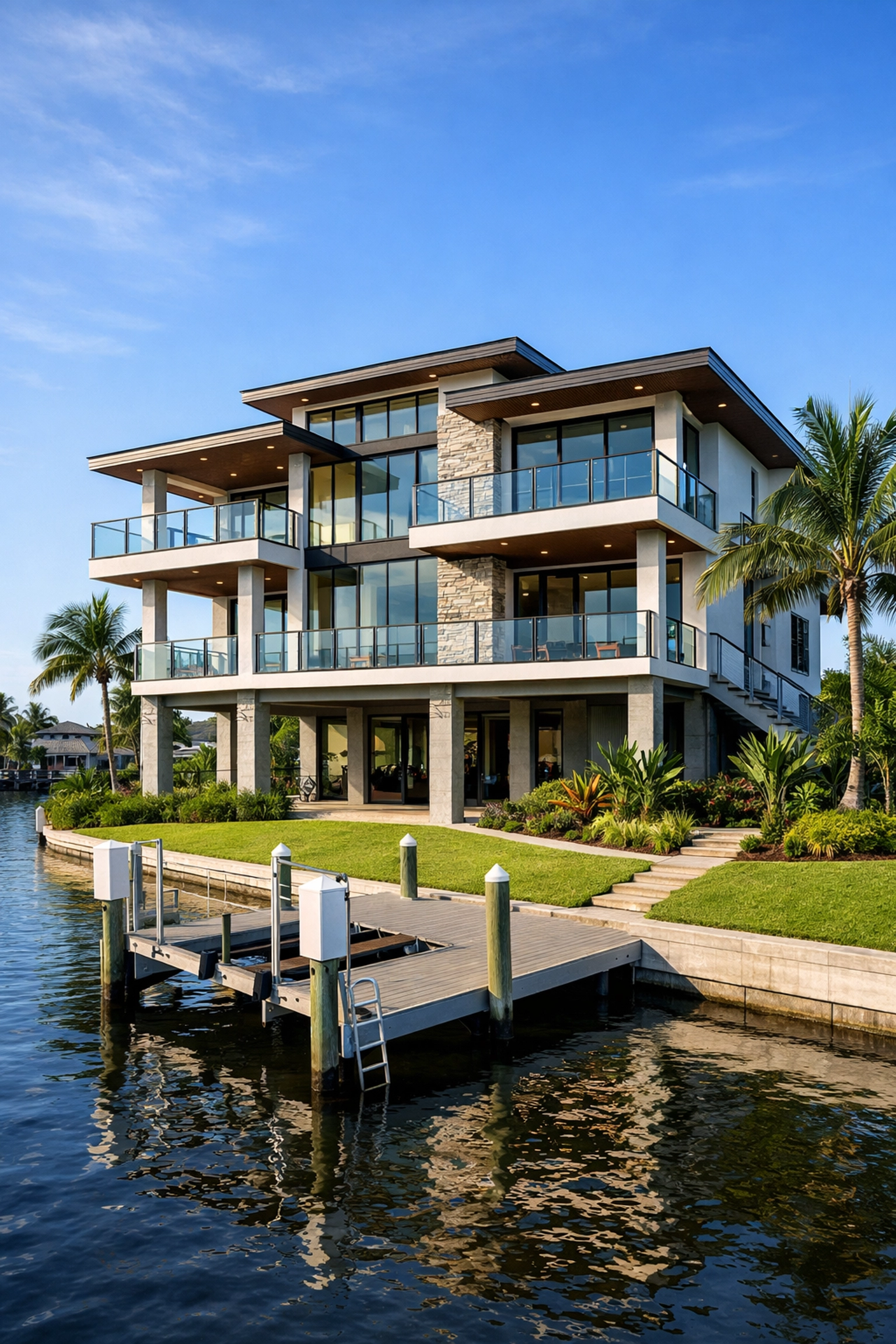
(Caption: A modern, high-elevation waterfront home designed for 2026 coastal standards.)
Final Thoughts
Buying one of the many SWFL waterfront homes available in 2026 is an exciting journey, but it requires a sharper eye than it did five years ago. Focus on construction quality, understand your water access, and don't be afraid to negotiate in this balanced market.
Ready to start your search? Head over to www.swflhomestoday.com to see what’s currently hitting the market. Whether you’re looking for a fixer-upper with a view or a brand-new custom estate, the water is calling. See you at the dock!