

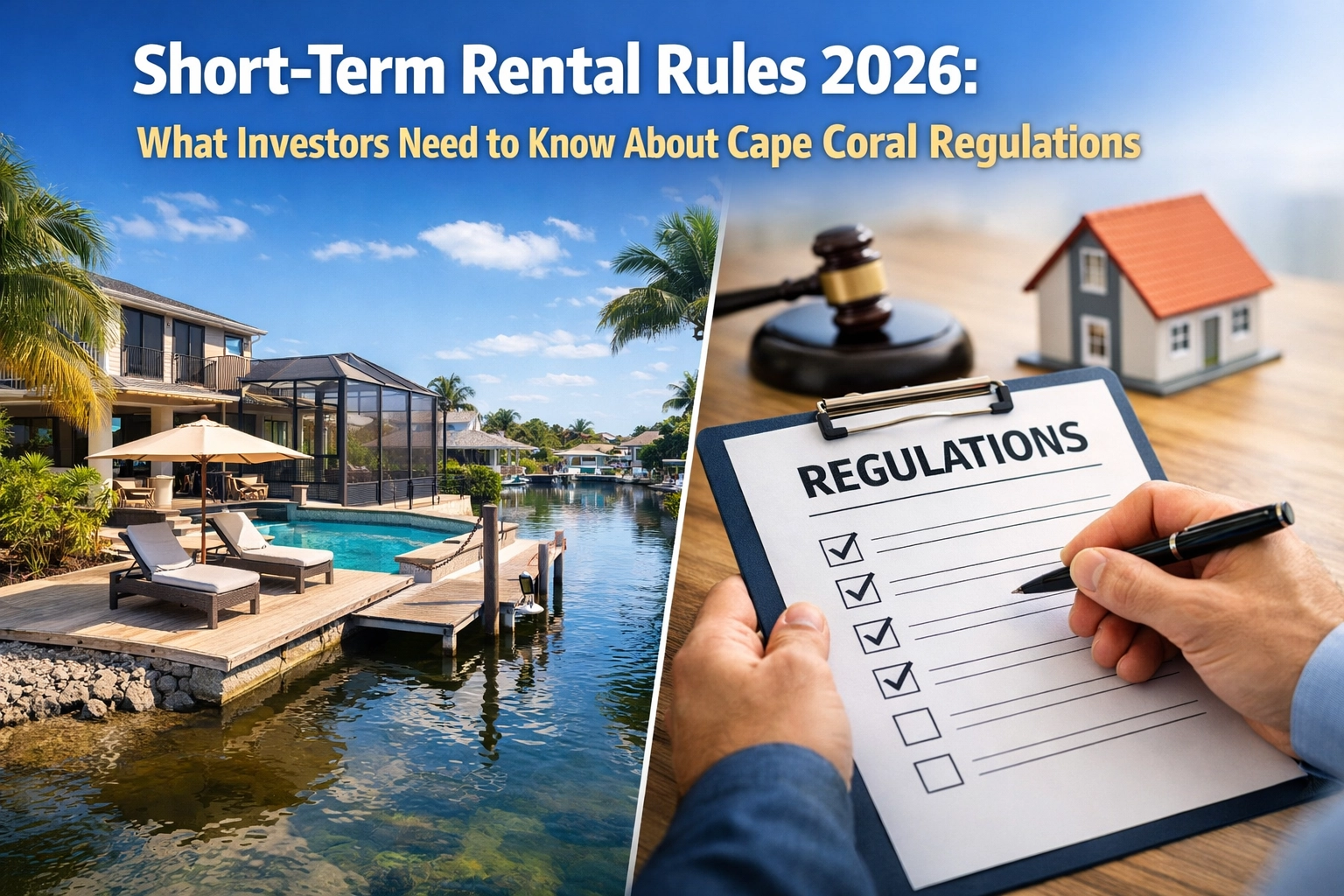
If you're one of the many investors eyeing investment in residential properties in Southwest Florida, listen up. Cape Coral just changed the game for short-term rentals, and what used to be a simple $35 one-time registration is now a $350 annual commitment, plus a lot more red tape.
As of January 1, 2026, Cape Coral implemented sweeping changes to how short-term rentals are regulated, registered, and enforced. Whether you're working with realtors Cape Coral to acquire your next Airbnb property or you already own a vacation rental portfolio, these new rules will directly impact your bottom line.
Let's break down exactly what changed, what it costs, and how to stay compliant without getting slapped with a $2,000 fine.

What Counts as a Short-Term Rental in Cape Coral?
First things first: Cape Coral defines a short-term rental as any residential property leased or rented for six months or less. That includes single-family homes, duplexes, condos, and multi-family units.
If you're renting out your property on Airbnb, Vrbo, Booking.com, or even through direct bookings for stays under six months, you're operating a short-term rental. And yes, that means you're now subject to the city's updated registration and compliance requirements.
Long-term rentals (anything over six months) are still required to register, but they only pay $35 annually: a huge difference from the $350 short-term operators now face.
The New Registration Requirements: What You Need to Do
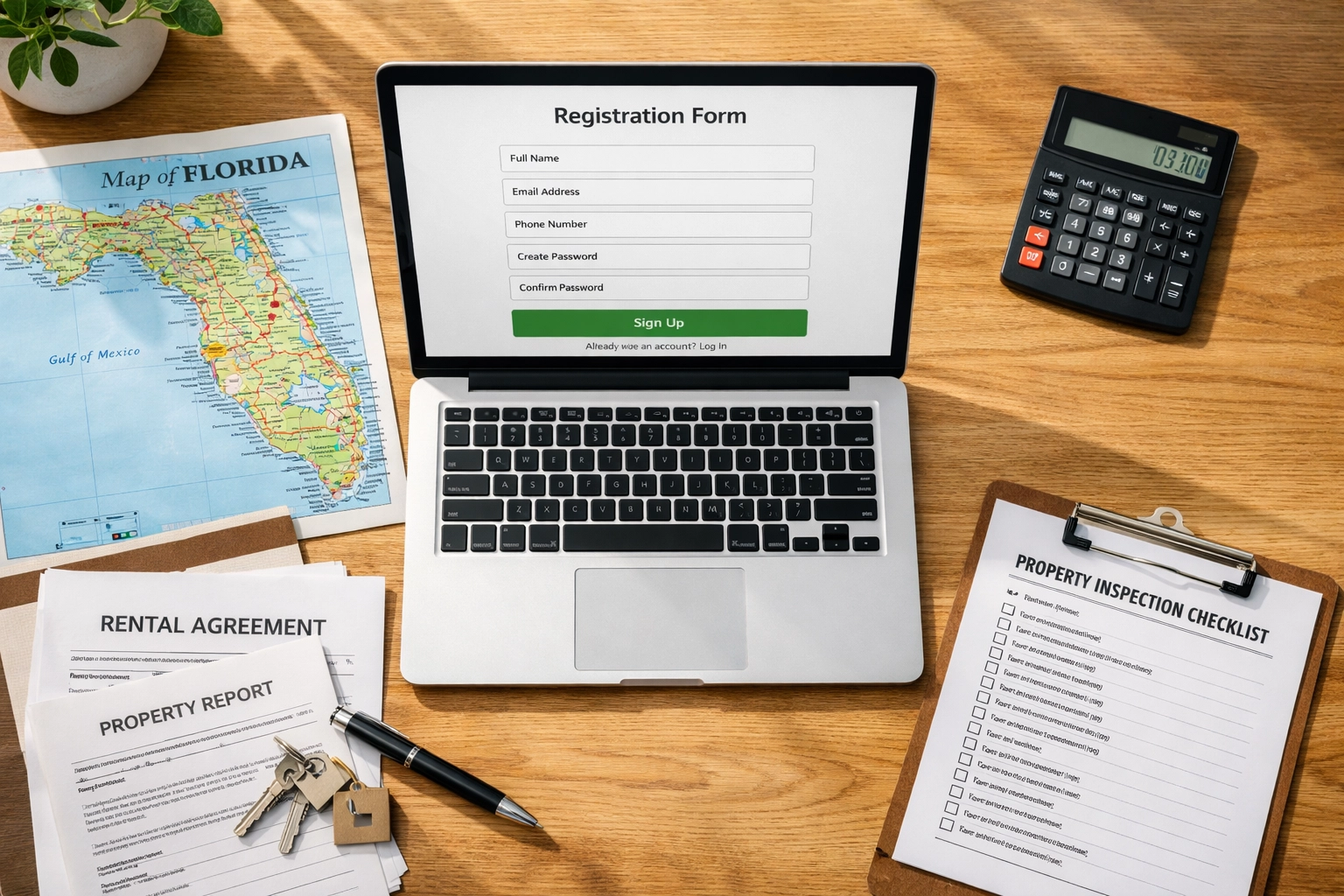
Starting January 1, 2026, all short-term rental properties in Cape Coral must register annually with the City Clerk's Department. Here's what that looks like:
- Annual registration fee: $350 per property per year
- Registration deadline: Must be completed before accepting any bookings
- Renewal requirement: Must renew every year on your anniversary date (late fees apply if you're more than 30 days late)
- Multi-property owners: Good news: if you own multiple units, you can register them all under a single registration and pay one $350 fee
This is a massive shift from the old system, where a one-time $35 fee covered you indefinitely. The city made this change to fund better enforcement, staff monitoring, and response teams for neighborhood complaints. Translation: Cape Coral is serious about cracking down on problem rentals.
You can register online through the city's portal at CapeCoral.gov/RentalRegistration. The process is relatively straightforward, but make sure you have your property details, contact information, and payment method ready.
Penalties: What Happens If You Don't Comply?
Here's where things get expensive. Cape Coral has rolled out a tiered penalty structure designed to encourage compliance: and punish repeat offenders:
- First violation: $500 fine
- Second violation: $1,000 fine
- Failure to register at all: Subject to even higher penalties under broader code enforcement provisions (potentially $2,000+)
- Each day a violation continues: Treated as a separate offense
To put this in perspective, in 2025, one Cape Coral operator was fined over $30,000 across three properties for offering stays shorter than the required seven-day minimum. The city isn't playing around.
If you're working with experienced realtors Cape Coral to acquire rental properties, make sure they walk you through the compliance requirements before you close. A $350 annual fee is a lot easier to stomach than a $30,000 fine.
Tax Obligations: It's Not Just About Registration
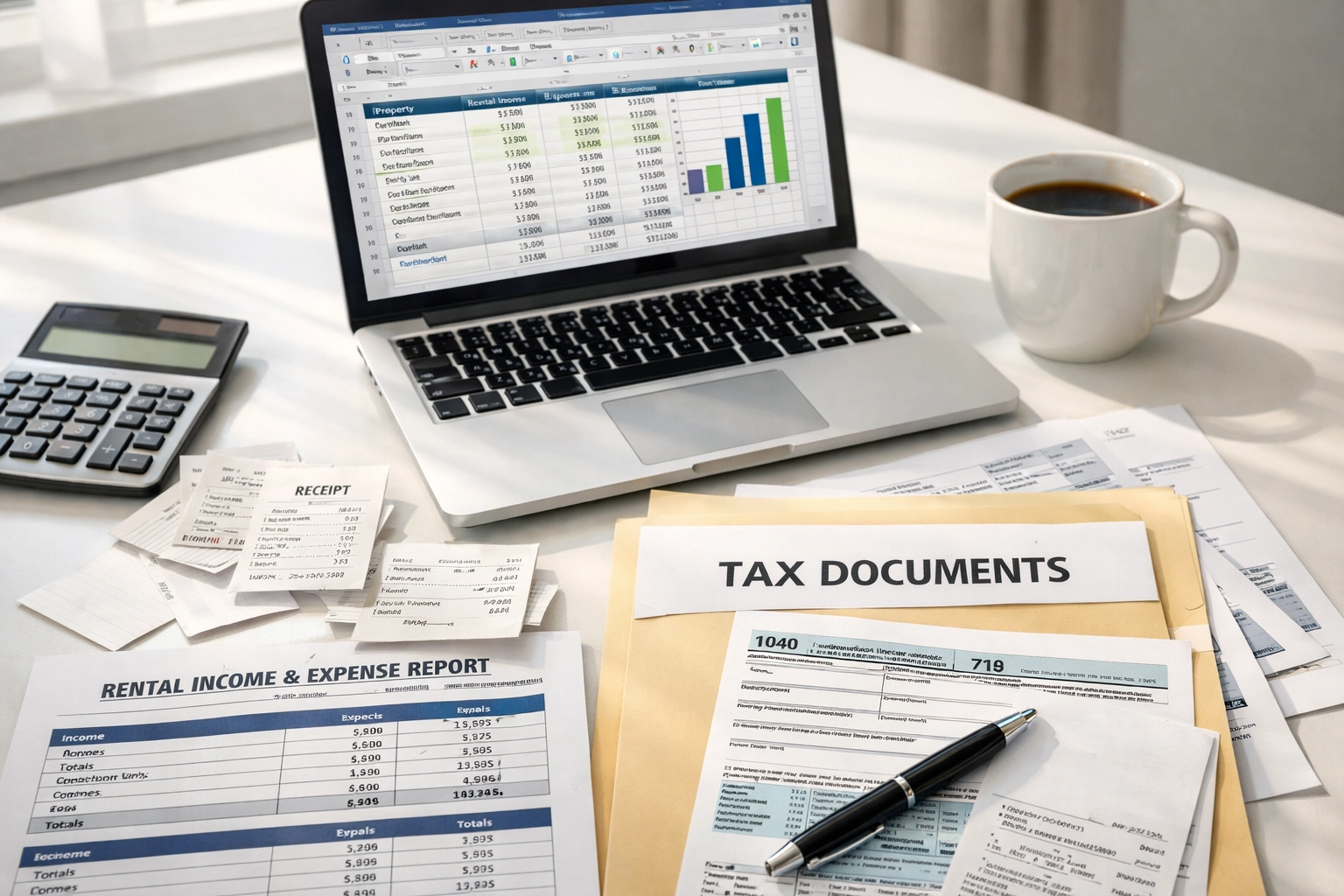
Beyond the city registration, short-term rental operators in Cape Coral have multiple tax obligations to manage. Here's the breakdown:
1. Lee County Tourist Development Tax
You must charge and remit the Lee County tourist development tax on all stays of six months or less. The good news? If you're listing on Airbnb or Vrbo, they automatically collect and remit this tax for you. If you're accepting direct bookings, you'll need to handle it yourself.
2. State Business License
You're required to obtain a state business license to operate a short-term rental in Florida. This is separate from your city registration.
3. State Tax Certificate
You must register for a state tax certificate and collect/remit state-administered lodging taxes when you receive direct payments from guests. Again, Airbnb and Vrbo handle this automatically for platform bookings, but direct bookings are on you.
4. Florida State Licensing
In addition to all of the above, state licensing is required for short-term rentals. The state license currently costs $50 and can be obtained through the Florida Department of Business and Professional Regulation (DBPR).
Why Cape Coral Made These Changes
The city didn't roll out these new rules just to collect more fees (though that's certainly part of it). According to city officials, the updated program allows Cape Coral to:
- Better track rental properties across the city
- Respond faster to neighborhood complaints (noise, parking, unruly guests)
- Fund police and code compliance staff dedicated to rental enforcement
- Recover costs associated with enforcement actions
Cape Coral has seen explosive growth in short-term rentals over the past few years, and with that growth came problems. Neighbors complained about noise, trash, and revolving-door occupancy. The city decided to take a proactive approach rather than wait for things to spiral.
For serious investors, this is actually good news. Higher barriers to entry mean fewer casual operators and more professional competition. If you're treating your investment in residential properties as a business (which you should be), these regulations just raised the bar: and that works in your favor.
How to Stay Compliant: A Quick Checklist
Here's your step-by-step guide to making sure you're fully compliant with Cape Coral's 2026 short-term rental rules:
- Register your property: Go to CapeCoral.gov/RentalRegistration and complete your annual registration ($350 per property).
- Obtain your state license: Apply through the Florida DBPR ($50).
- Register for state tax certificate: This is required if you're accepting direct bookings.
- Set up automatic tax collection: If you're using Airbnb or Vrbo, verify that they're collecting tourist development tax and state lodging taxes. If you're taking direct bookings, set up your own system.
- Mark your renewal date: Set a calendar reminder 30 days before your anniversary to avoid late fees.
- Keep documentation: Maintain records of your registration, licenses, and tax remittances in case the city audits you.
If you're purchasing a property specifically for short-term rental purposes, talk to your realtors Cape Coral about factoring these costs into your ROI calculations. The $350 annual fee, $50 state license, and tax obligations add up: but they're still manageable if you price your property correctly.
What This Means for Real Estate Investors
Let's talk numbers. If you're earning $50,000 per year in gross rental income from a Cape Coral vacation rental, the $350 registration fee represents less than 1% of your revenue. Add in the $50 state license, and you're still under $500 annually in compliance costs.
The bigger concern isn't the fees: it's the enforcement. Cape Coral is actively monitoring short-term rentals, and the fines for non-compliance are steep. If you're operating under the radar, now's the time to get legal.
For investors working with local realtors Cape Coral, make sure you're asking the right questions:
- Is the property zoned for short-term rentals?
- Are there any HOA restrictions?
- What's the average occupancy rate in this neighborhood?
- How do the new registration fees impact my projected ROI?
The best investment in residential properties decisions are made with full knowledge of the regulatory landscape. These new rules don't make Cape Coral a bad market: they just make it a more professional one.
The Bottom Line
Cape Coral's 2026 short-term rental regulations are here to stay. The $350 annual registration fee, tiered penalties, and state licensing requirements represent a new era of oversight for vacation rental operators.
If you're serious about investment in residential properties in Southwest Florida, compliance isn't optional: it's the cost of doing business. The good news? The process is straightforward, the fees are manageable, and the city has made it easy to register online.
Talk to experienced realtors Cape Coral who understand these regulations inside and out. Make sure your property is properly registered, your taxes are set up correctly, and your renewal dates are marked on your calendar. Do that, and you'll avoid the headaches (and fines) that come with non-compliance.
Cape Coral is still one of the most investor-friendly markets in Florida: you just need to play by the new rules.
Need help navigating Cape Coral's real estate market? Visit http://www.swflhomestoday.com to connect with local experts who can guide you through the process.