

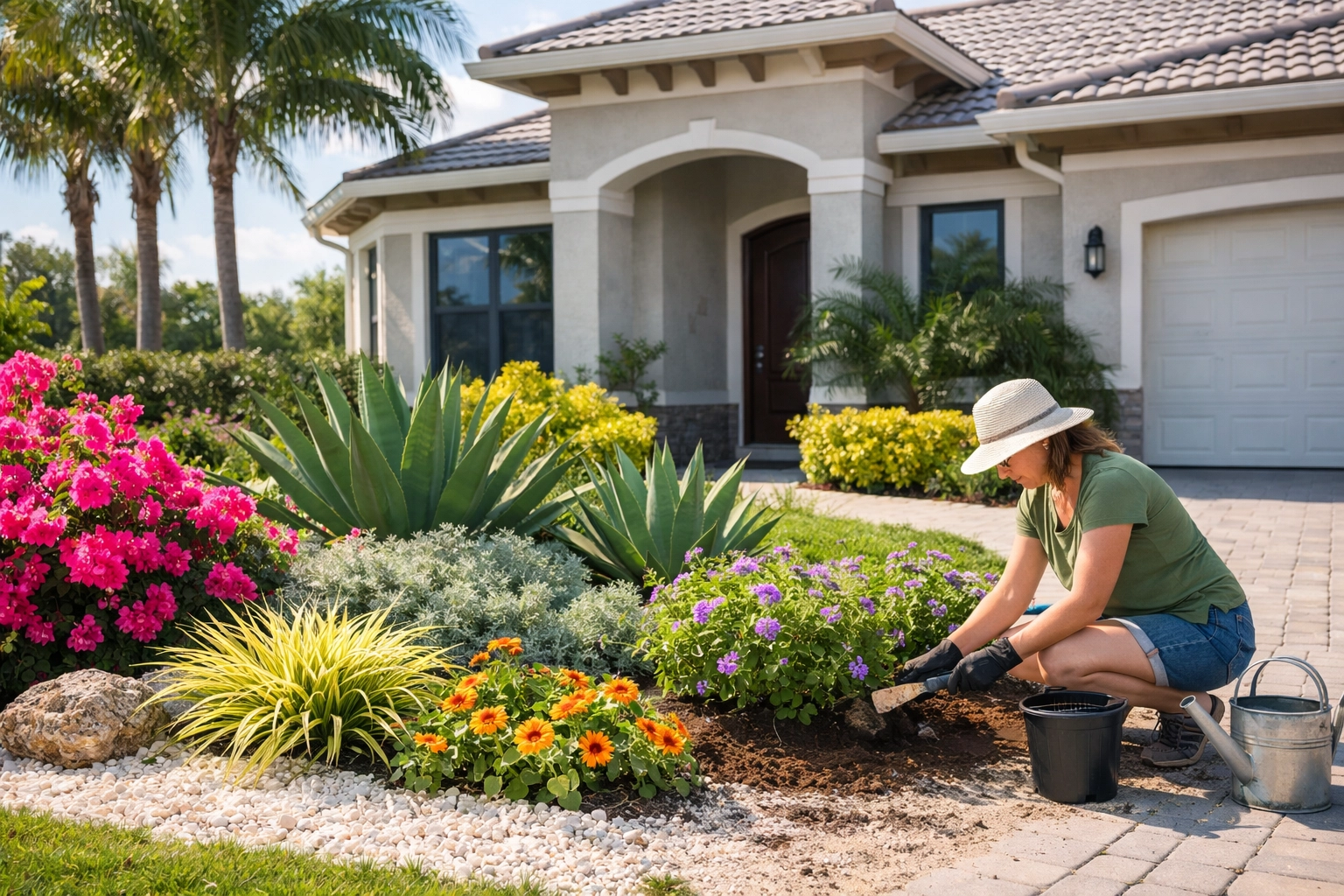
Let's be real: Cape Coral landscaping is a whole different game than the rest of the country. You can't just pick the prettiest plant at Home Depot and hope for the best. Between the salt air, sandy soil, brutal sun, and occasional hurricane, your yard needs to be tougher than it looks.
The good news? You don't have to sacrifice beauty for durability. There are plenty of salt-tolerant, drought-resistant plants that look amazing and actually thrive in Southwest Florida's coastal climate. Whether you're prepping your home for sale or just tired of watching your landscaping die every summer, this guide will help you choose plants that work with the environment instead of against it.
Why Salt Tolerance Matters (Even If You're Not on the Water)
You might think salt tolerance only matters if you're on a waterfront lot, but that's not true. Cape Coral's proximity to the Gulf means salt spray travels inland: especially during storms. Even homes several miles from the coast deal with salty air, salty irrigation water, and soil that retains salt over time.
Plants that aren't adapted to these conditions show stress quickly: brown leaf edges, stunted growth, and that sad, crispy look that screams "I'm struggling." Salt-tolerant plants, on the other hand, have built-in mechanisms to handle sodium without breaking a sweat.
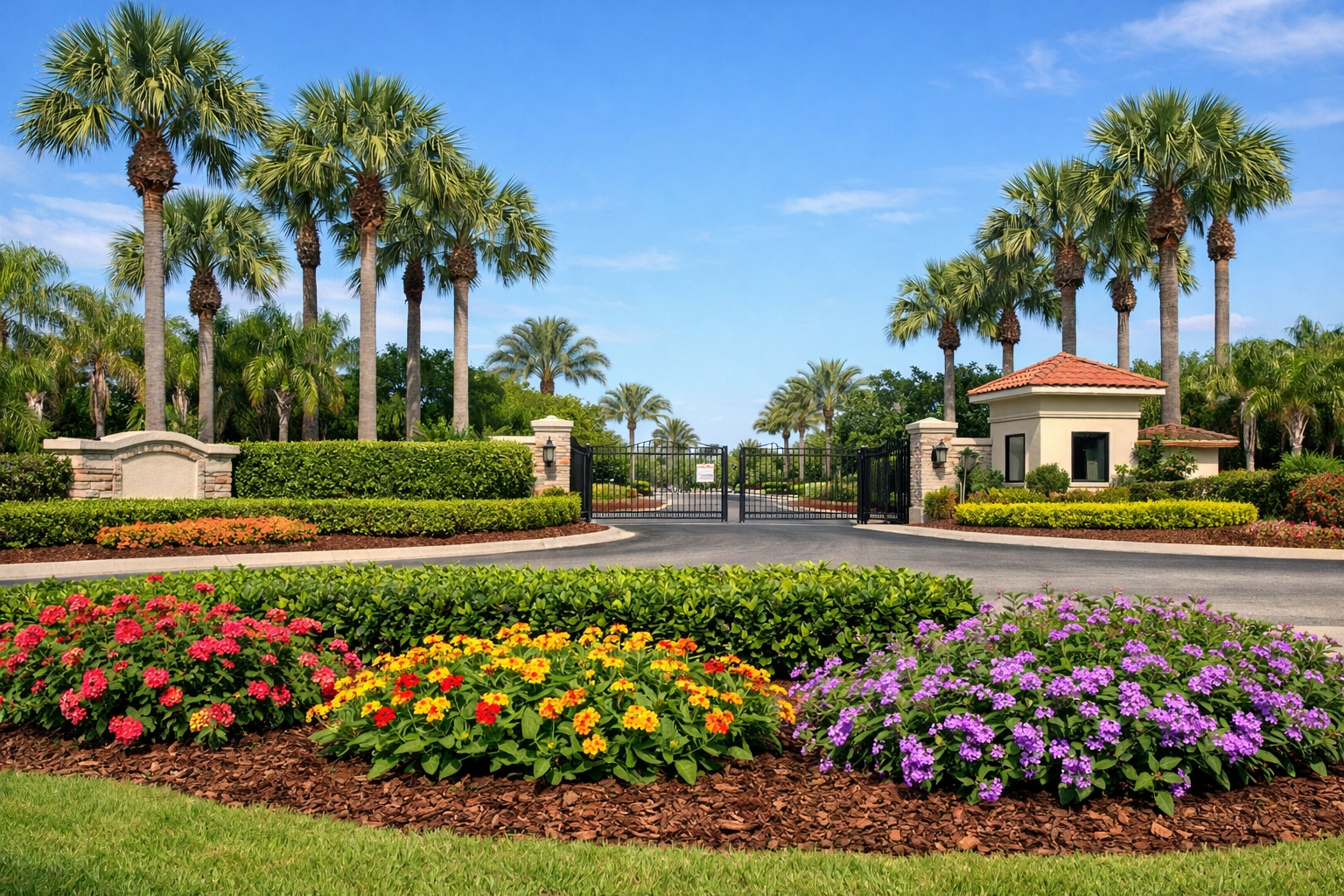
This is especially important in gated communities in Cape Coral Florida, where HOA landscaping standards are strict. Nobody wants to get a violation letter because their front yard looks like a desert: but you also don't want to waste money replacing plants every six months.
Trees That Anchor Your Curb Appeal
Let's start with the big stuff. Trees provide structure, shade, and instant visual impact. But in Cape Coral, you need trees that can handle salt, wind, and poor soil.
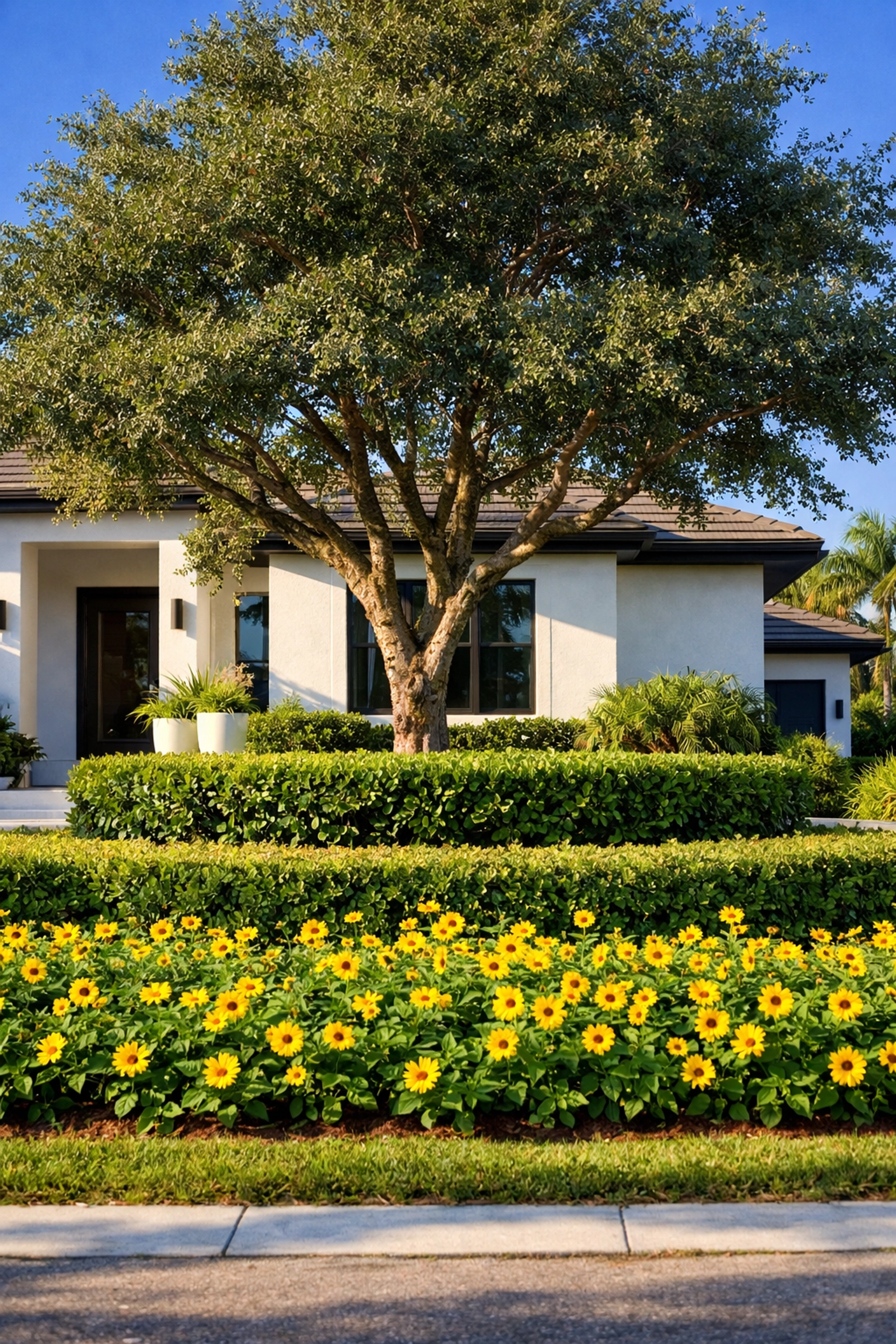
Black Olive Tree (Bucida buceras) is my top pick for a statement tree. It has this elegant, layered branching pattern that looks architectural without being fussy. The canopy provides great shade, and it's salt-tolerant enough to handle coastal conditions. Bonus: it stays relatively compact, so you won't be dealing with massive roots tearing up your driveway in 10 years.
Saw Palmetto (Serenoa repens) is native to Florida, which means it was literally built for this climate. It's got that rustic, coastal vibe that works whether you're going for tropical or more natural landscaping. The silver-leafed variety is especially striking and adds contrast to darker green plants.
Sabal Palm (Florida's state tree) is another no-brainer. It's moderately to highly salt-tolerant, drought-resistant once established, and gives you that classic Florida look. Plus, it's nearly hurricane-proof compared to other palms.
Pro tip: Avoid Queen Palms if you're close to the water. They're gorgeous but notoriously sensitive to salt and wind damage.
Shrubs and Hedges That Actually Stay Green
Shrubs are where you really build your curb appeal. They fill in bare spaces, provide privacy, and add color year-round. But Cape Coral shrubs need to earn their place in your yard.
Cocoplum is the MVP of Cape Coral landscaping: especially the horizontal or coastal variety. It grows wider than it does tall (usually around 3 feet), has zero insect problems, and handles salt like a champ. It's perfect for low hedges along walkways or as a border around your property. Plus, it requires almost no maintenance once established.
Firebush is another winner if you want something with more color. It loves sandy soil, produces red tubular flowers year-round, and attracts hummingbirds and butterflies. It'll grow to about 5-8 feet, so it works well as a mid-height hedge or backdrop plant.
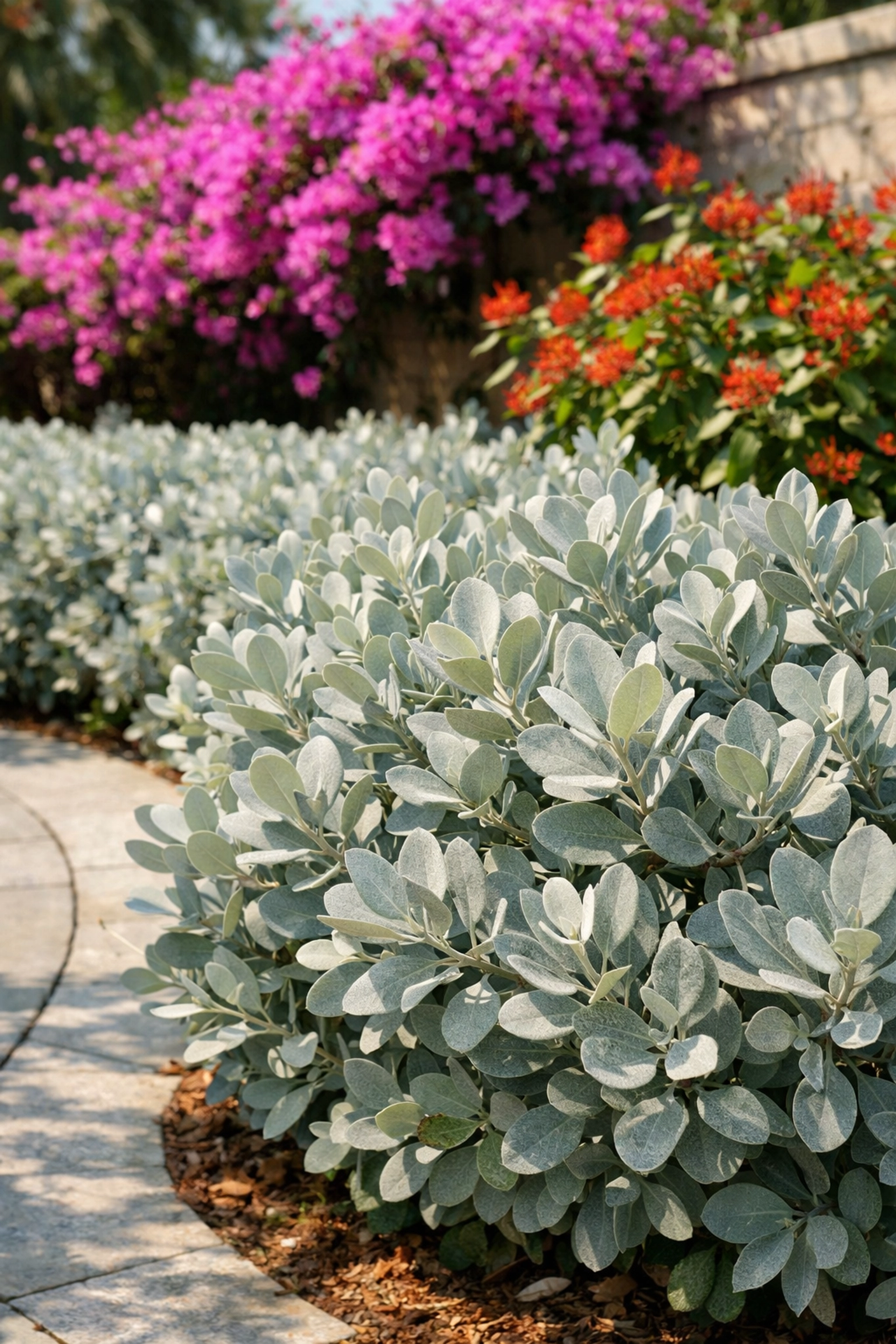
Silver Buttonwood (Conocarpus erectus var. sericeus) has this beautiful silvery foliage that catches the light and looks elegant without being high-maintenance. You can shape it into a formal hedge or let it grow more naturally as an accent shrub.
Hibiscus and Bougainvillea are classic Florida choices for a reason. Both are highly salt-tolerant and produce vibrant blooms. Hibiscus comes in every color imaginable, while Bougainvillea adds that dramatic pop of magenta, orange, or purple. Just know that Bougainvillea has thorns: so maybe don't plant it next to the walkway.
If you live in one of the gated communities in Cape Coral Florida with strict aesthetic guidelines, these shrubs typically meet HOA requirements while still giving you some personality.
Groundcovers That Fill the Gaps
Groundcovers are the secret weapon of low-maintenance landscaping. They fill in empty spaces, prevent erosion, and reduce the amount of mulch you need. In Cape Coral's sandy soil, the right groundcover can make your yard look lush without constant watering.
Beach Sunflower (Helianthus debilis) is one of the best options for Southwest Florida. It thrives in sandy, salty soil with almost no care once it's established. You'll get bright yellow blooms year-round, and it spreads quickly to cover bare spots. It's also native, which means it supports local pollinators.
Railroad Vine (Ipomoea pes-caprae) creates those pretty purple morning-glory-like flowers you see along the coast. It stabilizes soil, which is great if you have any slopes or areas prone to erosion. It's incredibly hardy and spreads aggressively: so plant it somewhere you actually want it to take over.
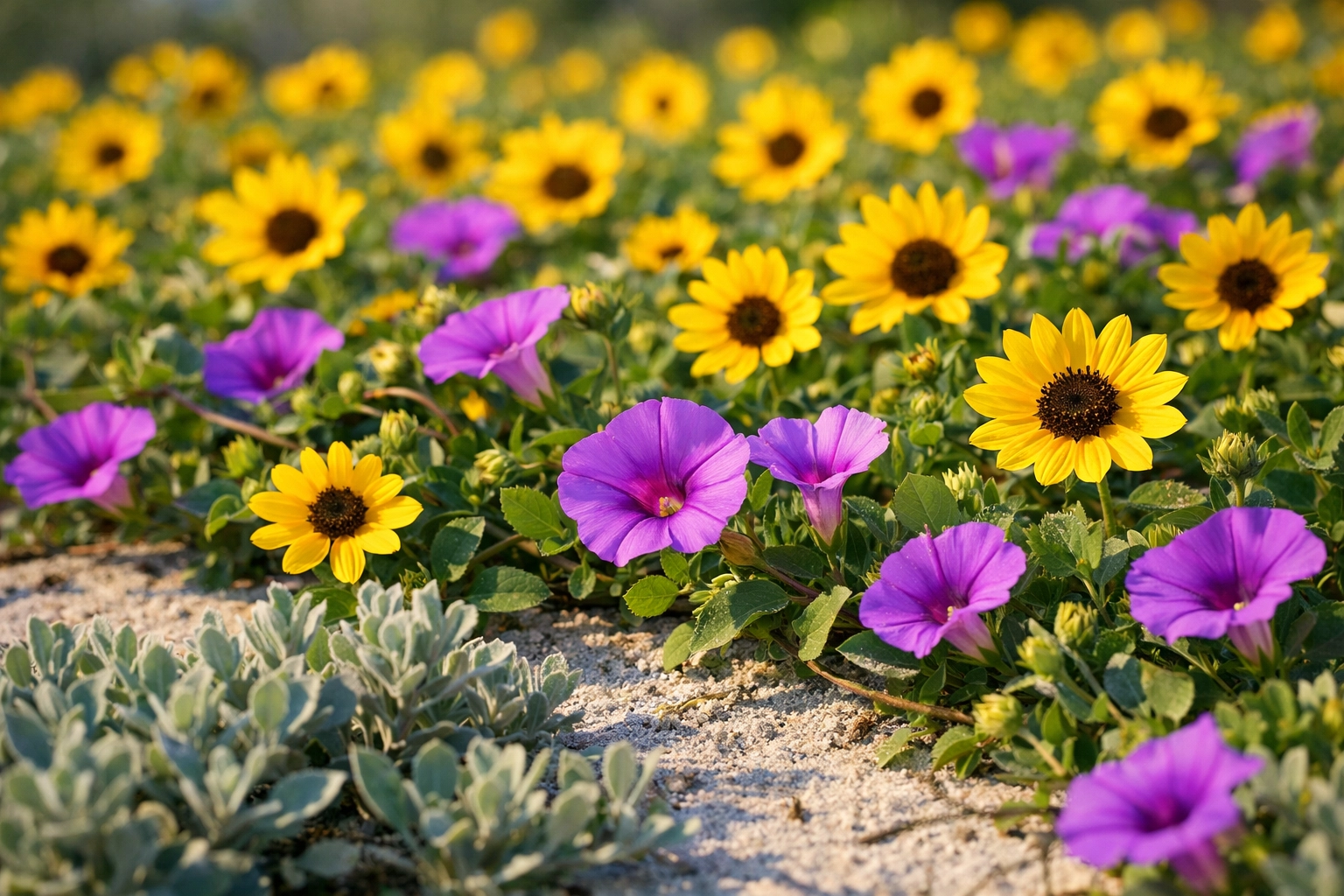
Sea Lavender (Heliotropium gnaphalodes) has gray-green foliage and delicate flowers that work perfectly in coastal settings. It stays low and compact, making it ideal for edging pathways or planting between pavers.
Other native options like sea oats, dune sunflower, and blanket flower blend in naturally and require virtually no maintenance. They're also more likely to be approved by HOAs since they're region-appropriate.
Bonus Tips for Gated Community Landscaping
If you're in a gated community in Cape Coral Florida, you probably already know the HOA has opinions about your landscaping. Here's how to stay compliant while still creating curb appeal:
Check the plant list. Most Cape Coral HOAs have approved plant lists that include salt-tolerant, Florida-friendly species. Stick to those and you'll avoid violations.
Layer your landscaping. Use trees for height, shrubs for structure, and groundcovers for color. This creates visual interest without looking cluttered or overgrown.
Mulch matters. A fresh layer of mulch makes even basic landscaping look polished. It also helps retain moisture and keeps roots cooler in the summer.
Think long-term. Choose plants that won't outgrow their space in two years. Overgrown landscaping is one of the most common HOA complaints: and it's way more expensive to remove and replace than to plant correctly the first time.
Maintenance That Actually Works in SWFL
Here's the thing about Cape Coral landscaping: the less you fuss with it, the better it performs. Over-watering and over-fertilizing are the two biggest mistakes I see.
Water deeply but infrequently. Once your plants are established, most of these species only need watering during extreme droughts. Deep watering encourages roots to grow down into the soil, making plants more resilient.
Use slow-release fertilizer. Cape Coral's sandy soil doesn't hold nutrients well, so frequent light fertilizing is better than heavy doses. Native and salt-tolerant plants typically need less fertilizer than non-native species.
Prune strategically. Most of these plants need minimal pruning. Cocoplum and Silver Buttonwood benefit from light shaping, but don't go crazy. Over-pruning stresses plants and makes them more vulnerable to pests and disease.
Mulch annually. Refresh your mulch every year to suppress weeds, retain moisture, and keep the root zone cooler. Pine bark mulch works well in Cape Coral and breaks down slowly.
The Bottom Line
Cape Coral curb appeal doesn't have to be complicated. The key is choosing plants that are already adapted to the salt, sun, and sand. Black Olive trees, Cocoplum hedges, and Beach Sunflower groundcovers give you that polished, tropical look without the constant maintenance.
Whether you're selling your home or just want a yard that doesn't look like it's giving up, salt-tolerant plants are your best bet. They're tougher, more attractive, and way easier to maintain than anything you'd plant in Ohio.
And if you're in one of the gated communities in Cape Coral Florida, you'll have the added peace of mind knowing your landscaping meets HOA standards while still standing out on the street. Win-win.
If you're thinking about buying or selling in Cape Coral and want to know how landscaping impacts home value, let's talk. Good curb appeal can add thousands to your sale price: and the right plants make all the difference. Check out more SWFL real estate tips at swflhomestoday.com.