

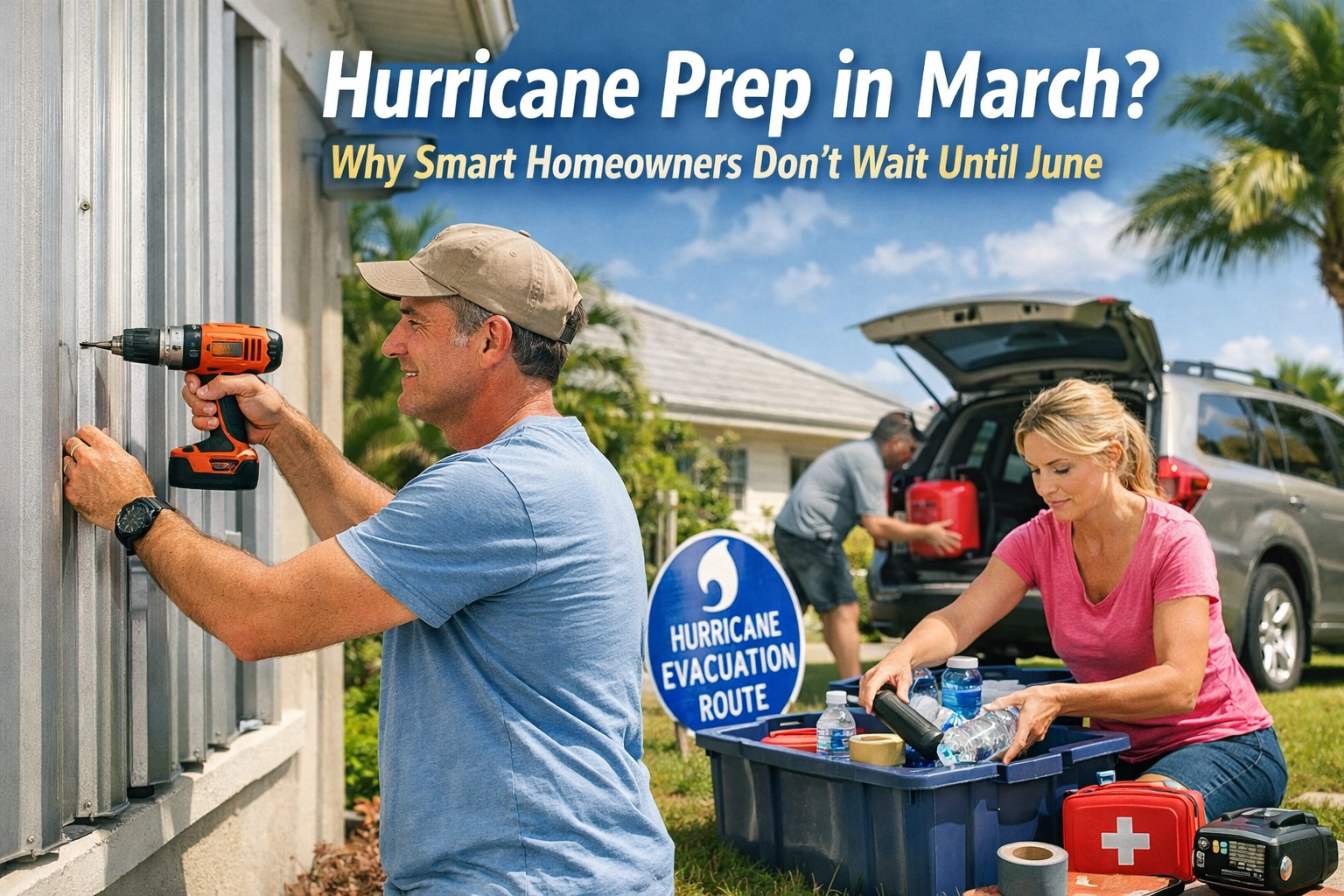
If you're new to Southwest Florida, you've probably heard the warnings: "Hurricane season starts June 1st." And if you're like most people, you're thinking, "Great, I'll start getting ready in May."
Here's the problem with that plan: everyone else is thinking the same thing.
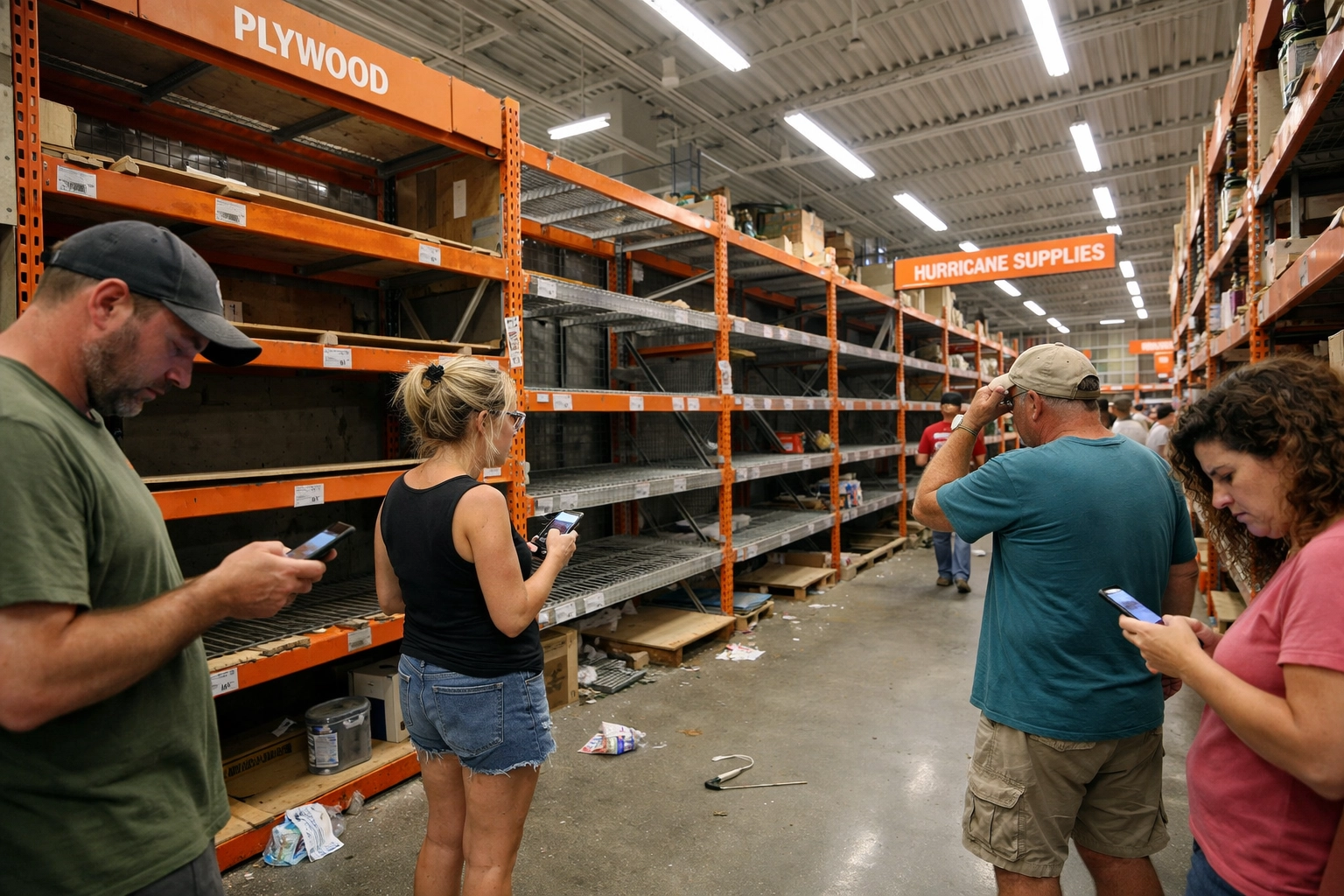
By the time June rolls around, Home Depot is out of plywood, generator prices have doubled, and insurance companies have stopped returning calls. Meanwhile, you're scrambling to book a contractor who's already booked through August.
Smart homeowners don't wait. They start in March. Here's why.
The June Rush is Real (and Expensive)
Hurricane season officially begins on June 1st and runs through November 30th. But here's what most people don't realize: the preparation season should start much earlier.
When you wait until late May or early June, you're competing with millions of other Florida residents for the same supplies, services, and attention. Stores run out of essentials like batteries, water, and tarps. Contractors are slammed with requests. Insurance agents are overwhelmed with policy reviews and new quotes.
Prices skyrocket. Selection drops. And if a storm forms early (which happens more often than you'd think), you're stuck scrambling.
Starting in March gives you a three-month head start. You can shop sales, compare prices, and take your time assembling everything you need without the panic-buying chaos.
National Hurricane Preparedness Week Sets the Tone
March isn't just a random time to start prepping: it aligns with National Hurricane Preparedness Week, which runs through early May. This initiative breaks down hurricane preparation into seven manageable daily themes:
- Know Your Risk – Understand your flood zone, evacuation routes, and storm surge potential
- Develop an Evacuation Plan – Map out where you'll go and how you'll get there
- Assemble Disaster Supplies – Build your emergency kit gradually
- Get an Insurance Checkup – Review coverage and document your property
- Strengthen Your Home – Install shutters, reinforce garage doors, trim trees
- Help Your Neighbors – Check on elderly or vulnerable residents
- Complete a Written Plan – Document everything so your family knows what to do
When you start in March, you can tackle one theme per week and still have time to revisit anything you missed. By June, you'll be fully prepared while your neighbors are still trying to find a hardware store with sandbags in stock.
Insurance Reviews Take Time (Start Now)
Here's something most Cape Coral homeowners learn the hard way: insurance companies won't issue new policies or make major changes to existing policies once a named storm enters the Gulf of Mexico.
That's called a "storm exclusion period," and it can lock you out of coverage right when you need it most.
If you're thinking about increasing your hurricane coverage, adding flood insurance, or switching carriers, March is the time to do it. Here's why:
- Underwriting takes 30-60 days – Especially if you're applying for new flood coverage through FEMA's National Flood Insurance Program
- Inspections may be required – Roof condition, wind mitigation features, and home age all factor into your premiums
- You'll have time to shop around – Don't just accept the first quote; compare coverage limits, deductibles, and exclusions
Pro tip: When you're reviewing your policy, pay special attention to your hurricane deductible. In Florida, this is often a percentage of your home's insured value (usually 2-10%), not a flat dollar amount. That means a $400,000 home with a 5% hurricane deductible would require you to pay $20,000 out of pocket before coverage kicks in.
If you're working with realtors in Cape Coral to buy or sell a home, ask them about the insurance history of the property. Homes with wind mitigation features (impact windows, reinforced roofs, etc.) qualify for significant premium discounts.
Supplies Are Cheaper (and Available) in March
Let's talk money. Building a proper hurricane supply kit isn't cheap, but starting early makes it way more affordable.
In March, you can:
- Buy in bulk during regular sales – Stock up on water, canned goods, and batteries when they're on sale, not when they're marked up
- Use coupons and loyalty rewards – Grocery stores and hardware chains regularly run promotions; take advantage of them
- Spread costs over several months – Instead of dropping $500 all at once in May, spend $150-$200 per month starting in March
- Shop online without shipping delays – Order non-perishables from Amazon or Costco without worrying about delivery bottlenecks
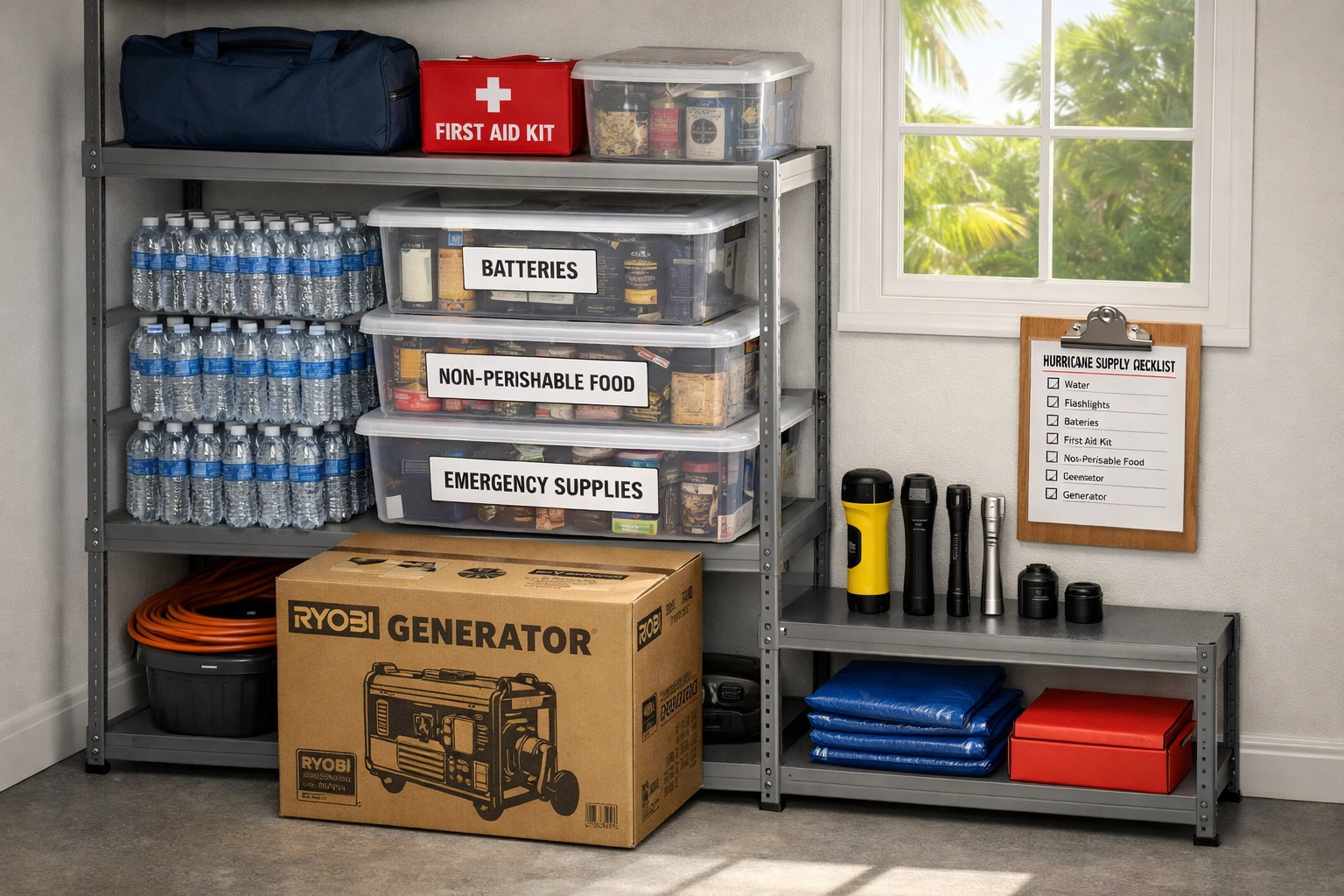
Here's a reality check: a basic hurricane supply kit for a family of four (enough to last 72 hours) typically includes:
- 12 gallons of water
- Non-perishable food for 3 days
- Battery-powered or hand-crank radio
- Flashlights and extra batteries
- First aid kit
- Prescription medications (7-day supply)
- Cash (ATMs may not work after a storm)
- Important documents in waterproof containers
- Phone chargers and backup power banks
That list gets expensive fast: especially if you're also buying plywood, tarps, and sandbags. Spreading those purchases across three months makes it manageable.
Contractors Are Available (and Negotiable)
If you need to install storm shutters, reinforce your garage door, or trim back overgrown trees, March is prime time to book contractors.
Why? Because they're not slammed yet.
During peak hurricane prep season (May-June), contractors are overbooked, prices are inflated, and quality work is rushed. If a storm actually forms, they may cancel your job entirely to focus on emergency repairs for existing clients.
But in March? They're hungry for work. You can:
- Negotiate better rates – Contractors offer discounts during slower months
- Get on their schedule early – Book your project for April or early May before the rush
- Take your time vetting candidates – Check references, compare quotes, and verify licenses without feeling rushed
If you own waterfront property in Cape Coral, this is especially important. Dock repairs, seawall reinforcements, and boat lift maintenance all take time: and you don't want to be waiting for a contractor when a storm is 72 hours out.

You'll Actually Be Self-Sufficient for 72 Hours
Here's the part nobody talks about: after a major hurricane, you're on your own for at least 72 hours.
First responders will be overwhelmed. Power companies will be prioritizing hospitals and emergency infrastructure. Roads may be impassable. Cell towers might be down.
If you wait until June to start prepping, you're betting that a) no storms form early, and b) you'll have time to finish everything before one does.
That's a risky bet.
Starting in March gives you time to:
- Test your generator – Make sure it works before you need it
- Stock up on medications – Talk to your doctor about getting a 90-day supply
- Prep your vehicles – Full gas tanks, emergency kits, and evacuation supplies
- Document your property – Take photos and videos of your home's contents for insurance claims
- Establish a communication plan – Designate an out-of-state contact person everyone can check in with
The goal isn't just to survive a hurricane: it's to be comfortable and safe while waiting for help to arrive.
Why Realtors in Cape Coral Stress Early Prep
If you're buying or selling a home in Cape Coral, hurricane preparedness isn't just about safety: it's about property value.
Homes with documented storm prep features (impact windows, hurricane shutters, reinforced roofs, backup generators) sell faster and for higher prices. Buyers want peace of mind, and sellers who can prove their home is hurricane-ready have a major advantage.
Experienced realtors in Cape Coral will tell you: the best time to make those improvements is before listing season heats up in the spring. And if you're buying, March is when you should be asking sellers about storm history, insurance claims, and mitigation features.
Starting your hurricane prep in March also signals to potential buyers (if you're selling) that you've been a proactive, responsible homeowner. That matters in a market where insurance costs and storm risk are top of mind for buyers.
The Bottom Line: March Prep Beats June Panic
Hurricane preparation isn't glamorous. It's not fun. But it's absolutely necessary if you live in Southwest Florida.
Starting in March instead of June gives you:
- Three months to spread costs and avoid sticker shock
- Access to supplies, contractors, and insurance options before the rush
- Time to test systems, document property, and create a real plan
- Peace of mind that you're ready: not reactive
Don't wait for the first tropical depression to form in the Atlantic. By then, it's too late to do anything except hope for the best.
Smart homeowners start early. And in Southwest Florida, early means March.
Key Takeaway: Hurricane season starts June 1st, but your preparation should start in March. Early prep means better prices, more options, and zero panic. Stock up on supplies gradually, review your insurance now, book contractors before they're slammed, and create a written plan your family can actually follow. The storm that catches you unprepared won't wait( so don't wait to get ready.)