

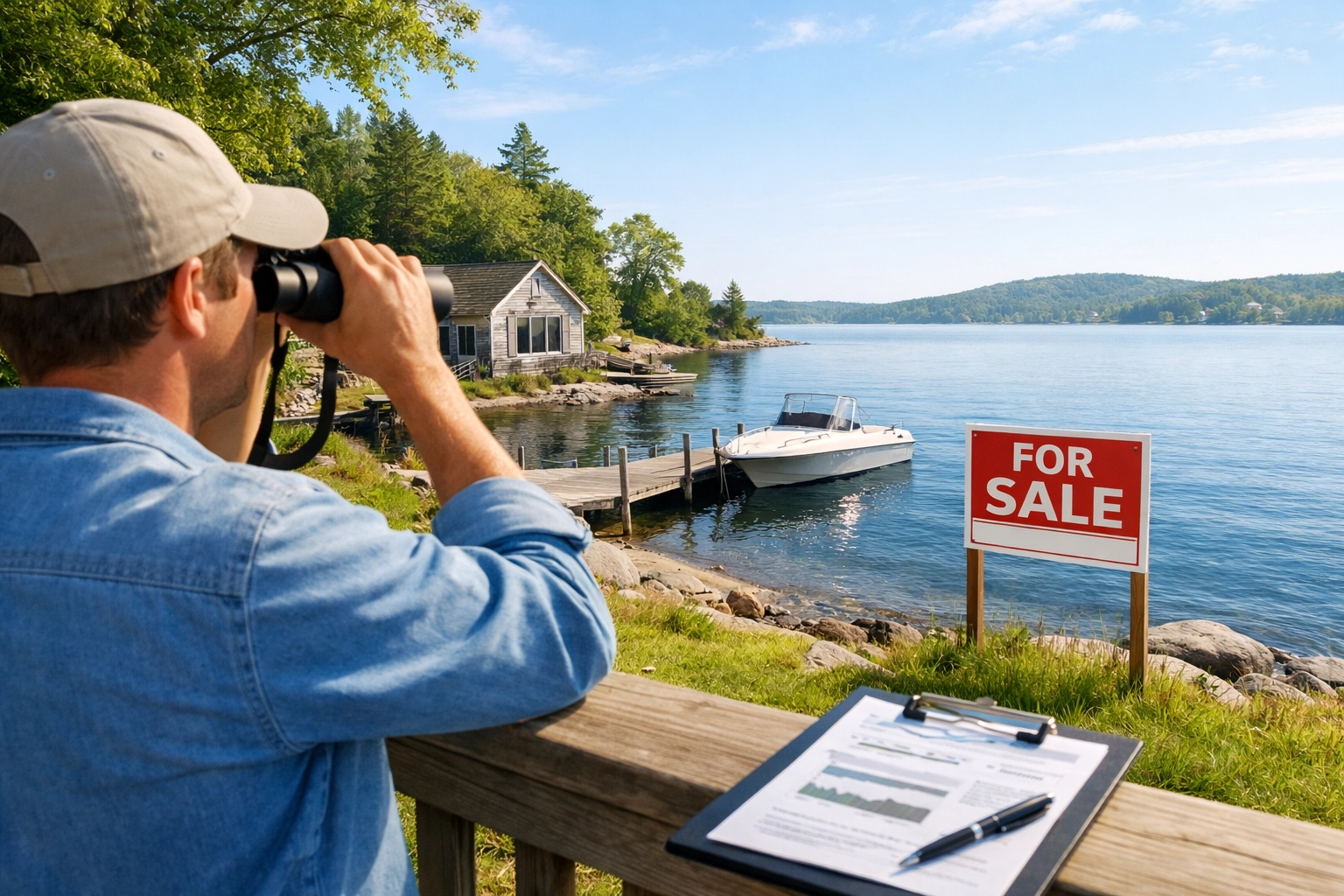
Every serious buyer knows that SWFL waterfront homes don't stay on the market long. The good ones get snatched up in days, sometimes hours. But here's the thing: undervalued waterfront properties do exist: you just need to know what you're looking at before everyone else figures it out.
The difference between a smart investment and an expensive mistake often comes down to three things: seawall condition, location quality, and assessment status. Let's break down exactly how to spot hidden value before the competition even schedules a showing.
Start With the Seawall (It's More Important Than You Think)
Most buyers walk a waterfront property and focus on the house. Smart buyers start at the water's edge.
The seawall is the backbone of any waterfront property in Southwest Florida. A well-maintained seawall protects the land from erosion, prevents sinkholes, and ensures your backyard doesn't slowly disappear into the canal. A failing seawall? That's a $30,000–$80,000 repair you didn't budget for.
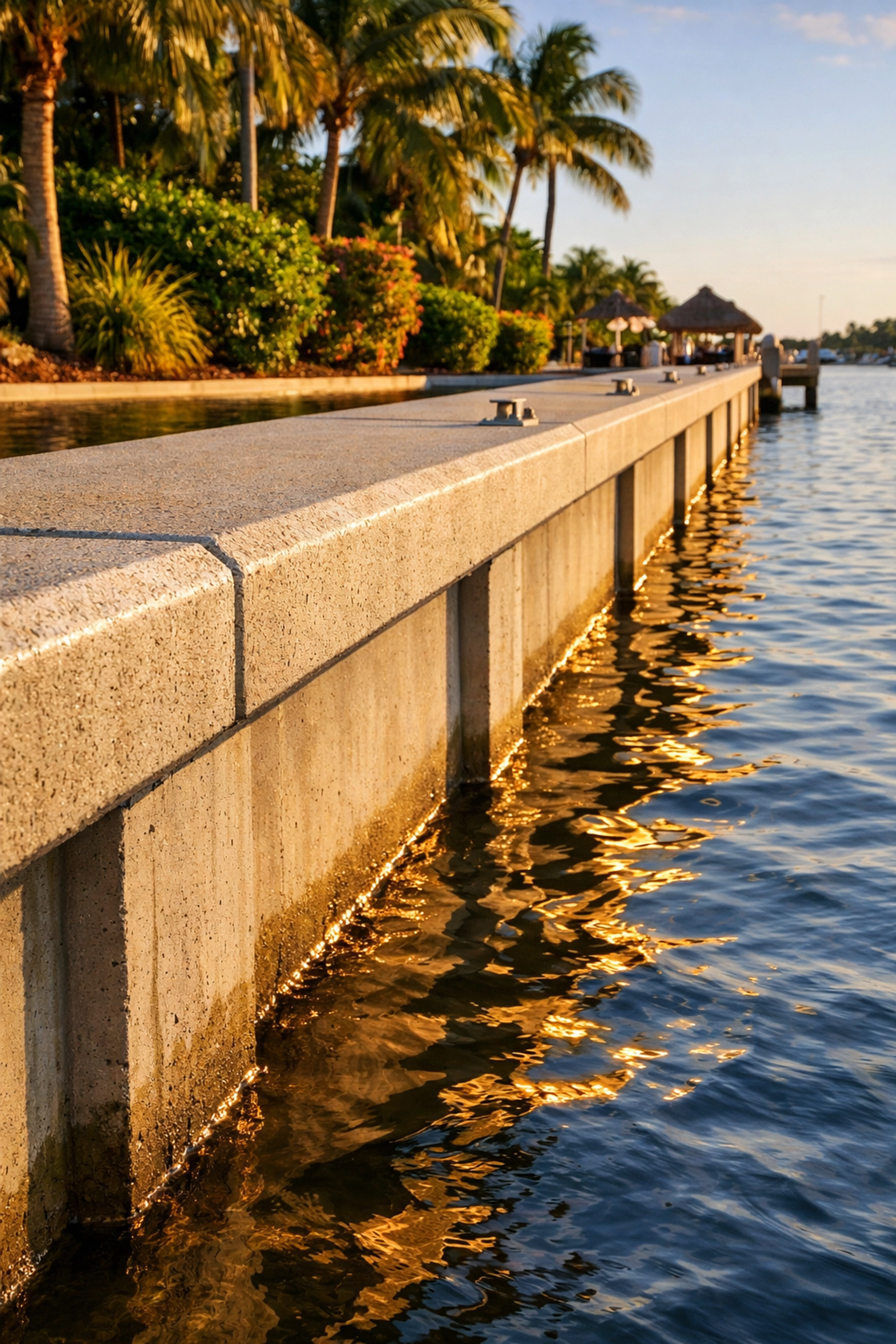
Here's what to look for:
Signs of a solid seawall:
- No visible cracks or separation from the cap
- Even, level cap with no tilting or sinking
- No soil erosion behind the wall
- Recent maintenance records (ask the seller)
Red flags that signal trouble:
- Horizontal or vertical cracks wider than a quarter-inch
- Bulging or bowing sections
- Water seeping through the wall at low tide
- Sinkholes or depressions in the yard near the wall
Now here's where the opportunity hides: if a property is priced below market but has a solid seawall, you may have found a gem. Conversely, if a home is priced "competitively" but the seawall needs replacing, you're looking at a below-market deal only if you deduct the repair cost from your offer.
Location Within the Location: Not All Waterfront Is Equal
In Cape Coral and Fort Myers, "waterfront" covers everything from direct Gulf access to landlocked canals. The pricing gap between these can be $200,000 or more: and that's where undervalued properties hide.
Deep-water access beats everything. Properties with direct, no-bridge access to the Gulf command premium pricing. But here's the insider move: some deep-water access homes are still priced like sailboat-water homes because the listing doesn't emphasize it or because the current owner doesn't boat.
If you see a listing that mentions "waterfront" but doesn't explicitly scream "GULF ACCESS" in all caps, pull up a map. Check the route to open water. Count the bridges. If it's a straight shot and the price doesn't reflect that, you might be looking at an undervalued property.
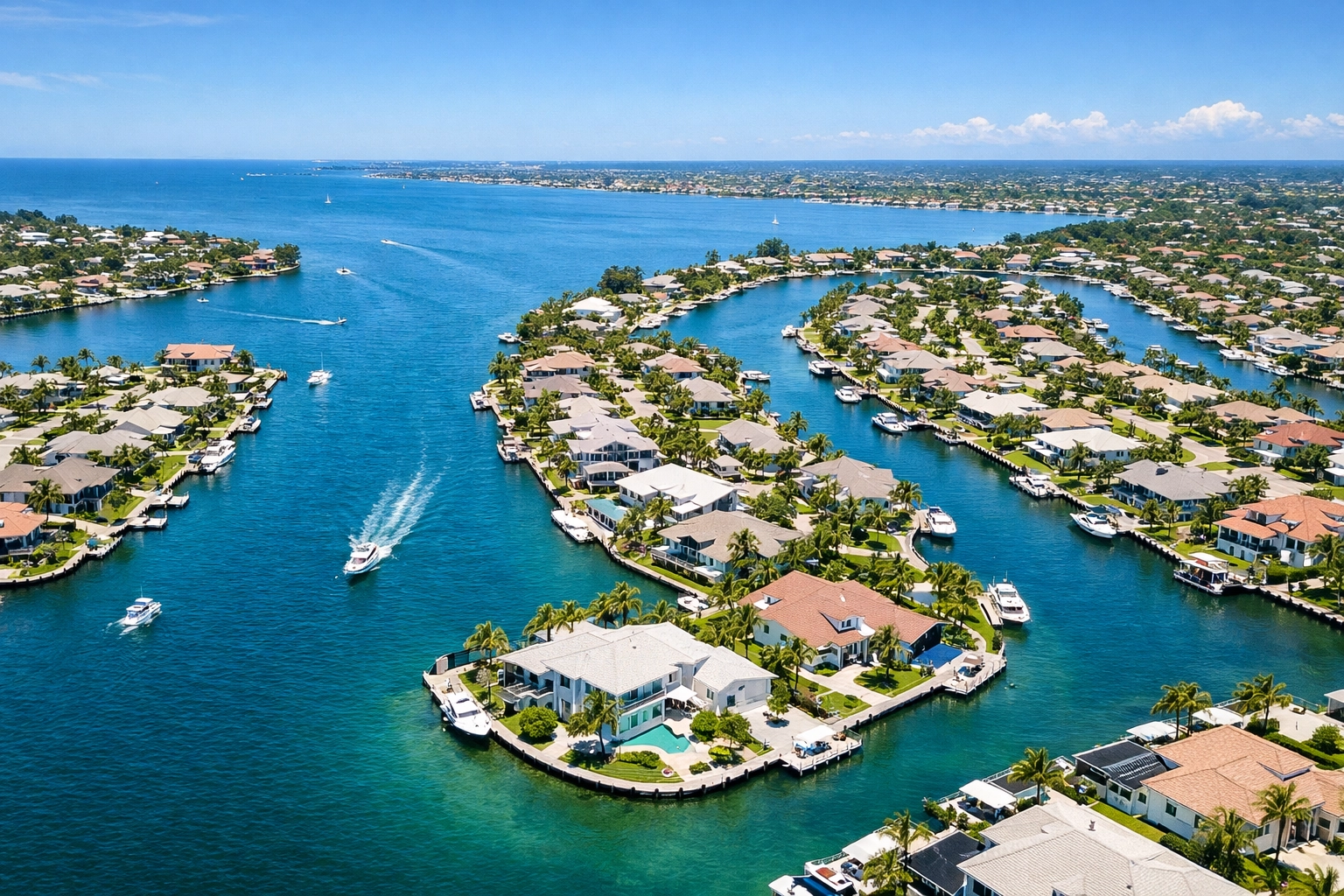
Assess the actual water view premium. Research shows that unobstructed water views command 59–68% premiums over non-waterfront properties, while partial views add only 10–33%. Properties with water access but no view? Just a 10% bump.
Translation: If you find a property with a partial water view priced like it has no view at all, that's your signal. The owner may not have staged the view properly in photos, or the listing might have been written by someone who doesn't understand the local waterfront market.
The Assessment Status No One Talks About
This is where most buyers miss the opportunity entirely.
Lee County property assessments don't always reflect current market conditions: especially after major events like Hurricane Ian. Some waterfront properties are still assessed based on pre-storm comps, while others have been reassessed post-rebuild.
Pull the property's assessment history on the Lee County Property Appraiser's website. Look at:
- Current assessed value vs. asking price
- Recent assessment changes (has it jumped or stayed flat?)
- Special assessments for seawall districts or dredging projects
If a property is priced close to its assessed value but comparable waterfront homes are selling for 20–30% above assessment, you've found a mispriced listing. Sellers who price based on tax assessment rather than market comps are leaving money on the table: and handing you an opportunity.
Pro tip: Properties with recent special assessments (for canal maintenance, seawall districts, etc.) may be priced lower because the seller is factoring in those costs. But if those assessments have already been paid and the infrastructure is now upgraded, you're getting improved amenities at a discount.
Run the Comps Like a Pro
The most reliable way to spot an undervalued waterfront property is analyzing comparable sales. But here's where most buyers go wrong: they use comps from six months ago or compare properties that aren't actually comparable.
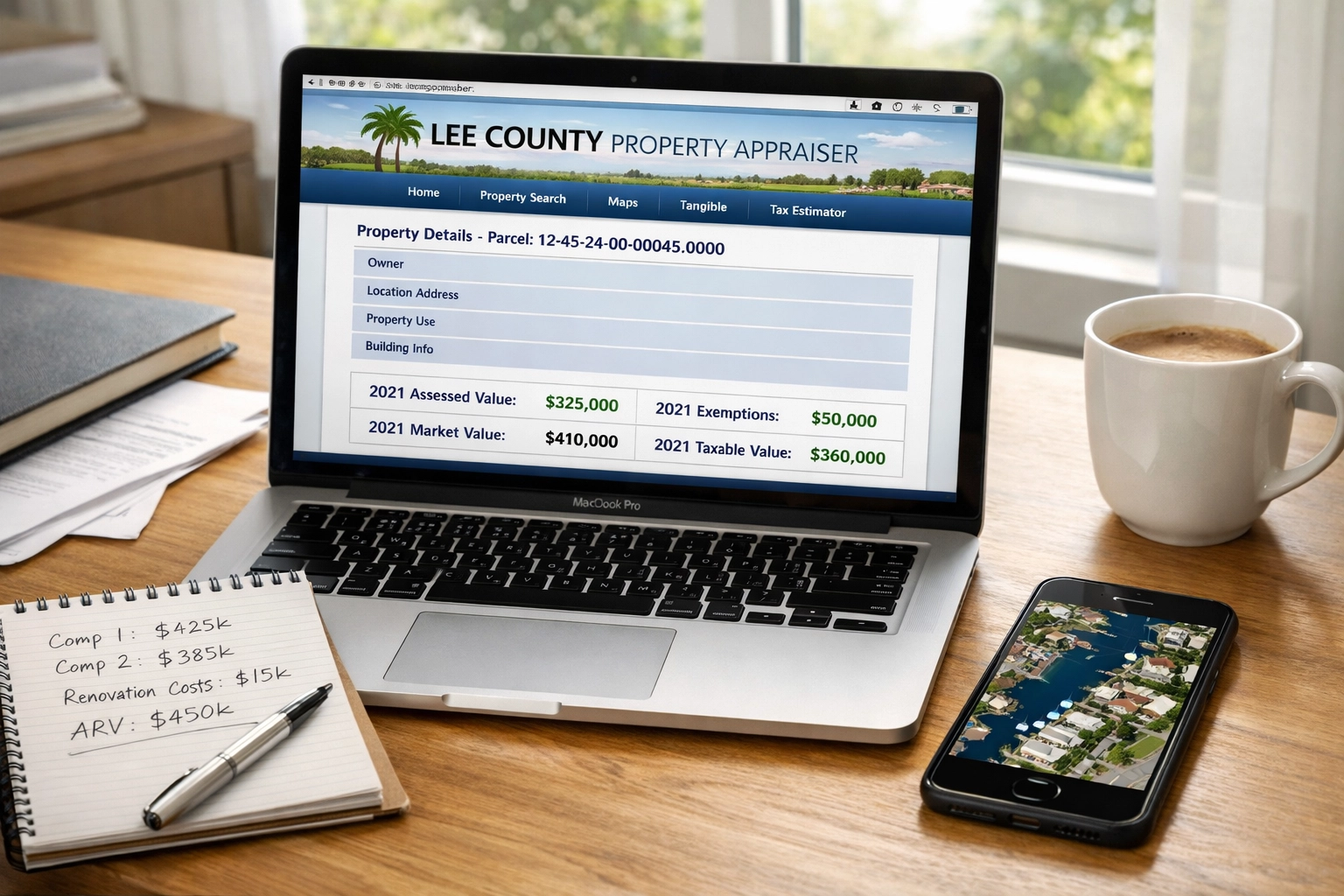
How to run accurate waterfront comps:
-
Time matters. Use sales from the last 90 days max. The SWFL waterfront market moves fast: comps from last summer are already outdated.
-
Match the water access type. Don't compare sailboat-water homes to Gulf-access homes. Don't compare canal-front to riverfront. The pricing tiers are different.
-
Factor in lot size and frontage. A home with 80 feet of waterfront footage should not be compared to one with 50 feet: that's a 60% difference in water frontage.
-
Account for seawall and dock condition. If comparable homes have new seawalls and docks, but your target property has original 1980s infrastructure, subtract $40,000–$60,000 from those comps.
If you spot a property priced 15% or more below adjusted comps and the listing has been active for more than two weeks, there's your signal. Either the market hasn't recognized the value yet, or there's a hidden issue (which is why you always inspect before you offer).
Hidden Value Signals Only Locals Notice
Some of the best undervalued waterfront properties don't look like deals at first glance. Here's what to watch for:
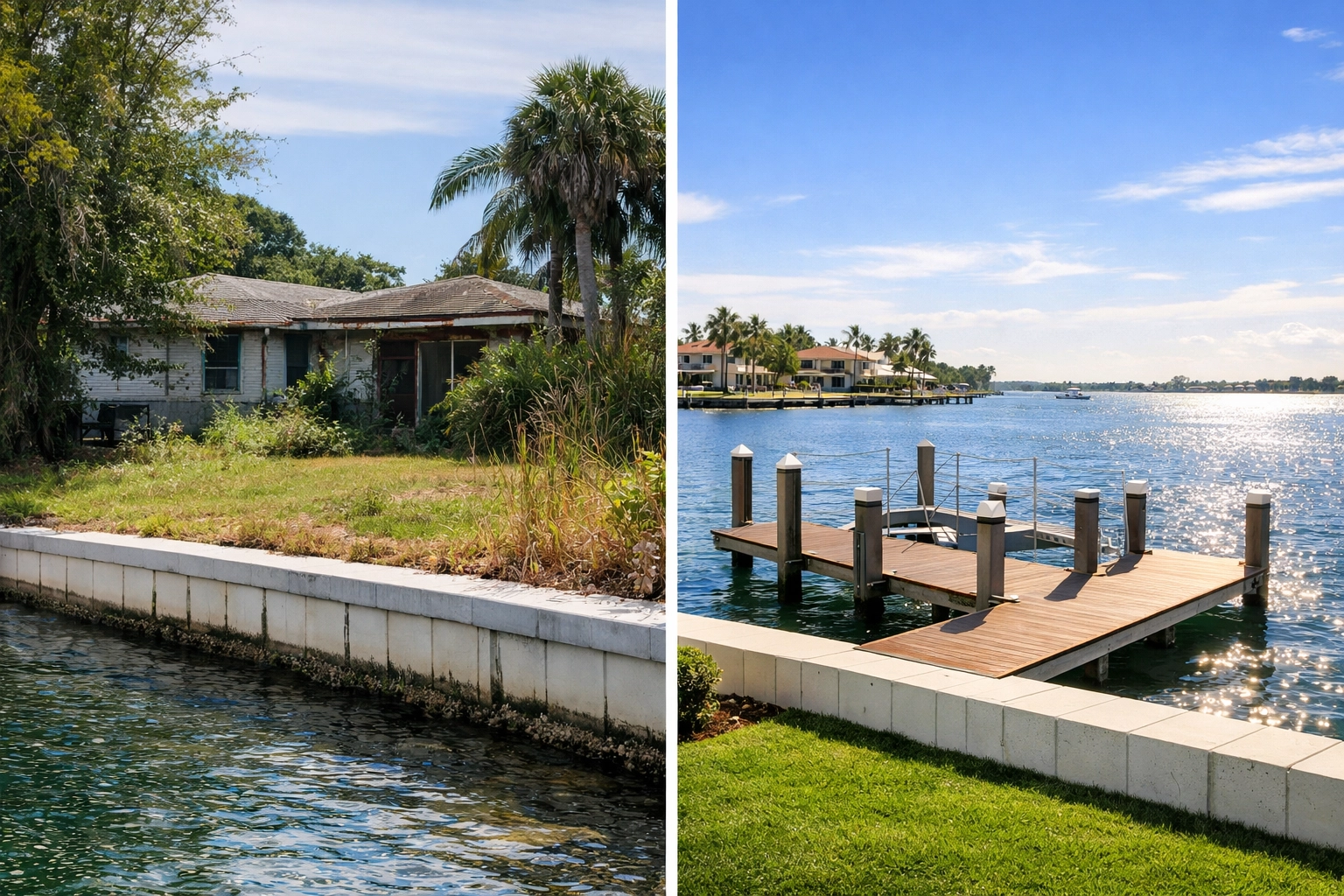
The "boater fixer-upper." A dated interior with a brand-new seawall and deep-water access. Most buyers see the ugly kitchen and walk away. Smart buyers see the $60,000 in recent waterfront infrastructure and realize the bones are solid.
The wide-canal outlier. Cape Coral has thousands of canal homes, but only certain canals are deep and wide enough for larger boats. If you find a home on a 100-foot-wide canal priced like it's on a 60-foot canal, that's undervalued.
Seasonal listings. Waterfront homes listed in July and August (the slow season) often sit longer and get price cuts. Sellers who list in summer are sometimes more motivated than those who list in February during snowbird season.
The neglected view. Some sellers don't stage their water views properly: overgrown landscaping, dirty windows, bad listing photos. If you visit in person and realize the view is spectacular but the photos made it look average, the market may have undervalued it too.
Red Flags vs. Real Opportunities
Not every "deal" is actually a deal. Here's how to separate undervalued properties from money pits:
Walk away if:
- The seawall is failing and the seller won't negotiate the repair cost
- The property is in a known flood zone with outdated flood certs
- There's active saltwater intrusion damage (look for rusted rebar or spalling concrete)
- The canal is silted in and requires dredging (expensive and sometimes impossible)
Lean in if:
- The property needs cosmetic updates but the structure and waterfront infrastructure are solid
- It's been on the market 30+ days because the listing undermarketed the water access
- The seller is out of state and hasn't updated the pricing to reflect current market conditions
- Recent comps show strong appreciation but this property hasn't repriced yet
The Bottom Line: Speed + Knowledge = Advantage
Undervalued SWFL waterfront homes exist, but they don't last. The buyers who win are the ones who can assess seawall condition, understand water access quality, pull accurate comps, and move fast when they spot value.
Before you make an offer on any waterfront property:
- Get a marine survey if there's a dock
- Have a structural engineer inspect the seawall
- Pull the Lee County assessment and compare to market comps
- Check the flood zone and insurance costs
The competition is looking at the same listings you are. The difference is whether you know what you're looking at: and whether you're ready to act when you find it.
If you're ready to start your search for SWFL waterfront homes, visit swflhomestoday.com or reach out directly. The best deals don't wait, and neither should you.