

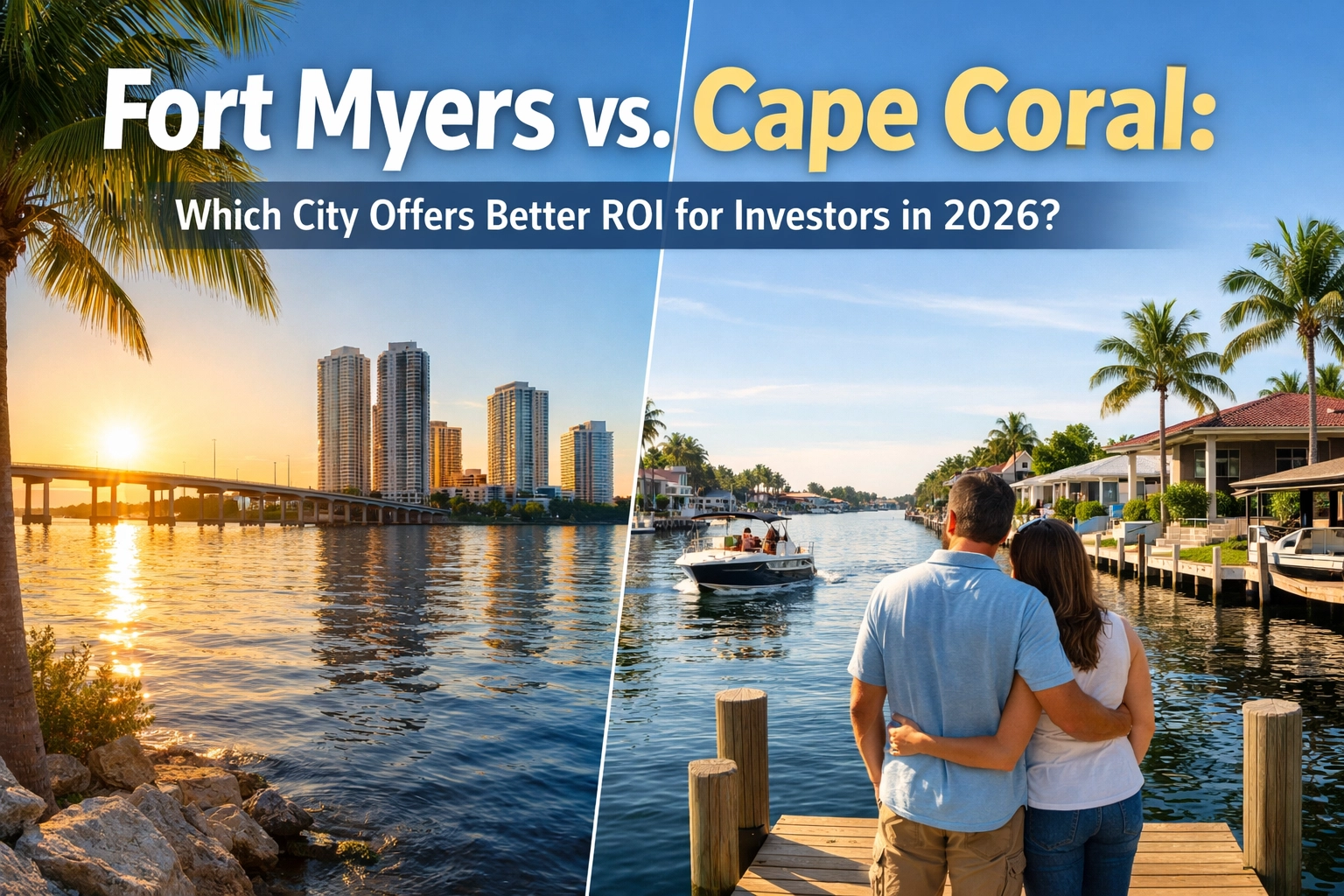
If you're an investor eyeing Southwest Florida in 2026, you've probably asked yourself this question a hundred times: Fort Myers or Cape Coral? Both cities have their cheerleaders, both offer waterfront living, and both have seen wild market swings over the past few years. But when it comes to return on investment, the answer isn't as simple as picking your favorite beach.
Let's cut through the noise and look at what actually matters: price trends, rental yields, inventory levels, and those sneaky costs that can tank your ROI faster than a failed flip. If you're working with experienced realtors Cape Coral or Fort Myers side, they'll tell you the same thing: 2026 is a year where due diligence wins.
The Price Reality Check
Here's the cold, hard truth about price forecasts. Fort Myers city proper is looking at a 3% to 7% decline through 2026. Not great, but manageable. Cape Coral? We're talking a steeper 10% to 15% drop. That's a significant difference when you're calculating your entry point and exit strategy.
Now, before Cape Coral fans start throwing stones, let's add some context. The broader Cape Coral-Fort Myers metro area is projected to see only about a 1% decline over the next year, which suggests things might stabilize in the second half of 2026. But right now, Cape Coral is absorbing more of that downward pressure than Fort Myers.
Why does this matter? Because if you buy a $400,000 property in Cape Coral and it drops 12%, you're starting $48,000 in the hole. That's a tough climb back to profitability, even with decent rental income.
Supply and Demand: The Inventory Story
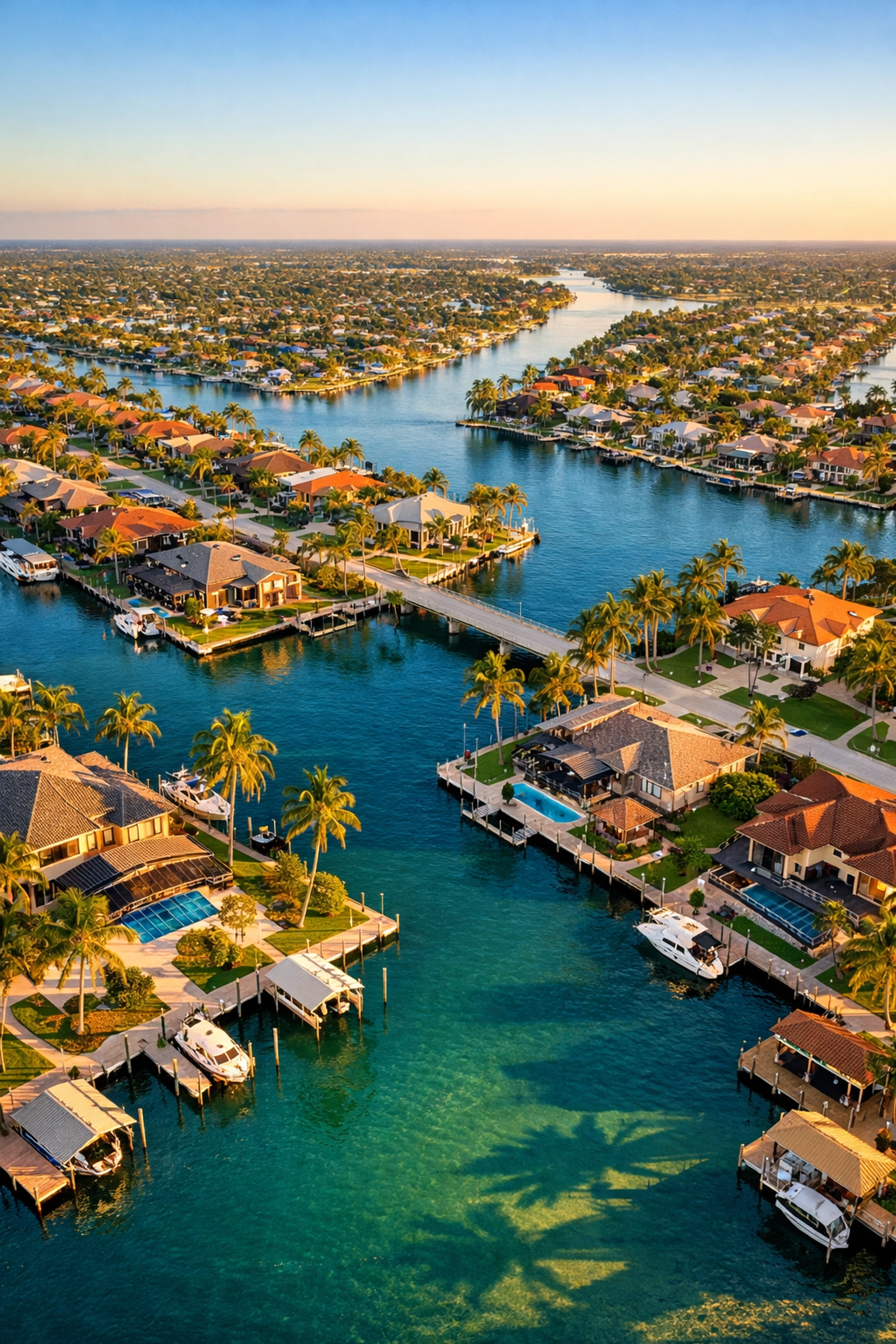
Cape Coral's inventory situation is… let's call it "generous." The city currently has more than six months of housing supply on the market. For context, a balanced market typically sits around three to four months. Anything above that, and buyers have the upper hand.
Why the glut? Three main reasons:
-
Pandemic remote workers are heading back to their home states. The 2020-2022 migration wave has reversed, and Cape Coral felt that shift hard.
-
Investors are pulling back. After years of aggressive buying, many investors are sitting on the sidelines, watching the market correct.
-
New construction kept rolling. Cape Coral added inventory throughout 2024 and 2025, even as demand softened.
Fort Myers proper tells a different story. Neighborhoods like McGregor Boulevard, the Downtown River District, and the areas around Edison Park show much tighter inventory dynamics. Fort Myers recorded 426 closed sales in December with 7.3 months of inventory: still elevated, but noticeably better than Cape Coral's numbers.
Tighter inventory means less downward pressure on prices. It's basic economics, and it's one reason Fort Myers is holding up better.
The Insurance Elephant in the Room
Let's talk about the cost nobody wants to discuss but everyone needs to plan for: homeowners insurance. If you're not factoring this into your ROI calculations, you're setting yourself up for disappointment.
Rising insurance premiums in Florida are hitting waterfront properties especially hard. Cape Coral, with its 400 miles of canals, has plenty of properties in high-risk flood zones. Fort Myers Beach and waterfront Fort Myers areas face the same challenges. But here's the key difference: inland Fort Myers properties carry significantly lower insurance burdens.
This isn't a minor detail. We're talking about insurance premiums that can eat into your rental income by hundreds of dollars monthly. When you're calculating cap rates and cash-on-cash returns, that difference between a waterfront Cape Coral home and an inland Fort Myers property can swing your ROI by 2-3 percentage points.
If you're working with Cape Coral real estate agents who know the local market, they should be walking you through insurance scenarios for every property you consider. If they're not? Find someone who will.
Where Fort Myers Wins
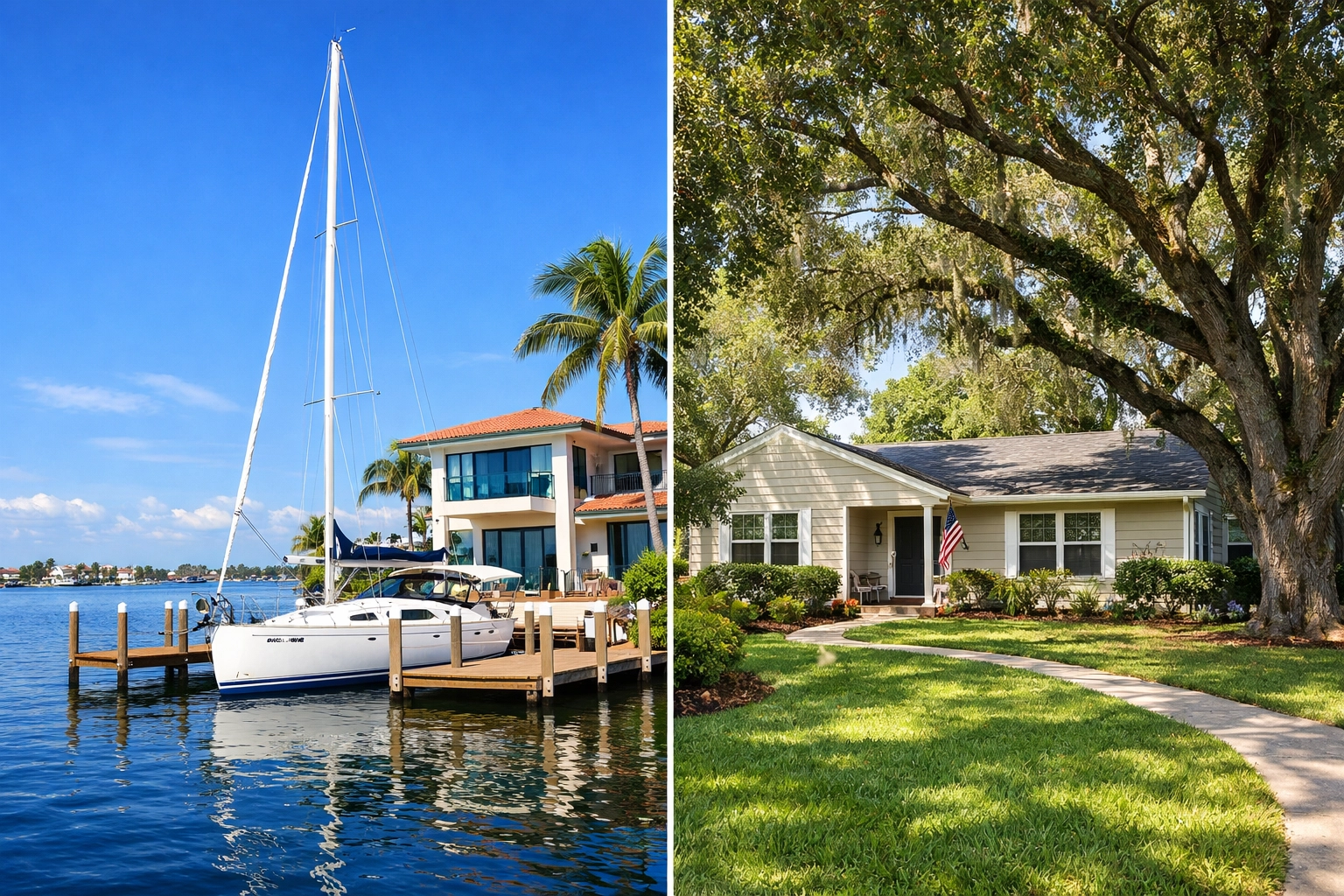
Fort Myers isn't just holding up better on paper: it's showing real-world advantages for investors who want stability over speculation.
Established Neighborhoods: Areas like Hancock Creek, Gateway, and parts of South Fort Myers offer solid entry points for investors. These neighborhoods attract first-time buyers and young families, which means consistent demand and easier exit strategies if you need to sell.
Price Points: Inland Fort Myers properties range from $280,000 to $450,000, hitting that sweet spot for investors building rental portfolios. You're not competing with luxury buyers, but you're also not scraping the bottom where maintenance costs spiral out of control.
Job Market Proximity: Fort Myers has a more diverse employment base than Cape Coral. Healthcare, education, and service industries provide steady renter pools. Cape Coral is more residential and car-dependent, which can limit your renter demographic.
Transaction Activity: Fort Myers is simply seeing more deals close. That liquidity matters. If you need to sell, you want a market where properties actually move: not one where your listing sits for six months while you watch comparable sales drop.
Cape Coral's Case (Because It's Not All Bad)
Fair is fair: Cape Coral still has its advantages, especially for a specific type of investor.
Affordability: With median prices around $380,000, Cape Coral offers accessible entry points. If you're building a portfolio and can weather short-term depreciation, buying at the bottom of a cycle can work.
Waterfront Access: Where else can you find gulf-access waterfront properties at these prices? For investors targeting vacation rentals or buyers who prioritize boating lifestyle, Cape Coral's canal system is unmatched.
Future Growth Potential: Once this correction works through the system, Cape Coral could see strong appreciation in the late 2020s. If you're playing the long game and don't need immediate returns, there's an argument for strategic buying now.
But here's the catch: success in Cape Coral requires precision. The market shows a $50,000 gap between current list prices and actual closing prices. Translation? Plenty of sellers are still in denial about where the market really is. You need to negotiate hard and buy well below asking.

The Smart Money Strategy
If I'm advising an investor in 2026, here's my playbook:
For stability seekers: Focus on inland Fort Myers neighborhoods. Target properties in the $300,000-$400,000 range. Look for turnkey or minimal-rehab opportunities. Your goal is cash flow with minimal depreciation risk.
For value hunters: Cape Coral can work, but only if you're getting properties at genuine discounts: not list price, not "just reduced," but 10-15% below comparable sales. Factor in worst-case insurance scenarios. Don't touch anything that needs major work unless you're an experienced rehabber.
For everyone: Run your numbers conservatively. Assume rental rates stay flat. Budget for 20% higher insurance and maintenance costs than comparable properties from 2023. If the deal still works? Pull the trigger.
The Bottom Line
Fort Myers offers better ROI potential for most investors in 2026. Smaller projected declines, stronger demand fundamentals, and lower insurance costs add up to more predictable returns. Cape Coral works as a value play only if you're buying right: and I mean really right: and you're prepared to hold through continued softness.
The Southwest Florida market isn't collapsing, but it is correcting. Smart investors are focusing on stability, cash flow, and manageable downside risk. Whether you choose Fort Myers or Cape Coral, make sure you're working with experienced local professionals who understand the nuances of each market.
The opportunity is there. You just need to know where to look and how to calculate what really matters. In this market, doing your homework isn't optional: it's the difference between building wealth and learning expensive lessons.
If you're ready to explore investment opportunities in Fort Myers or Cape Coral, connect with our team to get started with a strategy that fits your goals.