

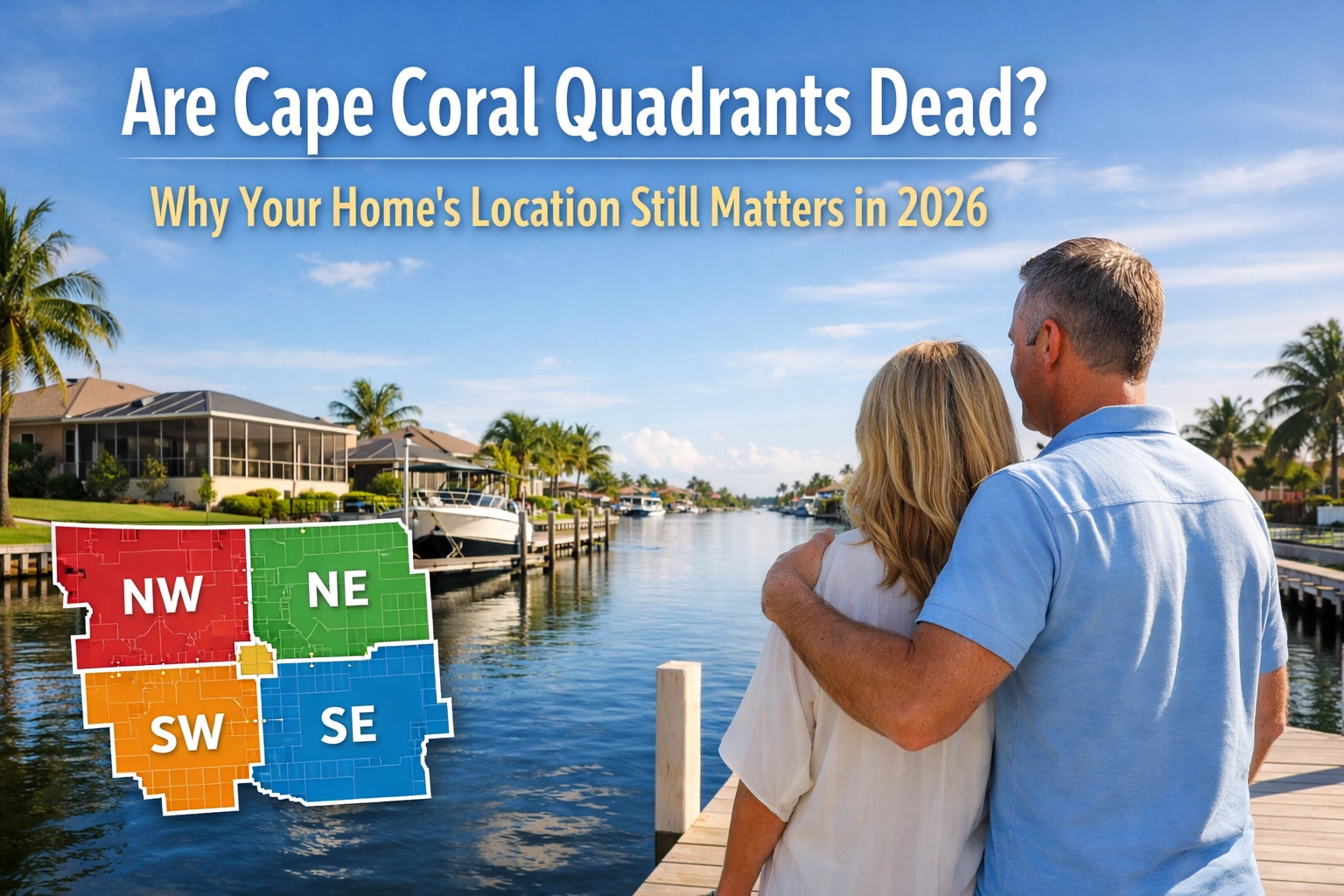
If you’ve spent more than five minutes looking at homes in Cape Coral, you’ve heard the lingo. "We only want the SW," or "The NE is where the value is." For decades, our city has been chopped up into four neat pieces: Northwest (NW), Northeast (NE), Southwest (SW), and Southeast (SE).
But it’s March 2026, and the city has grown up. With over 200,000 residents and a landscape that looks vastly different than it did even five years ago, a big question is circulating among buyers and sellers at RE/MAX Realty Team: Are the quadrants dead?
The short answer is no, but the way we use them has changed forever. In 2026, if you’re still buying or selling based solely on a quadrant, you’re missing the forest for the trees. Today, it’s all about the "micro-market."
The Quadrant Cheat Sheet (For the Uninitiated)
Before we dive into why the old rules are breaking, let’s recap what the quadrants traditionally represented.
- Southwest (SW): Historically the "Gold Coast." This is where you find the high-end SWFL waterfront homes, luxury estates, and the most established gated communities.
- Southeast (SE): The "Original Cape." It’s closest to the bridges to Fort Myers, home to the Yacht Club, and features many of the city’s first homes (and plenty of modern teardown-rebuilds).
- Northwest (NW): The land of opportunity. This area saw a massive boom in the early 2020s. It offers newer construction and more "elbow room," though it's traditionally further from the main commercial hubs.
- Northeast (NE): The "Value Zone." Traditionally the most affordable quadrant, though the expansion of the Pine Island Road corridor has turned this area into a commercial powerhouse.
While these definitions still hold some weight, the 2026 data shows that the lines are blurring. You can find a million-dollar home in the NE just as easily as you can find a modest inland home in the SW.
Why the "Micro-Market" is King in 2026
When people ask us if location still matters, we point them to the data. As of March 2026, the market isn't moving as one giant unit. Instead, it’s a collection of neighborhoods, each with its own heartbeat.
Take a look at the current stats:
- Sandoval (SW): This gated community is on fire. We’re seeing only 8.4 months of supply here, which is remarkably tight for the current climate. The median sold price is sitting around $396,500, and sellers are getting about 94.9% of their asking price.
- Cape Coral Yacht Club (SE): Despite its history, the Yacht Club area is seeing a massive 13.3 months of supply. Why? Because the median sold price has skyrocketed to $1,312,500. It’s a luxury market with a different pace.
- Cape Harbour (SW): Another luxury staple, showing 12.3 months of supply and a median price that demands a specific type of buyer.
What does this tell us? It tells us that being in the "Southwest" doesn't guarantee a fast sale. A home in Sandoval is performing much differently than a home in Cape Harbour, even though they are relatively close to each other. This is why working with experienced realtors Cape Coral homeowners trust is vital: you need someone who understands the street-by-street nuances, not just the zip code.
The Waterfront Factor: More Than Just a View
In 2026, the distinction between "waterfront" and "dry lot" is more significant than the distinction between "North" and "South."
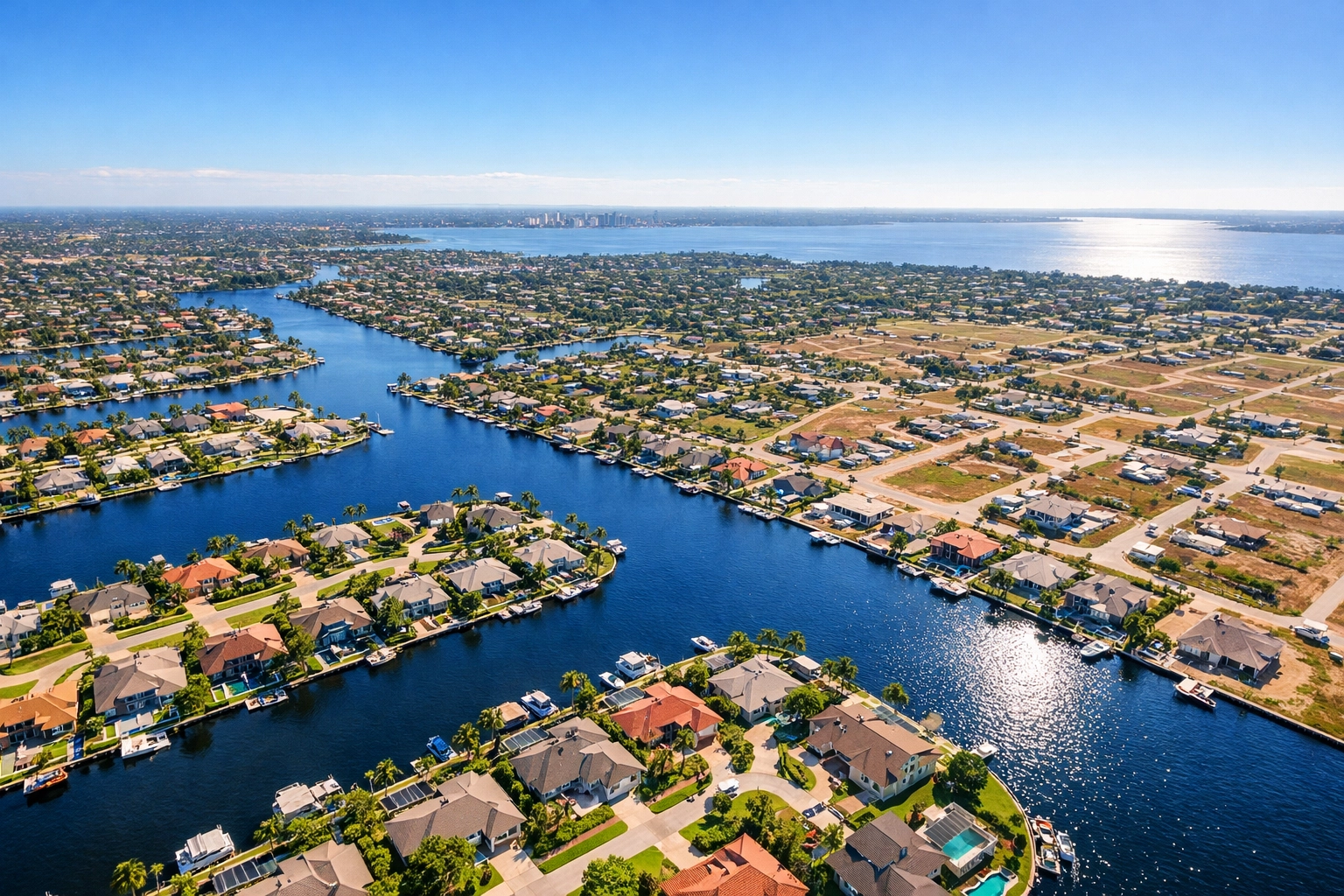
SWFL waterfront homes are not all created equal. In the past, people assumed the SE and SW had the best water access. While they do have the most "direct access" (no bridges) lots, the NW has seen incredible development in its canal systems.
Buyers today are savvy. They aren't just asking if a home is on a canal; they are checking the "time to open water." A home in the SE might get you to the Gulf in 5 minutes, while a home in the deep NW might take 45 minutes. In 2026, that 40-minute difference can equate to a $200,000 difference in property value.
Gated Communities vs. The "Old Cape" Style
Another reason the quadrants are losing their grip is the rise of gated communities in Cape Coral Florida. In the 1990s, Cape Coral was almost entirely "open" neighborhoods. Today, communities like Sandoval, Heatherwood Lakes, and Bella Vida have created their own mini-economies.
These communities offer a lifestyle that transcends their quadrant. Residents care more about the amenities, the security, and the HOA fees Cape Coral associations manage than they do about whether they are in the NW or the SW.
However, lifestyle comes with a price. When looking at these areas, you have to factor in those monthly fees. A lower mortgage payment in a gated community might be offset by a $400/month HOA fee. Conversely, a non-HOA home in the SE might have higher insurance costs due to the age of the structure. It’s a balancing act that requires a sharp eye.

Investment Demand: Where the Money is Going
If you’re looking at Cape Coral from an investment perspective, the "quadrant" strategy is definitely dead. Analysts in 2026 are focusing on "A-rated neighborhoods" rather than geographical slices.
Current investment trends show:
- Concentrated Growth: The strongest opportunities are in areas with mature infrastructure. Buyers want to be near the new "Seven Islands" development in the NW or the revitalized South Cape downtown area.
- Cap Rates: We are seeing solid rental income potential with cap rates ranging from 4.5% to 5.8% in highly rated neighborhoods.
- The "Amenities" Premium: Properties near growing retail hubs: like the massive developments along Pine Island Road: are seeing better long-term appreciation than isolated waterfront lots.
If you’re an investor, you shouldn't be asking "Which quadrant should I buy in?" You should be asking "Which neighborhood has the highest resident retention and the best access to the new commercial corridors?"
The "New" Cape Coral: North vs. South
While the four quadrants are becoming less distinct, a new divide has emerged: North of Pine Island Road vs. South of Pine Island Road.
South of Pine Island: This is the established, "classic" Cape Coral. It’s where the majority of the dining, nightlife, and direct Gulf access lives. It’s denser, more bustling, and generally more expensive.
North of Pine Island: This is the "New Frontier." With the expansion of utilities (the UEP project) continuing to move north, this area is seeing a surge in modern, energy-efficient homes. It’s where you go if you want a 2026-built home with the latest hurricane ratings without the $1M+ price tag of the southern waterfront.
Why Your Real Estate Partner Matters More Than Ever
In a market this complex, the "search by map" feature on Zillow only tells half the story. To truly understand why one street in the NW is valued 20% higher than the street next to it, you need boots on the ground.
At RE/MAX Realty Team, we’ve watched this city evolve. We don't just see quadrants; we see school zones, elevation levels, canal depths, and upcoming commercial permits. Our cape coral real estate agents are trained to look at the micro-data that determines your home's true value or your next investment's potential.
Whether you are looking for a sprawling estate or a cozy starter home, you can browse all the latest listings and neighborhood-specific data at www.swflhomestoday.com.
Summary: The 2026 Location Playbook
So, are Cape Coral quadrants dead? They aren't dead, but they've been demoted. They are now the starting point of the conversation, not the conclusion.
The Key Takeaways for 2026:
- Look for Micro-Markets: Don't judge a home by its quadrant. Look at the specific neighborhood stats (like Sandoval's high demand vs. the Yacht Club's luxury inventory).
- Waterfront is a Variable: "Waterfront" is a broad term. Bridge heights and "time to Gulf" are the real value drivers.
- Amenities Over Geography: Proximity to new commercial developments and high-quality gated community amenities often trumps traditional quadrant prestige.
- Data is Your Best Friend: In 2026, we have more data than ever. Use it. Pay attention to months of supply and percentage of asking price to know how much leverage you actually have.
The "Perfect Location" in Cape Coral still exists, but it might not be where you think it is. It’s not just a spot on a map: it’s a combination of lifestyle, infrastructure, and investment potential.
Ready to find your perfect pocket of the Cape? Let’s talk. The market is moving, and even in a city of 120 square miles, every block counts.