

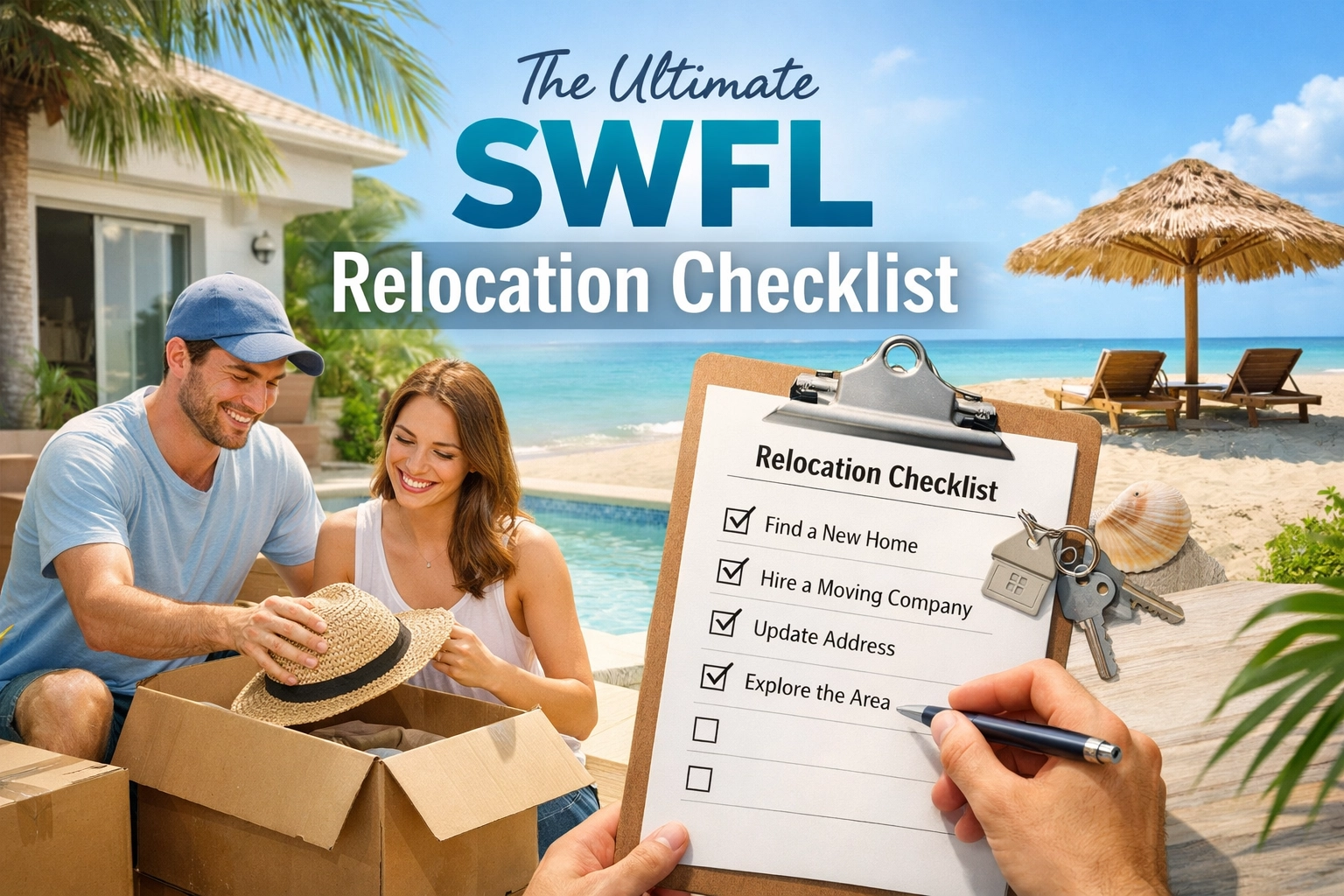
So, you’ve decided to make the move to Southwest Florida. First off, congratulations! Whether you’re eyeing the canals of Cape Coral, the history of Fort Myers, or the luxury of Naples, you’re about to trade snow shovels for sand shovels.
As someone who lives and breathes SWFL real estate at RE/MAX Realty Team, I’ve seen hundreds of families make this transition. Some do it flawlessly, and others… well, they forget that Florida has its own set of rules (and a very specific timeline for paperwork).
Moving here isn't just about packing a truck; it’s about navigating flood zones, understanding the "183-day rule," and making sure you don't miss the Homestead Exemption deadline. To make your life easier, I’ve put together the ultimate relocation checklist. Think of this as your roadmap to becoming a true Floridian.
8 Weeks Before: The "Big Picture" Phase
Two months out might feel like you have plenty of time, but in the world of real estate and moving logistics, it goes by in a flash. This is your research and planning stage.
- Finalize Your Neighborhood: SWFL isn't a monolith. Cape Coral offers a boater’s paradise with over 400 miles of canals, while Fort Myers has a more established, suburban feel. Take some time to browse listings at http://www.swflhomestoday.com to see which vibe fits your lifestyle and budget.
- Budget for the "Florida Factor": When calculating your housing budget, remember that homeowner’s insurance in Florida is a different beast. Factor in wind and flood insurance quotes early so there are no surprises at closing.
- The Great Purge: You do not need those heavy wool coats, snowblowers, or industrial-grade heaters. If you haven’t worn it or used it in a year, sell it or donate it. Moving to Florida is the perfect excuse for a fresh start.
- Interview Moving Companies: Get at least three quotes. If you’re moving during the "Snowbird" season (January–April), companies book up fast.

6 Weeks Before: Securing the Foundation
By now, you should have a clear idea of where you're landing. This phase is all about the logistics of your new home and your family’s needs.
- Confirm Your Housing: Whether you're closing on a house or signing a lease, ensure your paperwork is in order. If you're buying, double-check your flood zone status. This affects your insurance rates and your peace of mind.
- School Enrollments: If you have kids, contact the Lee County School District (or the district for your specific county). Florida schools often have specific "choice" programs, and the earlier you get into the system, the better.
- Healthcare Transfers: Don't wait until you have a sinus infection to find a doctor. Research providers in the Lee Health network and request your medical records be transferred from your current physicians.
- Measure Your Furniture: Florida homes often have "Great Room" layouts that differ from traditional northern colonial styles. Make sure that giant sectional is actually going to fit in your new sun-drenched living room.
4 to 2 Weeks Before: The Nitty Gritty
This is when things start to feel real. You’re likely surrounded by half-packed boxes, but don't let the paperwork slip.
- Utility Connections: Schedule your water, electricity (FPL or LCEC), and trash pickup for the day before you arrive. You do not want to move into a Florida house in July without the AC running. Trust me on this one.
- The SunPass Factor: If you’re driving your own car down, get a SunPass. Many of our bridges (like the Midpoint and Cape Coral bridges) and the I-75 Express lanes use electronic tolling. It saves you time and money.
- Change of Address: Do the official USPS swap, but also remember your banks, credit cards, and Amazon account.
- Vehicle Prep: If you’re driving a long distance, get your oil changed and your tires checked. Also, check your car’s coolant levels: Florida heat is tough on engines.

Moving Week: The Transition
You’re finally doing it! As you cross the state line, keep these final few tasks in mind.
- Final Walkthrough: If you’ve purchased a home, do a final walkthrough. Check that the AC is blowing cold and there are no new leaks.
- Essentials Box: Pack a "Day 1" box with toilet paper, cleaning supplies, chargers, basic tools, and: most importantly: sunscreen.
- Pet Safety: Moving is stressful for pets. The Florida heat can be a shock to them, so make sure they stay hydrated and don't spend too much time on hot pavement during the unloading process.
The First 30 Days: The "Florida Shuffle"
Welcome home! Now that you’re here, Florida law requires you to take care of a few "official" things fairly quickly.
- Vehicle Registration (10 Days): You are required to register your vehicle in Florida within 10 days of establishing residency (which usually means starting a job or enrolling a child in school). You’ll need your out-of-state title and proof of Florida insurance.
- Driver’s License (30 Days): You have 30 days to get your Florida license. Visit the Lee County Tax Collector’s office. Pro tip: Make an appointment online; it’ll save you hours of waiting.
- Voter Registration: You can usually do this at the same time you get your driver’s license.

For Homeowners: The "Must-Do" Tax Break
This is the most important financial tip I can give you as a broker. File for your Homestead Exemption.
In Florida, if a property is your permanent residence, you can decrease the property’s taxable value by up to $50,000. More importantly, the "Save Our Homes" cap limits increases in the assessed value of your home to 3% per year.
- The Deadline: You must file by March 1st of the year you wish the exemption to apply.
- The Requirement: You must have legal or beneficial title to the property as of January 1st of that year.
Establishing Residency (The 183-Day Rule)
Many people move to Florida for the tax benefits: specifically, the lack of state income tax. However, your former state might not want to let you go so easily.
To be considered a Florida resident for tax purposes, you generally need to follow the 183-day rule. This means spending at least 183 days (six months and one day) in the state of Florida. Keep a log or save your receipts if you plan on traveling back and forth, as some states (looking at you, New York and Illinois) are known to audit "tax refugees" to ensure they’ve truly moved.

Summary: Your SWFL Transition Checklist
Moving to Southwest Florida is a journey, not just a trip. Here is a quick recap of the "non-negotiables":
- Check Flood Zones & Insurance: Do this before you fall in love with a house. Visit http://www.swflhomestoday.com to find the right property in the right zone.
- Purge the Winter Gear: You won't need it, and it costs money to move it.
- Handle the Vehicle Stuff Fast: 10 days for registration, 30 days for your license.
- File for Homestead Exemption: Do not miss the March 1st deadline if you want to save thousands on taxes.
- Track Your Days: If you're maintaining a second home elsewhere, remember the 183-day rule to keep the tax man happy.
Relocating can be overwhelming, but once you’re sitting on your lanai watching the sunset with a cold drink in your hand, you’ll realize every bit of paperwork was worth it. If you have questions about specific neighborhoods or need a recommendation for a local mover, reach out to us at RE/MAX Realty Team. We’re not just your real estate agents; we’re your new neighbors!