

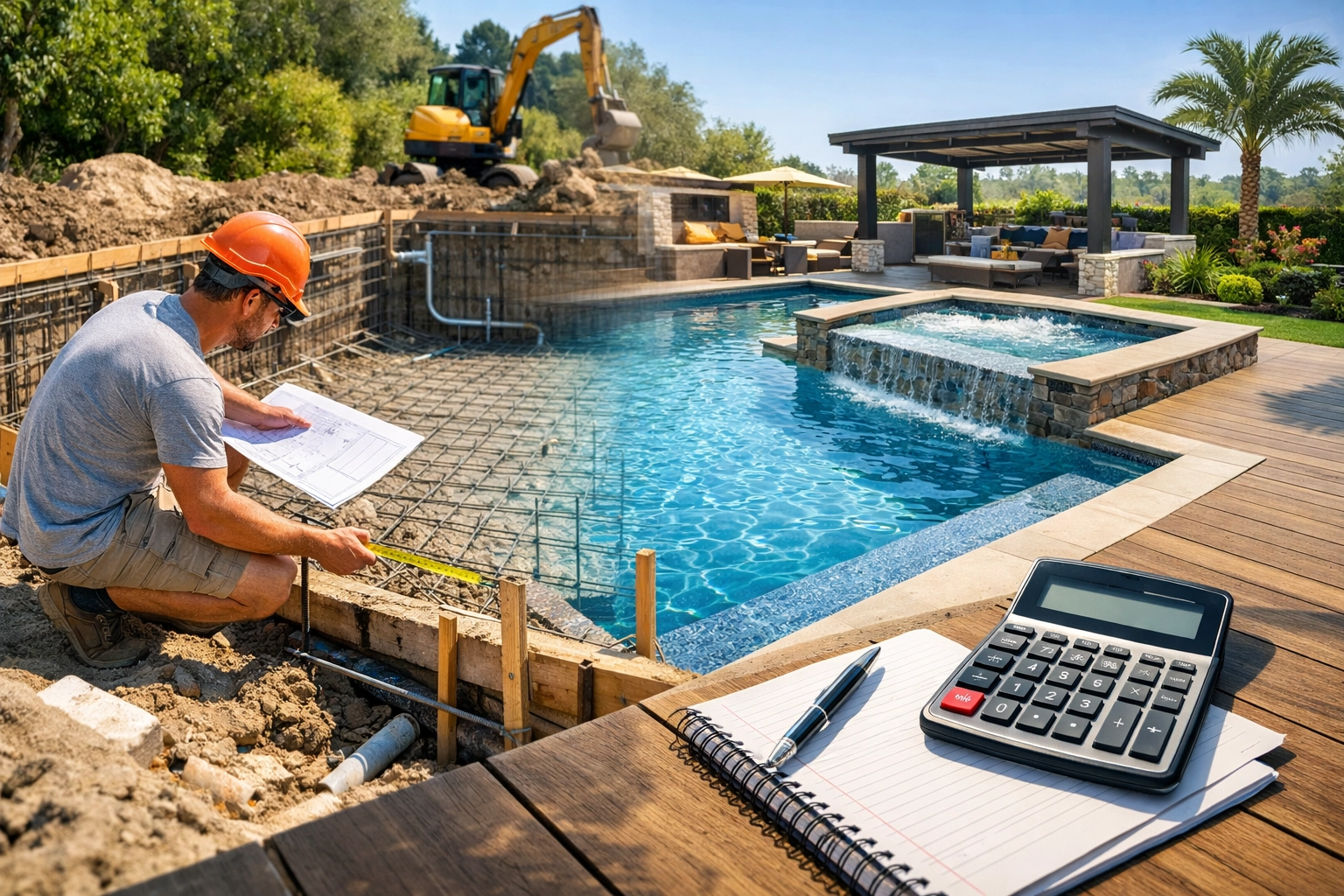
If you live in Southwest Florida, you know that a backyard without a pool is basically just a very hot patch of grass. Whether you’re looking at a brand-new build in Cape Coral or finally deciding to upgrade your current spot, 2026 is shaping up to be an interesting year for the pool industry.
We’ve seen some shifts in technology, material availability, and, of course, pricing over the last couple of years. If you’re dreaming of that first cannonball into your own private oasis, you need a realistic roadmap. I’m Penny, and today I’m breaking down exactly what it takes to get a custom pool into the ground this year, from the first dollar spent to the first day of swimming.
The Planning Phase: It Starts on Paper
Before the first shovel hits the dirt, you have to get through the paperwork and the design. In 2026, custom pool blueprints usually run between $1,000 and $3,000.
Why the cost? Because a "custom" pool isn't just a hole in the ground. It involves engineering for the specific soil type of your lot, drainage planning, and ensuring your pool equipment is positioned for maximum efficiency. In Cape Coral specifically, we also have to deal with strict setback requirements and, in many cases, Seawall considerations if you’re on one of our hundreds of miles of canals.

The HOA Factor
If you’re in a gated community or a neighborhood with an HOA, add another layer to your planning timeline. You’ll need their blessing on the design, the colors of your pavers, and even the type of screen enclosure you choose. Getting this approved can take anywhere from two weeks to two months, so don’t skip this step!
Material World: Choosing Your Shell
The biggest decision you’ll make (and the one that affects your wallet the most) is what your pool is actually made of. In 2026, we’re seeing three main contenders:
1. Concrete (Gunite) – The Gold Standard
- Cost: $50,000 – $120,000+
- Longevity: 50–100 years
- The Vibe: This is for the homeowner who wants total creative freedom. Want a beach entry? A built-in bar? A custom waterfall? Concrete is your best friend. It takes the longest to build but offers the highest ROI for your property value.
2. Fiberglass – The "Fast" Track
- Cost: $50,000 – $100,000
- Longevity: 25 years
- The Vibe: These are pre-manufactured shells delivered on a flatbed truck and craned into your yard. While they used to be limited in design, 2026 models offer some incredible shapes and built-in features. They are easier to maintain because the surface is non-porous (less algae!).
3. Vinyl Liner – The Budget-Friendly Option
- Cost: $20,000 – $40,000
- Longevity: 10 years (before the liner needs replacing)
- The Vibe: We don’t see these as often in Florida because of our high water table and sun intensity, but they are the most affordable entry point. Just be prepared to replace that liner every decade.
2026 Cost Breakdown: By the Numbers
Let's get into the nitty-gritty. Most people want to know: "How much is this actually going to cost me?" While prices vary based on your specific lot, here is a general guide for what we are seeing in the SWFL market right now.
Base Costs by Size
- Small (10 x 20 ft): $10,000 – $25,000 (Base installation only)
- Medium (14 x 28 ft): $19,600 – $49,000
- Large (20 x 40 ft): $40,000 – $100,000
Note: These are base costs. For a fully finished backyard with a deck, screen, and equipment, most homeowners should budget between $75,000 and $115,000 for a mid-range concrete pool.
The "Must-Have" Add-Ons
You aren't just buying a tub of water. You’re buying an experience. Here’s what you should budget for the extras:
- Heating (Solar or Heat Pump): $3,500 – $7,500. In 2026, high-efficiency heat pumps are the standard because they allow you to swim year-round, even during those "chilly" 60-degree January nights.
- Decking: $3,000 – $20,000. Travertine remains the king of Florida decks because it stays cool under the sun, but pavers are a great, cost-effective alternative.
- Fencing/Enclosure: $2,000 – $13,500. Safety is a requirement. Most people in our area opt for a "Lanai" or screen enclosure to keep the bugs and debris out.
- Lighting: $450 – $1,800. LED lighting that changes color via an app on your phone is the 2026 standard.

The Timeline: When Can You Actually Swim?
Patience is a virtue, especially in construction. If you started the process today, here is what your timeline would likely look like:
- Design & Permitting (4–8 Weeks): This is the biggest variable. Permitting offices can get backed up. In 2026, we are seeing slightly faster digital permitting, but it still takes time.
- Excavation (1 Week): The big machines arrive and dig the hole. This is the loudest and messiest part.
- Steel, Plumbing, and Electrical (2–3 Weeks): The "skeleton" of your pool goes in. This is where the structural integrity happens.
- The Shell (1–4 Weeks): For fiberglass, this is a one-day event. For concrete, it involves spraying the gunite and then, crucially, letting it cure.
- Tile and Coping (1–2 Weeks): Adding the decorative elements that make the pool look finished.
- Decking and Screen Enclosure (2–3 Weeks): This is when your backyard starts looking like a resort instead of a construction site.
- Interior Finish & Fill (1 Week): The final plaster or pebble finish is applied, and the hose starts running!
Total Estimated Time: 3 to 6 months.
Why Building a Pool is a Smart Move in 2026
You might be looking at those numbers and thinking, "That's a lot of money." And you're right. But in the Southwest Florida real estate market, a pool is more than just a place to cool off, it’s a massive asset.
Homes with well-maintained, modern pools sell faster and for significantly more money than those without. In fact, many buyers relocating to the area won't even look at a home if it doesn't have a pool or the space to build one. If you're curious about how a pool might affect your specific home's value, you can always check out current listings and market trends at http://www.swflhomestoday.com.

2026 Trends: What's Hot Right Now?
If you're going to build, you might as well do it with style. Here are a few things we’re seeing in the coolest backyards this year:
- Smart Pools: Everything is controlled from your smartphone. You can turn on the heater while you're driving home from work or check the chemical balance from your couch.
- Saltwater Systems: While "salt" pools have been around a while, the 2026 systems are much more reliable and easier on the skin and eyes than traditional chlorine.
- Sun Shelves (Baja Ledges): A shallow area (6-12 inches deep) designed for lounge chairs or for toddlers to splash safely.
- Natural Aesthetics: Moving away from bright blue tiles and toward earthy tones, stone finishes, and "lagoon" style designs that blend in with the Florida landscape.
Summary & Takeaway
Building a custom pool in 2026 is a significant investment of both time and money, but for the Florida lifestyle, it’s hard to beat.
Here’s the quick recap:
- Budget: Plan for $75k–$115k for a complete, high-quality project.
- Materials: Choose concrete for customization or fiberglass for easier maintenance.
- Timeline: Expect a 4 to 6-month window from permit to swim.
- Strategy: Don't forget the "hidden" costs like fencing, landscaping, and increased property taxes/insurance.
If you’re still in the "maybe" phase and want to see if it’s better to build new or just buy a house that already has the perfect pool, we can help you compare the costs. Head over to RE/MAX Realty Team and let's find your perfect slice of paradise!
Happy swimming!