

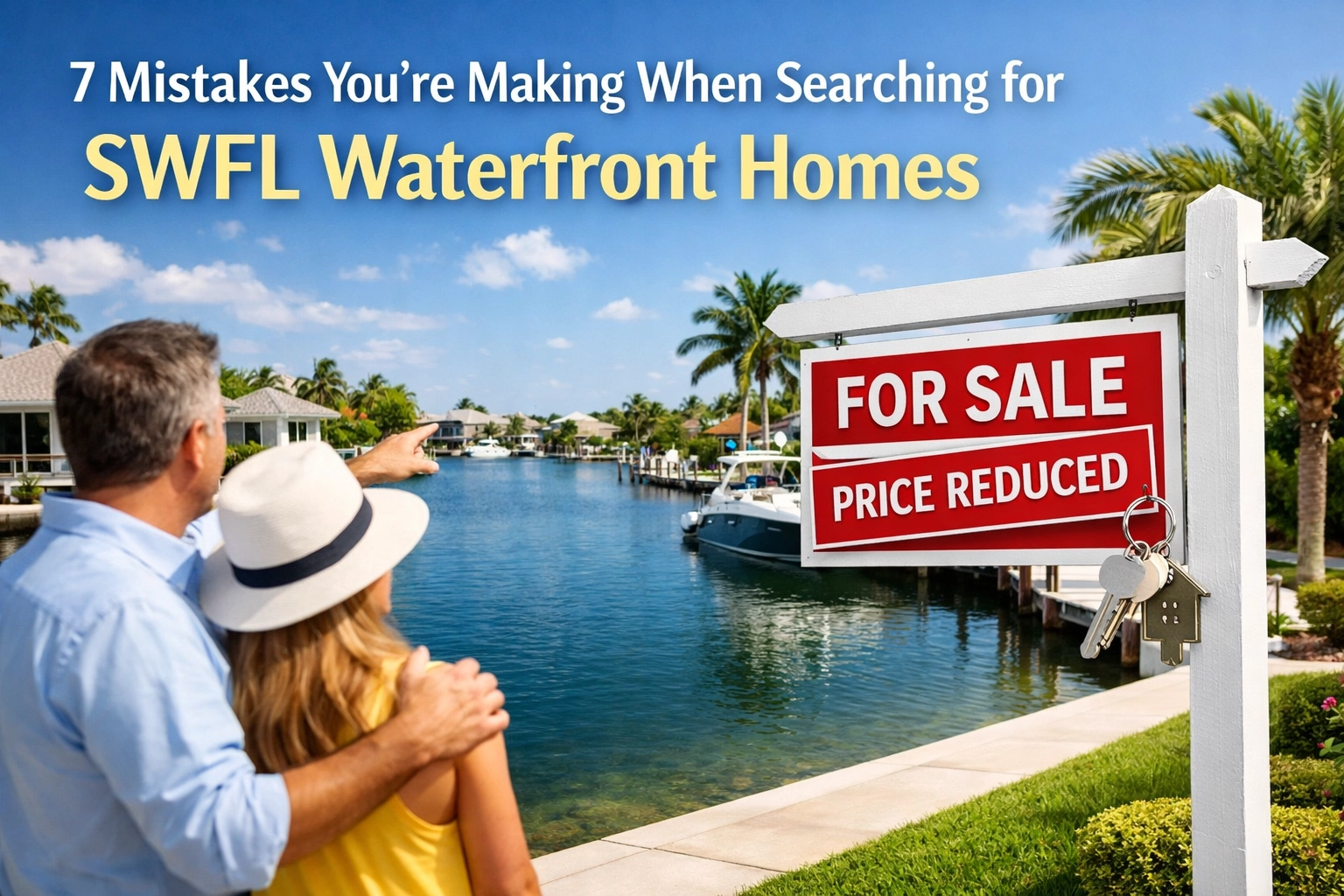
So, you’ve decided to take the plunge and find your dream home in the "Waterfront Wonderland" of Southwest Florida. Whether you’re eyeing the 400 miles of canals in Cape Coral or the riverfront estates of Fort Myers, you’re looking for more than just a house, you’re looking for a lifestyle. You want the boat in the backyard, the morning coffee with a view of the dolphins, and those legendary Gulf sunsets.
But here’s the reality: buying a waterfront home in Southwest Florida (SWFL) is vastly different from buying a standard home in a landlocked neighborhood. The complexities of tides, bridges, seawalls, and insurance can turn a dream into a logistical nightmare if you aren’t careful.
As local cape coral real estate agents, we see buyers make the same avoidable mistakes every single week. If you want to protect your investment and ensure your boat actually fits behind your house, avoid these seven common pitfalls.
1. Misunderstanding "Canal Access" and Bridge Clearances
In Cape Coral, the term "canal access" is used broadly, but it covers a wide spectrum of reality. Not all canals are created equal.
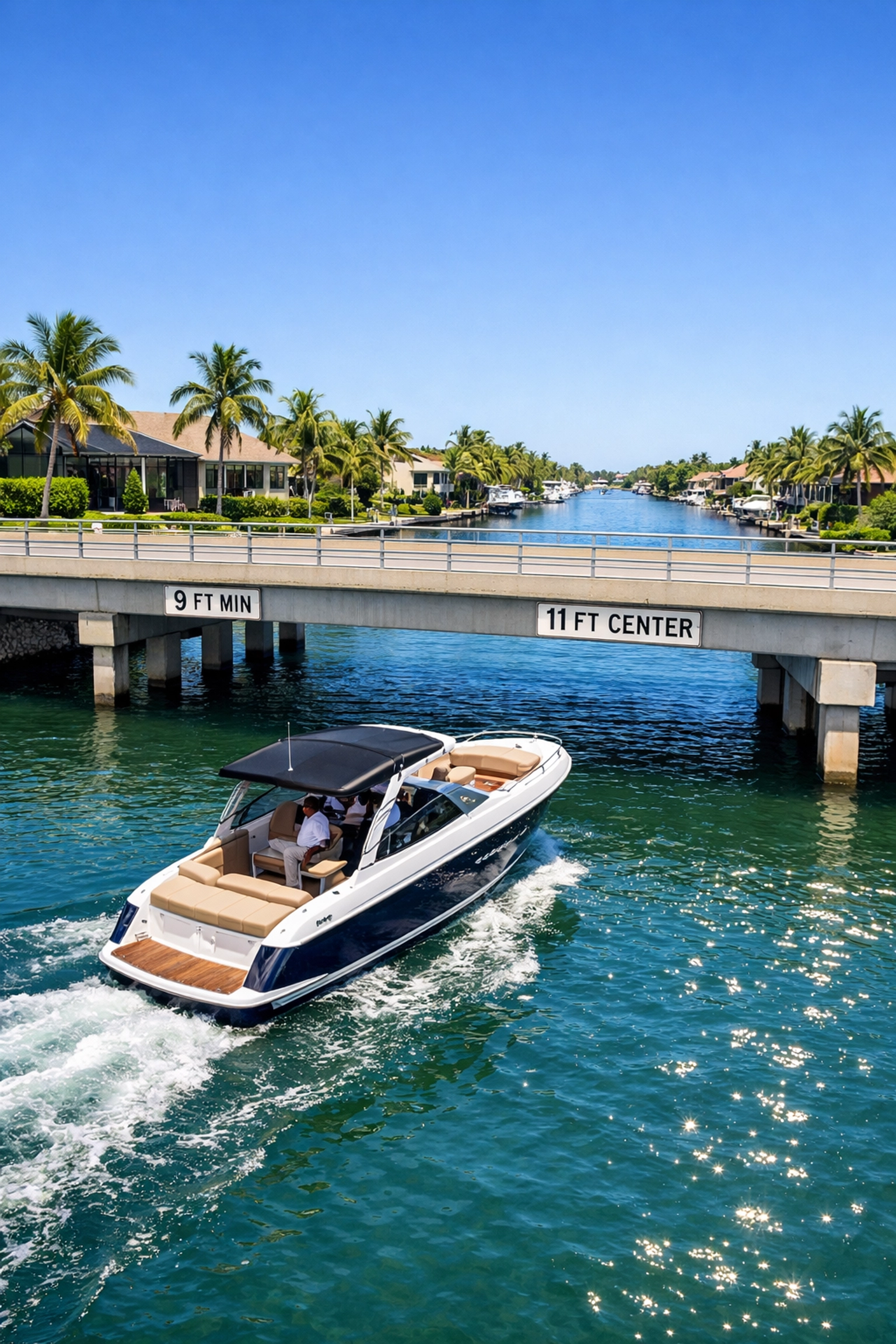
Many buyers see a home on the water and assume they can park a large sailboat or a high-profile sportfishing boat behind it. Then, they realize there’s a bridge with a 9-foot clearance between them and the Gulf of Mexico.
The Cape Coral quadrants matter immensely here. If you are in the Southeast or Southwest, you might find "Direct Access" (meaning no bridges) or "Indirect Access" (meaning you have to pass under at least one bridge). If you buy a boat with a T-top or a flybridge and your home is behind a low bridge, you’re essentially landlocked.
Always ask:
- How many bridges are between the dock and open water?
- What is the specific vertical clearance of those bridges at high tide?
- How long is the "run time" to get to the river or the Gulf?
2. Skipping a Specialized Seawall Inspection
When you buy a standard home, you get a home inspection. When you buy a waterfront home, a standard home inspection is not enough. You need a marine contractor to look at your seawall.
The seawall is the most critical "structural" element of your backyard. In SWFL, these are typically concrete barriers that hold your land in place. If a seawall fails, you aren’t just looking at a crack in the patio, you’re looking at a $50,000 to $100,000 replacement job.
Look for signs of "weep hole" failure, cracking along the cap, or "sinkholes" developing in the yard near the water’s edge. A general home inspector might notice a crack, but only a specialist can tell you if the tie-backs are corroding or if the wall is starting to tip toward the canal.
3. Ignoring Property Orientation (The "Sunset Trap")
Everyone wants a western-facing backyard because of the sunsets. They are spectacular, no doubt. However, there is a trade-off that many out-of-state buyers don't realize until their first July in Florida.
A western-exposure home means the back of your house, where your pool, lanai, and master bedroom usually are, will be hammered by the intense afternoon sun. This leads to significantly higher AC bills and can make your outdoor living space feel like an oven from 3:00 PM to 7:00 PM.
If you prefer a cooler lanai in the afternoons, an eastern-exposure home might be a better fit. You still get the light, but you get the shade when you’re most likely to be grilling or swimming. Orientation affects your lifestyle and your wallet more than you think.
4. Underestimating the Impact of Elevation
In SWFL, elevation is everything. Even a six-inch difference in the "finished floor elevation" of a home can mean the difference between thousands of dollars in annual flood insurance premiums.
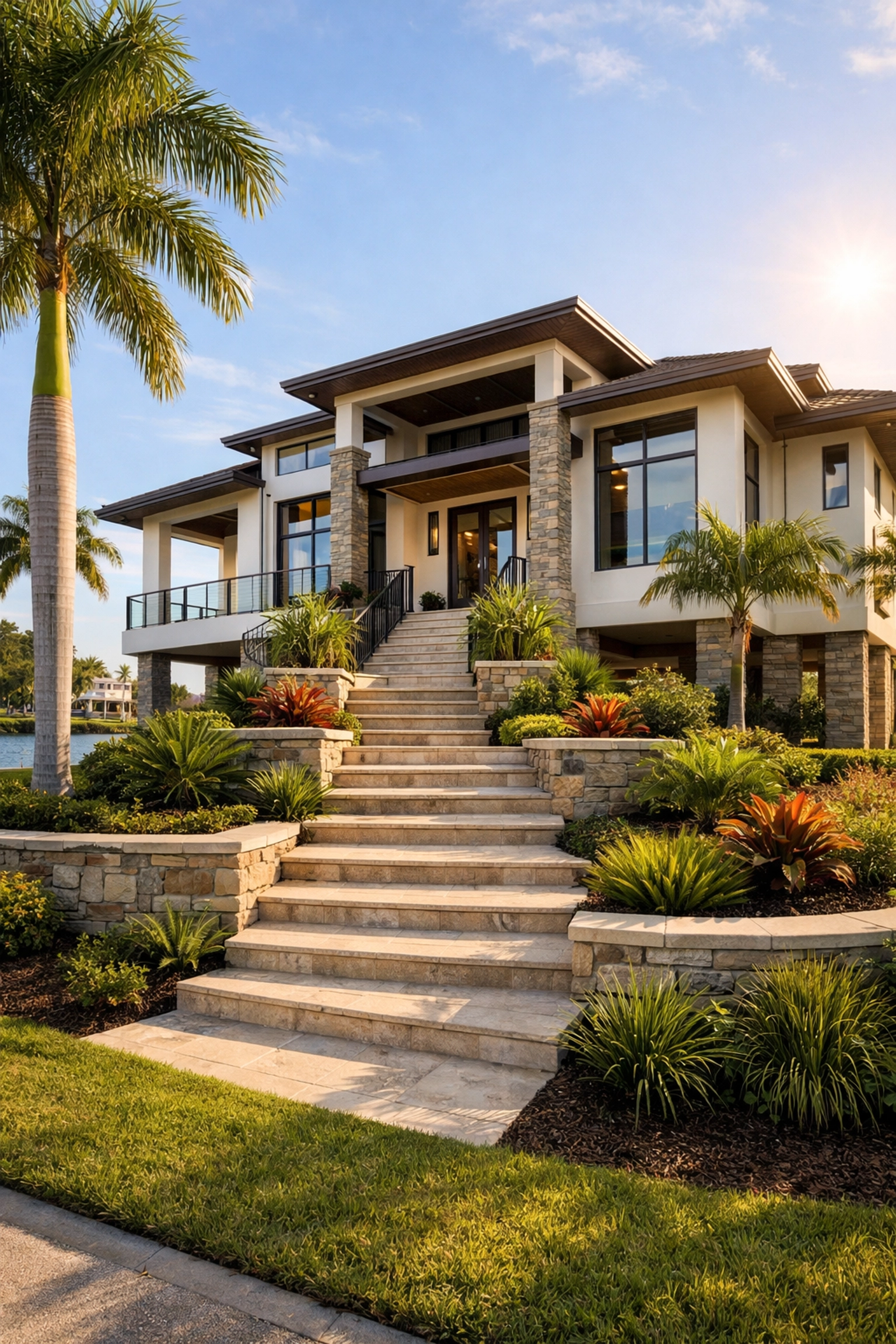
When searching for SWFL waterfront homes, you need to look at the Elevation Certificate. Homes built after the mid-1990s are generally built to higher elevation standards, but older "vintage" Cape Coral homes may be lower.
Lower elevation doesn't just mean a higher risk of water entering the home during a storm; it means the hydrostatic pressure on your foundation is higher, and your insurance carrier will price that risk accordingly. If you’re looking at gated communities in cape coral florida, many newer developments have been engineered with significantly higher elevations, providing a bit more peace of mind.
5. Forgetting to Factor in HOA Fees and Rules
If you are looking at waterfront properties within a community, you have to look closely at the HOA fees Cape Coral associations charge. More importantly, you need to read the "Rules and Regs" regarding watercraft.
Some communities have strict rules about:
- The length of the boat you can dock.
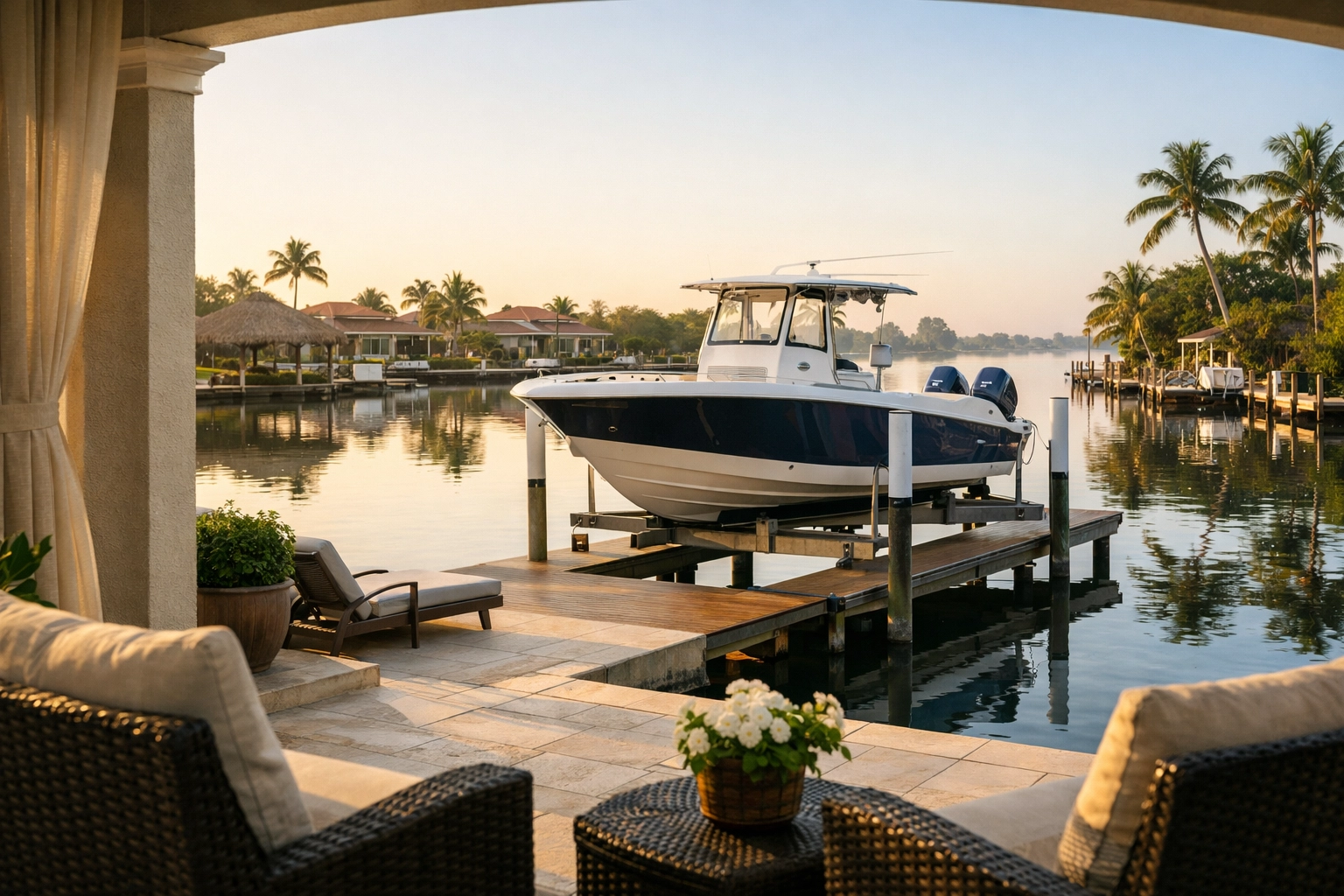
- Whether you can have a boat lift or a canopy.
- "Live-aboard" restrictions.
- Commercial vehicle or trailer parking (where do you put the boat trailer?).
Don't assume that because you own the lot, you can build whatever dock you want. Always verify the CC&Rs (Covenants, Conditions, and Restrictions) before signing on the dotted line. You can find more details on specific community rules at www.swflhomestoday.com.
6. Overlooking Water Depth and "Draft"
This is the mistake that breaks the hearts of boaters. You find the perfect house, the seawall is great, and there are no bridges. You buy the house, bring your boat around, and realize that at low tide, there is only 2 feet of water in your canal.
If your boat has a deep draft, you could find yourself stuck at the dock for six hours a day waiting for the tide to come back in. Siltation happens, and while the city of Cape Coral does have a canal dredging program, it’s a massive undertaking that doesn't happen overnight.
Always check the depth at the dock and in the center of the canal at mean low tide. If you see a lot of exposed mud on the banks of nearby vacant lots, take that as a warning sign.
7. Not Working with a Hyper-Local Expert
The biggest mistake is thinking that any real estate agent can navigate the nuances of waterfront property. Buying a condo in a landlocked neighborhood is a transaction; buying a waterfront home in SWFL is a technical acquisition.
You need realtors Cape Coral who understand the "spreader system," the difference between fresh water and salt water canals (yes, Cape Coral has a massive freshwater canal system that does not lead to the Gulf!), and which neighborhoods are currently seeing the most appreciation.
An expert agent will know which areas have "muck" bottoms that make installing a boat lift more expensive and which areas are prone to faster currents that make docking a challenge.
Summary: Doing Your Due Diligence
Searching for a waterfront home in Southwest Florida is an exciting journey, but it requires a different set of goggles. To recap, before you fall in love with a kitchen island or a primary suite view, make sure you:
- Verify the Boat Path: Check every bridge and power line between the house and the open water.
- Inspect the Seawall: Hire a pro to ensure the land isn't sliding into the canal.
- Check the Elevation: Know your flood zone and your floor height to avoid insurance sticker shock.
- Test the Water: Ensure the depth at low tide accommodates your specific vessel.
- Understand the Quadrants: Whether you are in the NW, NE, SW, or SE of Cape Coral changes your commute to the Gulf and your property value.
At RE/MAX Realty Team, we specialize in helping buyers navigate these specific challenges. We don't just show you houses; we show you the waterways, the dockage, and the local lifestyle that makes this area so special.
Ready to start your search the right way? Visit us at www.swflhomestoday.com to browse the latest waterfront listings and get the local insights you won't find on the national search portals. Let's find you a home where the only thing you have to worry about is whether you have enough bait for the weekend.