

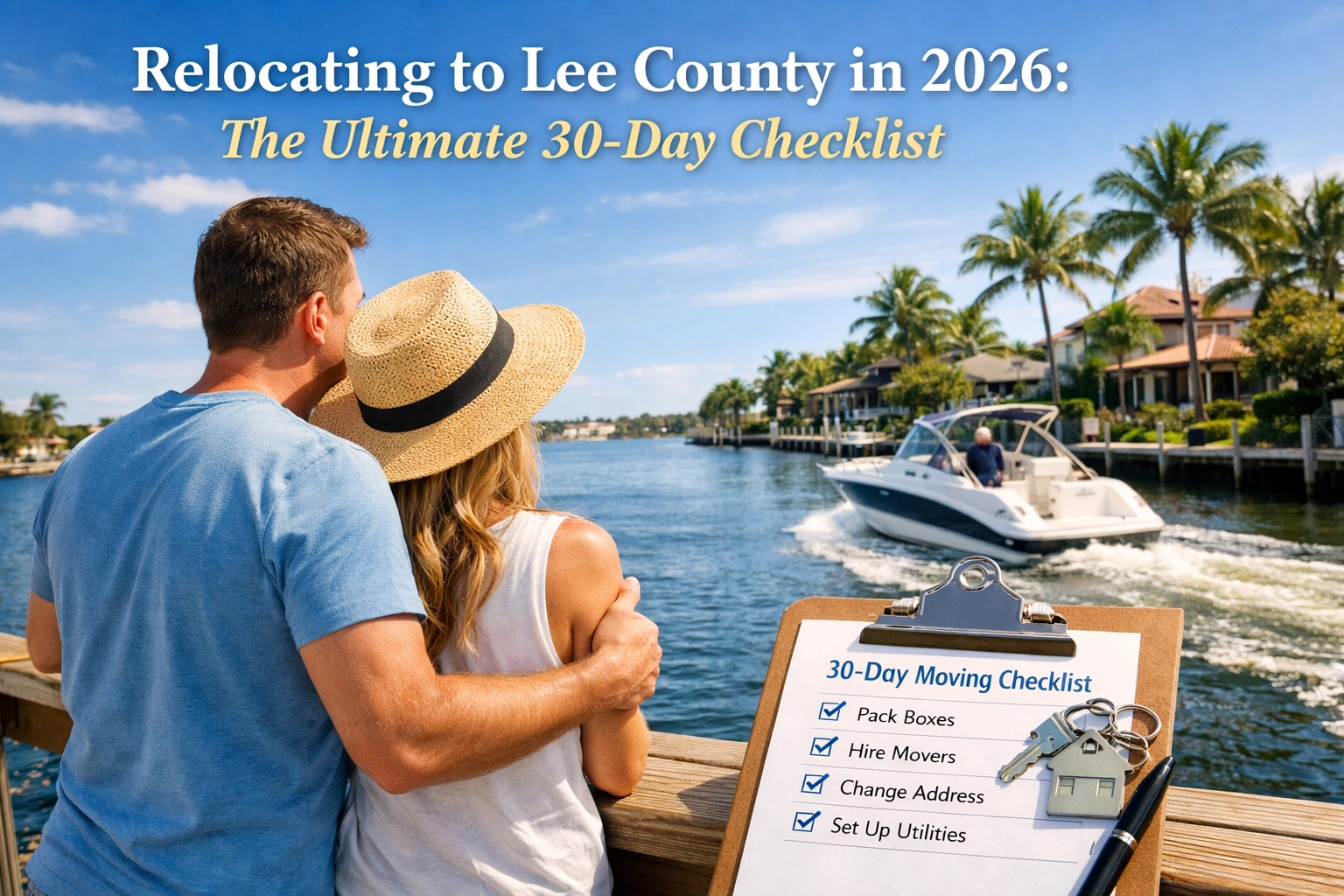
So you've decided Southwest Florida is calling your name. Maybe it's the year-round sunshine, those stunning Gulf sunsets, or the idea of swapping snow shovels for flip-flops. Whatever brought you here, relocating to Lee County is a big move, and having a game plan makes all the difference.
This 30-day checklist will walk you through everything from researching neighborhoods to unpacking your last box. Let's turn that dream into your new reality.
Days 1-10: Research and Dream Smart
Day 1-3: Define Your Lee County Lifestyle
Before you start scrolling through listings, get clear on what you actually want. Lee County isn't just one vibe, it's a collection of communities with totally different personalities.
Fort Myers gives you that thriving downtown culture with craft breweries, art galleries, and the River District buzz. Cape Coral is known for affordability, family-friendly vibes, and over 400 miles of navigable canals (yes, really). Bonita Springs and Estero offer a nice middle ground with newer developments and great shopping.
Ask yourself: Are you a beach-every-weekend person? Do you need Gulf access for your boat? Would you rather be 10 minutes from downtown restaurants or have a bigger yard and more space?
Day 4-6: Decode Cape Coral's Quadrants
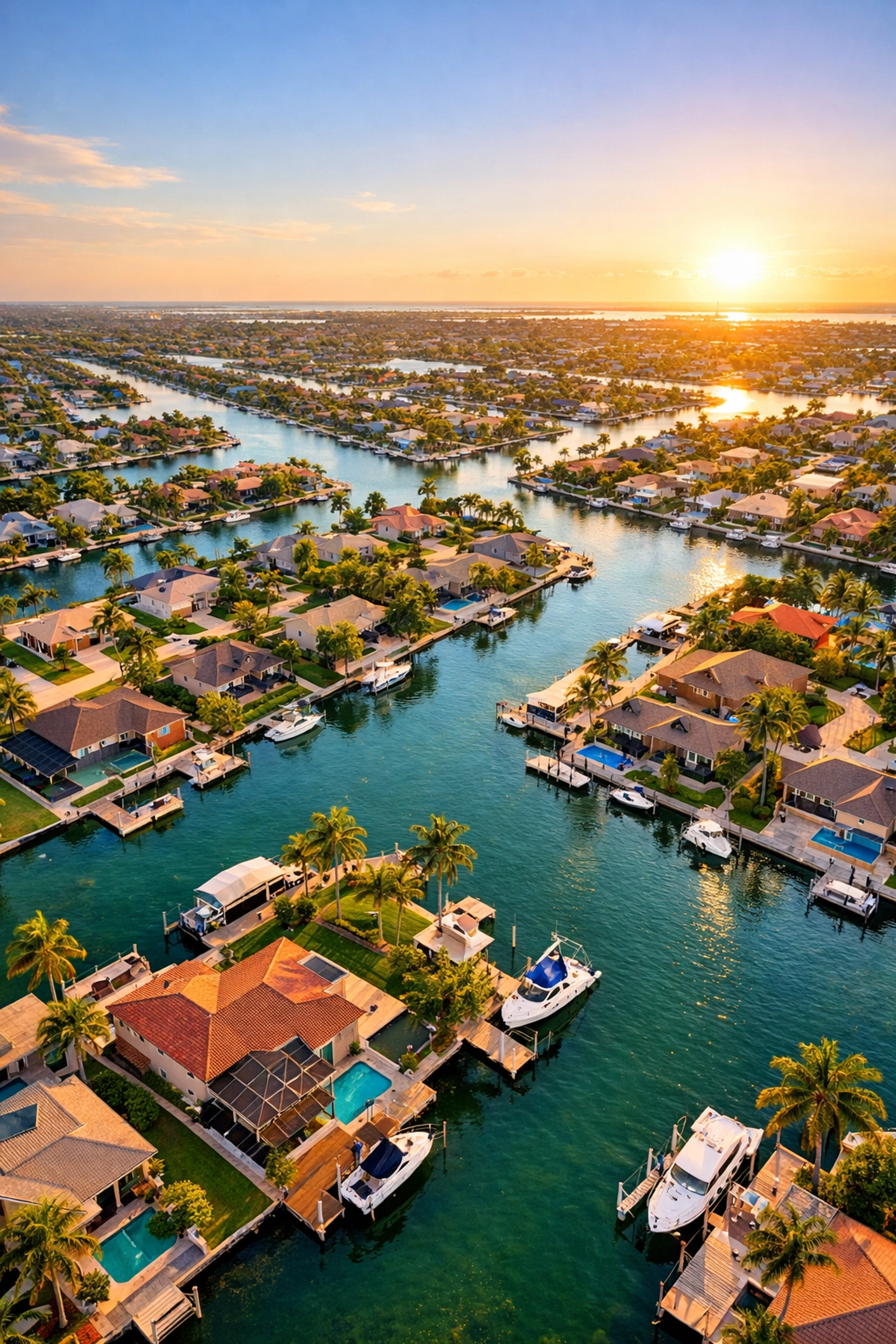
If Cape Coral is on your radar, understanding the quadrants is crucial. The city is divided into four sections, and each one has different perks:
- Southwest (SW): The most sought-after area with Gulf access canals, proximity to golf courses, and established neighborhoods. You'll pay a premium here.
- Southeast (SE): Shortest commute to Fort Myers, close to the airport, and tons of dining options along Pine Island Road.
- Northwest (NW): Quieter, more rural feel with larger lots. Great if you want space and don't mind a longer drive to amenities.
- Northeast (NE): A mix of older and newer homes, still developing, with more affordable prices.
One pro tip from local experts: consider living 7-15 minutes from the beaches instead of directly on them. You'll get newer homes, better insurance rates, more land, and lower HOA fees: all while still being close enough for sunset beach runs.
Day 7-8: Do the Drive-Around Test
Don't just rely on online photos. Seriously. Book a long weekend and drive through neighborhoods you're considering. Look for:
- Walkability (are there sidewalks?)
- New construction activity (is the neighborhood still being built out?)
- Community character (do homes look maintained?)
- Proximity to essentials (grocery stores, urgent care, schools)
You'll pick up on things Zillow can't show you: like whether there's traffic noise, how close neighbors are, or if the community feels alive or sleepy.
Day 9-10: Connect with a Local Agent
This is where we come in. A knowledgeable local agent (like our team at RE/MAX Realty Team) knows which neighborhoods match your wishlist, what's actually on the market, and how to negotiate in Southwest Florida's unique real estate landscape.
Schedule calls with 2-3 agents, ask about their experience with relocations, and pick someone who gets your vision.
Days 11-20: Logistics and Real Talk

Day 11-13: Get Pre-Approved for Your Mortgage
If you're financing, get pre-approved now: not pre-qualified, but actually pre-approved with a hard look at your finances. Florida's market can move fast, especially in desirable areas, and sellers take pre-approved buyers way more seriously.
Shop around with at least three lenders to compare rates. Local lenders often understand Florida-specific requirements (like flood insurance and wind mitigation) better than big national banks.
Day 14-15: Understand Florida's Insurance Reality
Let's talk about the elephant in the room: property insurance in Florida isn't cheap. Between homeowners insurance, flood insurance (if you're in a flood zone), and windstorm coverage, your annual costs can surprise you.
Get insurance quotes before you make an offer. Seriously. Some homes that seem like deals can become money pits once you factor in $4,000-$6,000 annual insurance premiums.
Day 16-18: Tour Homes (Virtually or In-Person)
Now the fun part. Start touring homes with your agent. If you're out of state, lean on video tours and FaceTime walkthroughs: most agents are pros at this now.
Pay attention to:
- Roof age (Florida sun and storms are tough on roofs)
- AC units and age (a necessity here, not a luxury)
- Lanai condition (screened outdoor space is gold)
- Signs of previous water damage or flooding
Day 19-20: Make Your Move and Negotiate
Found "the one"? Your agent will help you craft a competitive offer. In Lee County's market, you might face multiple offers on desirable properties, so having a smart negotiation strategy matters.
Be ready to move quickly but don't skip the home inspection. Florida-specific issues like termites, foundation problems from sandy soil, and Chinese drywall (in older homes) need professional eyes.

Days 21-30: Seal the Deal and Settle In
Day 21-23: Lock in Your Closing Date and Hire Movers
Once your offer is accepted, you'll work toward a closing date (usually 30-45 days out). Now's the time to book movers. If you're relocating from up north, budget for a longer-distance move and consider whether you want to ship your car or drive it down.
Pro tip: If you're moving during peak season (January-March), book movers early. Everyone wants to escape to Florida in winter.
Day 24-25: Set Up Utilities and Services
Contact these providers about two weeks before your move-in date:
- Electricity (Florida Power & Light or LCEC)
- Water/Sewer (depends on your city)
- Internet/Cable (Xfinity, CenturyLink, or others)
- Garbage pickup (some are through HOAs, some through the city)
Also think about pest control. In Florida, regular pest management isn't optional: it's essential. Most neighborhoods have reliable local companies.
Day 26-27: Change Your Address Everywhere
The boring but necessary stuff:
- USPS mail forwarding
- Driver's license (you have 30 days after moving to get a Florida license)
- Vehicle registration
- Voter registration
- Bank accounts
- Subscriptions and memberships
Florida has no state income tax (hooray!), but you'll want to establish residency properly, especially if you're coming from a high-tax state.
Day 28: Close on Your Home
The big day! You'll sign what feels like 10,000 documents, get your keys, and officially become a Lee County resident. Bring your ID, proof of homeowners insurance, and be ready to wire the closing costs.
Most closings in Florida happen at title companies, not at lawyers' offices like in some states.
Day 29-30: Move In and Start Exploring

Congratulations: you made it! Now comes the fun part: making Lee County feel like home.
Spend your first weekend exploring. Hit up the Fort Myers River District for dinner, check out the Saturday farmers market, drive over to Sanibel or Captiva for a beach day, or grab coffee in Cape Harbour. Join local Facebook groups for your neighborhood to connect with neighbors and get insider tips on everything from the best HVAC companies to where to find the freshest grouper.
Your Southwest Florida Chapter Starts Now
Relocating to Lee County isn't just about changing your address: it's about embracing a whole new lifestyle. Slower mornings with waterfront coffee. Evening walks past palm trees instead of through snow. Access to some of the best beaches in the country without the Panhandle crowds.
The 30-day timeline keeps you organized, but here's the real secret: once you're here, you'll wonder why you didn't make the move sooner.
Ready to find your perfect Lee County home? Let's talk. We know this market inside and out, and we'd love to help you land in exactly the right spot.
Bottom line: Planning your relocation in phases makes the process way less overwhelming. Research smart, get the logistics squared away early, and give yourself grace during the transition. Southwest Florida living is worth every bit of effort it takes to get here.