

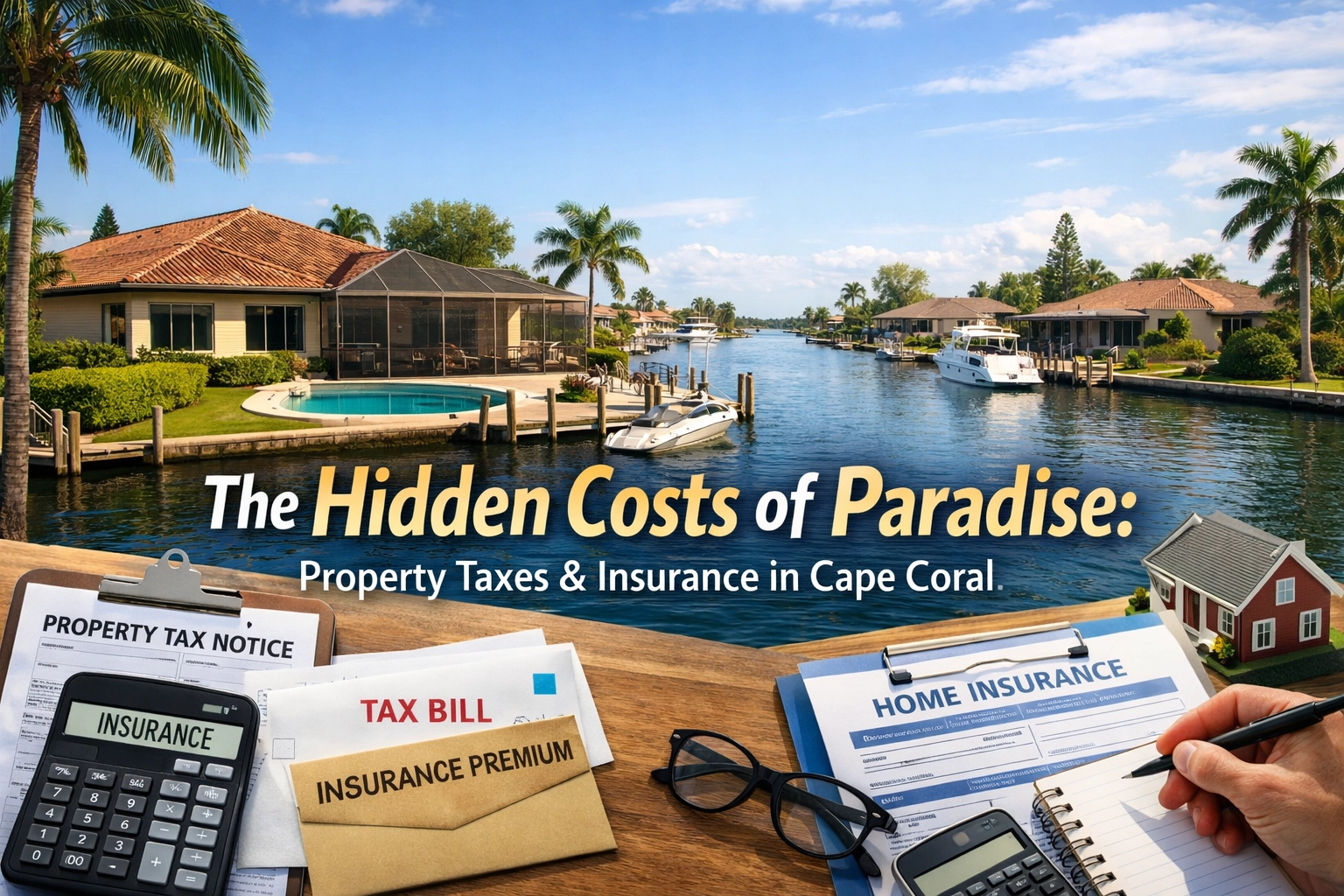
So you're thinking about making the move to Cape Coral. You've seen the palm trees, the waterfront homes, and those dreamy sunset Instagram posts. The property prices look reasonable compared to other coastal Florida markets, and you're ready to pull the trigger.
But here's what most buyers don't see coming: the monthly mortgage payment is just the beginning. Property taxes and insurance in Southwest Florida have their own personality, and they can add hundreds (sometimes thousands) of dollars to what you thought your housing costs would be.
Let me break down the real numbers, because at RE/MAX Realty Team, we believe in showing you the whole picture before you fall in love with a property.
Property Taxes: The Math You Need to Know
Cape Coral operates on a millage rate of 5.1471 mills, which translates to an effective property tax rate of about 0.88% of your home's assessed value. That sounds abstract, so let's make it real.
If you buy a $400,000 home in Cape Coral, you're looking at roughly $3,520 in annual property taxes, that's about $293 per month. Not terrible compared to states like New Jersey or Illinois, but it's a line item that catches a lot of first-time Florida buyers off guard.
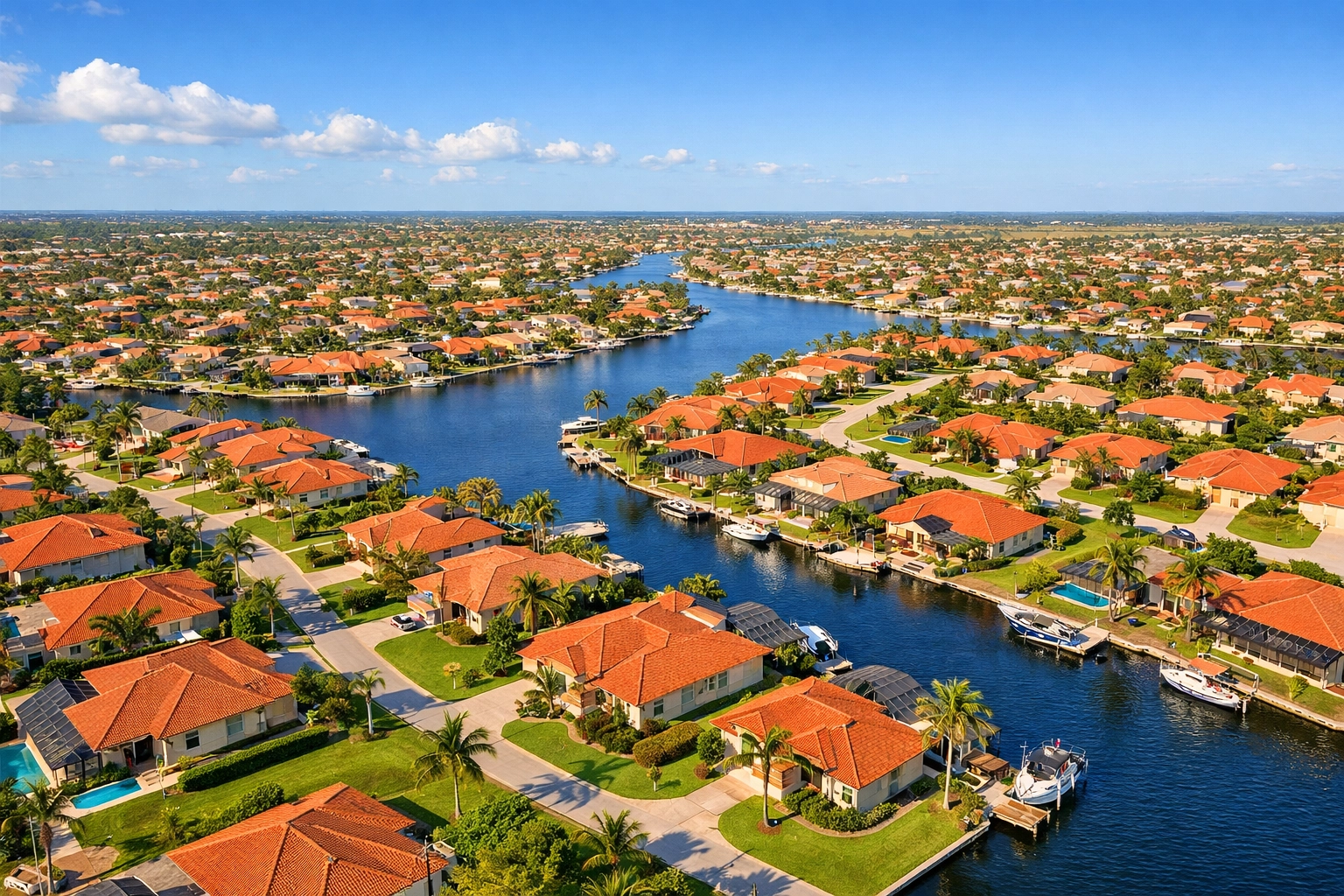
Here's where it gets interesting: Cape Coral has over 61,599 homesteaded properties valued at approximately $12.6 billion out of a total $31 billion taxable value in the city. That homestead exemption matters more than you think.
Homestead vs. Non-Homestead: A Big Deal
Florida law caps annual assessed value increases at 3% for homesteaded properties (your primary residence), but 10% for non-homesteaded properties like second homes or investment rentals.
Let's say you're buying a vacation home you'll rent out part of the year. That 10% cap means your property taxes can climb significantly faster than someone who claims homestead. Over a decade, that difference compounds.
Example:
- Year 1: $400,000 home = $3,520 in taxes
- Year 5 (homestead): ~$3,950 in taxes
- Year 5 (non-homestead): ~$5,080 in taxes
That's over $1,100 more per year by year five if you don't homestead. Factor that into your cash flow calculations if you're buying investment property.
How the Quadrants Factor In
Cape Coral is divided into four main quadrants (NW, NE, SW, SE), and while the tax rate is the same across the city, the assessed values vary wildly depending on location and water access.
Southwest Cape Coral is where you'll find the priciest properties, waterfront homes with Gulf access can easily hit $800,000 to $2 million+. That means property taxes of $7,000 to $17,600+ annually. These are the trophy properties, but they come with trophy-level carrying costs.
Southeast Cape Coral tends to be more affordable, with many homes in the $250,000–$400,000 range. Your annual property taxes here might land between $2,200 and $3,520. It's a sweet spot for families who want good schools without the waterfront premium.
Northwest and Northeast Cape Coral fall somewhere in between, with a mix of canal-front and non-waterfront properties. Expect $3,000–$6,000 annually depending on your specific street and water access.
The Insurance Elephant in the Room
Now let's talk about the cost that's really making headlines: homeowners insurance.
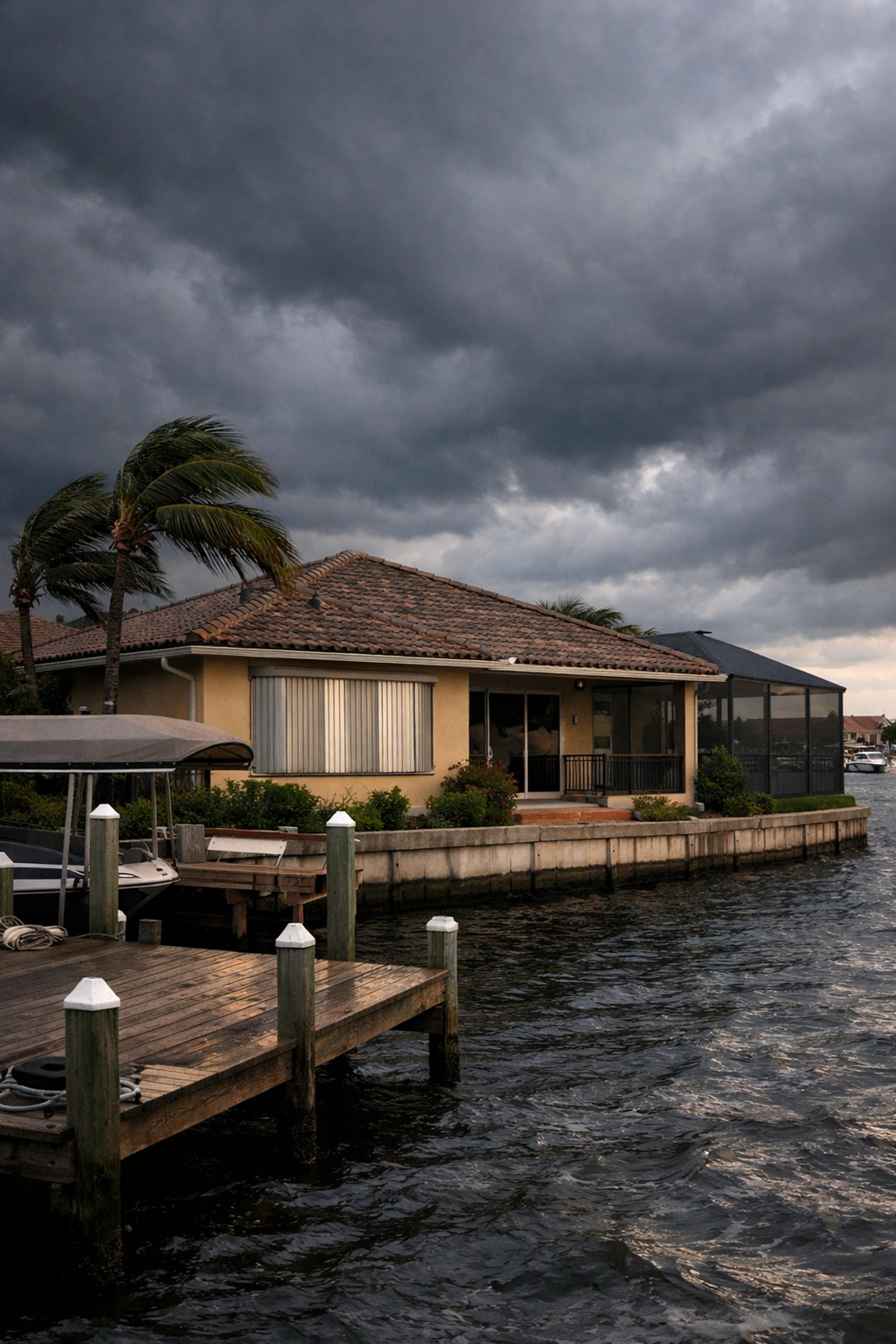
I won't sugarcoat it: Florida's insurance market is rough right now. Between hurricane claims, fraud litigation, and carriers pulling out of the state, premiums have skyrocketed. While I don't have today's exact Cape Coral averages (insurance quotes are hyper-specific to your property), here's what we're seeing on the ground:
- Non-waterfront homes: $3,000–$6,000 annually
- Waterfront homes: $8,000–$15,000+ annually
- Flood insurance (often required): Add another $500–$3,000 depending on your flood zone
That waterfront dream home? You might be looking at $12,000+ per year just for insurance. That's $1,000 per month before you even get to your mortgage payment.
Why Insurance Costs Vary by Quadrant
Southwest Cape Coral properties, especially those with direct Gulf access, often face higher flood insurance premiums because they're closer to storm surge zones. If you're in an AE or VE flood zone, expect flood insurance to be a significant chunk of your annual costs.
Meanwhile, inland properties in the NE or SE quadrants might have lower flood insurance requirements: or none at all if you're outside a designated flood zone and paying cash (though we always recommend carrying it anyway).
The roof age, construction type, and even the year your home was built all factor into your insurance quote. Concrete block construction with a newer roof? You'll fare better. Wood frame with a 15-year-old shingle roof? Brace yourself.

Legislative Wildcards You Should Know About
Here's something most buyers don't realize: Florida's property tax landscape could shift under your feet.
The state legislature has filed 22 bills aimed at reducing or eliminating homestead property taxes. One proposal: House Joint Resolution 209: would add a $200,000 homestead exemption for owners who carry property insurance. That could reduce Cape Coral's first-year tax revenue by about $33.6 million.
What does that mean for you? Potentially lower property taxes if you homestead and insure. But it also means uncertainty: tax policy could change year to year, and cities might adjust millage rates to make up for lost revenue.
It's a moving target, which is why working with a local agent who stays on top of these changes matters.
Hidden Costs People Forget
Beyond taxes and insurance, here are the expenses that surprise Cape Coral buyers:
HOA Fees: If you're buying in a gated community like Sandoval or Cape Harbour, expect $200–$600+ monthly. That's another $2,400–$7,200 per year.
Canal Maintenance: Own a seawall? Budget $5,000–$20,000+ for eventual repairs or replacement. Dock maintenance adds up too.
Hurricane Prep: Shutters, generators, and storm supplies aren't one-time costs. Every season brings new expenses.
Higher Utilities: Air conditioning runs 9+ months a year here. Electric bills of $250–$400 in summer are normal for larger homes.
How RE/MAX Realty Team Helps You Budget for Reality
This is where having a local broker who knows Cape Coral inside and out makes all the difference. At RE/MAX Realty Team, we don't just show you pretty houses: we help you run the real numbers.
We'll connect you with insurance agents who specialize in coastal properties, walk you through tax exemptions you might qualify for, and help you compare the total cost of ownership across different quadrants.
Buying in the SW for $600,000 might look appealing, but when you factor in $10,000 in insurance and $5,000 in taxes, suddenly that $400,000 home in the SE with $3,500 in insurance and $3,200 in taxes pencils out better for your monthly budget.
We've seen too many buyers stretch for the "dream home" without accounting for the carrying costs. Six months later, they're house-poor and stressed. We'd rather help you find a home you can actually afford to keep.
The Bottom Line
Cape Coral is still an incredible place to live. The lifestyle, the weather, the waterways: it's all real. But "paradise" comes with property taxes around 0.88% of your home's value and insurance costs that can rival your mortgage payment if you're on the water.
Before you make an offer, add up the full picture:
- Mortgage payment
- Property taxes (~$293/month per $400K in home value)
- Homeowners insurance ($250–$1,250+/month depending on location)
- Flood insurance (if applicable)
- HOA fees (if applicable)
The smart move? Get pre-qualified, then sit down with a local agent who'll help you model out your true monthly costs across different properties and quadrants. At RE/MAX Realty Team, that's exactly what we do: because we want you to love your Cape Coral home for the long haul, not just the first six months.
Visit us at swflhomestoday.com to start planning your move with eyes wide open. Paradise is worth it when you know what you're getting into.