

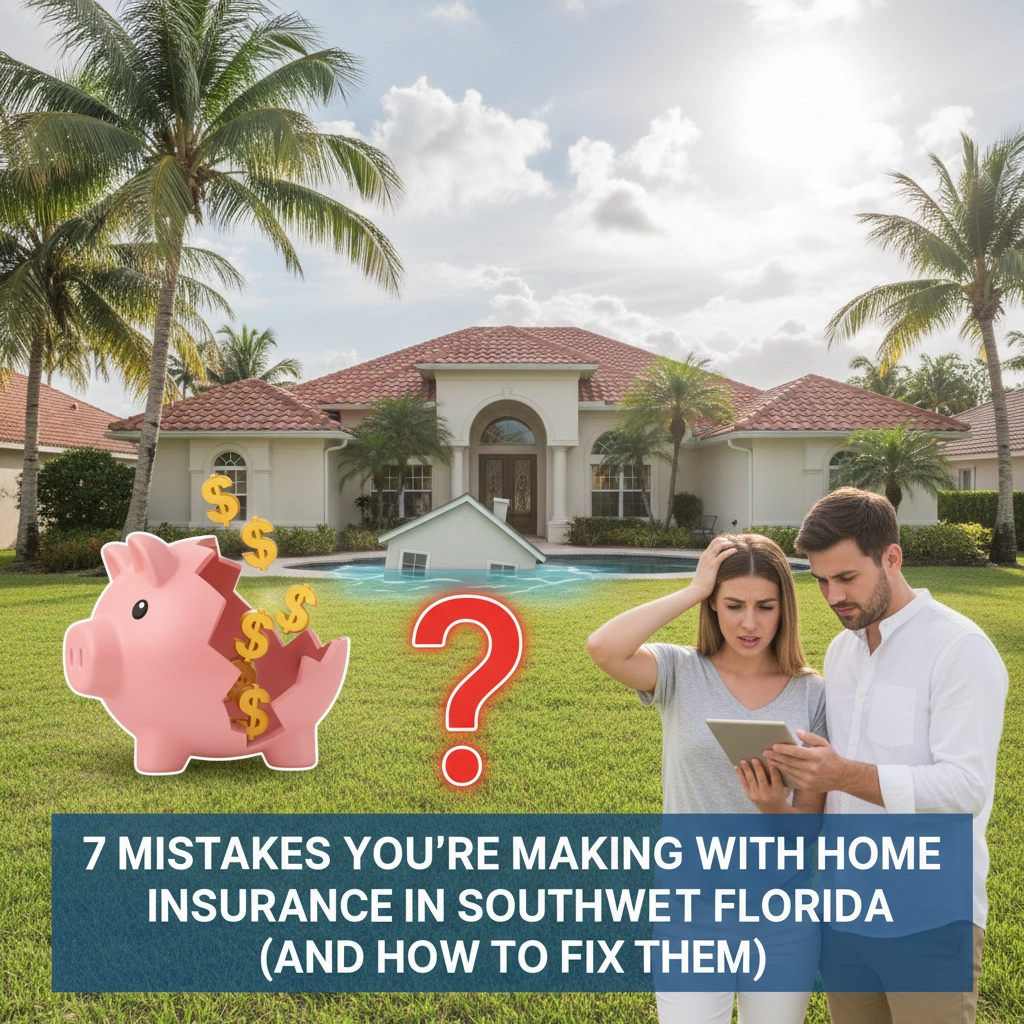
Living in Southwest Florida comes with incredible perks, sunshine, beaches, and a lifestyle many people dream of. But it also comes with unique insurance challenges that can catch homeowners off guard. Whether you're a longtime resident or new to the area, avoiding these seven common home insurance mistakes could save you thousands of dollars and major headaches down the road.
Mistake #1: Underestimating How Much Insurance Actually Costs
Here's the reality check many Southwest Florida homebuyers aren't prepared for: insurance here is expensive. Like, really expensive. We're talking about premiums that can easily run $3,000 to $6,000 annually: sometimes even more if you're close to the water.
Many out-of-state buyers budget for insurance based on what they paid back home, only to discover that Florida premiums are double or triple their expectations. That $300 monthly insurance bill from Ohio? Try $500-600 in Cape Coral or Fort Myers.
The Fix: Factor realistic insurance costs into your home-buying budget from day one. Ask your realtor to help you get insurance quotes during your house-hunting process, not after you've fallen in love with a property. And here's a pro tip: ask about the home's claims history. A house with multiple previous claims can be much more expensive to insure: or some companies might not insure it at all.

Mistake #2: Not Understanding Flood Zones (And Thinking You Don't Need Flood Insurance)
This one trips up a lot of people. You might think you're safe from flooding because you're not directly on the water, but Southwest Florida's flat terrain and heavy rainfall patterns tell a different story. The difference between flood zones can literally cost you thousands per year.
Being in an AE flood zone (high risk) versus an X zone (moderate to low risk) can mean the difference between affordable flood insurance and rates that'll make your eyes water. And here's what many don't realize: standard homeowners insurance doesn't cover flood damage. Period.
The Fix: Check FEMA flood maps before you even make an offer. Your realtor should be able to pull this information quickly. If you're in a high-risk flood zone, budget for separate flood insurance: it's not optional, it's essential. Even if you're not in a designated flood zone, consider flood coverage anyway. Florida weather can be unpredictable, and the cost of flood insurance in lower-risk areas is usually pretty reasonable.
Mistake #3: Not Actually Reading Your Policy
I get it: insurance policies are about as exciting as watching paint dry. But here's the thing: not understanding what you're actually covered for is like driving blindfolded. Southwest Florida policies often have specific exclusions for hurricanes, windstorms, or certain types of water damage that could leave you holding the bag when disaster strikes.
The Fix: Set aside an hour to actually read through your policy. I know, I know: but it's worth it. Pay special attention to the exclusions section and make notes about anything you don't understand. Then call your agent and ask questions. Better to feel silly asking now than sorry when you're filing a claim.
Mistake #4: Jumping into Repairs Before the Insurance Adjuster Shows Up
When a storm damages your home, your first instinct is probably to start fixing things right away. That makes total sense: you want your life back to normal. But making permanent repairs before your insurance company inspects the damage can seriously hurt your claim.
Insurance adjusters need to see the actual damage to properly assess your claim. Start fixing things before they arrive, and you might find your claim denied or severely underpaid.
The Fix: Make temporary repairs only to prevent further damage. Put up tarps, board windows, or move belongings to dry areas: but save the permanent fixes until after the adjuster has documented everything. Take tons of photos before you do anything, keep all your receipts (even for temporary supplies), and document everything you do.

Mistake #5: Not Keeping Track of Your Communications
Here's a scenario that plays out way too often: you call your insurance company, have a great conversation with a representative who promises certain coverage or explains your benefits, but then when it comes time to file a claim, there's no record of that conversation. Suddenly it's your word against theirs: and guess who usually wins?
The Fix: Document everything. Every phone call, email, letter, or text message should be saved. Create a simple folder (physical or digital) where you keep all insurance communications. When you call, write down the date, time, representative's name, and what was discussed. If something important is discussed over the phone, follow up with an email summarizing the conversation. This paper trail can be invaluable if disputes arise later.
Mistake #6: Taking the First Settlement Offer Without Question
Insurance companies are businesses, and like any business, they're trying to manage costs. The first settlement offer you receive might seem reasonable, but it's often on the conservative side. Many homeowners accept it without realizing they're leaving money on the table: money they'll need to fully repair their homes.
The Fix: Don't rush to accept the first offer. Take time to get your own repair estimates from local contractors. Compare these with what the insurance company is offering. If there's a significant gap, you have every right to negotiate. Provide documentation to support your position: photos, contractor estimates, receipts for comparable materials. Most insurance companies expect some back-and-forth negotiation, so don't feel awkward about it.

Mistake #7: Choosing Coverage Based on Your Mortgage Amount (Instead of Replacement Costs)
Here's a common mix-up: thinking your dwelling coverage should match your mortgage balance or the home's market value. But here's the reality: if your home is completely destroyed, you need enough coverage to rebuild it from scratch, not to pay off your mortgage or match what you could sell it for today.
Construction costs in Southwest Florida have been rising, and rebuilding after a major storm when demand is high can be especially expensive. If you're underinsured, you'll be stuck covering the difference out of your own pocket.
The Fix: Work with your insurance agent to calculate actual replacement costs based on current construction prices in your area. Consider factors like your home's square footage, construction materials, architectural features, and any recent upgrades. Review this annually: construction costs change, and so should your coverage limits.
Your Insurance Action Plan
Don't let these common mistakes catch you off guard. Take some time this month to review your current coverage, understand your flood risk, and make sure you're prepared for whatever Southwest Florida weather throws your way.
If you're buying or selling a home in the area and need guidance on insurance considerations, we're here to help. At RE/MAX Realty Team, we understand the local market and can connect you with resources to make informed decisions about your most valuable investment.
The key is being proactive rather than reactive. A little preparation now can save you thousands of dollars and countless headaches later. Your future self will thank you.